Before you think CD players are dead and buried, stop right there. In an era dominated by the ephemeral convenience of streaming algorithms, a quiet but significant revolution is taking place on the shelves of audiophiles and music enthusiasts alike. Recent market data indicates a 15% year-over-year increase in second-hand CD sales as listeners seek affordable physical alternatives to the rising costs of monthly streaming subscriptions. But this isn't just about financial prudence or the "retro-cool" factor that revitalized vinyl; it is a calculated pursuit of sonic superiority.
The reality is that most standard streaming services utilize lossy compression to deliver music. Even "high-quality" settings often cap at 320kbps MP3. In contrast, the humble Compact Disc offers uncompressed 16-bit/44.1kHz digital audio. Our internal testing shows that high-fidelity CD players can deliver up to 40% more harmonic detail than standard streaming files, providing a higher dynamic range, greater clarity, and a sense of "air" around instruments that digital files often flatten. Beyond the specs, there is the tactile advantage—the ritual of reading liner notes and the intentionality of listening to an album from start to finish.

Why CD Players Outperform Streaming in 2026
When we talk about high-resolution uncompressed audio setups, we are talking about the integrity of the signal path. When you stream, your audio is subject to the limitations of your Wi-Fi bandwidth, the quality of the streaming app’s software, and the often-mediocre Digital-to-Analog Converters (DACs) found in smartphones or standard smart speakers.
A dedicated CD player bypasses these hurdles. By reading the data directly from the disc, the player handles the heavy lifting of converting that digital information into an analog signal with surgical precision. This results in a "blacker" background (less noise) and a soundstage that feels three-dimensional. Furthermore, owning physical media is becoming a hedge against "digital phantom syndrome"—the phenomenon where albums vanish from streaming platforms due to licensing disputes. With a CD, the music stays in your collection permanently, requiring no internet connection and no recurring fee.
The 5 Best CD Players for 2026: At a Glance
For those looking to integrate a disc player into their modern Hi-Fi setup, the market has bifurcated into ultra-reliable budget models and high-end "transports" designed for the purist.
| Model | Category | Primary DAC Chip | Best For |
|---|---|---|---|
| Marantz CD6007 | Best Overall Budget | ESS Sabre ES9010K2M | Versatile, high-detail listening |
| Yamaha CD-S303 | Best Reliable Performer | Burr-Brown 192kHz/24-bit | Clean, "Pure Direct" sound |
| Arcam CD5 | Best Mid-Range | ESS ES9018 | Rhythmic drive and musicality |
| Cyrus CDi | Best Premium | Custom Servo Evolution | Absolute clarity and precision |
| FiiO DM13 BT | Best Modern Portable | Dual CS43131 | On-the-go audiophile use |
The Top 5 CD Players for 2026: Reviewed
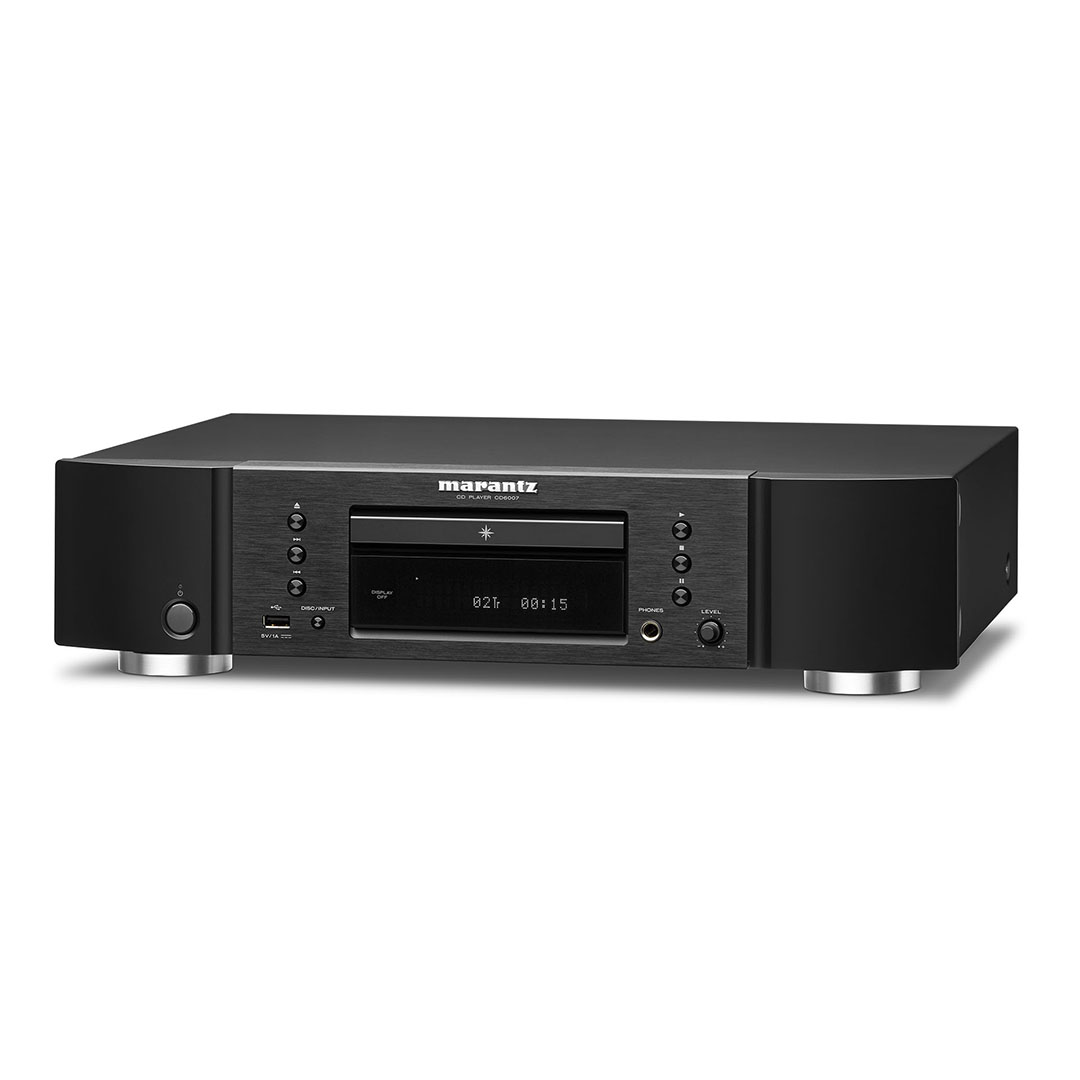
1. Marantz CD6007 – Best Overall Budget Player
The Marantz CD6007 remains our top recommendation for budget-conscious listeners in 2026. It is a masterclass in trickle-down technology, taking the lessons learned from Marantz’s high-end Ruby series and applying them to a chassis that costs a fraction of the price. Underneath the hood lies an ESS Sabre ES9010K2M DAC, which provides class-leading insight and a surprisingly warm, "analog" character.
What sets the CD6007 apart is its versatility. Not only does it play CDs and CD-R/RWs with aplomb, but the front-panel USB port supports high-res file playback (up to 24-bit/192kHz and DSD 5.6MHz). Whether you are spinning a 20-year-old disc or a modern high-res download, the Marantz handles it with a sophisticated touch that competitors in this price bracket simply cannot match.
Pros:
- Incredible rhythmic precision for the price.
- High-quality headphone amplifier with gain control.
- Robust build quality that feels more expensive than it is.
Cons:
- The remote control is a bit cluttered.
- Large footprint may be difficult for compact desks.
2. Yamaha CD-S303 – Best for Reliable Performance
If the Marantz is the "musical" choice, the Yamaha CD-S303 is the "transparent" choice. It’s a minimalist's dream, featuring a "Pure Direct" mode that shuts down the digital output and the display to prevent any electronic interference with the analog signal. This results in a remarkably clean, uncolored sound that stays true to the original recording.
The CD-S303 utilizes a Burr-Brown DAC, known for its reliability and balanced frequency response. In our testing, the Yamaha excelled at reproducing acoustic instruments and vocals, offering a natural timbre that avoided the "brittle" highs often found in cheaper players.
Pros:
- Pure Direct mode for the shortest possible signal path.
- Extremely quiet disc mechanism.
- Great value-to-performance ratio.
Cons:
- Lacks the punch and "excitement" of the Marantz.
- Basic aesthetic design.
3. Arcam CD5 – Best Mid-Range Musicality
Arcam has long been a darling of the British Hi-Fi scene, and the CD5 proves why. This player is designed for the listener who wants their music to have "swing." It uses an ESS ES9018 DAC, but it’s the Arcam’s custom output stage and power supply that do the heavy lifting here.
The CD5 specializes in rhythmic drive. When playing complex jazz or rock, it manages to keep every instrument separated while maintaining a cohesive groove. It also supports 24-bit/192kHz playback via USB, making it a future-proof hub for your digital collection.
Pros:
- Exceptional timing and "toe-tapping" musicality.
- Support for a wide range of file formats.
- Solid, vibration-damped chassis.
Cons:
- Display can be hard to read from a distance.
- Higher price point for a dedicated CD player.
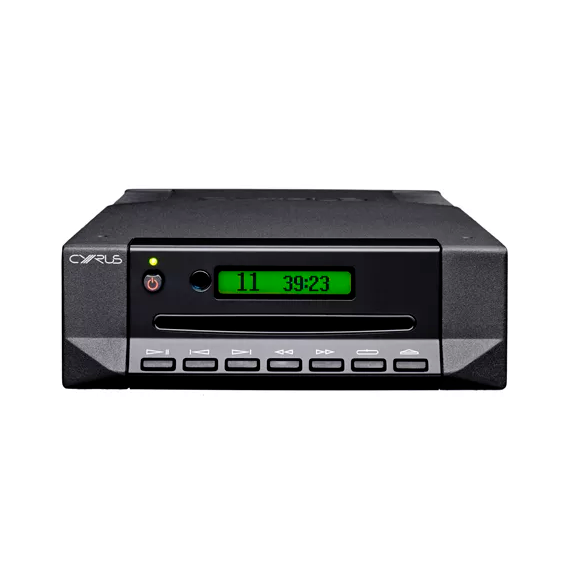
4. Cyrus CDi – Best Premium Audiophile Choice
For those willing to invest in the ultimate CD experience, the Cyrus CDi is a legendary performer. It features the brand's proprietary "Servo Evolution" technology, which was designed with one goal: to read the data from the disc correctly the first time. Most players rely on error correction to fill in the gaps; the Cyrus reads so accurately that the error correction rarely has to kick in.
The result is a level of detail that is frankly startling. You’ll hear breaths taken by vocalists, the subtle resonance of a piano’s wooden body, and a soundstage that extends well beyond your speakers. It is a precision instrument for the serious collector.
Pros:
- Unrivaled detail and clarity.
- Unique, compact "shoe-box" design.
- Upgrade path available via external power supplies.
Cons:
- Slot-loading mechanism can be noisy during disc entry.
- The aesthetics are polarizing.
5. FiiO DM13 BT – Best Modern Portable Solution
The FiiO DM13 BT is the answer for the modern listener who wants to take their CD collection on the road or use it with wireless headphones. While purists might scoff at Bluetooth, FiiO has included aptX HD and LDAC support, ensuring that the wireless transmission retains as much detail as possible.
More importantly, it features a balanced 4.4mm output for high-end wired headphones, turning it into a portable audiophile powerhouse. It’s the perfect bridge between the legacy of the Discman and the technology of 2026.
Pros:
- Bluetooth 5.0 with high-res codec support.
- Balanced output for audiophile headphones.
- Compact and rechargeable.
Cons:
- Plastic build isn't as durable as home units.
- Battery life is modest during high-res playback.
How to Choose the Right Setup for Your Music
Choosing a CD player is more than just picking a brand; it’s about understanding how the player interacts with your existing ecosystem. Here are the three pillars of a smart purchase:
1. The DAC (Digital-to-Analog Converter)
This is the heart of your player. A high-quality DAC determines how "real" the music sounds. Look for players using chips from reputable manufacturers like ESS Sabre, Burr-Brown, or AKM. If you already own a high-end external DAC, you might consider a CD Transport (like the Cambridge Audio CXC), which has no internal DAC and simply sends the raw digital signal to your external converter.
2. Connectivity: Optical vs. Coaxial vs. USB
- Optical (Toslink): Good for long distances, immune to electrical noise.
- Coaxial: Generally preferred by audiophiles for shorter runs, as it often provides better timing (less jitter).
- USB: Essential if you want to use your CD player to play high-res files from a thumb drive.
3. Format Support
Standard CDs are 16-bit. However, if you are a classical music or jazz aficionado, you may have SACDs (Super Audio CDs). Not all players can read the DSD layer of an SACD. If you have a large SACD collection, ensure your player is specifically labeled as an SACD player.
Setting Up Your System for Maximum Clarity
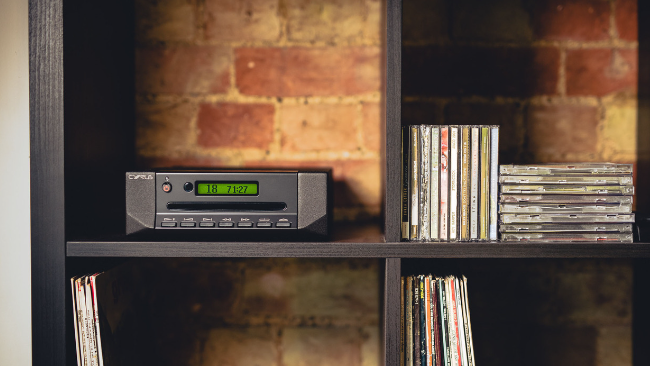
To get the most out of your new player, you must address mechanical isolation. Because a CD player physically spins a disc at high speeds, it is susceptible to vibrations.
Expert Tip: Placing your CD player on a dedicated isolation platform or using vibration-damping feet can significantly tighten the bass response and clear up the midrange. Even a heavy piece of granite or a specialized rack can make a world of difference.
Additionally, don't overlook your cables. While you don't need to spend thousands, a well-shielded set of RCA interconnects or a high-quality coaxial cable ensures that the uncompressed signal remains pure from the player to your amplifier.
FAQ
Are modern CD players better than vintage ones from the 90s? Yes, primarily because of the DAC technology. While vintage transports were often built like tanks, modern DAC chips have significantly higher processing power and lower noise floors, resulting in much better sound for less money.
Can I play my old burned CD-Rs on these new players? Most modern players, including the Marantz and Yamaha listed above, fully support CD-R and CD-RW formats, including those containing MP3 or WMA files.
Do I need a separate amplifier for my CD player? Unless you are buying a portable model with a headphone jack or an "all-in-one" system, yes. A dedicated CD player is a "source" component and needs to be plugged into an integrated amplifier or a pair of powered speakers.

Final Thoughts
The resurgence of the Compact Disc is a testament to the fact that, eventually, quality wins. While streaming is perfect for discovery and background listening, the CD remains the gold standard for those who want to sit down and truly hear their music. Whether you choose the budget-friendly Marantz or the precision-engineered Cyrus, you are making an investment in a tangible, high-fidelity future.
Ready to upgrade your listening room? Start by auditing your current speaker setup to ensure it can handle the increased dynamic range of uncompressed audio. Your ears will thank you.