Quick Facts
- The Connection Divide: Bluetooth is a hardware-to-hardware protocol designed for proximity and low power; "Wireless" in high-end audio usually refers to Wi-Fi or 2.4GHz RF (Radio Frequency) networks that offer significantly higher bandwidth.
- Latency Advantage: For gaming and professional video editing, 2.4GHz RF is the industry standard, offering near-zero latency that Bluetooth—even with modern codecs—cannot yet match.
- Audio Fidelity: Wi-Fi-based systems support lossless, high-resolution audio (up to 24-bit/192kHz), whereas Bluetooth typically relies on "lossy" compression to fit data through a narrower wireless pipe.
- Market Growth: Driven by the adoption of Auracast broadcast technology, the global Bluetooth headphone and earphone market is forecasted to reach a valuation of $120 billion by 2026.
- Stability: Wi-Fi speakers allow for uninterrupted music playback even if your phone receives a call or moves out of the room, a feat traditional Bluetooth cannot achieve.
The Wireless Misconception: Why All Untethered Audio Isn't Equal
As we move into 2026, the lines between convenience and quality have blurred, yet the fundamental misunderstanding of "wireless" remains the primary hurdle for consumers seeking the best possible acoustic experience. In my years reviewing luxury travel gear and premium hotel sound systems, I’ve found that many travelers assume any device without a cord is a Bluetooth device. This is a critical error.
While Bluetooth has become the "gold standard" for mobile connectivity due to its universal compatibility, it is often the bottleneck in a high-fidelity signal chain. Conversely, "wireless" audio—specifically systems utilizing Wi-Fi or proprietary 2.4GHz RF dongles—operates on a much larger playing field. To choose correctly, one must understand that Bluetooth is about a personal connection, while true wireless audio is about an infrastructure of sound.
| Feature | Bluetooth (v5.4+) | 2.4GHz RF (Proprietary) | Wi-Fi 6E/7 Audio |
|---|---|---|---|
| Typical Range | 10–30 Meters | 10–20 Meters | Entire Network Coverage |
| Latency | 100–200ms (Average) | <20ms (Near-Instant) | Variable (Buffered) |
| Max Bitrate | ~990kbps (LDAC) | ~2–5Mbps | >9.6Gbps (Network Capacity) |
| Primary Use Case | Commuting, Gym, Casual | Competitive Gaming | Multi-room, Audiophile Home |
| Compatibility | Universal | Requires USB Dongle | Network Dependent |
Defining the Tech: Bluetooth vs. Wi-Fi vs. 2.4GHz RF
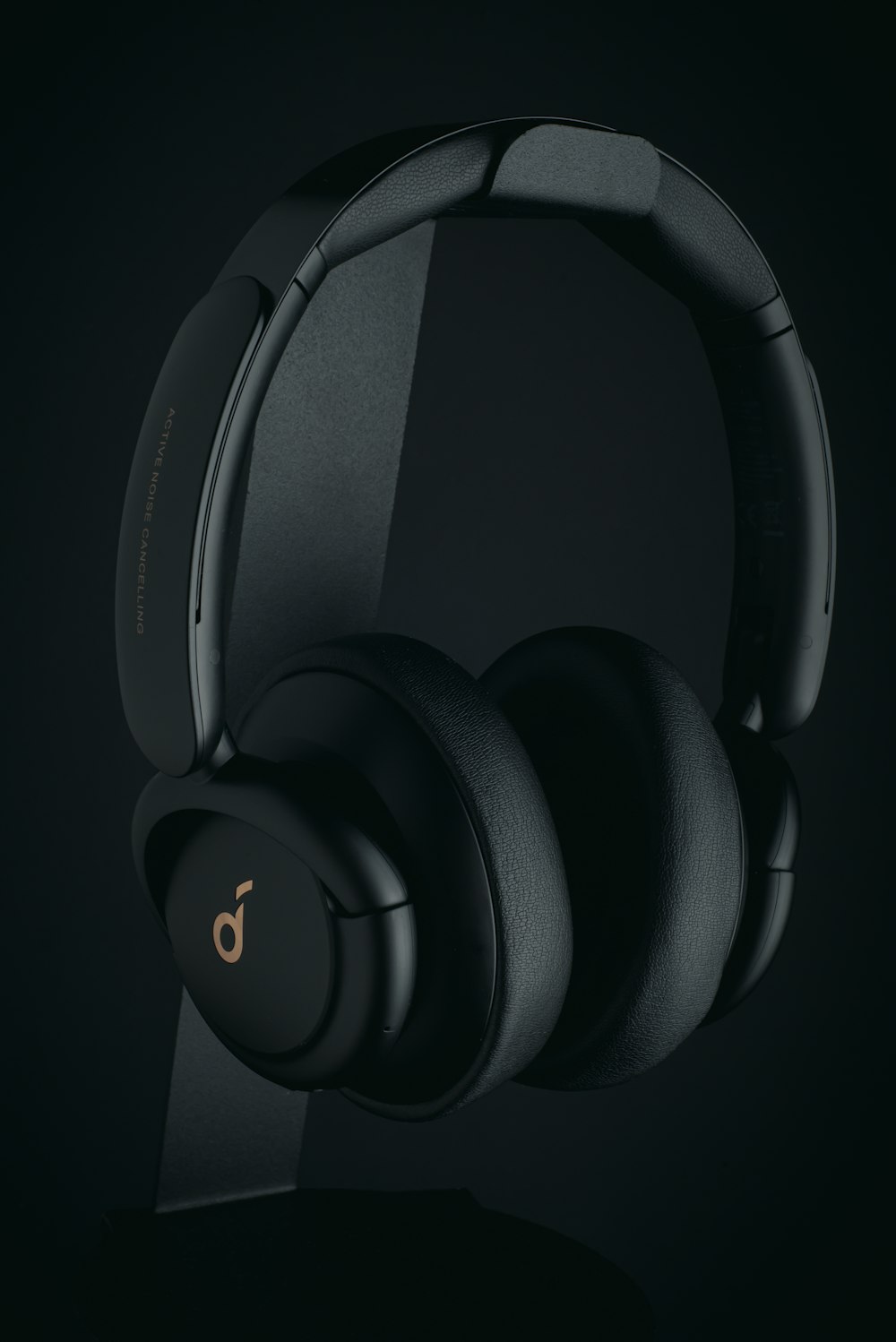
To navigate the 2026 market, we must first categorize these protocols by their operational strengths. Bluetooth is a "Point-to-Point" system. Your smartphone talks directly to your headphones. It is elegant, power-efficient, and works in the middle of the Sahara as well as it does in a London Heathrow lounge. However, because it was designed to conserve battery, it squeezes audio data through a very tight straw.
In contrast, 2.4GHz RF (often used in gaming headsets) utilizes a dedicated USB transceiver to create a high-speed highway for data. It ignores the complex "handshaking" protocols of Bluetooth in favor of raw speed. Then we have Wi-Fi audio. Systems like Sonos, Bluesound, or KEF don’t stream from your phone; they stream through your network. Your phone acts as a remote control, but the speaker itself pulls high-bitrate data directly from the cloud or a local server.
Key Performance Metrics for 2026: Latency and Bandwidth
For the discerning listener, the decision usually comes down to two factors: the delay you can tolerate and the detail you can hear.
Latency and Synchronization
If you have ever watched a movie where the actor's lips move a fraction of a second before the sound reaches your ears, you have experienced Bluetooth latency. While the introduction of LE Audio and the LC3 codec has improved this, Bluetooth still struggles with synchronization.
Wireless 2.4GHz technology is superior for gaming and professional applications because it avoids the compression and re-transmission cycles common in Bluetooth. For a competitive gamer, 100 milliseconds is an eternity. By using a dedicated RF band, manufacturers can achieve near-instantaneous sound synchronization, making it the only choice for those whose reflexes depend on auditory cues.
The $120 Billion Market and the Bandwidth Struggle
The Bluetooth headphone and earphone market is currently on a trajectory to grow to $120 billion by 2026. This massive scale is driven by a push toward "lossless" Bluetooth, yet we must remain objective: Bluetooth bandwidth remains fundamentally limited. Even the most advanced codecs like aptX Lossless are "mathematically lossless" only under ideal conditions.
High-performance wireless speakers, however, leverage Wi-Fi to support higher-bitrate audio files that traditional Bluetooth bandwidth simply cannot accommodate. When you are listening to a 24-bit FLAC file, you are moving a massive amount of data. Wi-Fi has the "headroom" to handle this without stripping away the micro-dynamics that give music its "visceral, substantial" feel.
The Lossless Audio Frontier
In 2026, "Lossless" is no longer a niche term for audiophiles; it is a marketing requirement. But there is a significant difference between a file being lossless and the transmission being lossless. You can play a Master Quality Authenticated (MQA) file on your phone, but if you send it via standard Bluetooth, it is compressed before it reaches your ears.
High-end wireless speakers use Wi-Fi and Ethernet to deliver high-resolution, lossless audio that surpasses Bluetooth capabilities. By staying within the network, the digital-to-analog converter (DAC) inside the speaker receives the full, unadulterated bitstream.
Expert Insight: If your goal is "Critical Listening"—where you sit down specifically to enjoy the nuances of a recording—Bluetooth is your enemy. Wi-Fi or wired Ethernet is the only way to ensure that what the artist recorded is what you are actually hearing.
Use Case Scenarios: Which Should You Choose?
The Modern Commuter (Bluetooth)
If your primary listening happens on a plane, a train, or in a hotel gym, Bluetooth remains the undisputed champion. The 2026 landscape has been revolutionized by Auracast, a broadcast technology that allows you to tune into public transmitters—like airport gate announcements or silent gym TVs—using your personal Bluetooth buds. It is the gold standard for mobile convenience.
The Home Theater & Multi-room Enthusiast (Wi-Fi)
For a luxury home setup, Wi-Fi is the only logical choice. Beyond the audio quality, the functionality is superior. Because the speaker is an independent node on your network, you can take a phone call or watch a YouTube clip on your phone without the audio interrupting the music playing in your living room. Furthermore, Wi-Fi allows for perfect synchronization across multiple rooms—a feat Bluetooth cannot reliably manage over large distances.
The Competitive Gamer (2.4GHz RF)
If you spend your evenings in high-stakes digital environments, ignore both Bluetooth and standard Wi-Fi. You need a dedicated 2.4GHz RF connection. The stability of a dedicated dongle ensures that even in a "noisy" wireless environment filled with other signals, your audio remains lag-free and crisp.
Best High-End Wireless Solutions of 2026
Based on extensive testing in both residential and professional environments, these are the standout performers for the current year.
-
Best for Multi-Room: Bluesound PULSE 2i
- Power: 150W total system power.
- Logic: Uses the BlueOS ecosystem to stream 24-bit high-res audio across your home network.
- Verdict: The most robust choice for those who value software stability as much as sound.
- View Bluesound PULSE 2i →
-
Best Stereo Pair: KEF LS50 Wireless II
- Specs: Supports up to 24-bit/192kHz; HDMI eARC, Toslink, and RCA inputs.
- Logic: These are not just speakers; they are a complete high-end hi-fi system in two boxes.
- Verdict: The gold standard for uncluttered, high-resolution home audio.
- Explore KEF LS50 →
-
Best Design: B&W Zeppelin Pro
- Build: 240W of amplification with a sculptural aluminum body.
- Logic: Combines Bowers & Wilkins' legendary driver tech with seamless AirPlay 2 and Spotify Connect (Wi-Fi) integration.
- Verdict: For the traveler who wants their home to look as good as it sounds.
- See the B&W Zeppelin →
-
Best Value: Cambridge Audio Evo One
- Drivers: 14 sophisticated drivers delivering a massive 700W.
- Logic: An all-in-one "super speaker" that handles everything from Bluetooth 5.3 to high-bitrate Wi-Fi streaming.
- Verdict: If you only have room for one piece of audio equipment, this is it.
- Discover Cambridge Evo →
Future Trends: Auracast and the UWB Revolution
As we look deeper into 2026, two technologies are set to redefine the "Bluetooth vs. Wireless" debate. Auracast is transforming Bluetooth from a 1-to-1 connection into a 1-to-many broadcast medium. Imagine being at a sports bar and "tuning in" to the audio of the specific screen you are watching through your headphones.
Furthermore, Ultra-Wideband (UWB) is beginning to challenge Wi-Fi for high-fidelity, short-range transmission. UWB offers much higher data rates than Bluetooth with significantly lower power consumption than Wi-Fi. While still in its infancy for consumer audio, it promises a future where "wireless" no longer requires the compromise of compression.
FAQ
Q: Can I use Bluetooth for gaming?
A: You can, but it is not recommended for fast-paced games. The latency (delay) will likely result in a disconnect between the visual action and the sound you hear. For gaming, a 2.4GHz RF connection is far superior.
Q: Do Wi-Fi speakers require an app?
A: Most do. While many support universal protocols like AirPlay 2 or Chromecast, the best experience (and highest audio quality) usually comes from using the manufacturer’s native app (like BluOS or the Sonos app).
Q: Is Bluetooth 5.4 "Lossless"?
A: Not inherently. While Bluetooth 5.4 provides the stability needed for lossless codecs like aptX Lossless, both your source (phone) and your receiver (headphones) must support that specific codec to achieve a lossless stream.
Conclusion
The choice between Bluetooth and wireless audio is no longer about which is "better," but which is appropriate for your environment. For the traveler, the commuter, and the casual listener, the $120 billion Bluetooth market offers unparalleled convenience and the exciting new potential of Auracast.
However, for the home, the theater, and the gaming desk, Bluetooth remains a compromise. If you value the integrity of a lossless recording or the split-second timing of a competitive match, investing in Wi-Fi or 2.4GHz RF infrastructure is the only way to truly unlock the potential of modern audio. As a critic, my recommendation is simple: use Bluetooth for your life on the move, but leave the heavy lifting to your network when you're at home.
Are you ready to upgrade your home soundscape? If you are looking for more specific reviews on how these systems integrate into a smart home lifestyle, subscribe to our monthly gear guide.