Quick Facts
- Demographic Scale: More than 76 million Baby Boomers shared the experience of these technological transitions.
- The Technical Leap: A massive shift occurred as analog vacuum tubes were replaced by solid-state transistors.
- Key Manufacturers: Brands like Sony, General Electric, Kodak, and Philco dominated the mid-century market.
- Modern Value: There is a booming market for mid-century modern design and original hi-fi audio components.
- Cultural Shift: Technology moved from being a shared family experience to a personal, portable one.
- Direct Answer: Iconic examples of nostalgic technology include vinyl record players, transistor radios, and console televisions.
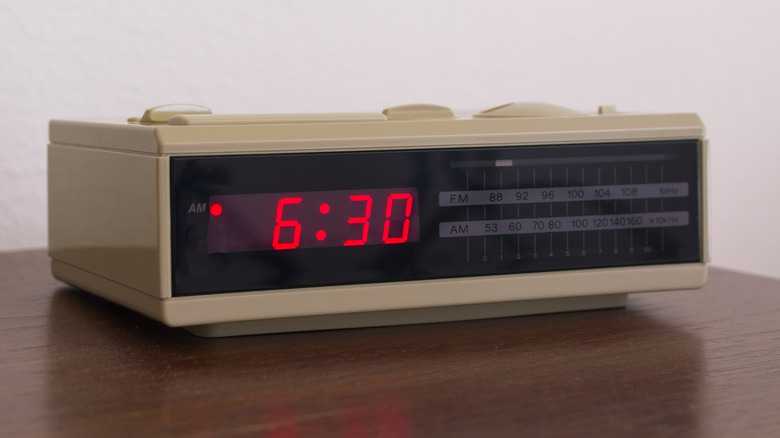
Iconic examples of nostalgic technology for the Baby Boomer generation include vinyl record players, transistor radios, and console televisions. These devices represented significant shifts in media consumption, moving from fragile shellac records to durable vinyl and from stationary vacuum-tube radios to portable transistor models. Other memorable tech includes telephone party lines, where multiple households shared a single connection, and integrated clock radios that combined alarms with bedside entertainment.
1. The Transistor Radio: Portability Redefined (1954)
Before the mid-1950s, listening to the radio was a stationary activity. Families gathered around large, heavy wooden cabinets powered by glowing vacuum tubes that took several minutes to warm up. That changed in 1954 with the introduction of the Regency TR-1, but the real cultural explosion occurred when Japanese engineering entered the scene. For the first time, media became personal. We could take our music to the beach, the park, or hide it under a pillow at night to listen to late-night broadcasts.
The introduction of the Sony TR-63 was a watershed moment for mid-century teenagers. It featured tactile controls and a sleek bakelite casing that felt like the future. This device allowed for a shift from stationary listening to a burgeoning youth culture driven by AM radio waves. From a technical standpoint, the replacement of vacuum tubes with transistors meant devices were smaller, more durable, and required less power.
Historically, the impact was massive. The Sony TR-63 transistor radio, a popular portable device for mid-century teenagers, reached cumulative worldwide sales of approximately seven million units by the mid-1960s. This wasn’t just a new gadget; it was the birth of the "portable" lifestyle we take for granted today.
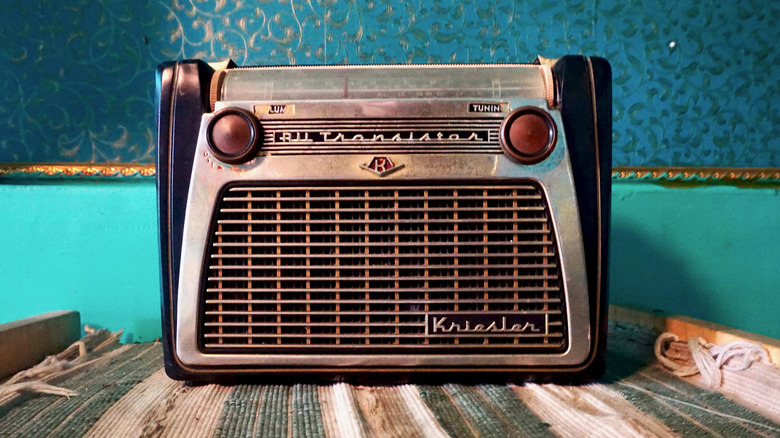
Legacy Note: The transistor is essentially the grandfather of the modern microprocessor. Without the leap from vacuum tubes to transistors in these pocket radios, the integrated circuits in your current smartphone would not exist.
For those interested in collecting vintage transistor radios for beginners, look for models with intact plastic casings and original leather carrying cases. While many are relegated to the list of obsolete technology examples, a functioning Sony or Regency unit is a prized piece of engineering history.
2. Vinyl Record Players: The Hi-Fi Revolution
While today’s music is often a stream of data from the cloud, the Baby Boomer generation experienced music as a physical, tactile event. The major shift occurred in 1948 when Columbia Records introduced the 12-inch Long Play (LP) record. This moved the industry away from fragile 78-rpm shellac records to durable vinyl. The hi-fi audio revolution was born, and with it, a new standard for home entertainment.
We remember the ritual: carefully removing the sleeve, placing the needle, and hearing that faint crackle before the music began. When discussing old technology vs new technology, the conversation almost always turns to the "warmth" of analog audio. Unlike digital formats that compress sound into bits and bytes, vinyl offers a continuous analog signal that many enthusiasts still believe is superior.

The turntables of the 1960s were masterpieces of mechanical engineering. They relied on belt-driven or direct-drive motors to maintain a precise RPM. Today, nostalgic technology like the record player has seen a massive resurgence, not just among Boomers but with younger generations who crave the physical connection to their music that a Spotify playlist simply cannot provide.
3. Console Televisions: The Living Room Centerpiece
In the 1950s and 60s, a television wasn't just an appliance; it was a significant piece of furniture. These console TVs were massive units encased in heavy wood veneer, often featuring birch, walnut, or mahogany finishes to match the mid-century modern design of the home. These were 5 examples of old technology that actually required two people to move.
The engineering inside was dominated by cathode ray tubes (CRT). Because these tubes were deep and heavy, the electronics were built into wide cabinets that often included a record player and an AM/FM radio, creating an all-in-one entertainment center. We didn't have remotes; we had heavy plastic dials that clicked firmly as we toggled through the three or four available channels.
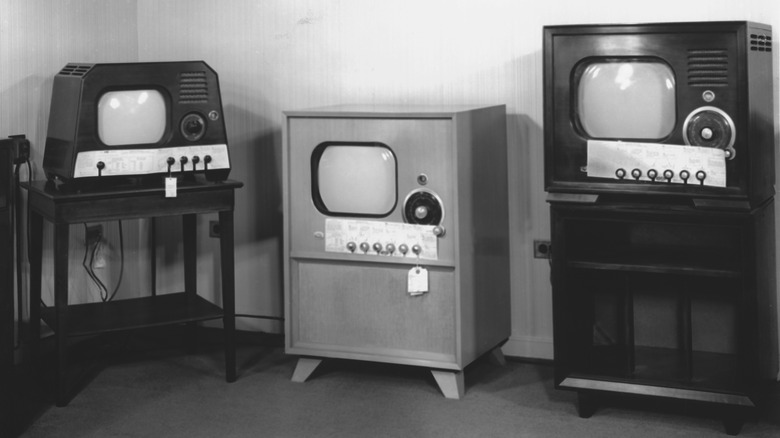
Legacy Note: The "furniture" aspect of these TVs served a secondary purpose. Before modern cooling fans, the large wooden cabinets provided enough internal air space to dissipate the immense heat generated by the vacuum tubes and high-voltage flyback transformers.
Today, restoring vintage console tv cabinets has become a popular hobby. Some enthusiasts preserve the original cathode ray tubes to play vintage video games, while others gut the interiors to install modern flat screens or bars, keeping the nostalgic gadgets every boomer will remember using as a focal point of their décor.
4. The Kodak Instamatic: Photography for Everyone
Before 1963, photography was a somewhat technical endeavor. You had to manually thread film, set apertures, and hope you didn't expose the roll to light. That changed with the launch of the Kodak Instamatic. It was the ultimate point-and-shoot device, utilizing an easy-load film cartridge that eliminated the struggle of traditional film handling.
When comparing old technology vs new technology, the Instamatic stands as a precursor to the modern smartphone camera’s simplicity. Between 1963 and 1970, Kodak produced more than 50 million Instamatic cameras, making it one of the most successful 5 examples of old vs new technology transitions in history. It provided us with an affordable way to document our lives, from birthdays to family vacations.
The visual quality of those square, often slightly faded photos is a hallmark of the era. While modern digital sensors offer infinite resolution and perfect color, the Instamatic captured a specific aesthetic that modern apps try to replicate with "retro" filters. It was old technology that focused on the moment rather than the technical settings.
5. Rotary Telephones and Party Lines
Communication in the mid-century was a lesson in patience and community. The rotary phones of our childhood featured heavy handsets and satisfying rotary dials that whirred as they spun back to the starting position. This was a purely mechanical landline infrastructure, where the "click-click-click" of the dial sent pulses to a central office.
One of the most unique aspects of this era was the party line. Especially in rural areas, multiple households often shared a single phone line. You had to wait for your neighbor to finish their call before you could make yours, and there was always the temptation to lift the receiver quietly to eavesdrop on the local gossip. When looking at the difference between old generation vs new generation technology, the privacy we enjoy today is perhaps the most significant change.
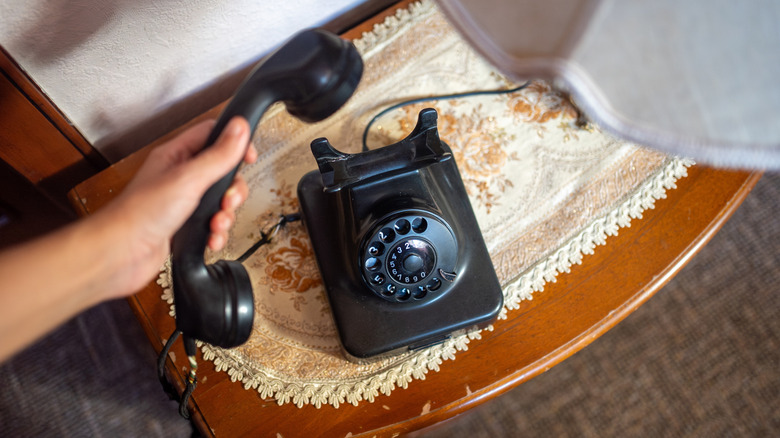
These phones were built to last decades, a stark contrast to the obsolete technology examples of today that require replacement every few years. They were heavy, made of durable plastics or even metal, and remained functional even during power outages because they were powered by the phone line itself.
The Technical Evolution: Old vs. New Technology
The primary difference between historical and contemporary devices is the transition from analog, mechanical systems to digital, integrated circuits. Vintage gadgets relied on physical dials and tactile controls, whereas modern alternatives consolidate these functions into multi-purpose smartphones and cloud-based services.
While old technology featured furniture-style designs with wood veneers meant to last a lifetime, contemporary devices prioritize portability, high-speed data, and sleek, minimalist aesthetics. For example, consider the evolution of the mobile device:
| Feature | 1970s/80s Mobile (Motorola DynaTAC) | 2026 Smartphone (Estimated) |
|---|---|---|
| Weight | Approx. 2.5 lbs | Approx. 0.4 lbs |
| Battery Life | 30 minutes of talk time | 72+ hours (Active Use) |
| Display | LED numeric only | Foldable 8K OLED |
| Storage | 30 phone numbers | 2TB + Unlimited Cloud |
| Price (Adj. for inflation) | Over $10,000 | Approx. $1,200 |
As we move further into the digital age, many are asking where to find authentic baby boomer electronics. Thrift stores, estate sales, and specialized online marketplaces are teeming with people looking to reconnect with the tactile nature of the past. Gen Z has also joined this movement, seeking out the physical satisfaction of a mechanical switch or the grainy texture of a film photo.
FAQ
What is nostalgic technology?
Nostalgic technology refers to devices and gadgets from previous eras—specifically the mid-20th century—that evoke a sense of sentimentality and personal history. These items are often defined by their analog nature, mechanical switches, and distinct physical designs that contrast with modern, digital alternatives.
What are some old technologies?
Common examples include rotary telephones, transistor radios, vinyl record players, cathode ray tube (CRT) televisions, and film cameras like the Kodak Instamatic. Other examples include typewriter machines, slide projectors, and 8-track tape players.
Why is Gen Z so obsessed with nostalgia?
Gen Z often seeks out nostalgic items as a reaction to the "perfect" and ephemeral nature of digital life. The tactile immersion of vintage gadgets, like the mechanical click of a camera or the physical ritual of playing a record, provides a grounded, tangible experience that digital streaming cannot match.
Why is Gen Z so obsessed with the 80s?
The obsession with the 80s stems from the era's bold aesthetic, the birth of iconic pop culture, and the transition from analog to digital. Movies, fashion, and synth-heavy music from that decade represent a colorful, high-energy world that feels both exotic and comforting to younger generations.
What are the top 10 inventions of all time?
While subjective, historical lists typically include the wheel, the printing press, the steam engine, the light bulb, the telephone, penicillin, the airplane, the transistor, the internet, and the internal combustion engine.