Quick Facts
- Efficiency: Text-based audio editing allows for a 30-minute reduction in clean-up time per meeting.
- Model Accuracy: Uses the Universal-3 Pro model to achieve a 94.1% word accuracy rate.
- Processing Limit: The multimodal Gemini Nano model supports summaries for transcripts up to 41 minutes.
- Session Length: Supports continuous speaker labeling for recordings lasting up to 18 hours.
- Accessibility: Fully searchable digital archives via a dedicated web portal at recorder.google.com.
- Privacy: 100% on-device processing ensures your audio data never leaves the mobile device.
The Google Pixel features an advanced ai voice recorder that provides real-time transcription with high speaker label accuracy. Its standout capability is text-based audio editing, allowing users to trim recordings by deleting transcript words, making it an efficient tool for meeting minutes and voice memos.
As a mobile editor who has seen every voice recorder app hit the Play Store in the last decade, I can tell you that we have officially moved past the era of "just a voice memo." In 2026, the Pixel app is no longer a simple utility; it is the best ai voice recorder for professionals, students, and creators who need to turn spoken words into actionable data instantly. Google reported that the integration of the Gemini Nano model in the Pixel Recorder app resulted in a 24% increase in the total number of saved recordings, and it is easy to see why.
1. Edit Audio by Deleting Transcript Text
The most revolutionary feature in the current Pixel lineup is what I call "surgical precision" editing. Traditionally, if you wanted to remove a "dead" minute from a recording or cut out a tangent, you had to squint at an audio waveform and hope your finger was steady enough to drag the playhead to the right spot. With the Pixel ai voice recorder note taker, that frustration is gone.
You can now edit audio by deleting transcript text directly. If you see a paragraph where the speaker went off-topic, you simply highlight those words in the transcript and hit delete. The app automatically snips the corresponding audio with millisecond precision, creating a seamless transition. This feature makes the Pixel the best ai voice recorder and transcriber for anyone doing long-form interviews or podcasting on the go. It feels less like audio engineering and more like editing a Google Doc.
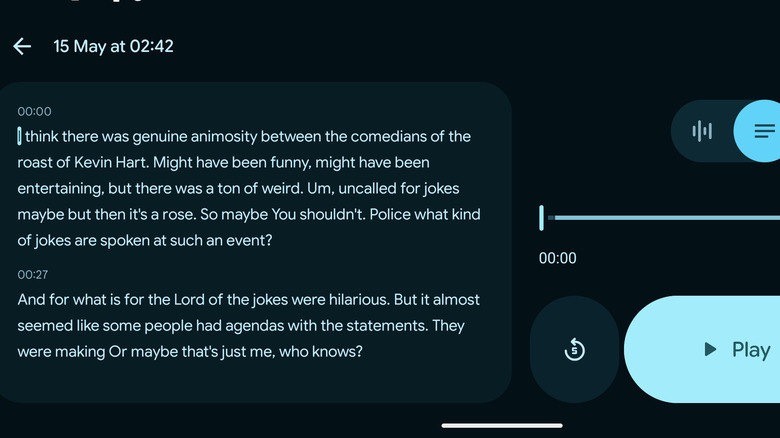
This ai voice recorder to text functionality doesn't just save time; it changes the workflow. I’ve used this during press conferences to quickly trim a 40-minute Q&A session down to the three minutes of spicy quotes I actually need for my story, all while sitting on the subway heading back to the office.
2. Gemini Nano Extended Summarization & Smart Tags
The jump in processing power we have seen recently is staggering. The Pixel 9 and 10 series utilize a multimodal version of Gemini Nano that extends the on-device summarization capability to process transcripts of up to 41 minutes, a massive leap from the previous 15-minute limit. This means you can record nearly an entire lecture or a standard boardroom meeting and get a high-quality summary without needing a cloud connection.
| Feature | Pixel 8 Series | Pixel 9 & 10 Series |
|---|---|---|
| Max Summary Length | 15 Minutes | 41 Minutes |
| AI Model | Gemini Nano (Standard) | Gemini Nano (Multimodal) |
| Daily AI Access Avg | 1 - 2 times | 2 - 5 times |
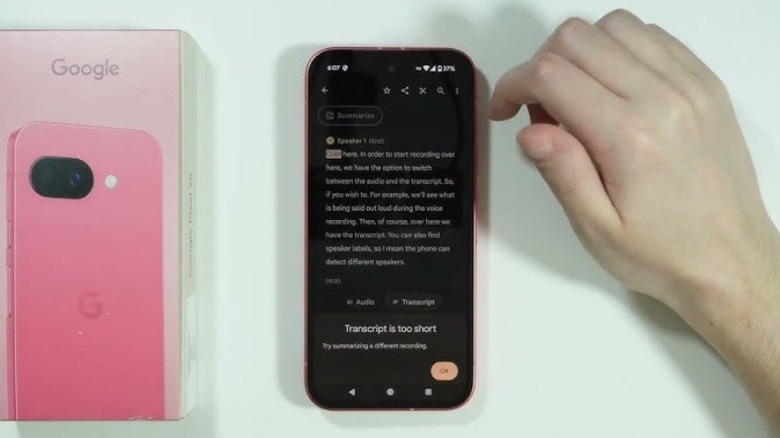
Beyond just summaries, the app now uses smart tagging to identify more than just voices. It can detect and label sounds like laughter, applause, music, or even background sirens. When you are scrolling through a long recording, these tags act as visual anchors, helping you find that moment when the whole room laughed at a joke or when the background noise became too distracting. It’s this level of ai voice recorder for meetings optimization that keeps users coming back; in fact, statistics show users are now accessing AI-powered summaries an average of 2 to 5 times per day.
3. Generative AI Background Music
In what might be the "coolest" update for 2026, the Pixel 10 has introduced generative background tracks. While this might sound like a gimmick, it is incredibly useful for content creators. If you are recording a voiceover for a social media reel or a quick update for your team, the app can generate a custom, royalty-free music bed based on the "mood" of your recording.
Options like Chill Beats or Rainy Day Blues allow you to quickly polish a rough voice memo into something that sounds professionally produced. The app analyzes the pace and tone of your speech to ensure the music doesn't overwhelm your voice. It’s a specialized feature that moves the google ai voice recorder from a work tool into the creative space.
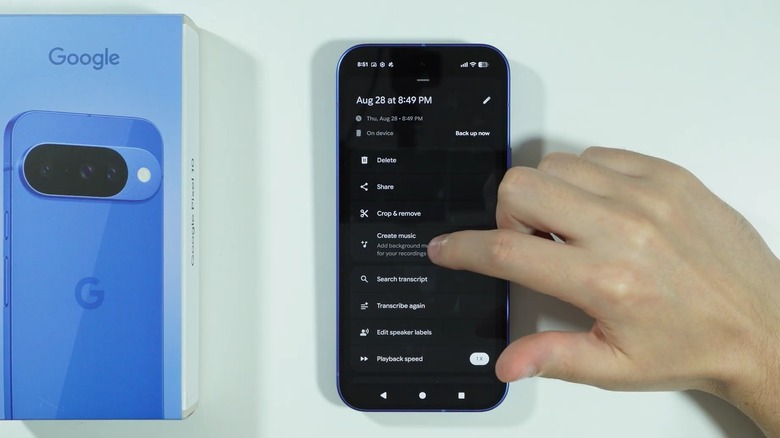
Pro Tip: Use the Generative AI music feature for internal company announcements. It adds a layer of professional polish that makes even a Monday morning update feel a bit more engaging for the team.
4. Advanced Speaker Labeling & Diarization
We have all been in meetings where several people talk over each other. Most ai voice recorder app solutions struggle here, resulting in a wall of text. However, the Pixel Recorder supports real-time speaker diarization and labeling for continuous audio recordings of up to 18 hours.
What makes this special in 2026 is the pixel recorder speaker label accuracy. Using the Universal-3 Pro model, the app hits a 94.1% word accuracy rate and can distinguish between up to eight different speakers with sub-300ms latency. Because this is processed fully on the device, you don't have to worry about the delay or privacy concerns of sending your audio to a remote server. You can literally watch the app assign "Speaker 1" and "Speaker 2" labels in real-time as you sit in a café.
5. Global Translation & Multilingual Transcription
For those of us working in global teams, the google recorder app translation features are a lifesaver. The app now supports real-time transcription in over 28 languages, including high-fidelity support for Mandarin, Hindi, Japanese, and French.
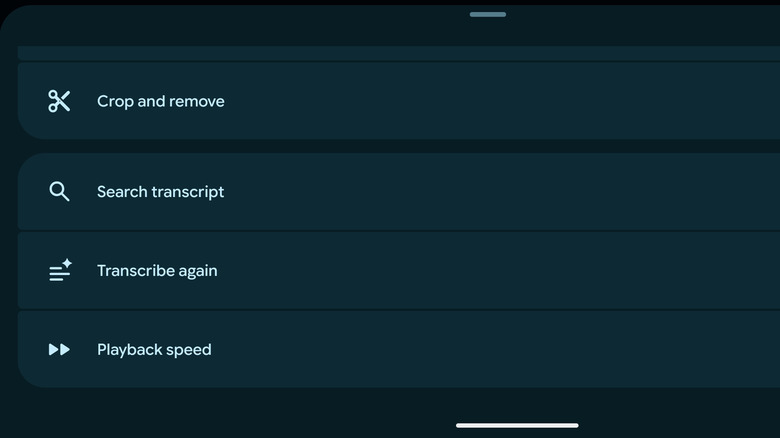
One hidden gem here is the ability to re-transcribe existing recordings. If you recorded a meeting in English but need to share the notes with a colleague in Tokyo, you can tell the app to re-process the audio into Japanese. It doesn't just translate the text; it re-analyzes the audio phonemes to ensure the highest possible transcript quality in the target language.
6. Creating Shareable Video Snippets
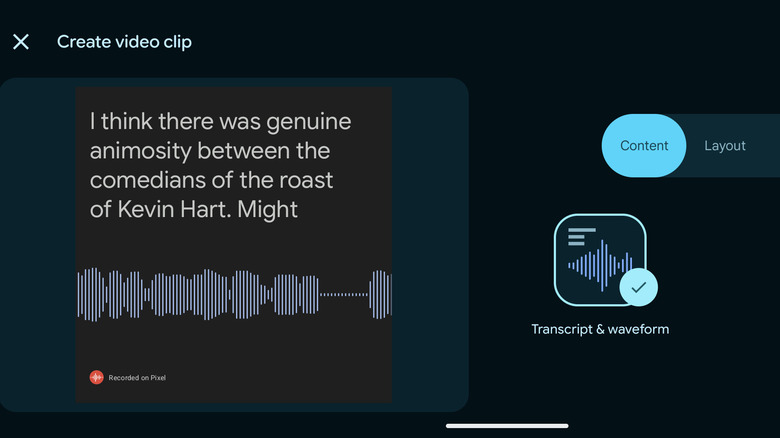
Visual communication is king, and Google knows it. Instead of sending someone a raw audio file that they probably won't listen to, you can use the Pixel app to generate shareable snippet visualizer for recordings.
These are short video clips—perfect for Instagram or Slack—that include a dynamic waveform visualizer and a rolling transcript of what is being said. It allows you to highlight a specific "aha!" moment from a meeting or a funny quote from a friend. By turning audio into a visual format, you increase the chances of your message actually being consumed by your audience. It’s a "bot-free" way to share professional insights without needing third-party video editors.
7. Cloud Management via Recorder Web Portal
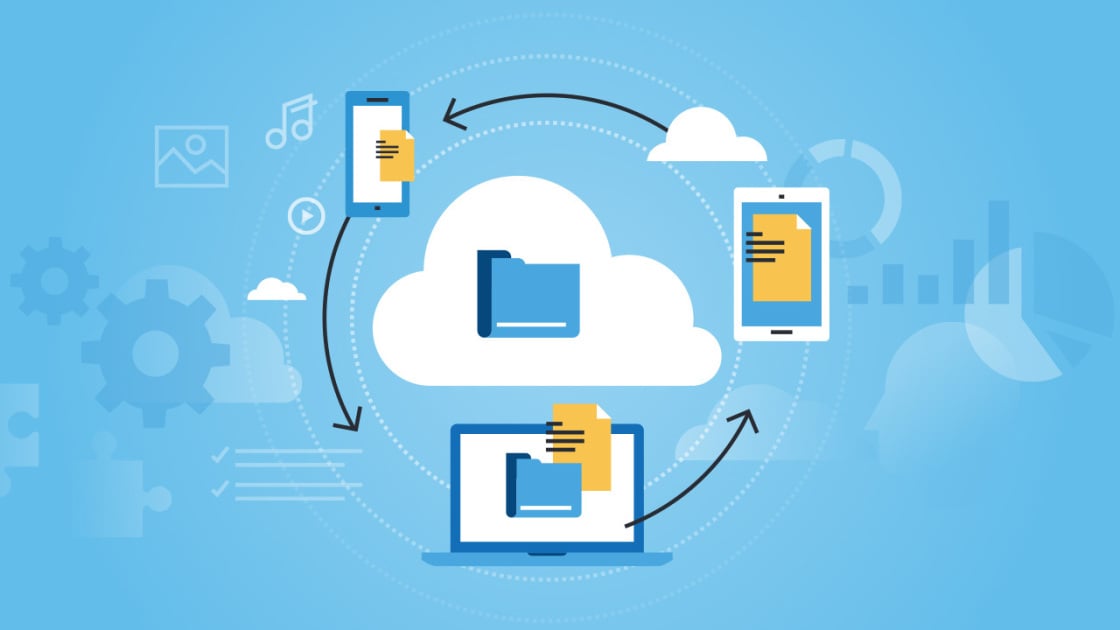
While the mobile app is where the magic happens, the web portal at recorder.google.com is where the long-term organization occurs. Many users forget that their recordings are automatically synced to the cloud, enabling them to search for specific phrases across their entire library from a laptop.
If you remember someone mentioning "budget projections" six months ago but can't remember which meeting it was in, you can simply type that phrase into the search bar on the web portal. It will scan your entire digital archive and point you to the exact second that phrase was uttered in any of your hundreds of recordings. This cross-device synchronization makes the ai voice recorder a powerful tool for building a personal knowledge base.
8. Bot-Free Privacy Advantage
Finally, let’s talk about etiquette. There is a growing fatigue with "meeting bots" from services like Otter or Fireflies that join Zoom calls uninvited. It can feel invasive and often disrupts the flow of a natural conversation.
The Pixel ai voice recorder for meetings offers a massive privacy advantage because it is "bot-free." It lives on your phone, sitting on the table, recording only what you want it to. Because it processes everything on-device, there is no third-party "bot" presence in your calendar or your calls. This makes it a much more polite and professional choice for sensitive creative sessions or high-stakes business negotiations.
Technical Specification
- Hardware Requirement: Pixel 8, 9, or 10 series recommended for Gemini Nano features.
- On-Device Storage: Transcription files are small, but audio is saved in high-quality .m4a format.
- Transcription Limit: Up to 18 hours per single recording file.
- Summary Limit: 41 minutes for multimodal Gemini Nano; 15 minutes for basic Gemini Nano.
- Battery Impact: Optimized for background recording; consumes roughly 4-6% battery per hour of active transcription.
FAQ
What is an AI voice recorder and how does it work?
An ai voice recorder is a mobile application or hardware device that uses machine learning models, like Large Language Models, to more accurately capture speech. Unlike traditional recorders that just save audio files, these apps use on-device processing to understand the context of what is being said, allowing for real-time dictation and smart features like summarization.
Can an AI voice recorder automatically transcribe audio to text?
Yes, the Pixel ai voice recorder to text feature works in real-time as you speak. It uses advanced phoneme recognition to convert audio waves into written words instantly. In 2026, these transcripts have gotten so accurate that they can even recognize industry-specific jargon and proper nouns with 94.1% accuracy.
Can an AI voice recorder summarize long recordings for me?
Absolutely. On the latest Pixel devices, the ai voice recorder for meetings uses a multimodal version of Gemini Nano to generate automated summaries. Once a recording is finished, you can tap the summary button, and the AI will provide a bulleted list of the main topics discussed, even for recordings up to 41 minutes long.
Do AI voice recorders work offline or require an internet connection?
Mainstream apps usually require a cloud connection for heavy processing, but the Pixel app is unique because it is designed for offline use. You can transcribe, label speakers, and even generate summaries without an internet connection, which is a major privacy and reliability benefit for travelers.
Can an AI voice recorder distinguish between different speakers?
Yes, this process is known as speaker diarization. The Pixel recorder app uses an on-device model to analyze the unique pitch and cadence of different voices. It can label up to eight different speakers in a single session, making it the best ai voice recorder and transcriber for group settings like university seminars or board meetings.