When the Orion capsule slammed into the Earth’s atmosphere on December 11, 2022, traveling at a staggering 25,000 miles per hour, it was hailed as a triumphant conclusion to the Artemis I mission. To the casual observer, the scorched, blackened hull bobbing in the Pacific was a badge of honor—proof that NASA’s deep-space chariot could survive the 5,000°F gauntlet of reentry. However, as engineers began peeling back the layers of the heat shield at the Kennedy Space Center, they discovered a narrative far more troubling than the public victory lap suggested.
The primary safety concern for the upcoming Artemis II mission—the first crewed lunar flight in over half a century—revolves around the Orion spacecraft’s heat shield. During the uncrewed Artemis I reentry, the protective material experienced unexpected "char liberation," leaving behind material cavities that were never predicted in pre-flight simulations. While NASA intends to mitigate these risks by altering the spacecraft’s entry trajectory to manage heat loads differently and utilizing advanced arc jet testing to model material response, the stakes remain incredibly high. With the Artemis II crewed flyby currently scheduled for no earlier than February 6, 2026, the space agency finds itself in a high-stakes race to resolve five critical safety recommendations from the NASA Office of Inspector General (OIG) before four human lives are placed atop the Space Launch System rocket.
The Artemis I Post-Mortem: A Successful Flight with a Hidden Warning
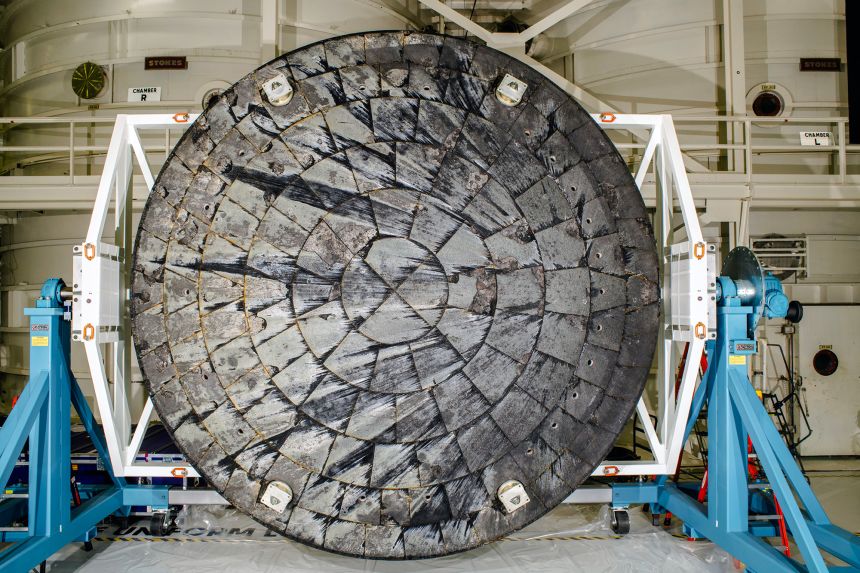
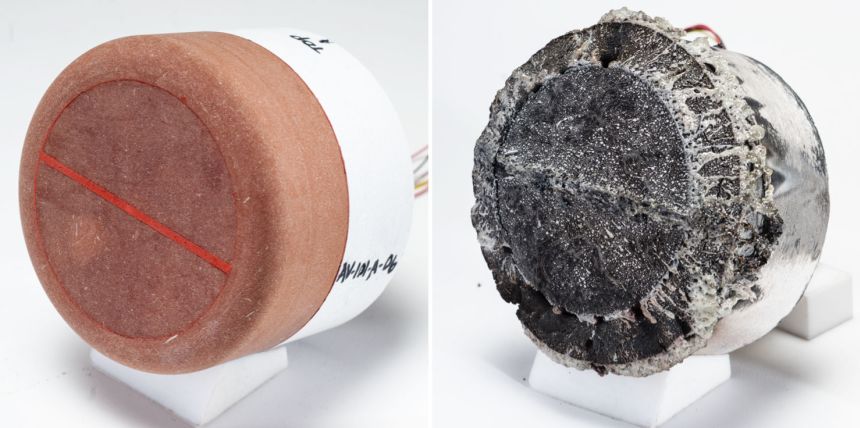
Artemis I was, by most metrics, a resounding success. It proved the viability of the Space Launch System (SLS) and demonstrated that Orion could navigate to the moon and back. Yet, the "post-mortem" investigation revealed that the heat shield did not behave as expected. Instead of ablating—wearing away slowly and uniformly to carry heat away from the cabin—chunks of the charred protective layer broke off prematurely.
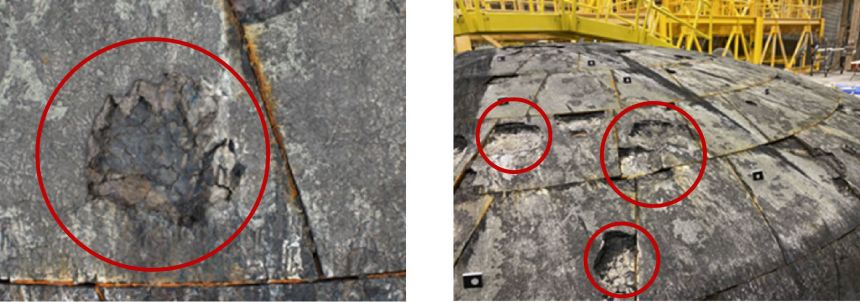
This phenomenon, known as char liberation, created small pits and cavities in the shield. While the interior of the capsule remained safe during Artemis I, the unpredictability of the erosion is what keeps safety investigators awake at night. If larger pieces of the shield were to break away during a crewed mission, it could lead to localized "hot spots" where the underlying structure is exposed to plasma temperatures rivaling half the surface of the sun.
The Core Issue: Why the Avcoat Heat Shield is Failing
The material at the center of the controversy is Avcoat, an ablative substance that NASA has utilized for the Orion program since its selection in 2009. This marks a 15-year development cycle, yet the transition from the Apollo era to the modern Artemis era has introduced new complexities.
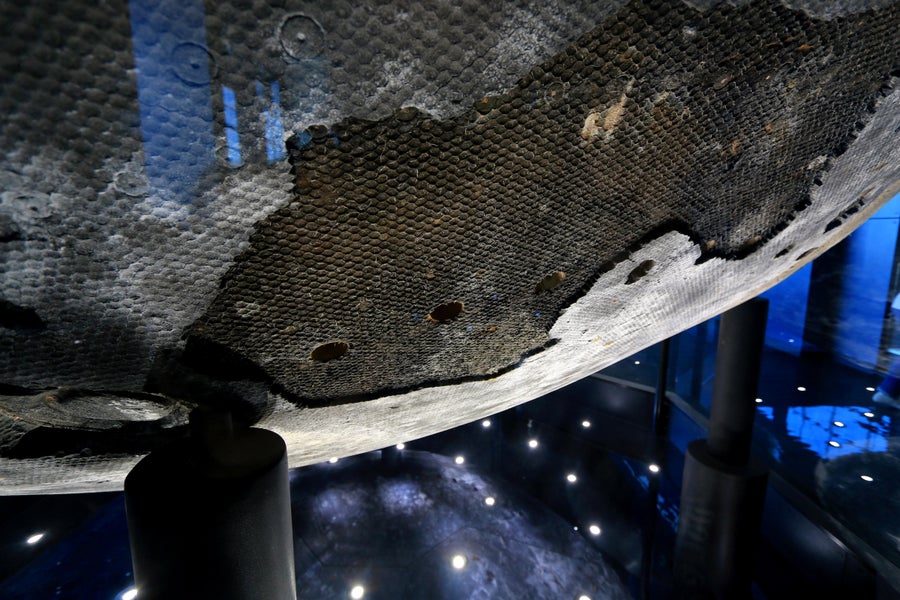
In the 1960s, the Apollo heat shields featured a honeycomb structure with over 360,000 individual cells, each hand-filled with resin. For Orion, NASA moved to a "block" design, where less than 200 large, pre-molded tiles are bonded to the capsule. This shift was intended to simplify manufacturing and reduce weight, but it may have fundamentally changed how the material handles the mechanical stresses of atmospheric friction.
The data: 100+ locations where material wore away unexpectedly
The NASA OIG report was blunt: inspectors identified over 100 locations where the Avcoat material failed to ablate as intended. These weren't just surface scuffs; they were deep cavities where the material had literally "popped" off the shield. When dealing with the thermal protection system (TPS), uniformity is everything. Even a single deep cavity can create turbulence in the surrounding plasma flow, leading to an exponential increase in heat at that specific point.
A Comparison of Engineering: Apollo vs. Artemis
| Feature | Apollo Heat Shield (1960s-70s) | Orion Heat Shield (Artemis) |
|---|---|---|
| Material | Avcoat (Hand-filled Honeycomb) | Avcoat (Large Bonded Blocks) |
| Structure | 360,000+ small cells | <200 large tiles |
| Reentry Speed | ~24,500 mph | ~25,000 mph |
| Design Philosophy | Redundancy through cell isolation | Efficiency through large-scale bonding |
More Than Just a Shield: Secondary Critical Flaws
While the heat shield has dominated the headlines, the OIG report highlighted several other "critical" anomalies that suggest the Orion spacecraft is still a work in progress. These issues, if left unaddressed, represent a cumulative risk that could jeopardize the mission.
- Separation Bolts: During the Artemis I mission, engineers discovered unexpected melting and erosion on the bolts that separate the crew module from the service module. These gaps could allow hot plasma to seep into areas of the craft not designed to withstand such temperatures.
- Power Distribution: The capsule experienced 24 instances of power distribution anomalies. NASA traced these back to radiation interference, which caused "trips" in the electrical system. In a crewed scenario, a loss of power to propulsion or life support systems is a "loss of crew" event.
- Ground Systems: The sheer power of the SLS launch caused $26 million in damage to Mobile Launcher 1—five times the original repair estimate. This included damage to elevators and blast shields that are essential for crew ingress and emergency egress.
- Communication Gaps: The Deep Space Network (DSN), the aging backbone of NASA’s interplanetary communication, is showing signs of deterioration. Telemetry dropouts during Artemis I highlighted a need for significant hardware upgrades to ensure the Artemis II crew stays in constant contact with Mission Control.
NASA’s Controversial Fix: Trajectory Over Hardware
Perhaps the most controversial aspect of the Artemis II mission is NASA's decision not to replace the heat shield. To do so would require stripping the capsule to its frame, a process that would likely push the launch date into 2027 or 2028 and add hundreds of millions to the budget.
Instead, NASA is opting for a "trajectory mitigation" strategy. The plan is to alter the entry profile of the capsule. By changing the angle at which Orion hits the atmosphere, NASA believes it can manage the heat load in shorter, more intense bursts rather than a sustained "slow cook."
Expert Insight: "NASA is essentially gambling on their ability to model the chaos of atmospheric reentry. They are relying on arc jet testing—simulating heat with high-powered plasma torches in a lab—to predict how the Avcoat will behave. But a lab is not the vacuum of space, and a torch is not the Earth's atmosphere." — Summary of independent aerospace engineering critiques.
The Safety Debate: NASA Confidence vs. Expert Skepticism
Within the agency, the official stance is one of "calculated confidence." NASA Chief Jared Isaacman and mission managers have repeatedly stated that the data from Artemis I, while unexpected, provides enough of a "safety margin" to proceed with a crew. They argue that because the capsule structure remained cool despite the char liberation, the shield technically "worked."
However, not everyone agrees. Dr. Charlie Camarda, a former NASA astronaut and expert in thermal structures, has been a vocal critic of this approach. He has characterized the decision to proceed without a root-cause fix as "kicking the can down the road." The OIG has backed this concern by issuing five mandatory recommendations, including a requirement that NASA complete a full root-cause analysis of the heat shield degradation and prove that the redesigned trajectory is safe before the 2026 launch.
The Countdown to 2026: What Happens Next?
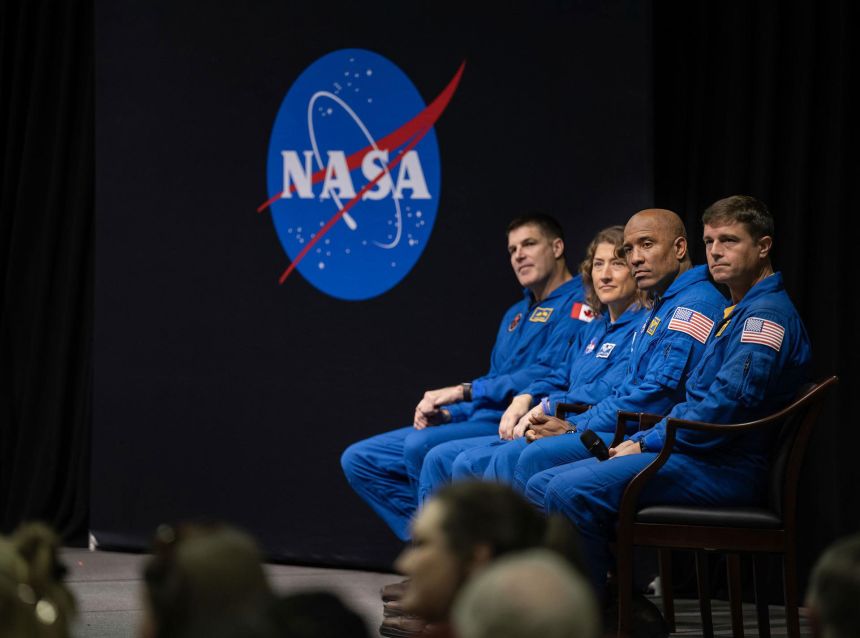
The Artemis II mission is currently slated for February 2026. For the four astronauts selected for the mission—Reid Wiseman, Victor Glover, Christina Koch, and Jeremy Hansen—the next two years will be a period of intense training and, likely, lingering questions.
NASA is currently in the "testing and verification" phase. This involves hundreds of hours of arc jet testing at the Ames Research Center and high-fidelity computer modeling. The agency must convince not just itself, but the OIG and the broader scientific community, that they aren't repeating the mistakes of the past.
Ultimately, the Artemis program represents a $55 billion investment in the future of human exploration. Balancing that massive political and financial momentum against the razor-thin margins of astronaut safety is the hardest job in Washington. As we approach the 2026 launch, the ghost of Columbia looms large—a reminder that in spaceflight, what you don't know can hurt you.
FAQ
Q: Why can't NASA just build a new heat shield for Artemis II?
A: The Orion capsule for Artemis II is already largely assembled. Replacing the heat shield would require a complete "de-stacking" and reconstruction of the thermal protection system, which would delay the mission by at least two years and significantly increase costs. NASA believes the current shield is safe if the reentry trajectory is managed correctly.
Q: What exactly is "char liberation"?
A: It is a phenomenon where the outer, charred layer of an ablative heat shield breaks off in chunks rather than wearing away smoothly. This creates pits or cavities that can potentially cause uneven heating and structural risks to the capsule.
Q: Is the Artemis II mission still going to the moon?
A: Yes, the mission plan remains a lunar flyby. The crew will not land on the moon (that is reserved for Artemis III), but they will travel further into deep space than any human has ever gone, looping around the far side of the moon before returning to Earth.