In the high-stakes ecosystem of Hollywood blockbusters, we often operate under the assumption that legendary figures like Steven Spielberg are the primary architects of every project they touch. We envision studios waiting in line to present their most prized intellectual properties to the man who gave us Jaws, Jurassic Park, and E.T. However, the development history of the 2018 sci-fi spectacle Ready Player One presents a fascinating anomaly. Before the keys to the OASIS were handed to Spielberg, they were offered—twice—to a young director who, at the time, was being hailed as the next great cinematic visionary: Josh Trank.
The irony is palpable. In the narrative of modern cinema, Spielberg eventually took over a project that a 26-year-old newcomer had rejected. To understand how the industry reached this junction, one must look past the box office receipts and into the volatile mechanics of career trajectories, creative ego, and the "what-ifs" that define Hollywood's development hell.
The Unlikely Second Choice: Spielberg and the OASIS
When Warner Bros. secured the film rights to Ernest Cline’s nostalgia-heavy novel in 2010, the industry expectation was a director who could navigate both high-concept visual effects and deep-seated 1980s pop culture. While Spielberg was the ultimate inspiration for much of that culture, he wasn't the first person the studio pursued.
Before Steven Spielberg officially signed on in 2015, Josh Trank was the first choice. Having just disrupted the superhero genre with his indie-style hit Chronicle, Trank was the industry’s most sought-after "wunderkind." Warner Bros. approached him twice to direct the adaptation, viewing him as a filmmaker who could bring a contemporary, grounded edge to Cline’s hyper-stylized digital world.
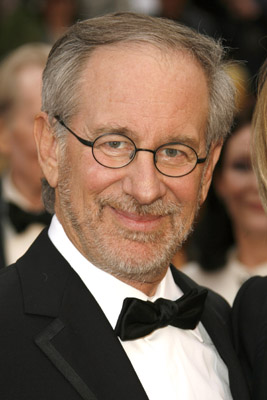
The decision to approach a novice over a master suggests a specific era in studio thinking: the desire for "gritty" realism, even in fantastical settings. Trank’s rejection of the project remains one of the more curious footnotes in recent film history, especially considering the divergent paths the two directors took shortly thereafter.
The Rise of Hollywood’s Wunderkind: The Chronicle Era
To appreciate why Warner Bros. was so insistent on Trank, one must look at the data surrounding his directorial debut. In 2012, Chronicle—a found-footage superhero film made on a modest $12 million budget—became a global phenomenon. It didn't just succeed; it shattered records and established a new benchmark for young filmmakers.
Josh Trank’s success was not merely critical; it was statistical. At age 26, Trank became the youngest filmmaker to direct a movie that opened at number one at the US box office. In doing so, he surpassed a record previously held by Steven Spielberg himself, who was 28 when Jaws changed the industry forever in 1975.
The Debut Record Comparison
| Feature | Josh Trank (Chronicle) | Steven Spielberg (Jaws) |
|---|---|---|
| Director Age at Release | 26 | 28 |
| Opening Weekend (Domestic) | $22 Million | $7 Million (1975 value) |
| Total Worldwide Gross | $126.6 Million | $476.5 Million |
| Box Office Ranking | #1 | #1 |
Chronicle earned a staggering $126.6 million worldwide, a return on investment that made Trank the "Golden Boy" of the early 2010s. His style—characterized by handheld cameras, psychological tension, and a rejection of traditional cinematic polish—was exactly what studios thought the "next generation" of audiences wanted. It was this specific momentum that gave him the leverage to say "no" to one of the biggest IPs on the market.
Turning Down the Keys to the OASIS
The question remains: Why did Josh Trank turn down Ready Player One? In subsequent interviews and industry post-mortems, the answer lies in a combination of creative confidence and a desire for original control. At the height of his Chronicle success, Trank was wary of being pigeonholed into "corporate" filmmaking.
Trank rejected the project twice because he felt his creative voice was better suited for projects where he could maintain a "found-footage" or gritty aesthetic, rather than the polished, CGI-heavy spectacle that Ready Player One demanded. He was also, at the time, pivoting toward other massive franchises, specifically the Fantastic Four reboot for 20th Century Fox and a then-secret Star Wars standalone film centered on Boba Fett.
From an objective industry standpoint, Trank’s rejection was a gamble on his own auteur status. He chose the "reimagining" of a classic Marvel property (Fantastic Four) over the "adaptation" of a new literary phenomenon (Ready Player One). In retrospect, it was a decision that would alter the course of his career permanently.
A Career in Flux: Josh Trank’s Timeline (2012–2015)
The three-year window following Chronicle represents one of the most dramatic rises and falls in modern Hollywood history.
- February 2012: Chronicle releases to critical acclaim; Trank becomes the youngest director with a #1 film.
- Late 2012: Warner Bros. makes the first offer for Ready Player One; Trank declines.
- 2013: Trank signs on to direct Fantastic Four, promising a "grounded, body-horror" take on the superhero team.
- 2014: Warner Bros. makes a second attempt to recruit Trank for the OASIS; he declines again.
- June 2014: Disney/Lucasfilm announces Trank will direct a Star Wars standalone film.
- May 2015: Rumors of a "disastrous" Fantastic Four set begin to circulate; Trank exits the Star Wars project.
- August 2015: Fantastic Four is released to a dismal 9% on Rotten Tomatoes.
The fallout was swift. The critical and commercial failure of Fantastic Four led to what many insiders call Trank's "Hollywood movie jail" period. The very traits that made him attractive to studios—his uncompromising vision and youthful confidence—were suddenly reframed as "difficult" and "unprofessional."
Two Diverging Paths: The Gritty vs. The Grand
When Steven Spielberg eventually took the helm of Ready Player One, he brought a diametrically opposed philosophy to the project. Where Trank might have emphasized the bleak, dystopian reality of Columbus, Ohio, in 2045 with a handheld, visceral feel, Spielberg leaned into the "CGI extravaganza."
Spielberg’s version of the OASIS was a love letter to the very cinema he helped create. He masterfully balanced the "real world" gloom with a neon-soaked, high-octane digital playground. The film’s success (grossing $583 million worldwide) proved that audiences weren't looking for a gritty deconstruction of the OASIS; they wanted the spectacle that only a master of the craft could deliver.
"Josh Trank’s rejection of the material allowed the film to return to its spiritual roots. Spielberg didn't just direct the movie; he was the context for the movie. Without his visual vocabulary, the OASIS would have felt like a hollow simulation." — Industry Analyst Perspective
The contrast in styles is most evident when comparing the visual language of Trank’s Chronicle—dark, claustrophobic, and grounded in "accidental" footage—with Spielberg’s sweeping, panoramic cinematography in Ready Player One. Trank sought to make the extraordinary feel ordinary; Spielberg sought to make the ordinary feel magical.
The Legacy of the Adaptation and the Future of the Franchise
Today, Ready Player One stands as a definitive entry in the 2010s sci-fi canon. It managed to navigate the dense forest of licensing rights (featuring characters from The Shining, Back to the Future, and Halo) in a way that likely would have been impossible for a younger, less established director to manage. Spielberg’s industry clout was the "Skeleton Key" that opened the doors for those cameos.
As for the future, the franchise remains in a state of flux. While Ernest Cline released the sequel novel, Ready Player Two, in 2020, a film adaptation has yet to enter formal production. Spielberg has indicated he will likely serve as a producer rather than a director for any future installments, opening the door once again for a new directorial voice.
Josh Trank, meanwhile, has slowly begun to re-emerge, directing the 2020 film Capone starring Tom Hardy. While far removed from the $200 million budgets of the OASIS, it represents a return to his roots: character-driven, uncompromising, and decidedly un-corporate.
The history of Ready Player One serves as a sobering reminder of the volatility of the film industry. It is a story of records broken, opportunities declined, and the enduring power of a veteran master to reclaim a narrative that was almost handed to his successor.
FAQ
Who was originally offered the chance to direct Ready Player One?
Before Steven Spielberg signed on in 2015, Josh Trank was the first choice. Warner Bros. approached the Chronicle director twice during the peak of his early career success.
Why didn't Josh Trank direct Ready Player One?
Trank turned down the project twice because he was focused on other high-profile projects, including the Fantastic Four reboot and a planned Star Wars spinoff. He also reportedly preferred creative control over projects that aligned more closely with his gritty, found-footage aesthetic.
What is the age record between Josh Trank and Steven Spielberg?
At age 26, Josh Trank became the youngest director to have a film (Chronicle) open at number one at the US box office. He broke the record previously held by Steven Spielberg, who was 28 when Jaws achieved the same feat.
How did the Fantastic Four reboot affect Josh Trank’s career?
The 2015 Fantastic Four reboot was a critical and commercial failure, earning only a 9% rating on Rotten Tomatoes. This led to Trank’s departure from the Star Wars Boba Fett project and a period of professional isolation often referred to as "Hollywood movie jail."
Are you interested in the latest updates on film production and destination filming locations? Explore the World of Ready Player One →