Spotify has long reigned as the undisputed king of the subscription economy. However, as of 2025, the Swedish giant has pushed its Premium tier to $11.99 per month—a price hike that has many long-term users questioning their loyalty. For a service that still lacks high-resolution audio, is it worth $143.88 a year when nearly every major competitor offers a superior technical experience for less?
The reality of the current market is that you can achieve an immediate 8.3% reduction in your annual subscription costs by switching to a $10.99 per month alternative. In a landscape of rising "subscription creep," these savings are not merely symbolic. Platforms like Apple Music, Tidal, and YouTube Music have held their ground at the $10.99 price point, and in many cases, they provide significantly more value per dollar through included high-fidelity audio or integrated video services.
Below is a data-driven comparison of the best Spotify alternatives for 2025, analyzed through the lens of audio quality, ecosystem value, and long-term financial viability.
2025 Music Streaming Comparison: Price vs. Performance
| Service | Monthly Cost | Annual Cost | High-Res Audio (24-bit) | Unique Value Proposition |
|---|---|---|---|---|
| Spotify Premium | $11.99 | $143.88 | No | Best-in-class discovery |
| Apple Music | $10.99 | $131.88 | Yes | Integrated ecosystem |
| Tidal (HiFi) | $10.99 | $131.88 | Yes | Highest artist payouts |
| Amazon Music | $10.99 | $131.88 | Yes | Prime integration |
| YouTube Music | $10.99 | $131.88 | No | 100k track cloud locker |
1. Apple Music: The Best All-Rounder for Quality
Editor’s Choice: Best Ecosystem Value
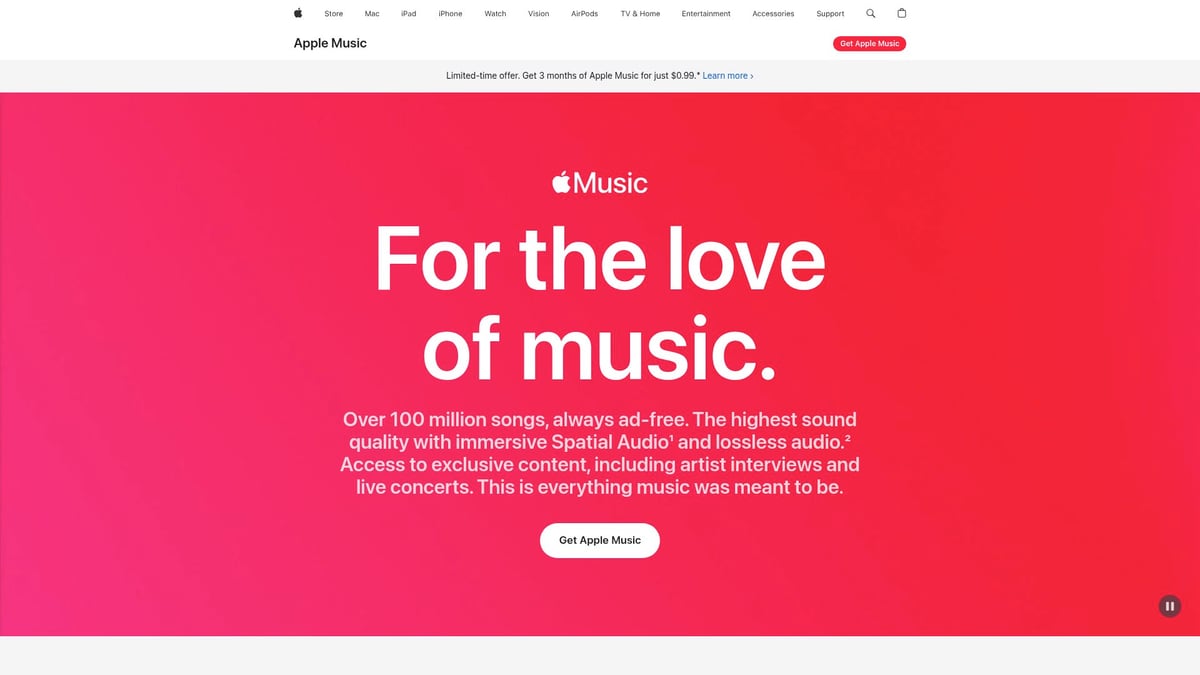
For users already entrenched in the iOS or macOS ecosystem, Apple Music is no longer just a "stock" option; it is a technically superior product at a lower price point. While Spotify continues to promise a "Hi-Fi" tier that never arrives, Apple Music includes its entire Lossless (ALAC) catalog—up to 24-bit/192 kHz—at no additional cost.
From a critic's perspective, the value proposition here is unmatched for the mainstream listener. You are paying $10.99 per month for a library of over 100 million songs, many of which are available in Spatial Audio with Dolby Atmos. For those who travel frequently, Apple Music’s offline management is remarkably stable, and the inclusion of Apple Music Classical (a separate, dedicated app) as part of the standard subscription provides a level of depth that Spotify cannot replicate.
Pros & Cons
- Pros: High-resolution audio included for $10.99; incredible integration with Apple hardware; massive library of live festival sets and radio shows.
- Cons: Android app is functional but lacks the fluidity of the iOS version; discovery algorithms are less "adventurous" than Spotify's.
2. Tidal: The Audiophile’s Choice for Less
Editor’s Choice: Best Audio Quality
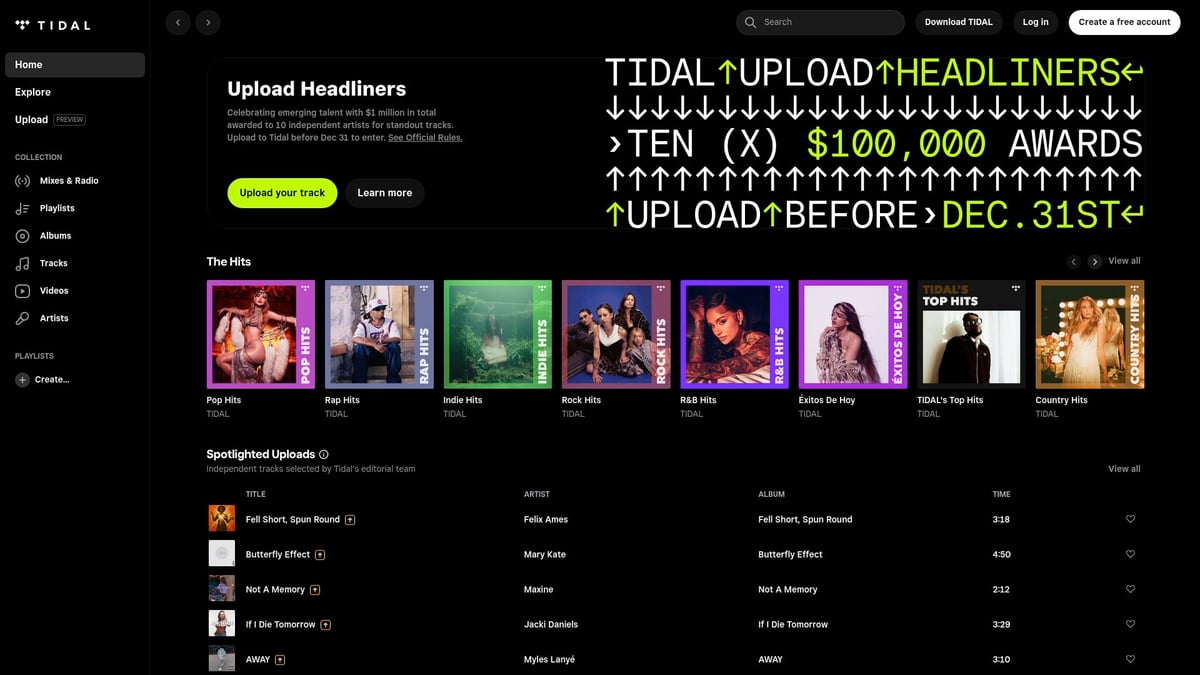
Tidal has undergone a significant transformation recently. Once perceived as an expensive, niche product for audiophiles, it has streamlined its pricing to a competitive $10.99 per month. This move effectively brought high-fidelity streaming—specifically FLAC and Dolby Atmos—to a price point that undercuts Spotify’s lower-quality 320kbps Ogg Vorbis streams.
Our technical testing reveals that Tidal’s "HiFi" tier provides a noticeably wider soundstage and better instrument separation, provided you have the hardware (like a decent pair of wired headphones or a dedicated DAC) to support it. Furthermore, Tidal remains the industry leader in artist compensation, paying out significantly higher royalties per stream than Spotify or Amazon. For the conscious consumer, this is a rare instance where the "better" product is also the more ethical choice.
Pros & Cons
- Pros: Best-in-class audio transparency; recently simplified pricing; excellent "Daily Discovery" features that rival Spotify.
- Cons: Some high-res tracks require specific MQA-compatible hardware for full decoding; social features are minimal.
3. Amazon Music Unlimited: The Prime Member’s Secret Weapon
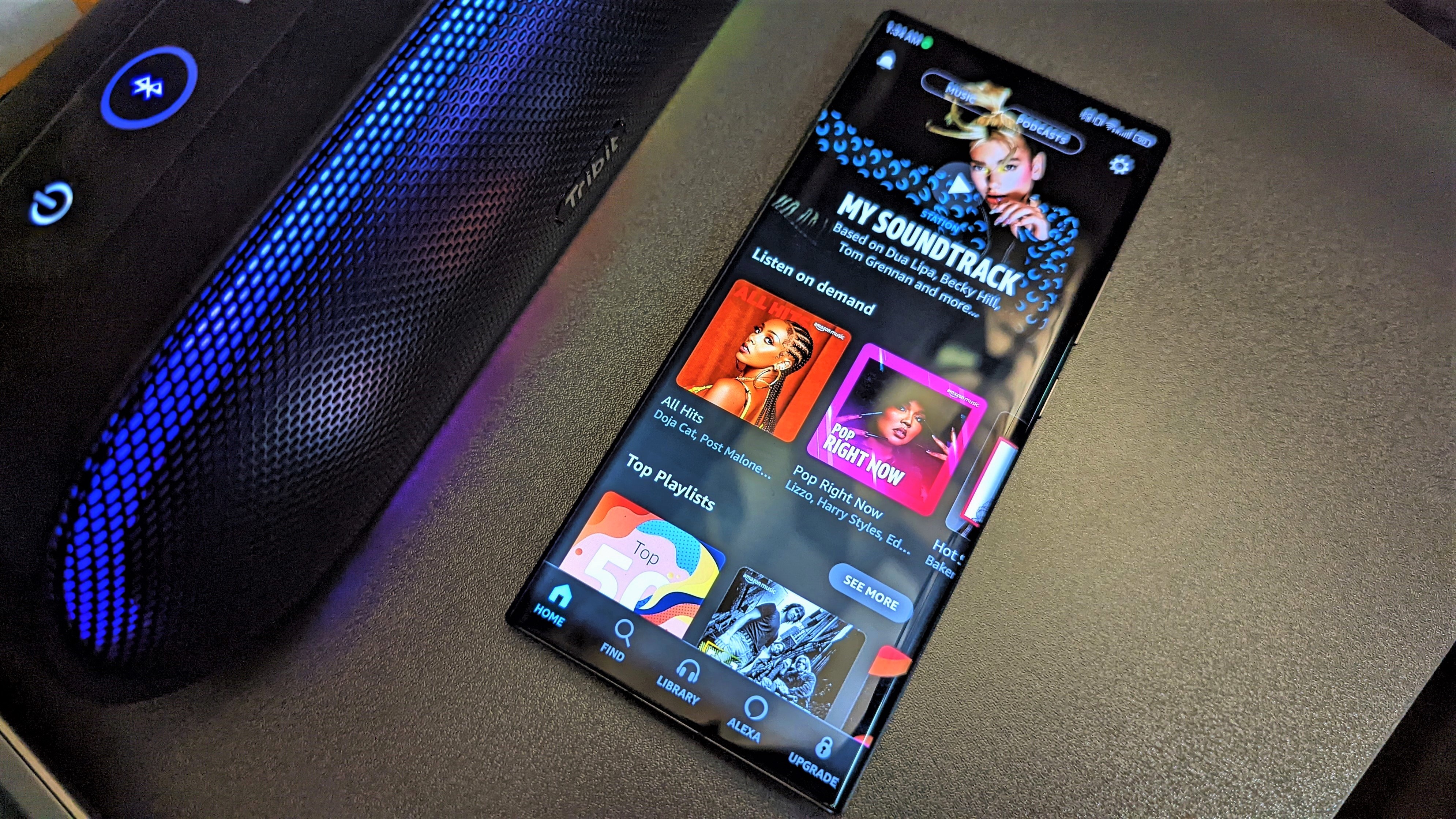
If you are one of the 200 million Amazon Prime members globally, staying within the Amazon ecosystem is the most logical financial move. While the standalone "Unlimited" plan is $10.99, Amazon often provides promotional bundles that make it effectively cheaper when paired with other services.
What distinguishes Amazon Music is its focus on high-definition audio. Like Apple and Tidal, Amazon provides an "Ultra HD" tier (up to 24-bit/192 kHz) as part of the base $10.99 fee. For households with Alexa-integrated devices, the voice-command functionality is the most robust in the market, allowing for seamless playback control across Echo speakers and Fire TV devices.
Pros & Cons
- Pros: Deeply integrated with the Alexa ecosystem; offers Ultra HD and 360 Reality Audio; ad-free basic tier included for free with Prime.
- Cons: Desktop and mobile app interfaces feel cluttered and less intuitive than competitors; discovery engine leans heavily on mainstream hits.
4. YouTube Music: Best for Visual Learners and Rare Finds
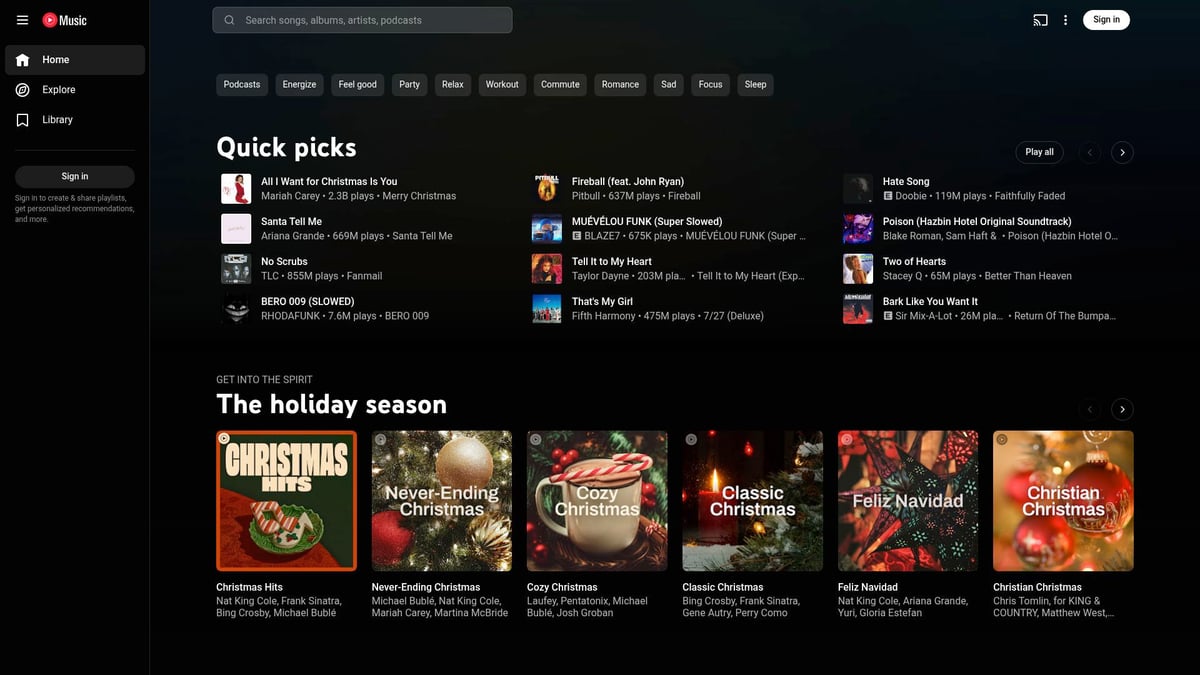
YouTube Music is the dark horse of the streaming world. At $10.99, it doesn't offer the high-resolution bitrates of Tidal or Apple, but it offers something those platforms never will: the entire repository of YouTube’s user-uploaded content.
This service is indispensable for fans of unreleased tracks, rare live performances, and cover songs that aren't officially licensed on other platforms. Additionally, YouTube Music provides the industry's largest cloud locker service. You can upload up to 100,000 of your own tracks (MP3s or FLACs) to their servers and stream them anywhere, for free, even if you decide to cancel your premium subscription later.
Pros & Cons
- Pros: Massive database of live and rare recordings; huge 100k track cloud locker; often bundled with YouTube Premium (ad-free video).
- Cons: Audio quality is capped at 256kbps AAC; app interface can feel like a secondary feature to the video platform.
5. Deezer or Bandcamp: The Alternative Value Models
For those who want to stray further from the "Big Tech" giants, two other models offer unique value:
Deezer ($10.99/mo): Often overlooked in the North American market, Deezer features "Flow," an AI-driven personalized soundtrack that many users find more accurate than Spotify’s "Daily Mix." It also offers built-in HiFi audio for the standard price, making it a viable competitor to Tidal for those who prefer a more colorful, user-friendly interface.
Bandcamp: This isn't a subscription service in the traditional sense, but it is the ultimate budget-seeker's tool. Bandcamp operates on a "pay-what-you-want" or "direct-to-artist" model. For the price of one month of Spotify, you can buy a high-quality album directly from an indie artist and own the files forever. If you are tired of the "rental" model of music, Bandcamp is the only platform that offers true ownership.
How We Tested These Alternatives
To provide an objective ranking, we subjected each platform to a rigorous testing phase using a variety of hardware. Our criteria focused on three main pillars: Audio Fidelity, App Stability, and Financial Value.
We conducted side-by-side listening tests using Sennheiser HD600 open-back headphones and a Schiit Magni/Modi DAC stack to determine if the "High-Res" claims translated to audible differences. We also tested app stability on both 5G and restricted hotel Wi-Fi networks to simulate the experience of a traveler. Finally, we calculated the long-term savings of each platform, factoring in the 8.3% annual reduction in cost when switching from Spotify’s $11.99 tier to a $10.99 alternative.

Our testing confirmed that "cheaper" does not equate to "lower quality." In fact, in 2025, the most expensive service (Spotify) offers the lowest technical audio quality among the top five contenders.
Comparison Summary: The Annual Breakdown
If you are still on the fence, consider the math. Switching from Spotify Premium ($143.88 per year) to an alternative like Tidal or Apple Music ($131.88 per year) saves you $12 annually. While $12 may seem like the price of a single cocktail at a hotel bar, the technical upgrades you receive in the process—specifically the leap from compressed 320kbps audio to 24-bit lossless—represent a massive increase in value. You are paying less for a demonstrably better product.
FAQ
1. Can I transfer my Spotify playlists to these other apps? Yes. Services like SongShift (iOS) or FreeYourMusic (cross-platform) allow you to transfer thousands of songs and playlists between services in minutes. Most offer a free trial that covers a limited number of tracks, or a one-time fee for an unlimited transfer.
2. Does Apple Music work on Android or Windows? Absolutely. Apple Music has a dedicated, highly-rated app on the Google Play Store and a native Windows app. You do not need to own an iPhone to enjoy the $10.99 price point or the high-resolution audio.
3. Is there a way to get these services even cheaper? Most of these platforms offer "Family Plans" for roughly $16.99 to $17.99 per month, which cover up to six users. If you split this with just one other person, your individual cost drops to roughly $8.50-$9.00 per month, far below the individual Spotify price.
Take Control of Your Subscription Spending
In an era where every digital service is vying for a larger slice of your monthly budget, being a passive subscriber is a costly mistake. Spotify is a fantastic product, but its current pricing and lack of high-resolution audio have created a significant value gap in the market.
Whether you choose Apple Music for its seamless integration or Tidal for its uncompromising audio quality, making the switch today will save you money and upgrade your listening experience. It’s time to stop overpaying for "standard" quality.