If you’ve ever felt that prickle on the back of your neck while typing a password on a crowded subway or checking your bank balance at a busy coffee shop, you aren’t alone. We’ve all been there: the subtle tilt of the phone, the shielding hand, or the awkward body pivot to keep prying eyes away from our digital lives. For years, the only solution was a $30 plastic privacy filter that made your $1,300 smartphone screen look dim, muddy, and cheap.
But with the upcoming release of the Galaxy S26 Ultra, Samsung is poised to solve a problem you perhaps didn’t even realize could be fixed by hardware. It’s called Flex Magic Pixel, and it represents the most significant shift in display privacy since the invention of the screen itself. This isn't just a software gimmick; it’s a fundamental rethinking of how light leaves your OLED panel.
What is the Galaxy S26 Ultra Privacy Display?
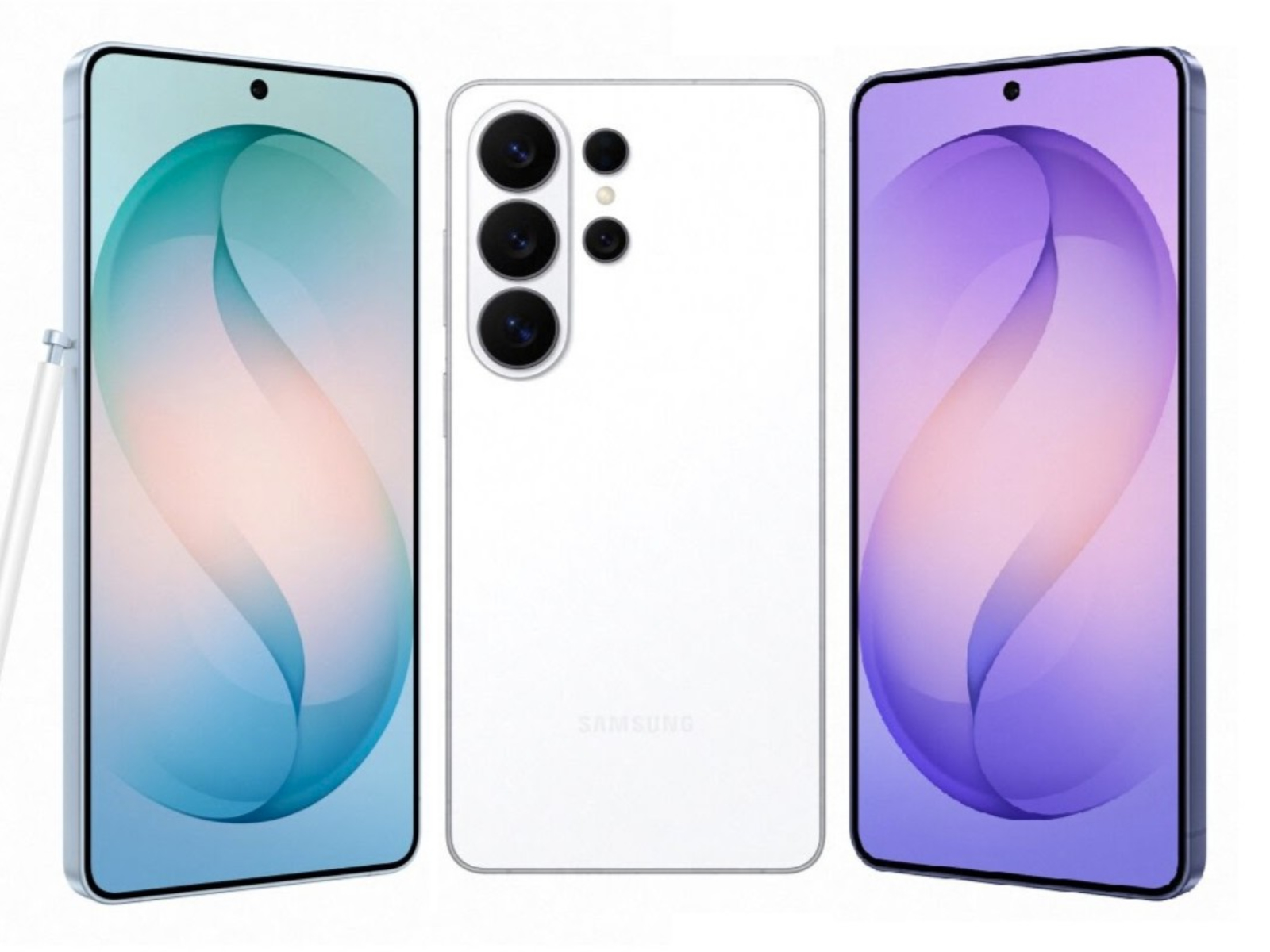
The Galaxy S26 Ultra privacy display is a built-in hardware breakthrough known as Flex Magic Pixel OLED tech. Unlike any screen we’ve seen in a mainstream flagship, this display allows users to narrow the screen's viewing angle at will. When activated, the content remains perfectly clear to the person holding the phone but becomes virtually invisible to anyone looking from the side.
The key differentiator here is versatility. Traditional privacy screen protectors are "always-on" physical layers that permanently degrade your viewing experience by dimming the screen and ruining color accuracy. In contrast, the Galaxy S26 Ultra’s privacy layer is baked into the OLED stack and can be toggled on or off via software. You get the world’s best display for watching Netflix at home, and a high-security vault for your data when you’re out in public.
| Feature | Traditional Privacy Filter | Galaxy S26 Ultra (Flex Magic Pixel) |
|---|---|---|
| Visibility Reduction | ~60% off-axis reduction | Up to 90% off-axis reduction |
| Brightness Loss | 20% to 30% reduction | 0% (for the primary user) |
| Control | Permanent physical layer | Software toggle (Manual or AI-triggered) |
| Clarity | Often causes "grainy" texture | Crystal clear 1440p resolution |
| Touch Sensitivity | Can be reduced by thickness | Unaffected (integrated hardware) |
How Flex Magic Pixel Works: Directional vs. Diffused Light
To understand why this is a "game-changer," we have to look at how a standard screen works. Think of your current smartphone screen like a lantern. It casts light in every direction so that everyone around the campfire can see it. This is great for sharing a YouTube video with a friend, but terrible for entering a credit card number at an airport gate.
The Flex Magic Pixel technology turns that lantern into a flashlight. By utilizing a specialized layer within the OLED stack, Samsung can manipulate the light emission paths.
- Standard Mode: The pixels emit light in a wide arc (diffused), offering the wide viewing angles we’ve come to expect from high-end AMOLED panels.
- Privacy Mode: The display narrows the emission cone (directional).
The statistical jump here is massive. Internal testing indicates that Flex Magic Pixel can reduce off-axis visibility by up to 90%. While third-party filters struggle to hit a 60% reduction, Samsung’s hardware solution effectively "blips" the screen out of existence for anyone standing more than 30 degrees to the left or right. Most impressively, the primary user experiences 0% brightness loss. You no longer have to crank your brightness to 100% (and drain your battery) just to see through a dark privacy filter.
AI Integration & One UI 8.5: Privacy on Demand
Hardware is only half the story. As an editor who lives in the intersection of specs and "real-world usage," I’m most excited about how Samsung is using AI to make this feature invisible yet indispensable. Through One UI 8.5, the Galaxy S26 Ultra will introduce a "Privacy Shield" protocol that acts as an intelligent guardian for your data.
Instead of you having to remember to turn on privacy mode, Samsung’s Proactive AI monitors your environment and the apps you are using. If you open a high-security application—such as a mobile banking app, a crypto wallet, or an encrypted messenger like Signal—while the phone’s sensors detect you are in a public location, the Flex Magic Pixel mode activates automatically.

Users will also find a dedicated toggle in the QuickStar Quick Panel, allowing for manual control. You can set specific "Safe Zones" (like your home or office) where the privacy feature remains dormant, and "Public Zones" (like commuter rail lines) where it defaults to high-security mode. This seamless handshake between the display hardware and the software ensures that your privacy doesn't come at the cost of convenience.
Hardware Advantage: Why This is an Ultra Exclusive
There is a reason we aren't hearing these rumors for the standard S26 or the S26+. The Flex Magic Pixel display stack is an expensive, precision-engineered component. Early supply chain reports suggest that the manufacturing yields for these specialized OLED panels are currently only high enough to support the Ultra's production volume.
This creates a significant "Signature Capability" for the Galaxy S26 Ultra. Much like the S-Pen or the 100x Space Zoom, the Privacy Display is set to be the "killer feature" that justifies the Ultra's premium price tag.

Sarah’s Take: Some might wonder if this tech leads to color shifting. In early prototype stages, directional displays often suffered from a "rainbow effect" when moved slightly. However, Samsung’s move to the Flex Magic Pixel suggests they’ve stabilized the refractive index, meaning the user sees perfect color, while the "shoulder surfer" sees nothing but a black or grey slate.
What Else to Expect: Galaxy S26 Ultra Specs and Launch Timeline
While the Flex Magic Pixel is the headline act, the S26 Ultra is shaping up to be a powerhouse across the board. The 2026 flagship is expected to push the boundaries of mobile photography and processing power.
Core Specs (Anticipated):
- Processor: Snapdragon 8 Gen 5 (Custom "For Galaxy" Edition) with enhanced NPU for AI Privacy tasks.
- Camera: A refined 200MP main sensor paired with a new 50MP 5x periscope lens that improves low-light zoom performance.
- Battery: 5,500mAh with rumored 65W fast charging—a long-awaited bump for the Ultra line.
- Build: Grade 5 Titanium frame with a new "Satin Finish" to reduce fingerprints.
The Roadmap to Launch:
- Official Announcement: Expected at a "Samsung Unpacked" event on February 25th, 2026.
- Pre-order Phase: Likely starting immediately after the event.
- Global Availability: Shipping is predicted to begin on March 11th, 2026.
- Pricing: Rumors from South Korea suggest a slight $50-$100 price hike due to the increased cost of the privacy-enabled OLED panel, potentially starting the S26 Ultra at $1,399.
FAQ
Does the privacy mode affect the under-display fingerprint sensor? No. Because the Flex Magic Pixel technology is integrated into the light-emission layer of the OLED itself and not an external glass overlay, the ultrasonic fingerprint sensor remains just as fast and accurate as on previous models.
Can I still use a tempered glass screen protector with this display? Yes, but with a caveat. You will want to use a standard, clear tempered glass protector. You should avoid third-party "privacy" glass protectors, as they will clash with the internal Flex Magic Pixel tech and likely cause significant display distortion or extreme dimming.
Will the privacy mode drain my battery faster? Actually, the opposite may be true. Because the display is restricting light emission to a narrower angle rather than broadcasting it 180 degrees, the power draw in Privacy Mode is technically lower than in Standard Mode, though the difference in daily usage will likely be negligible.
The Galaxy S26 Ultra is clearly aiming to be more than just a spec bump. By addressing the very human need for privacy in an increasingly public world, Samsung is moving away from "gimmicks" and toward meaningful, hardware-driven utility. If the Flex Magic Pixel performs as well in the hand as it does on paper, the days of the "shoulder surfer" are officially numbered.