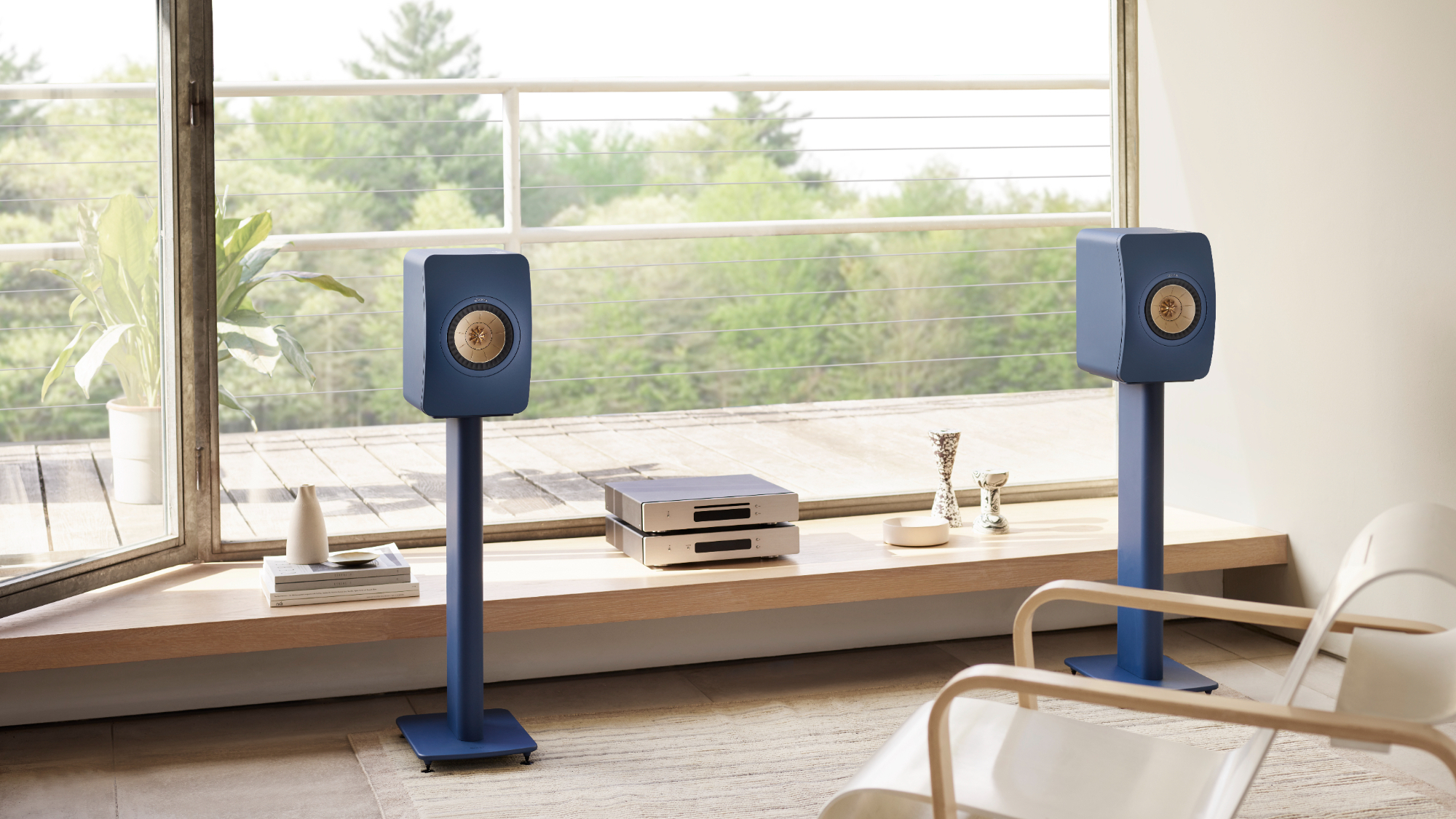
The landscape of home audio has undergone a tectonic shift over the last decade. As we move through 2025, the traditional "hi-fi stack"—a complex arrangement of separate amplifiers, pre-amps, and massive floor-standing towers—is no longer the default for the discerning listener. Market data reveals that over 60% of modern consumers now prefer active bookshelf speakers over passive models. This pivot is driven by a desire for streamlined setups that eliminate the need for external amplification while maintaining, or even exceeding, the fidelity of legacy systems. Whether you are an audiophile curating a dedicated listening room, a gamer seeking a more immersive soundstage, or a cinephile building a high-resolution home theater, the bookshelf speaker has become the definitive middle ground between space-saving utility and uncompromising performance.
Quick Verdict: Which One Should You Buy?
For those looking for an immediate recommendation based on specific use cases, the following table summarizes the three most impactful models of 2025.
| Category | Recommended Model | Primary Driver | Connectivity |
|---|---|---|---|
| Best for Beginners | Edifier R1280T | 4-inch Woofer | Dual RCA (Wired) |
| Best for Home Theater | Polk Signature Elite ES15 | 5.25-inch Mica-Fortified | Wired (Passive) |
| Best for High-Fidelity | Edifier S3000MKII | 6.5-inch Mid-Bass | KleerNet Wireless / Hi-Res |
Choosing Your Setup: Active vs. Passive Speakers
Understanding the architecture of your audio system is the first step toward a successful purchase. The distinction between active and passive speakers is the most significant technical hurdle for new buyers.
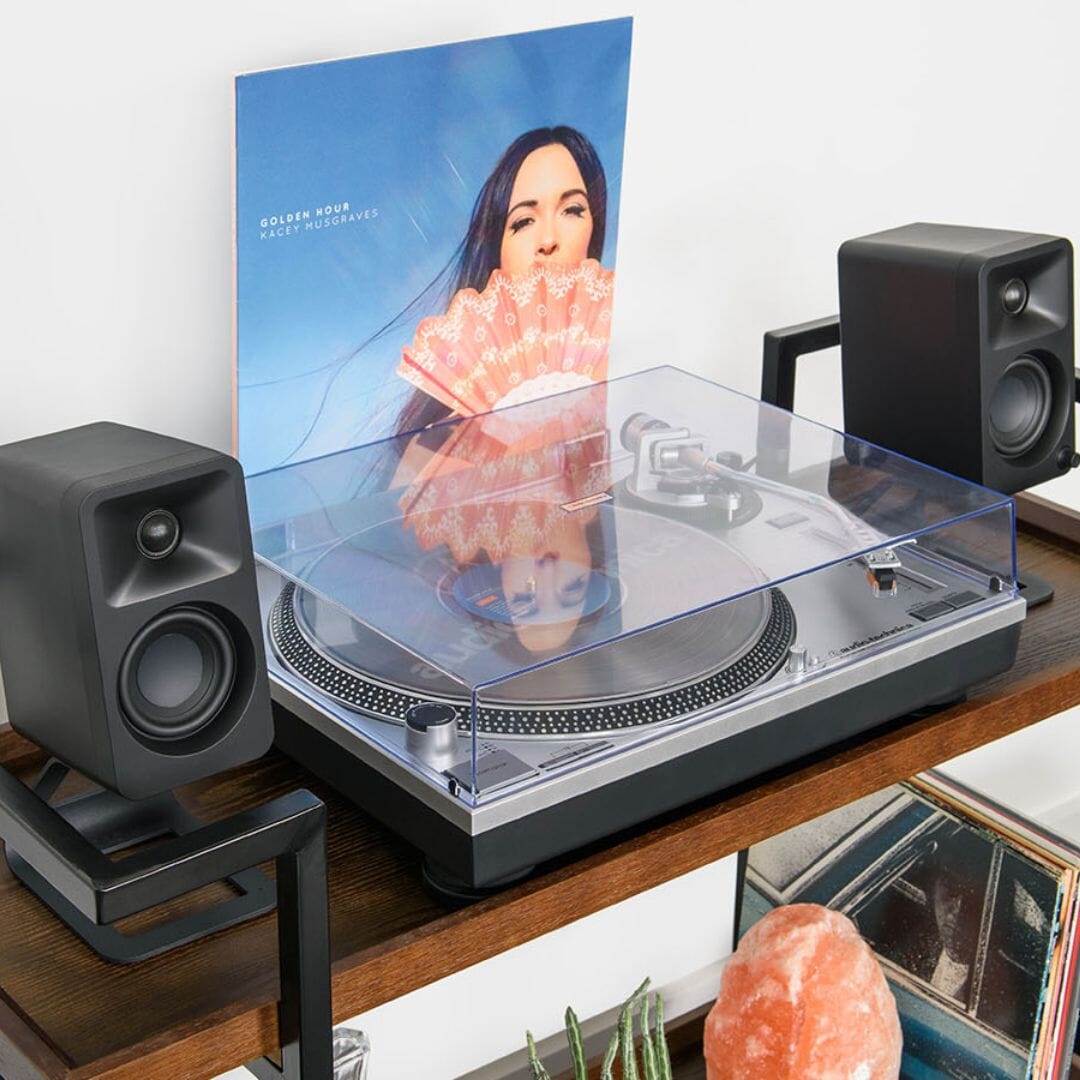
Active (Powered) Speakers contain their own internal amplifiers. This "all-in-one" approach is the driving force behind the 60% market preference mentioned earlier. They offer unparalleled convenience, often featuring Bluetooth, Optical, and USB inputs directly on the back of the primary speaker. For desktop gaming or simple turntable setups, active speakers are the logical choice as they require fewer cables and zero external hardware.
Passive Speakers, conversely, require an external amplifier or receiver to function. While this adds complexity and cost, it remains the gold standard for audiophiles who demand customization. A passive setup allows you to swap amplifiers to change the "flavor" of the sound or upgrade individual components over time without replacing the speakers themselves.
When considering fidelity, the debate often turns to Wired vs. Bluetooth. While Bluetooth 5.0 and aptX technologies have made massive strides, a wired connection remains superior for lossless audio. For critical listening or high-resolution home theater applications, physical copper wire ensures the full bit-rate of the recording reaches the driver without compression.
1. The Entry-Level Gold Standard: Edifier R1280T
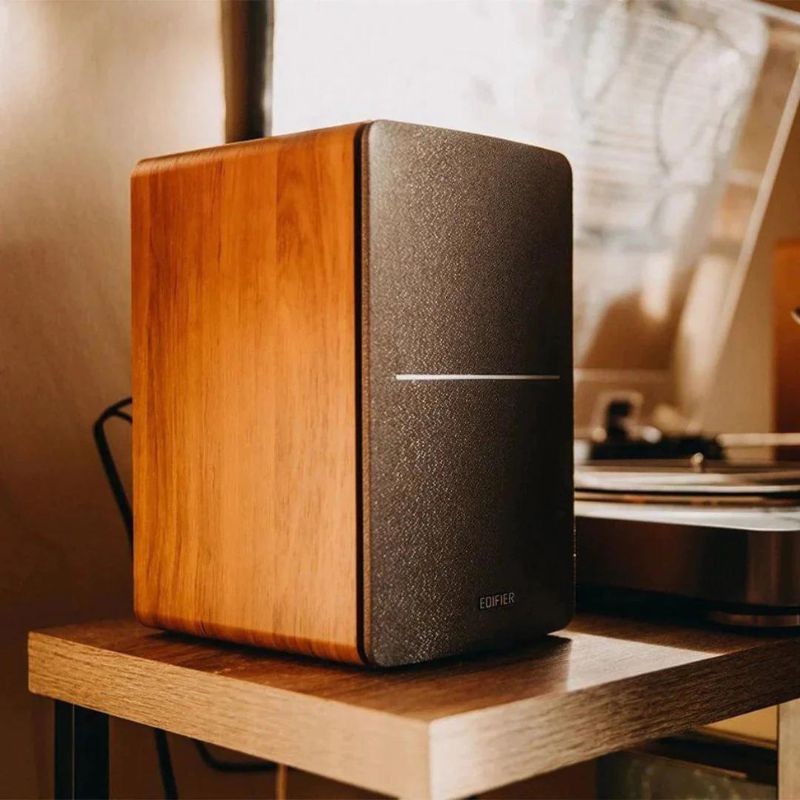
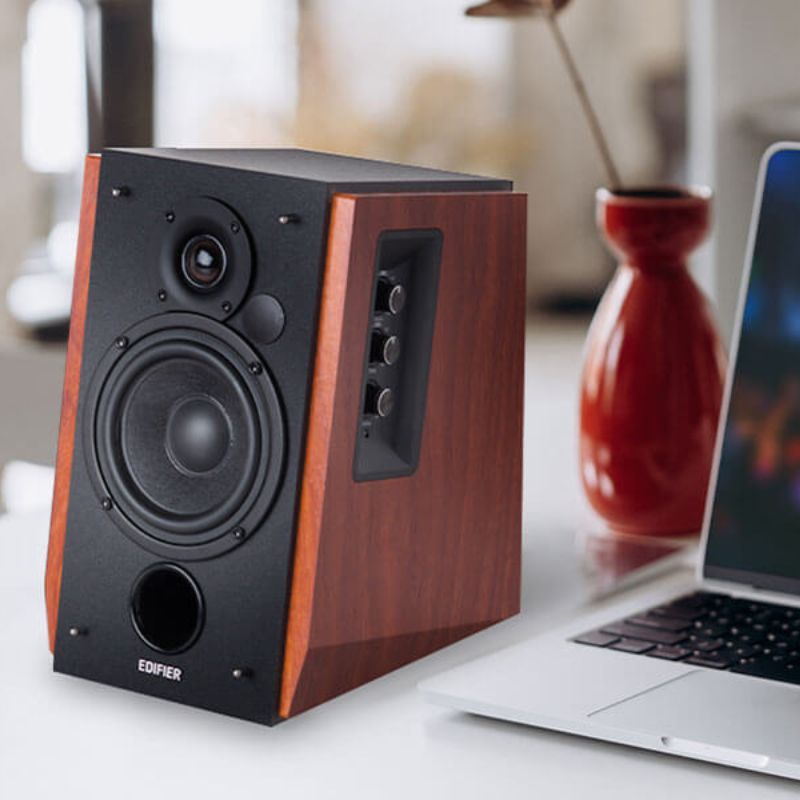
For those entering the world of high-fidelity audio, the Edifier R1280T remains the most logical starting point. It is an active system, meaning it works right out of the box with any device featuring a 3.5mm or RCA output. At a price point hovering around $100, it provides a balanced sound profile that avoids the muddy, bass-heavy pitfalls common in "budget" electronics.
- Power Output: 42W Total RMS
- Driver: 4-inch Bass driver + 13mm Silk dome tweeter
- Inputs: Dual RCA (allows connection to two devices simultaneously)
- Controls: Side-mounted Bass, Treble, and Volume knobs
Expert Insight: The R1280T is the top recommendation for beginners because it eliminates the "analysis paralysis" of matching speakers to an amp. Its sound is neutral, making it equally adept at handling podcasts as it is at classical music.
| Pros | Cons |
|---|---|
| Exceptional value-to-performance ratio | Lacks Bluetooth (T model is wired only) |
| Classic wood-grain aesthetic | Bass can feel thin in larger living rooms |
| No external amplifier required | Proprietary speaker interconnect cable |
View Edifier R1280T on Amazon →
2. Best for Home Theater Immersion: Polk Signature Elite ES15
If your primary goal is cinema, the Polk Signature Elite ES15 is a formidable contender. These are passive speakers designed to handle the dynamic range of modern film scores. They are Hi-Res Audio Certified and specifically engineered to support immersive formats like Dolby Atmos and DTS:X when paired with a compatible receiver.
- Woofer: 5.25-inch Mica-fortified polypropylene
- Tweeter: 1-inch Terylene high-res dome
- Frequency Response: 48Hz - 40kHz
- Sensitivity: 88dB
The inclusion of Polk’s patented Power Port technology minimizes turbulence and "chuffing," providing a cleaner, deeper bass response than many speakers of this size. This makes the ES15 an excellent choice for a 2.1 or 5.1 home theater setup where spatial accuracy is paramount.
| Pros | Cons |
|---|---|
| Hi-Res Audio Certified up to 40kHz | Requires an external amplifier |
| Wide soundstage ideal for movies | Larger footprint than desktop models |
| Power Port tech reduces port noise | High-end treble can be bright for some |
3. The Budget Passive King: Micca MB42X G2
The Micca MB42X G2 is a masterclass in minimalist engineering. Designed for listeners who already own an amplifier but have limited desk space or budget, this speaker utilizes a carbon fiber woofer to deliver surprisingly punchy low-ends.
- Woofer: 4-inch Balanced Carbon Fiber
- Tweeter: 0.75-inch Silk Dome
- Crossover: Enhanced 12dB/Octave
- Dimensions: 9.5” (H) x 5.8” (W) x 6.5” (D)
The "G2" update improved the internal crossover, ensuring that the transition between the woofer and tweeter is seamless. It is the quintessential "desk speaker" for those who want a true audiophile experience on a micro-budget.
| Pros | Cons |
|---|---|
| Extremely compact for small desks | Zero low-end under 60Hz |
| Neutral, transparent sound signature | Not suitable for large room fill |
4. High-Performance Flagship: ELAC Debut 3.0 DB63-BK
ELAC has long been the brand to beat in the mid-range market, and the Debut 3.0 continues that tradition. The technical highlight here is the 6.5-inch aramid fiber woofer. Technical testing shows that aramid fiber provides 25% better stiffness-to-weight ratio compared to standard paper-based drivers.
- Material: 6.5-inch Woven Aramid Fiber
- Tweeter: 1-inch Aluminum Dome with custom waveguide
- Cabinet: Thick MDF with internal bracing
- Performance: High-frequency accuracy up to 35kHz
The aluminum dome tweeter, housed in a deep spheroid waveguide, improves directivity and protects the tweeter from room interactions, making the DB63-BK exceptionally easy to place in varied acoustic environments.
| Pros | Cons |
|---|---|
| Superior bass stiffness and clarity | Needs a powerful amp to truly shine |
| Accurate, non-fatiguing high frequencies | Industrial design is somewhat plain |
5. Best for Desktop Gamers: Sanyun SW208
For the modern workstation, the Sanyun SW208 offers a blend of aesthetics and digital versatility. Unlike traditional monitors, the SW208 includes a 24-bit Hi-Res DAC (Digital-to-Analog Converter) that connects via USB, bypassing the often-noisy internal soundcards of most laptops.
- Connectivity: Bluetooth 5.0, USB, and 3.5mm Aux
- Design: Carbon fiber speaker units with a matte white or black finish
- Feature: Built-in Bluetooth allows for seamless switching between PC gaming and phone streaming.
The small footprint makes these ideal for gamers who have limited desk real estate but refuse to settle for the thin, tinny sound of standard computer peripherals.
| Pros | Cons |
|---|---|
| Integrated 24-bit DAC via USB | Limited maximum volume |
| Compact, modern aesthetic | Built-in cables limit placement distance |
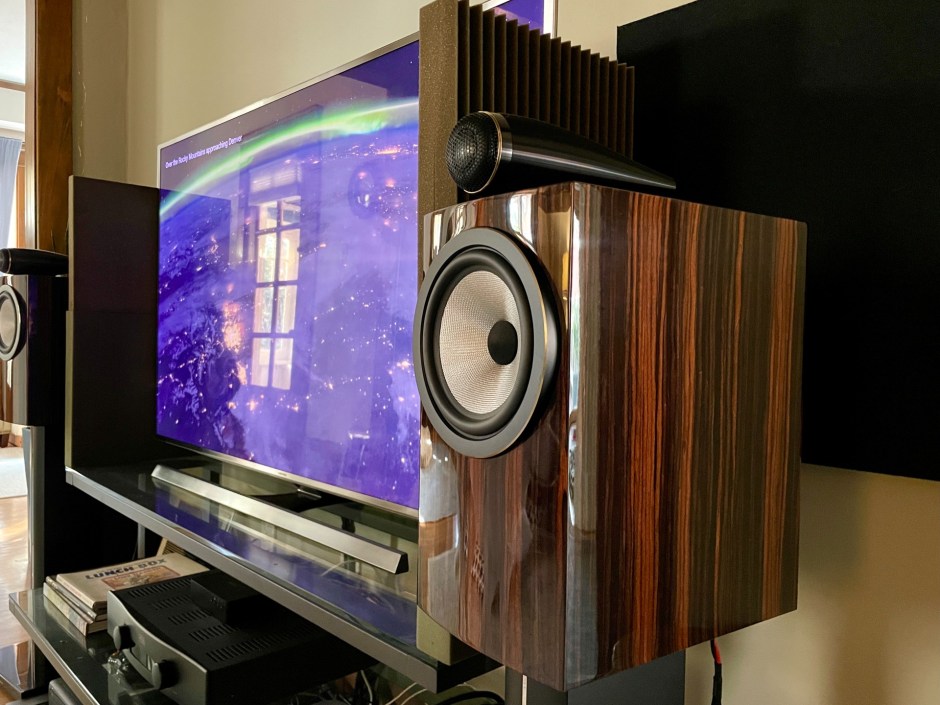
6. The Vocal Specialist: Bowers & Wilkins 606 S3
Bowers & Wilkins (B&W) is a name synonymous with high-end British engineering. The 606 S3 is their "Vocal Specialist." By using a titanium dome tweeter that is physically decoupled from the main cabinet, B&W minimizes vibrations that can blur the sound.
- Mid-range: Continuum Cone technology (derived from their $30,000 800 Series)
- Highs: Decoupled Double Dome Titanium Tweeter
- Audio Profile: Exceptional transparency in the 2kHz - 5kHz range.
If your listening habits lean toward jazz, acoustic sets, or dialogue-heavy cinema, the 606 S3 provides a level of mid-range clarity that most other bookshelf speakers simply cannot match.
| Pros | Cons |
|---|---|
| Unrivaled mid-range transparency | Premium price point |
| Stunning industrial design | Can sound "clinical" or overly analytical |
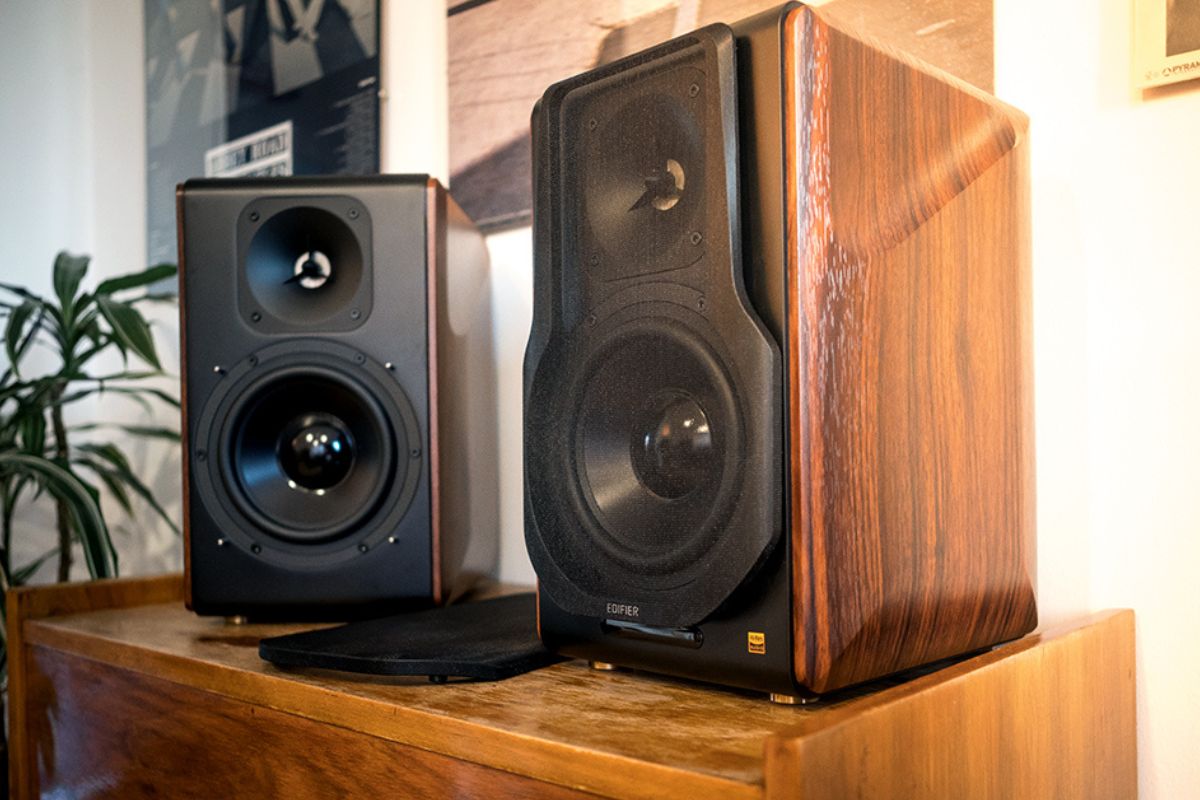
7. Wireless Audiophile Experience: Edifier S3000MKII
The S3000MKII represents the pinnacle of active speaker technology in 2025. With a massive 256W total power output, these speakers are capable of filling even the largest open-concept living rooms. What sets them apart is the KleerNet wireless technology, which connects the left and right speakers without a tethering cable, maintaining 24-bit/96kHz audio quality.
- Tweeters: Planar Diaphragm (extremely fast transient response)
- Woofers: 6.5-inch Long-throw Aluminum Alloy
- Certification: Hi-Res Audio and Hi-Res Wireless
- Connectivity: Bluetooth 5.0 with aptX HD, Optical, COAX, XLR, and USB
| Pros | Cons |
|---|---|
| True wireless connection between speakers | Extremely heavy (over 40lbs for the pair) |
| Massive power for large spaces | Large physical footprint |
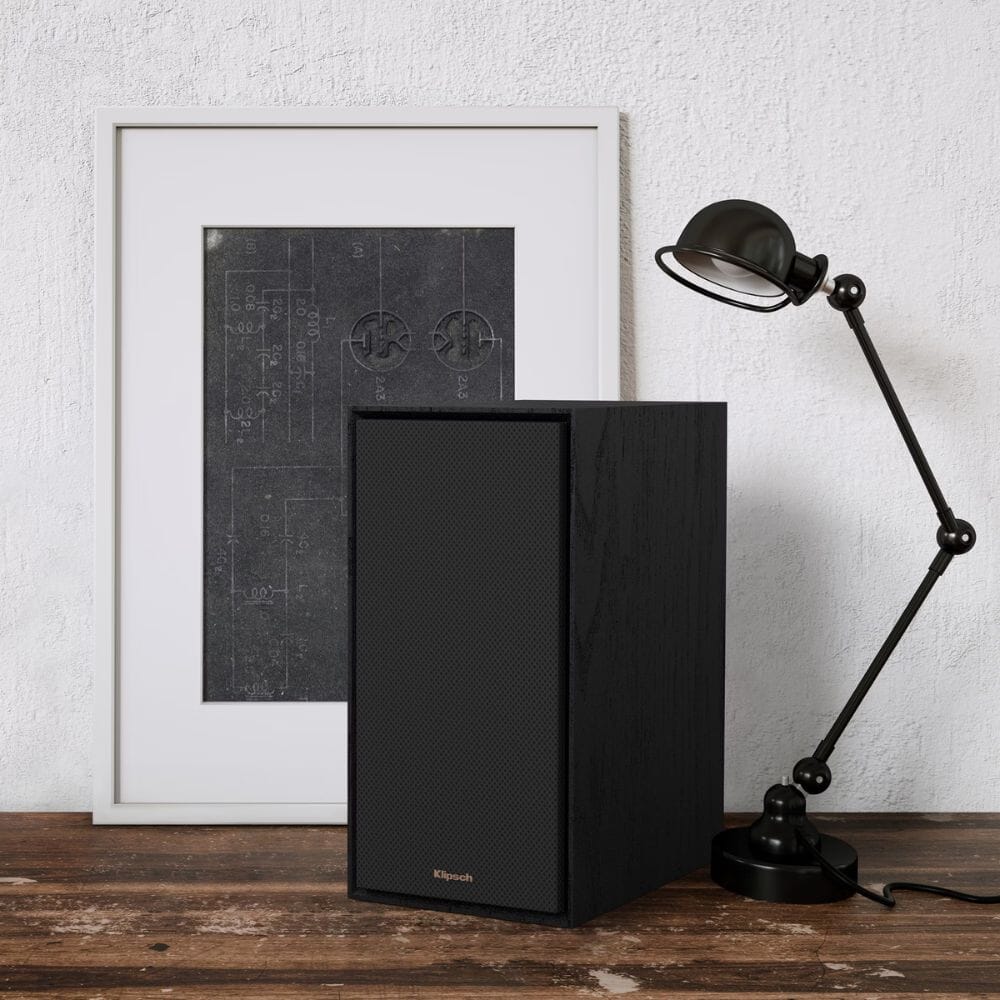
8. The Vintage Aesthetic Powerhouse: Klipsch R-41M
Klipsch speakers are famous for two things: their striking copper woofers and their "horn-loaded" tweeters. The R-41M is a high-efficiency speaker, meaning it can produce significant volume even when paired with a low-powered amplifier.
- Technology: 90x90 Square Tractrix Horn
- Woofer: Spun-Copper IMG (Injection Molded Graphite)
- Sound Profile: Bright, energetic, and "forward."
These are "fun" speakers. They excel at live rock recordings and pop music where a high level of energy and "snap" is desired. The vintage aesthetic with the copper drivers makes them a centerpiece for any room.
| Pros | Cons |
|---|---|
| High efficiency (works with any amp) | Treble can be fatiguing over long sessions |
| Iconic copper-and-black design | Weak bass performance without a sub |
9. Best Mid-Range Versatility: Q Acoustics M20 HD
The Q Acoustics M20 HD is designed for the modern home where a speaker might be on a bookshelf, a desk, or a stand. It features a "Boundary Control" switch on the back that adjusts the EQ based on whether the speaker is in a corner, against a wall, or in free space.
- Power: 130W Peak
- Connectivity: Bluetooth 5.0 (aptX HD/Low Latency), USB (24bit/192kHz), Optical
- Subwoofer Out: Allows for easy 2.1 expansion
This is perhaps the most versatile "lifestyle" speaker on this list, offering sophisticated British tuning in a package that fits anywhere.
10. The Budget Bluetooth Choice: Saiyin Wireless Speakers
For casual streaming in a kitchen or bedroom, the Saiyin Wireless Speakers are the most affordable entry into active audio. Despite the ~$60 price point, they include a dedicated subwoofer output, allowing you to build a full-range system over time.
- Power: 40W
- Woofer: 4-inch
- Features: Bluetooth + RCA inputs, compact build.
| Pros | Cons |
|---|---|
| Lowest price point for Bluetooth audio | Significant distortion at high volumes |
| Includes subwoofer expansion port | Basic plastic construction |
Buying Guide: What to Look for in 2025
When navigating these options, keep three technical criteria in mind:
- Driver Materials: Pay attention to the woofer material. In 2025, we see a move away from paper toward aramid fiber and carbon fiber. These materials provide better stiffness, which translates to faster bass response and less distortion at high volumes.
- Connectivity Ecosystem: If you plan on using a turntable, look for speakers with a Phono input or at least dual RCA inputs. For TV use, an Optical or HDMI ARC connection is essential to ensure low-latency audio sync.
- Room Scaling: A 4-inch woofer is perfect for a desk or a small bedroom. However, for a living room, you should prioritize 6.5-inch woofers. A larger driver moves more air, which is physically necessary to create the "immersive" feel of a home theater.
FAQ
What are the best bookshelf speakers for beginners in 2025? The Edifier R1280T is the top recommendation for beginners. As an active speaker system, it removes the need for an external amplifier and provides a balanced, reliable sound for roughly $100.
Which bookshelf speakers are best for home theater immersion? The Polk Signature Elite ES15 is highly recommended for home theaters. Its Hi-Res certification and support for Dolby Atmos and DTS:X provide a wider soundstage and more precise imaging for cinematic audio.
Is Bluetooth or wired better for bookshelf speakers? Wired connections provide superior fidelity and lossless audio, making them the choice for audiophiles. Bluetooth offers convenience for casual streaming but involves some audio compression.
Conclusion
The "perfect" speaker depends entirely on your environment. If you value simplicity and space, the Edifier S3000MKII offers a flagship wireless experience that rivals many wired setups. For those on a budget, the Edifier R1280T remains the undisputed king of value. As audio technology continues to evolve, the shift toward active, high-resolution systems ensures that high-fidelity sound is more accessible than ever before. Choose based on your primary use case—be it gaming, cinema, or critical listening—and let the 2025 lineup transform your living space.