Quick Facts
- Top Functional Pick: AT-AT Springie (Snap-fit kinetic toy)
- Best Display Piece: 28-piece Luke Skywalker Lightsaber with internal circuitry
- Fastest Print: R2-D2 Planter (Approximately 7 hours)
- Market Insight: The global 3D printing market is expected to reach 27.68 billion USD in 2026, making high-quality props more accessible than ever.
- Technology Trend: FDM technology is projected to maintain a 36.7% market share, while multi-material printing becomes a home standard.
- Optimal Settings: 0.16mm layer height with 10-20% infill for most star wars stl files.
- Recommended Material: PLA filament for static models; PETG or ABS for functional mechanical parts.
As the 3D printing market hits $27.68 billion in 2026, finding the best star wars stl files has never been easier. Whether you want a 3d printed star wars lightsaber or star wars 3d models for printing detailed miniatures, these top 5 picks represent the peak of 2026 fan art projects, blending cinematic accuracy with the latest in desktop manufacturing.
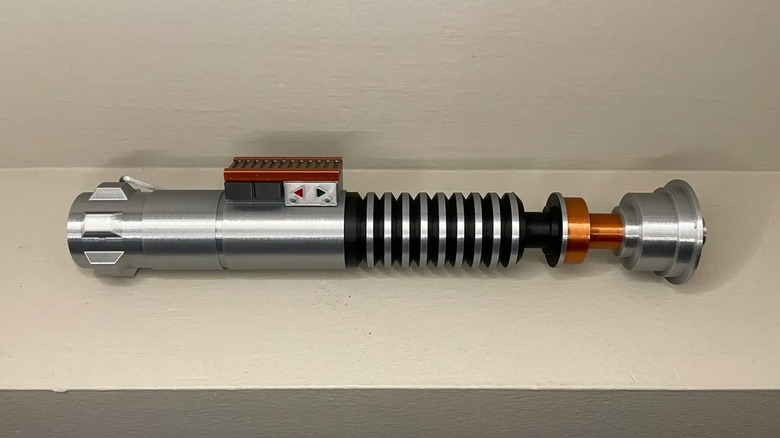
1. The Ultimate Prop: 28-Piece Luke Skywalker Lightsaber
If you are looking for the absolute gold standard in prop making, the 28-piece Luke Skywalker lightsaber is the project that defines the 2026 maker scene. While retail high-end replicas can cost upwards of $500, a well-executed 3d printed star wars lightsaber allows you to achieve the same screen-accurate proportions for a fraction of the price.
This specific star wars stl is not just a hollow tube. It is a complex assembly that includes internal chambers designed to house simulated power cells and crystal chambers. The 28-piece breakdown means you can print individual components in different colors or materials. For instance, you might use a metallic silk PLA filament for the emitter shroud and a matte black for the grip fins. By 2026, industry forecasts indicate that multi-material and multi-color printing will become the standard for desktop 3D printers, which drastically simplifies this build by removing the need for tedious manual painting of small parts.
The beauty of this model lies in its snap-fit assembly. Every piece is engineered to interlock with satisfying precision. If you are using high-quality slicing software, you can tune your tolerances so the activation switch actually clicks and the pommel unscrews to reveal the "guts" of the saber. It is the ultimate test for any fan diving into star wars stl files who wants a museum-quality shelf piece.
| Component | Recommended Material | Print Time (Est.) | Difficulty |
|---|---|---|---|
| Emitter & Shroud | Silk Silver PLA | 4 Hours | Medium |
| Internal Crystal Chamber | Translucent PETG | 2 Hours | High |
| Main Body / Hilt | Grey PLA | 6 Hours | Low |
| Grip Fins | Matte Black PLA | 1.5 Hours | Low |
2. Desk Gadgets: AT-AT 'Springie' and Functional Decor
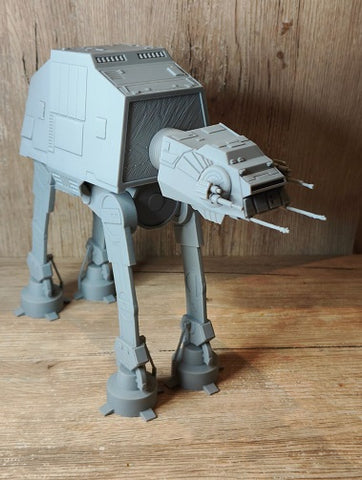
Not every print needs to be a months-long project. In 2026, the community has pivoted toward functional decor—items that look great but also serve a purpose or provide a tactile experience. The AT-AT 'Springie' is perhaps the most famous kinetic desk toy in the galaxy. It uses a clever 7-part composite build where the legs and body are connected by a 3D-printed spring mechanism.
When you tap the head of the AT-AT, it wobbles with a rhythmic motion that is surprisingly addictive. This model is perfect for showing off the capabilities of your printer to friends. Because it relies on a snap-fit assembly, you don't need glue, making it an excellent entry point for casual fans.
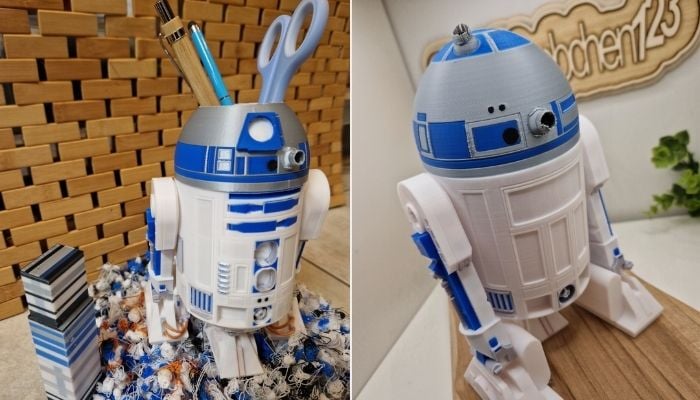
Beyond toys, the R2-D2 planter has become a staple for botanical enthusiasts. This star wars droid stl is often modified to include a drainage system in the legs. At a standard scale, it takes about 7 hours to print. The head can be adjusted or even printed separately to act as a lid for a hidden storage compartment. If you want to go smaller, consider a star wars light switch cover stl to add a subtle touch of the Force to every room in your house. These are quick, 2-hour prints that replace your standard hardware with Imperial or Rebel designs.
3. For the Gamer: Custom Star Wars Legion Terrain & Minis
The tabletop wargaming community has seen a massive surge in 2026, largely driven by the availability of high-fidelity star wars 3d print figures. If you play games like Star Wars: Legion, the ability to print your own modular terrain is a game-changer. Instead of buying expensive plastic kits, you can download a star wars ship stl or star wars legion terrain stl to build a custom battlefield.
One of the most popular files in this category remains the Imperial Star Destroyer Class II, which has recorded more than 11,800 downloads on major repositories. While a full-scale ship would be massive, most gamers scale these down to create atmospheric debris or objective markers.
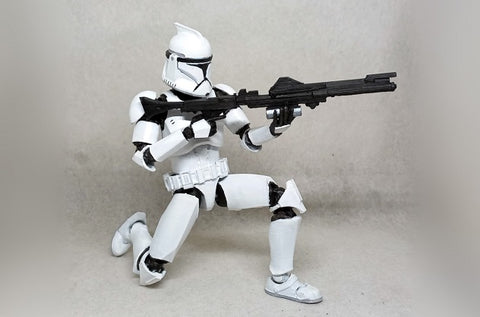
For those focused on star wars 3d models for printing miniatures, the level of detail available in 2026 is staggering. Using a resin printer or a finely-tuned FDM setup with a 0.2mm nozzle, you can produce 1/12 scale figures with articulating joints. This allows for custom posing and a level of personalization that "off-the-shelf" figures simply cannot match. Once the print is done, the focus shifts to miniature painting, where you can apply thin layers of acrylic to bring your Clone Troopers or Bounty Hunters to life.
| Feature | Desktop FDM (2026) | Resin (SLA) |
|---|---|---|
| Surface Detail | High (0.1mm) | Ultra-High (0.02mm) |
| Durability | Excellent | Brittle |
| Cleanup | Minimal | Chemical Wash Required |
| Best For | Terrain & Large Ships | star wars 3d print figures |
4. Iconic Wearables: The Full-Scale Mandalorian Helmet
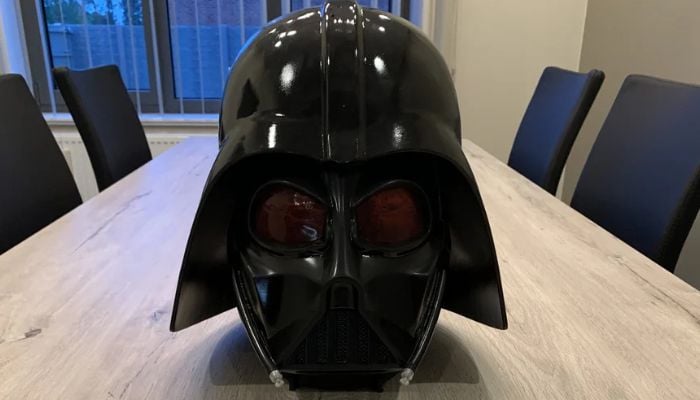
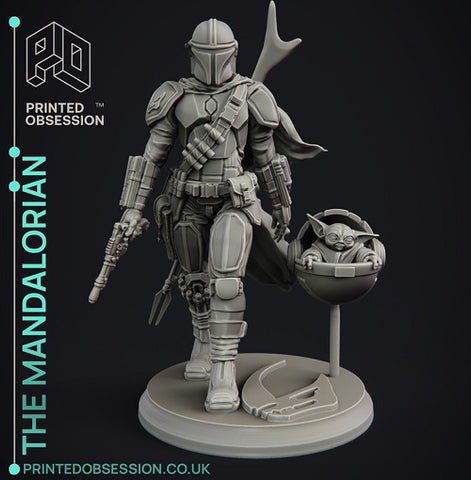
For the cosplayer, the star wars helmet stl is the holy grail. Whether it is the classic Stormtrooper bucket or the iconic Beskar-style Mandalorian helmet, these large-scale prints are the ultimate test of your machine's volume and your patience in post-processing.
By 2026, most mid-range printers can handle a full-sized helmet in one or two large pieces. However, for the best fit, I always recommend using slicing software to "cut" the model into segments that fit your specific head measurements. Using magnets for the neck ring or ear caps allows for a "quick-release" assembly that makes the helmet much more wearable at conventions.
The trend in 2026 is moving away from just "printing a bucket" toward integrating wearable technology. Many fans now leave internal channels in their star wars stl files for cooling fans, voice changers, and LED HUDs. When you are printing something this large, material choice matters. While PLA filament is easy to print, many professional cosplayers are moving toward PETG for its higher heat resistance—nothing ruins a May the 4th celebration faster than a helmet warping in a hot car.
5. Currency of the Galaxy: Screen-Accurate Imperial Credits
Sometimes the simplest star wars stl files are the most rewarding. Imperial Credits are a fantastic "weekend project." These models are typically small (standard dimensions are roughly 36 x 50 x 5 mm) and print very quickly.
These are perfect for fan art projects or as "handouts" during May the 4th events. To get the best results, print these with a high infill percentage (around 50-80%) to give them a realistic weight in the hand. You can even pause the print to insert a small metal washer inside the credit to give it a "clink" when dropped on a table.
If your printer supports multi-color switching, you can print the raised Imperial insignia in a different color than the base. If not, these are the perfect canvas for learning post-processing. A quick hit of metallic spray paint followed by a black oil wash will make these look like they have been circulated through the seediest cantinas in the Outer Rim.
Pro-Finishing: Achieving the 'Battle-Worn' Look
To make your 3d printed star wars lightsaber or star wars 3d print figures look like they belong on a movie set, you must master the art of post-processing. The "Used Universe" aesthetic is what makes Star Wars feel real.
Step 1: Sanding Progression
Start with 120-grit sandpaper to knock down the major layer lines. Move progressively through 220-grit and finish with 400-grit for a smooth surface. If you are working on a star wars helmet stl, use a filler primer between sanding stages to hide the seams where parts were joined.
Step 2: Priming and Base Coating
Apply a dedicated plastic primer. Once dry, lay down your primary metallic or matte base coat. For Beskar armor, a high-gloss black base followed by a graphite powder rub or specialized chrome paint is the secret to that deep, reflective shine.
Step 3: Weathering and Grime
This is where the magic happens. Use a "black wash"—watered-down black acrylic paint—and slather it into the recessed areas of your model. Quickly wipe away the excess from the flat surfaces with a paper towel. This leaves "dirt" in the cracks, giving the piece instant depth. For ships, use a silver "dry brush" technique on the edges to simulate paint chipping away to reveal the metal underneath.
FAQ
Where can I find high-quality Star Wars STL files?
The best sources for star wars stl files in 2026 remain community-driven platforms like Printables, MyMiniFactory, and Thingiverse. For high-fidelity prop making, many creators host their most detailed star wars 3d models for printing on specialized sites like Cults3D or through Patreon. Always check user reviews and "makes" to see if the file prints well on your specific machine.
Are there free Star Wars 3D print files available?
Yes, there is a massive library of free star wars stl files available. Many talented designers release "fan art" models for the community. However, for complex builds like a full-scale star wars helmet stl or a 28-piece lightsaber, paying a few dollars for a premium, pre-supported file can save you hours of frustration and wasted filament.
How do I 3D print a full-size Star Wars helmet?
To print a full-size helmet, you first need to scale the star wars helmet stl to your head size using software like Meshmixer or your slicer’s scaling tool. If your printer's build plate is too small, you will need to slice the model into multiple parts and join them using alignment tabs and superglue. Using a larger nozzle (like 0.6mm) can significantly reduce print time for these large objects.
Are 3D printed Star Wars models legal to sell?
Generally, no. Star Wars is a registered trademark owned by Disney. While printing models for personal use is widely accepted in the fan community, selling physical prints of star wars 3d print figures or props without a license can lead to legal issues. Some designers on Patreon offer "Commercial Tiers" for their original designs, but this usually only covers the design itself, not the underlying Star Wars IP.
What settings are best for printing detailed Star Wars miniatures?
For high-detail star wars 3d print figures on an FDM printer, use a 0.1mm or 0.12mm layer height. Slow down your outer wall speed to 25-30 mm/s to capture fine details. For resin printing, a 0.05mm layer height is standard, but you must ensure your exposure times are perfectly calibrated to prevent the loss of detail on small items like blasters or lightsaber hilts.