Most of us know the frustration of trying to capture a breathtaking lunar eclipse or a shimmering nebula with a smartphone, only to end up with a blurry, pixelated smudge. But high atop a rugged peak in the Chilean Andes, a team of engineers and astronomers has just finished building a machine that renders such limitations obsolete. The world’s largest digital camera—the LSST Camera (Legacy Survey of Space and Time)—has officially been completed, and it is poised to rewrite our understanding of the cosmos.
Boasting a staggering resolution of 3,200 megapixels (3.2 gigapixels), this $168 million marvel is roughly the size of a small SUV and weighs about 3,000 kilograms. To put its power into perspective, a single image captured by this camera would require 400 4K ultra-high-definition televisions to display at full resolution. It is powerful enough to spot a golf ball from 15 miles away, yet its gaze is fixed much further—on the billions of galaxies that populate our universe.
This isn't just a feat of photography; it is a time machine. From its home at the Vera C. Rubin Observatory on the El Peñón summit of Cerro Pachón, the LSSTCam will spend the next decade recording a 10-year time-lapse of the southern sky, mapping the "dark" universe and tracking the movement of billions of celestial objects.
The Engineering Marvel: Inside the LSST Camera
To understand the scale of the LSSTCam, one must look past its massive exterior and into its sophisticated "eye." The focal plane of the camera is a masterpiece of precision engineering, composed of over 200 individual CCD (charge-coupled device) sensors. These sensors are divided into "rafts"—modular units that each house nine sensors—and are cooled to nearly -150 degrees Fahrenheit to reduce electronic noise.
Each of these sensors captures 16 million pixels. When combined, they read 3.2 billion pixels of data in just two seconds. This rapid-fire capability is essential because the Rubin Observatory isn't designed to stare at a single star for hours; it is designed to sweep across the sky, capturing everything in its path.
Smartphone vs. LSST Camera Specs
| Feature | Smartphone (Standard Flagship) | LSST Camera (LSSTCam) |
|---|---|---|
| Resolution | 12 - 48 Megapixels | 3,200 Megapixels (3.2 Gigapixels) |
| Weight | ~200 grams | 3,000 kilograms (6,600 lbs) |
| Lens Diameter | ~5-10 millimeters | 1.55 meters (5 feet) |
| Data Throughput | Megabytes per second | 20 Terabytes per night |
| Primary Mission | Daily life & Social Media | Mapping the Evolution of the Universe |
The optics are equally impressive. The camera features a 1.55-meter wide lens—the largest of its kind—and a set of six optical filters, each about 75 centimeters wide. These filters allow astronomers to capture light ranging from near-ultraviolet to near-infrared, providing a multi-spectral view of the heavens that can reveal the temperature, composition, and distance of stars and galaxies.
The Chilean High Desert: Why Cerro Pachón?
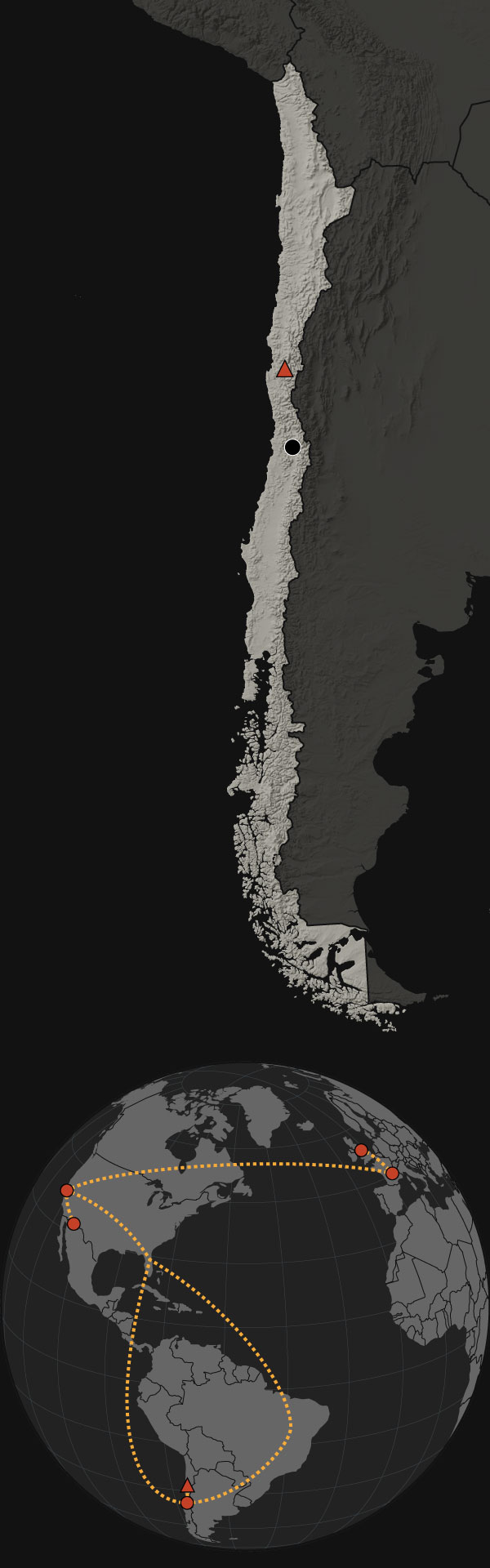
Our journey to see the world's largest camera takes us to the Coquimbo Region of Chile, specifically to the summit of Cerro Pachón. Standing at an elevation of 2,682 meters (8,800 feet), this location was chosen for the Vera C. Rubin Observatory for the same reasons it has become the global capital of astronomy: the air is remarkably thin, exceptionally dry, and largely free of light pollution.
The atmospheric stability here—what astronomers call "seeing"—is among the best on Earth. On Cerro Pachón, the stars don't twinkle as much; they shine with a steady, piercing clarity. This geographic advantage allows the LSSTCam to capture images with unprecedented sharpness, undistorted by the turbulent air that plagues lower-altitude sites.

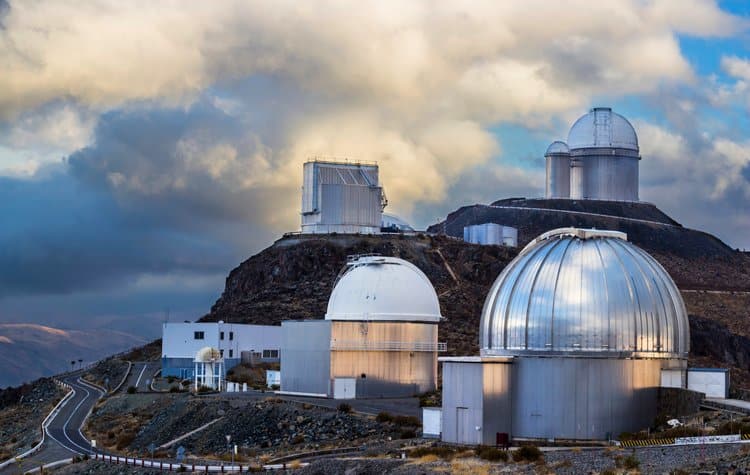
Cerro Pachón is not a lonely outpost. The Rubin Observatory sits in a prestigious neighborhood, flanked by the Gemini South Telescope and the Southern Astrophysical Research (SOAR) telescope. Together, these facilities form a technological vanguard, peering into the deep past of our universe from one of the most desolate and beautiful landscapes on our planet.
The Legacy Survey of Space and Time (LSST)
The LSSTCam is the heart of the Legacy Survey of Space and Time, a mission that aims to create what scientists are calling the "biggest movie ever made." For ten years, the camera will photograph the entire available southern sky every few nights. By the end of its mission, it will have cataloged roughly 20 billion galaxies and 17 billion stars.
This is more than just a static map. By repeatedly photographing the same patches of sky, the Rubin Observatory will detect anything that moves or changes in brightness. This includes:
- The "Dark" Universe: By observing how the light from distant galaxies is bent by gravity, scientists can map the distribution of dark matter and study the mysterious "dark energy" that is accelerating the expansion of the universe.
- Solar System Formation: The camera is expected to increase the number of known objects in our Solar System by a factor of ten, identifying thousands of new asteroids and Kuiper Belt objects.
- Transient Events: From supernovae to the tidal disruption of stars by black holes, the LSSTCam will act as an early warning system, alerting telescopes worldwide to fleeting cosmic events in real-time.
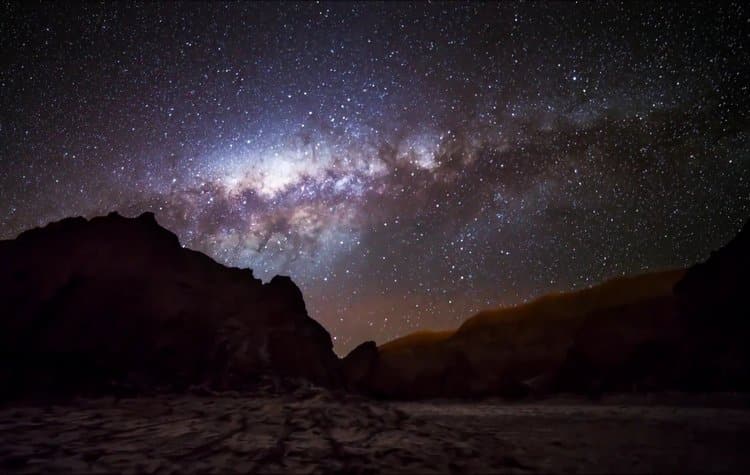
"The Rubin Observatory is not just about seeing further; it's about seeing 'more' and 'faster'. It will transform astronomy from a science of individual snapshots into a grand, cinematic narrative of the cosmos."
Data on a Galactic Scale
Capturing 3.2 billion pixels every few seconds creates a massive logistical challenge: what do you do with all that data? Every night, the LSSTCam will generate approximately 20 terabytes of raw data. To put that in perspective, a single night's work would take an average home internet connection months to download.
The solution is a high-speed fiber-optic pipeline that whisks the data from the mountain summit in Chile to processing centers in La Serena, and then across the world to supercomputing facilities in California, France, and Britain. Within 60 seconds of the camera’s shutter closing, any detected changes in the sky are broadcast to the global scientific community.
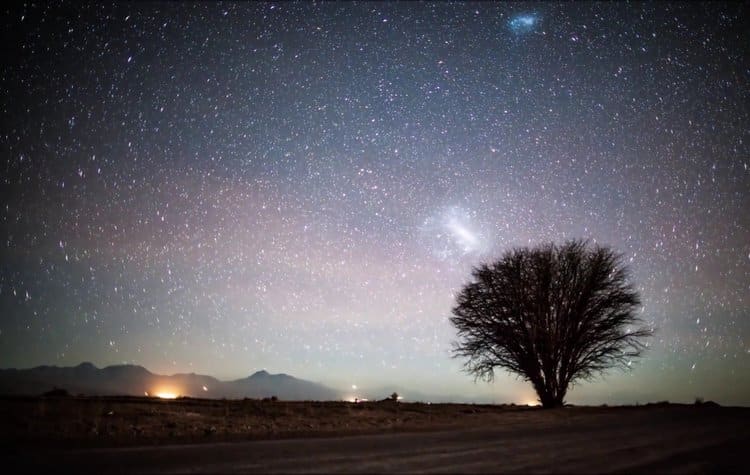
However, the mission faces a modern hurdle: the rise of satellite constellations like SpaceX's Starlink. These low-Earth orbit satellites can leave bright streaks across the camera's ultra-sensitive wide-field images. While software can remove many of these artifacts, the sheer number of satellites planned for the coming decade remains a point of concern for the observatory’s mission to provide a pristine view of the deep universe.
Visiting the Frontier: Astrotourism and Public Access
For the travel-minded explorer, the Elqui Valley and the surrounding mountains of the Coquimbo Region are already a bucket-list destination for astrotourism. While the Vera C. Rubin Observatory is currently a high-security research site, public access plans are in motion.
Beginning in late 2026, the observatory expects to host limited public tours and educational visits, allowing visitors to see the engineering marvel of the telescope structure and the high-tech facilities that support the LSSTCam. In the meantime, the town of Vicuña and the nearby Mamalluca Observatory offer a more accessible way for travelers to experience the same "starlight-and-silence" atmosphere that makes Cerro Pachón so special.
Even if you can’t make it to the Andes, you can still participate. The Rubin Observatory is partnering with the Zooniverse platform to allow citizen scientists from around the world to help sort through the millions of images the camera produces, hunting for everything from near-Earth asteroids to undiscovered galaxies.
FAQ
Q: Can I buy a lens like the one in the LSSTCam? A: Not unless you have a multi-million dollar budget and a custom fabrication facility. The primary lens is 1.55 meters wide and was ground to a precision of a few nanometers. It is a one-of-a-kind optical component.
Q: Will the LSSTCam take photos in color? A: The camera takes monochromatic images through different color filters. By combining images taken through multiple filters (ultraviolet, green, red, near-infrared, etc.), scientists can create the stunning full-color composite images we associate with deep-space photography.
Q: Is it the most powerful telescope in the world? A: It depends on how you define "powerful." While the James Webb Space Telescope (JWST) can see further into the infrared and has a larger mirror, the LSSTCam has a much wider field of view. It can photograph an area of the sky 40 times the size of the full moon in a single shot, making it the world's best tool for surveying the entire sky rather than focusing on a single point.
Discover the Universe for Yourself
The completion of the LSSTCam marks a turning point in human history. We are no longer limited to observing the universe in fragments; we are about to see it in its entirety, in high definition, over time. Whether you are an amateur stargazer or a professional astrophysicist, the data coming from Chile over the next decade will likely change how we view our place in the stars.
To learn more about the project and stay updated on the first images (scheduled for release in 2025), visit the official observatory portal.