The End of an Era: Why the ISS is Retiring
For over two decades, the International Space Station (ISS) has served as the definitive symbol of human cooperation in the vacuum of space. It is a sprawling, multi-billion-dollar laboratory that has hosted approximately 280 visitors from 26 partner countries, serving as a beacon of scientific advancement 250 miles above our heads. However, as any seasoned traveler or infrastructure analyst knows, all grand structures have a lifespan. The ISS is aging—facing structural fatigue and technical obsolescence—and NASA has finalized the timeline for its graceful exit.
In a decisive move toward a new orbital economy, NASA recently awarded SpaceX an $843 million contract to develop a "U.S. Deorbit Vehicle." This specialized spacecraft will safely guide the 925,000-pound station into a remote corner of the Pacific Ocean, known as Point Nemo, by January 2031. This is not merely an end, but a strategic pivot. NASA is transitioning from being the "owner-operator" of a sovereign outpost to becoming a "commercial customer" in a burgeoning marketplace. To ensure there is no "gap" in human presence in Low Earth Orbit (LEO), the agency is investing up to $1.5 billion between 2026 and 2031 into the development of private destinations.
The future of orbital travel will be defined by four key commercial stations: Axiom Station, Orbital Reef, Starlab, and Haven-1. These outposts are not just scientific labs; they are the next generation of "orbital real estate," blending research, manufacturing, and high-end hospitality.

The Next Frontier: Commercial Station Comparison
To help you navigate this transition, here is a snapshot of the primary contenders vying for the void the ISS will leave behind:
| Station Name | Lead Developers | Key Advantage | Estimated Launch |
|---|---|---|---|
| Axiom Station | Axiom Space | Direct ISS legacy & modular growth | 2026 (first module) |
| VAST Haven-1 | VAST & SpaceX | First-to-market; artificial gravity | 2026 |
| Starlab | Voyager Space & Airbus | High-capacity lab; Hilton design | 2028 |
| Orbital Reef | Blue Origin & Sierra Space | "Business Park" scale; luxury focus | 2027–2030 |
1. Axiom Station: The First Modular Successor
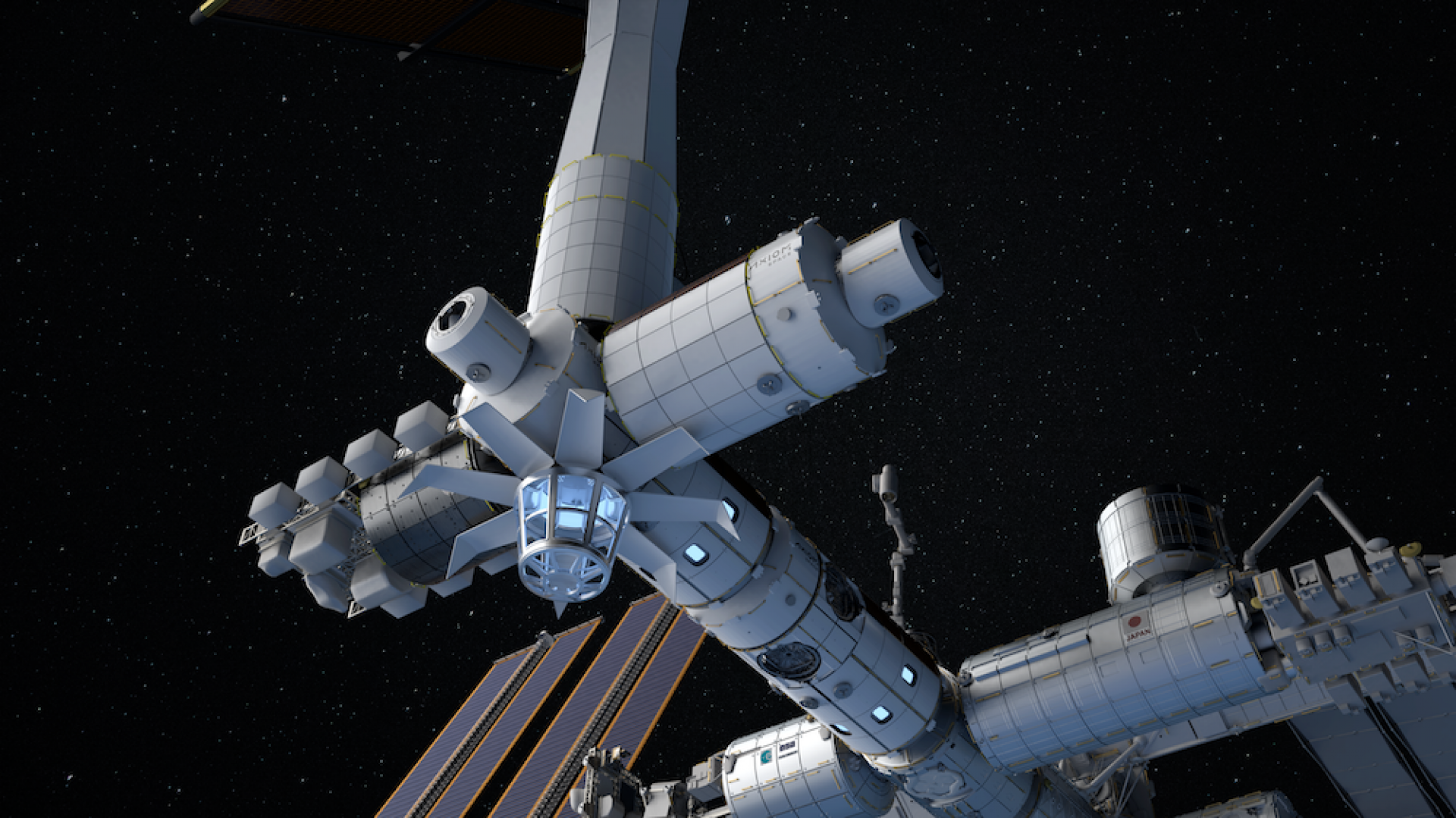
Axiom Space is currently the frontrunner in the race to replace the ISS, largely due to its unique "parasitic" growth strategy. Unlike other stations that require entirely new infrastructure from day one, Axiom Station will begin as a commercial segment attached to the existing ISS Harmony node. This allows the company to leverage the current station’s power and life-support systems while they build out their own independent capacity.
The Axiom Station launch date for the first module is targeted for late 2026. Over the following four years, the company plans to add at least three more modules—including a specialized research and manufacturing facility and a crew habitat with a panoramic observatory. By 2028 to 2030, Axiom Station will detach from the ISS to become a fully independent, free-flying entity.
From a critic’s perspective, Axiom’s most compelling feature is its continuity. It serves as a bridge for NASA astronauts and private researchers to move seamlessly from the old era to the new. The interiors, famously designed in collaboration with Philippe Starck, aim to move away from the "industrial" aesthetic of the ISS toward a more refined, upholstered environment suitable for both professional researchers and high-net-worth orbital tourists.
2. Orbital Reef: The 'Space Business Park'
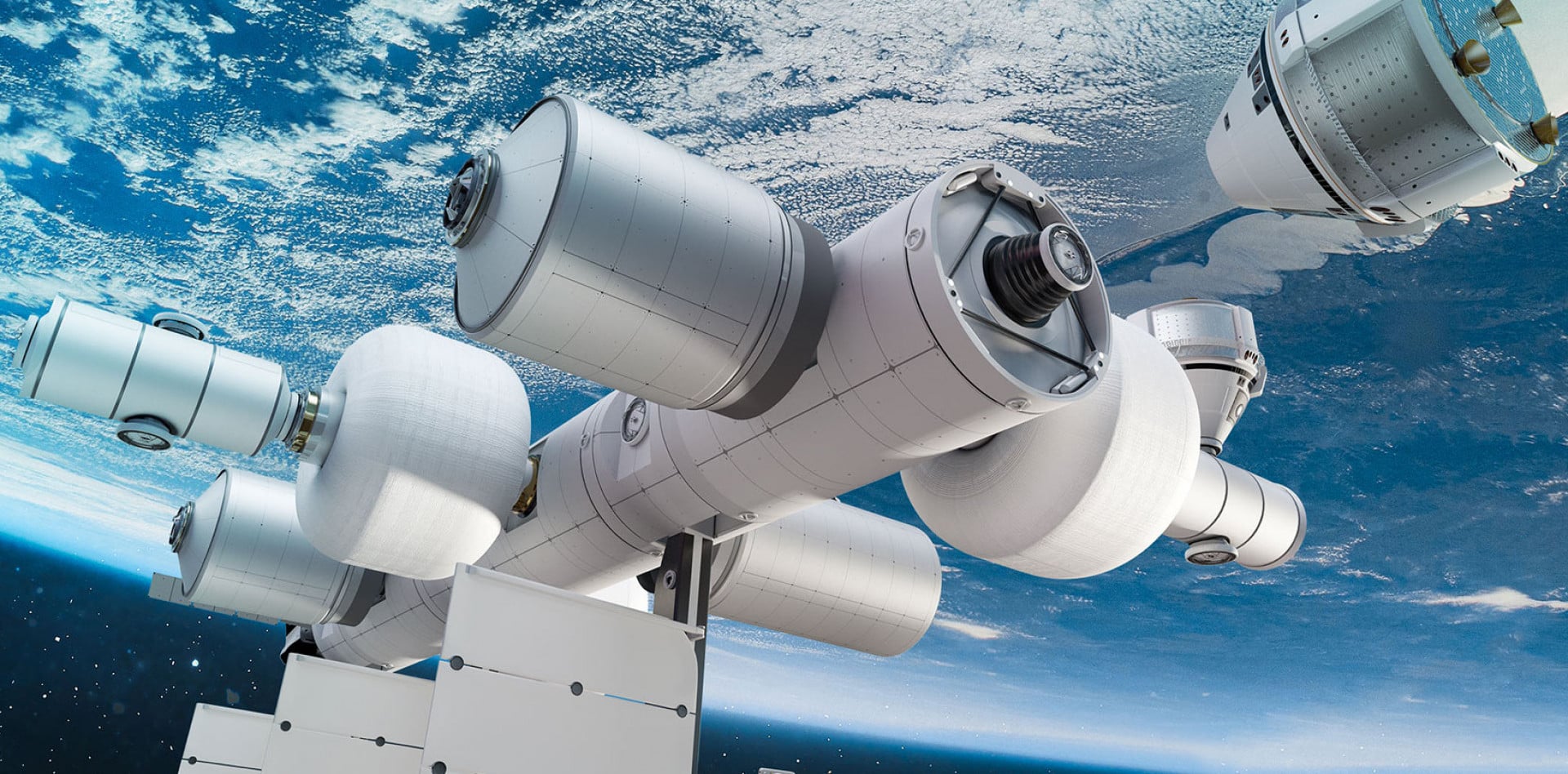
While Axiom focuses on continuity, Blue Origin and its partners (Sierra Space and Boeing) are thinking about scale. Orbital Reef is being marketed as a "mixed-use business park" in orbit. The Orbital Reef Blue Origin timeline targets an operational status by the end of the decade, aiming to capture the market for microgravity research, filmmaking, and luxury tourism.
What sets Orbital Reef apart is its architectural philosophy. It utilizes Sierra Space’s LIFE (Large Integrated Flexible Environment) habitat technology—inflatable modules that launch in a compact form and expand to provide massive pressurized volumes in orbit. This allows for a more spacious interior than the narrow corridors of the ISS.
The station’s design includes large, Earth-facing windows, which are a major selling point for the burgeoning space tourism sector. Beyond the views, the station is designed to accommodate up to 10 people, offering separate zones for industrial "heavy lifting," delicate scientific research, and high-end residential living. It is a bold vision of a self-sustaining orbital community where companies can rent "office space" or lab benches just as they would in a tech hub on Earth.
3. Starlab: The Global Science Powerhouse
Starlab is perhaps the most internationally collaborative project in the commercial pipeline. Lead by Voyager Space, in partnership with aerospace giant Airbus and Lockheed Martin, Starlab received $160 million in initial NASA funding to ensure it can fulfill the rigorous scientific requirements of a post-ISS world.
The station's design is highly efficient: a single-launch, free-flying orbital laboratory. By launching the entire primary structure in one go, Starlab avoids the complex and risky multi-year assembly process that characterized the ISS. However, efficiency doesn’t mean a lack of comfort. In a move that signaled the merging of aerospace and high-end hospitality, Hilton has been brought on board to design the station's interior suites and communal areas.
The goal is to create an ergonomic environment that reduces the psychological strain of long-duration missions. For the scientific community, Starlab offers the "GWC" (George Washington Carver) Science Park, a state-of-the-art laboratory intended to maintain the continuity of experiments currently running on the ISS, from biology to material sciences.

4. VAST Haven-1: The 2026 First Mover
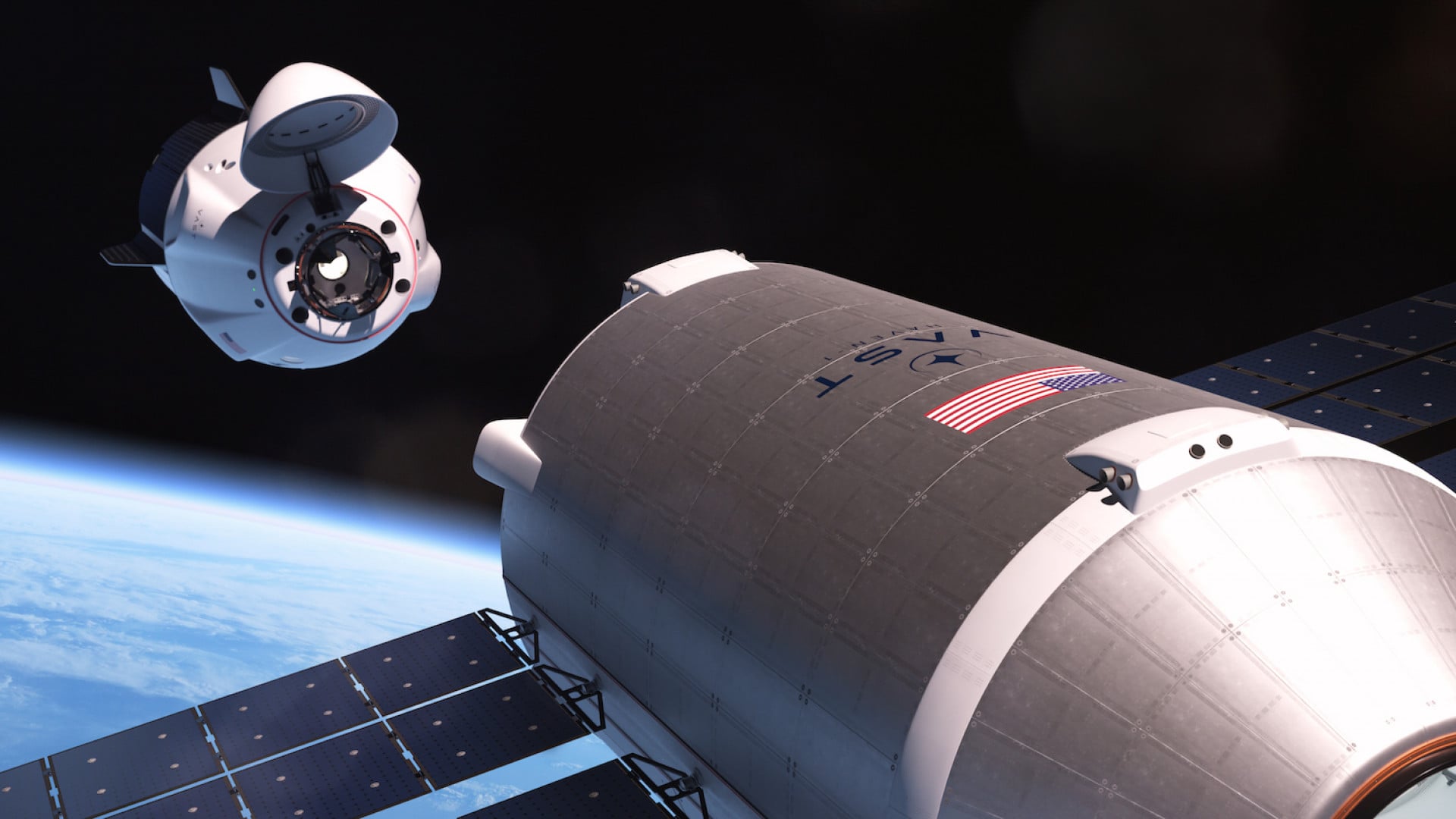
While the larger players are building massive, multi-module complexes, a startup named VAST is aiming to be the "first mover" in the market. Scheduled for launch as early as 2026 via a SpaceX Falcon 9, Haven-1 will be the world’s first commercial space station to enter orbit.
Haven-1 is a relatively small, single-module station designed to integrate seamlessly with the SpaceX Crew Dragon. It is essentially an "orbital hotel room" that can support four crew members for 30-day missions. However, its most groundbreaking technical ambition is the attempt to create artificial gravity. By spinning the station, VAST intends to use centrifugal force to simulate Earth-like (or Lunar/Martian) gravity, potentially solving many of the health issues associated with long-term weightlessness.
As a critic, I see Haven-1 as the "boutique hotel" of the orbital world. It lacks the massive lab space of Starlab or the industrial capacity of Axiom, but its speed to market and focus on the passenger experience make it the most immediate opportunity for commercial astronauts to reach LEO in a post-ISS world.
The Economics of Orbit: Costs and Geopolitics
The transition to private stations isn't just a technical shift; it’s a radical economic one. For decades, space was the exclusive playground of superpowers. Today, the future of low Earth orbit after 2030 is being shaped by venture capital and competitive pricing.
Current projections suggest that suborbital space tourism (the "edge of space") costs around $250,000 to $450,000 per seat. However, for the multi-day orbital stays discussed here, the price tag remains in the tens of millions. The long-term goal for these private space station companies is to scale operations until orbital stays become a "once-in-a-lifetime" luxury purchase rather than an impossibility.
There is also a significant geopolitical dimension. China's Tiangong Space Station is already operational and actively recruiting international partners through a 50-nation consortium. NASA’s strategy to fund multiple American commercial stations is, in part, a race to ensure that the "Western" model of open, commercial, and democratic space access remains dominant. By investing $1.5 billion into these private outposts, NASA is effectively subsidizing the infrastructure required to keep the U.S. at the forefront of the new space race.
Expert Insight: "The ISS was a government-funded laboratory. The new stations are commercial platforms. This means the pace of innovation will triple, but the focus will shift from pure science to ROI. Expect to see 'Made in Space' fiber optics and pharmaceuticals become major drivers for these stations." — James Wright

FAQ
Q: Will the ISS just be left to float away in 2030?
No. To prevent the station from becoming a dangerous piece of "space junk," SpaceX will use a specialized vehicle to push the ISS into a controlled re-entry. It will burn up in the atmosphere, with any remaining debris landing safely in the "spacecraft cemetery" at Point Nemo in the South Pacific.
Q: Can a regular person buy a ticket to these new stations?
Yes, theoretically. Companies like Axiom and VAST are actively selling missions. However, you currently need both an eight-figure net worth and the ability to pass rigorous physical and psychological training. By 2030, we expect "tourist-class" modules to be more common, though prices will likely remain high.
Q: Will these stations be as safe as the ISS?
In many ways, they may be safer. The ISS is using 1990s technology. These new stations utilize modern materials, advanced radiation shielding, and automated docking systems developed over the last decade by companies like SpaceX and Boeing.
The Horizon Awaits
The retirement of the International Space Station marks the end of a legendary chapter, but it also signals the start of the "Orbital Renaissance." As we move toward 2030, the sky is no longer a limit; it is a destination. Whether it's the modular pragmatism of Axiom or the artificial gravity of VAST, the next decade will redefine what it means to live and work in the stars.
Stay updated on the latest in orbital travel and aerospace news by subscribing to our monthly briefing.