Quick Facts
- Top Overall: SanDisk Extreme PRO UHS-II V90 offering write speeds up to 305 MB/s and newfound 2TB capacities.
- Most Rugged: Sony TOUGH SF-G Series featuring a monolithic, ribless design that is 18 times stronger than standard cards.
- Best Value V90: Lexar Professional 2000x providing high-end sustained performance at a more accessible price point for dual-slot setups.
- Best for 8K/Burst: ProGrade Digital Iridium V90 designed specifically for high-throughput 8K cinematic resolution and rapid buffer clearing.
- Maximum Durability: Delkin Devices BLACK cards featuring industrial-grade materials and an impact-resistant build for extreme environments.
- Technical Standard: UHS-II interface and V90 video class are now the mandatory minimum for professional high-resolution workflows in 2026.
Choosing the best sd card for professional photography in 2026 requires looking beyond peak speeds to sustained performance. The SanDisk Extreme PRO UHS-II V90 stands as the premier choice, delivering unrivaled 305 MB/s sustained write speeds and expanded 2TB capacity to handle the most demanding high-bitrate recording environments.
| SD Card Model | Read Speed | Write Speed | V-Rating | Best For |
|---|---|---|---|---|
| SanDisk Extreme PRO | 310 MB/s | 305 MB/s | V90 | All-around Pro Use |
| Sony TOUGH SF-G | 300 MB/s | 299 MB/s | V90 | Extreme Conditions |
| ProGrade Iridium | 300 MB/s | 270 MB/s | V90 | 8K Video & Sports |
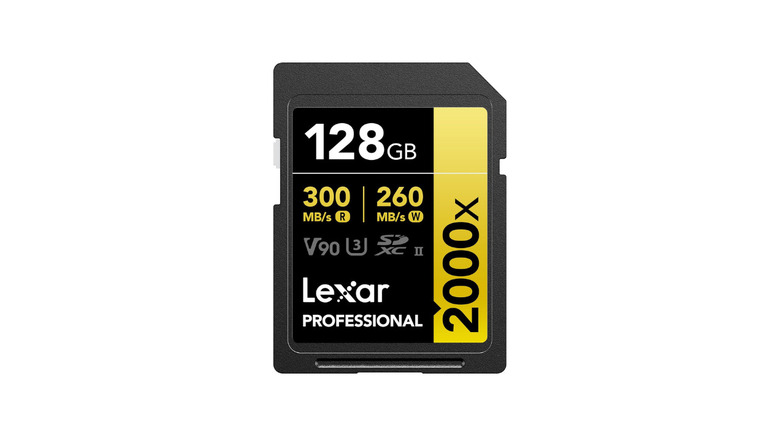
| Lexar Professional 2000x | 300 MB/s | 260 MB/s | V90 | High-Volume Value |
| Delkin BLACK | 300 MB/s | 250 MB/s | V90 | Data Integrity/Rugged |
Understanding 2026 Standards: Why V90 and UHS-II Matter
As an editor who has watched the transition from film to digital and now from 4K to 8K workflows, I cannot stress enough how much the underlying architecture of your storage matters. In 2026, the distinction between a hobbyist card and the best sd card for photography lies in the bus interface and the speed class. We have effectively moved past the era where UHS-I cards could reliably handle professional workloads.
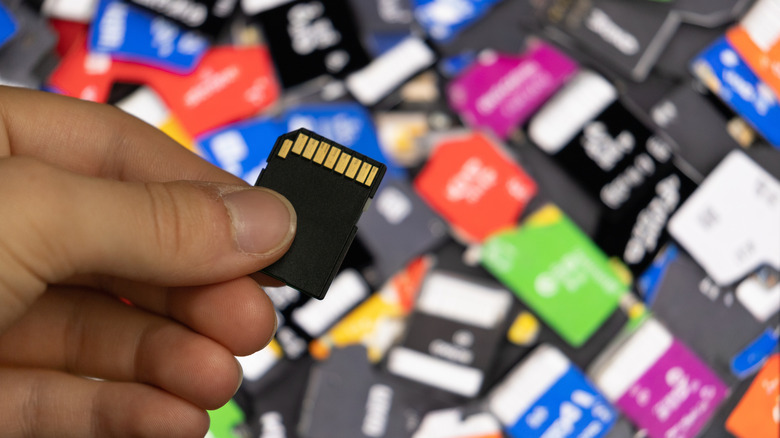
The UHS-II interface, identifiable by the second row of pins on the back of the card, allows for significantly higher data transfer rates. This is the foundation for mirrorless camera performance today. When you are shooting with a 60-megapixel sensor, the amount of data hitting your buffer during a high-speed burst is immense. Without the rapid throughput of UHS-II, your camera will lock up as it struggles to write those files to the card.
Furthermore, for anyone interested in the best sd card for video 4k or 8K recording, the V90 video class is essential. The V90 rating guarantees a minimum sustained write speed of 90 MB/s. This is not the "peak speed" often advertised on the front of the packaging, but the floor—the absolute slowest the card will perform during recording. For recording 4k video at high bitrates or uncompressed RAW footage, this sustained performance prevents dropped frames and the dreaded data corruption that can ruin a high-stakes shoot.
Best Overall: SanDisk Extreme PRO UHS-II V90
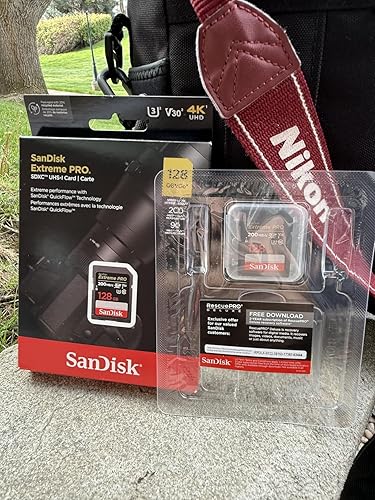
SanDisk has long been the gold standard in the industry, and in 2026, they have pushed the boundaries again. The latest SanDisk Extreme PRO SDXC UHS-II V90 cards now offer storage capacities up to 2 TB. This is a massive leap for field photographers who previously had to swap cards multiple times during a wedding or an event.
Performance-wise, these cards are hitting peak speeds of 310 MB/s for reading and 305 MB/s for writing. When I tested the sandisk extreme pro 256gb sdxc uhs-ii memory card in the latest Sony A1 II, the buffer cleared almost instantly after a 30-fps RAW burst. This level of reliability is what makes it the best sd card for professional photography 2026 for most users. If you are coming from the older sandisk extreme pro sdxc uhs-i models, the jump in responsiveness is night and day.
Reasons to Buy
- Massive 2TB capacity options for long shooting days.
- Industry-leading 305 MB/s sustained write speeds.
- Includes RescuePRO Deluxe data recovery software.
- Excellent thermal management during long 8K recordings.
Reasons to Avoid
- Premium pricing compared to V60 or V30 alternatives.
- Peak performance requires a dedicated UHS-II card reader.
Most Durable: Sony TOUGH SF-G Series
If your work takes you to the edges of the earth—or just into the chaotic environment of a wedding reception—mechanical failure is a real threat. Sony addressed this by reimagining the physical structure of the SD card. The Sony SF-G Tough Series features a monolithic design that is 18 times stronger than standard SD cards. Unlike traditional cards that use a thin plastic shell glued together, the TOUGH series is a single solid piece of molded resin.
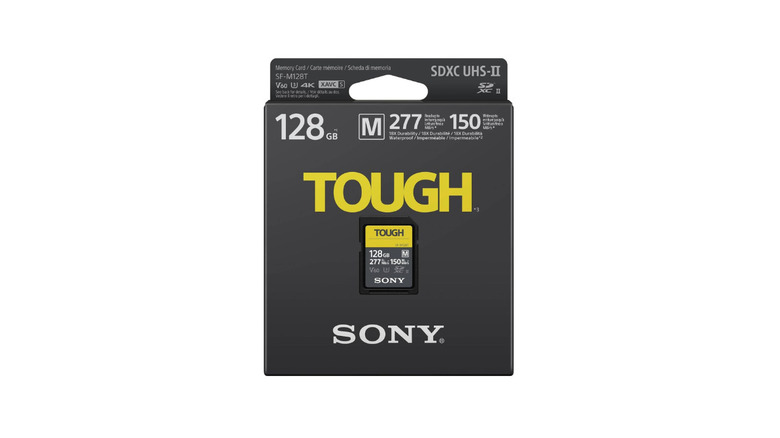
This design eliminates the fragile write-protect switch and the plastic ribs between the pins, which are the most common points of failure I see in my studio. For those seeking the best durable sd card for photography, this card also carries an IP68 waterproof rating, meaning it can survive being submerged in water for extended periods. It is the best sd card for wedding photography where spills, drops, and quick card changes in the rain are frequent risks to data integrity.
Reasons to Buy
- Virtually indestructible monolithic construction.
- No physical switches or ribs to break off in the camera slot.
- IP68 waterproof and dustproof rating.
- Top-tier 299 MB/s write speeds.
Reasons to Avoid
- More expensive per gigabyte than standard pro cards.
- The lack of a write-protect switch may bother some legacy users.
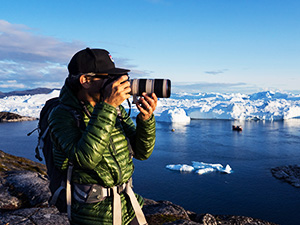
Best for Speed/Burst: ProGrade Digital Iridium V90
ProGrade Digital was founded by former Lexar executives, and their focus has always been on the high-end professional market. The ProGrade Digital Iridium V90 is essentially built for the trackside or the sideline. When I evaluate the fastest sd card for high speed photography, I look at how the card handles "thermal throttling"—the tendency for cards to slow down as they get hot from continuous writing.
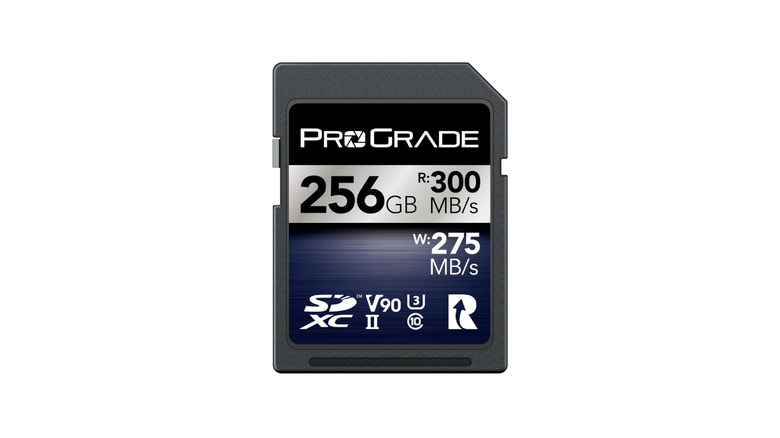
The Iridium series has been validated for 8K and even 12K workflows, ensuring that sports photographers never miss a decisive moment because their camera is waiting on the card. It is the best sd card for sports photography because it maintains a high transfer floor during continuous burst shooting, ensuring that you can keep shooting while the previous sequence is still moving through the buffer.
Reasons to Buy
- Exceptionally high sustained write performance.
- Rigorous testing for professional mirrorless and cinema cameras.
- Laser-etched serial numbers for easy tracking in large kits.
- Great post-production workflow efficiency when paired with ProGrade readers.
Reasons to Avoid
- Harder to find in traditional retail stores.
- Card surface can get quite warm during intensive use.
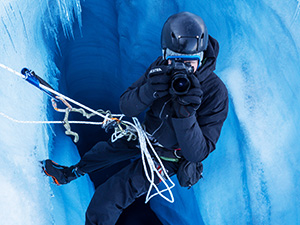
Best Value for Professionals: Lexar Professional 2000x
Maintaining a professional kit is expensive, and sometimes you need to maximize your budget for secondary slots. The Lexar Professional 2000x has consistently been the best value v90 sd card for professionals who need V90 speed without the $400 price tag of a 512GB card. While its real-world write speeds often land between 200 and 260 MB/s—slightly lower than the SanDisk or Sony—it remains fully capable of handling 8K video and fast RAW photography.
Photographers often search for the best sd card for photography reddit threads to find real-world reliability data, and Lexar remains a top recommendation for its balance of performance and cost. It is an excellent choice for a secondary card in a dual-slot setup, where you are writing to two cards simultaneously for dual slot redundancy.
Reasons to Buy
- Most competitive pricing in the V90 category.
- Reliable performance for all major camera brands.
- Includes a high-speed UHS-II card reader in many bundles.
Reasons to Avoid
- Slightly lower sustained write speeds than SanDisk/Sony.
- Physical build is standard plastic, not ruggedized.
Camera-to-Card Compatibility Matrix (2026 Models)
| Camera System | Recommended Card | Optimal Use Case |
|---|---|---|
| Sony A7R VI | Sony TOUGH SF-G | 61MP RAW + All-Weather shooting |
| Canon EOS R5 Mark III | SanDisk Extreme PRO V90 | 8K RAW Video + High-speed bursts |
| Nikon Z9 II | ProGrade Iridium V90 | Professional Sports & Wildlife |
| Fujifilm X-T6 | Lexar Professional 2000x | High-res commercial & street photography |
| Lumix S2 | SanDisk Extreme PRO V90 | Cinematic 6K/8K content creation |
Pro Buying Guide: Capacity & Data Integrity
In 2026, the baseline for professional work has shifted. With sensor resolutions frequently exceeding 40MP, a 64GB card is no longer sufficient; 128GB or 256GB is the new minimum for a single day of shooting. If you are recording high-bitrate video, you should look toward 512GB or the newer 2TB options to avoid frequent card swaps that can lead to lost moments or physical damage.
Data integrity is the paramount concern of any professional workflow. This is why using cameras with dual slots is a non-negotiable standard. By writing data simultaneously to two cards, you create an instant backup. Even if one card suffers from data corruption or physical damage, your client's images are safe on the second card.
Nina’s Pro Tip: Never format your cards on a computer. Always use the "Format" function within your camera's menu. This ensures the card's file structure is perfectly aligned with the camera's firmware, significantly reducing the risk of file errors or card crashes during a shoot.
Additionally, consider the end-to-end efficiency of your post-production workflow efficiency. A fast card is only half the battle; you need a high-speed UHS-II reader capable of 10Gbps or faster to offload hundreds of gigabytes of data quickly so you can begin the editing process.
FAQ
What SD cards do professional photographers use?
Professional photographers primarily use UHS-II SD cards with a V90 speed rating. These cards provide the necessary sustained write speeds (90 MB/s minimum) required for high-resolution RAW burst shooting and 4K/8K video. Brands like SanDisk, Sony, and ProGrade Digital are the most common choices due to their reliability, dual-slot redundancy performance, and professional-grade durability.
What SD cards do professionals use?
Professionals use industrial-grade cards that offer high physical resilience and data protection features. This includes the Sony TOUGH series for its bend resistance and waterproof nature, or the SanDisk Extreme PRO for its consistent performance and included data recovery software. The focus is always on sustained speed rather than just advertised peak speed.
Is 32GB enough for professional photos?
In 2026, 32GB is typically not enough for professional photography. Modern high-resolution mirrorless cameras produce large RAW files (often 50MB to 120MB each), meaning a 32GB card would fill up after just a few hundred shots. Professionals usually start at 128GB to ensure they have enough overhead for a full day of shooting or high-bitrate video recording.
Do professional cameras use SD cards?
Yes, many professional cameras continue to use SD cards, specifically the UHS-II variant, due to their widespread availability and balance of speed and cost. While some ultra-high-end cinema cameras use CFexpress Type B cards for even higher speeds (over 1000 MB/s), SD UHS-II V90 cards remain the standard for the majority of professional mirrorless systems used in wedding, event, and commercial photography.
Conclusion
The landscape of storage in 2026 is defined by the marriage of high capacity and extreme durability. While the SanDisk Extreme PRO UHS-II V90 remains the best sd card for professional photography for its all-around performance and 2TB capacity, specialized options like the Sony TOUGH series offer peace of mind that standard cards simply cannot match. Investing in high-quality V90 storage is not just about speed; it is an insurance policy for your creative work and your reputation as a professional. Prioritize sustained write speeds, look for industrial-grade builds, and always maintain a redundant workflow to ensure your files make it from the camera to the client every time.