For years, the conversation around the "smart home" was dominated by the novelty of voice-activated lights and the convenience of asking a speaker for the weather. In 2025, that narrative has undergone a fundamental shift. We are no longer looking at these devices as mere "convenience gadgets"; they have transitioned into essential financial tools. Just as a savvy traveler analyzes the cost-per-mile or the loyalty dividends of a premium credit card, a homeowner must now view automation through the lens of Return on Investment (ROI).
The primary fiscal enemy in the modern household is the "Vampire Draw"—the silent, phantom load of electricity consumed by devices in standby mode. Smart home upgrades save money by systematically eliminating this waste through smart plugs and optimizing HVAC cycles via intelligent thermostats. Beyond the financial ledger, the best time-saving smart devices, such as NFC tags for instant task automation and motion sensors, remove the friction of manual lighting and security checks. When implemented correctly, these upgrades transform a house from a passive structure into an active participant in your financial health.

1. Smart Thermostats: The Anchor of Energy Savings
In the world of home efficiency, the thermostat is the executive board. It controls the single largest energy expenditure in most households: climate control. According to recent industry data, homeowners implementing geo-fenced "Workday Away" routines on smart thermostats can reduce annual cooling and heating costs by an average of $150.
The mechanics of this saving are simple but profound. Traditional programmable thermostats rely on fixed schedules, which fail the moment your life becomes unpredictable. A smart thermostat utilizes adaptive learning and geofencing—tracking your smartphone’s location—to determine when the house is truly empty. Instead of cooling a vacant living room, the system enters an "Eco Mode," only ramping back up when it detects you are within a five-mile radius of home.
- Adaptive Learning: Devices like the Nest Learning Thermostat analyze your habits for a week and then build a schedule for you.
- Remote Room Sensors: By placing sensors in bedrooms or offices, the system prioritizes the temperature of the room you are actually in, rather than the hallway where the main unit usually sits.
- Utility Rebates: Many energy providers offer "Rush Hour Rewards," where they pay you to slightly adjust your temperature during peak grid demand.
For those seeking the highest ROI, I recommend the Google Nest Learning Thermostat or the ecobee SmartThermostat with Voice Control. Both offer the granular data reporting required to track your "Pre-Peak" automation, shifting approximately 20% of a household's daily energy consumption away from high-rate utility windows.
2. Smart Plugs & Energy Monitors: Killing Phantom Loads
While the thermostat handles the heavy lifting, the "vampire draw" occurs in the margins. Game consoles, printers, coffee makers, and older televisions can consume significant power even when "off." Smart plugs act as a physical disconnect for these energy culprits.
By utilizing "Pre-Peak" automation, you can program these plugs to shut off completely during your utility company’s most expensive hours. For example, a "10 PM Vampire Kill" routine ensures that every non-essential device in your home office and entertainment center is physically disconnected from the grid until the morning.
Expert Insight: Focus your smart plug investment on "high-idle" devices. A modern LED bulb uses very little standby power, but a 10-year-old laser printer can draw 10-15 watts just sitting idle. Over a year, that’s dozens of dollars wasted on a device you use twice a week.
Quick Wins for Smart Plugs:
- The Coffee Station: Set it to turn on 5 minutes before you wake up and off 30 minutes later.
- The Media Console: Link all peripherals (soundbars, consoles) to a single smart power strip that cuts power when the TV is off.
- The Home Office: Use a motion sensor to trigger the smart plug for your monitors and standing desk, ensuring they only draw power when you are at the chair.
3. Automated Window Coverings: Natural Climate Control
Automated blinds and shades are often dismissed as a luxury, but from a thermal dynamics perspective, they are high-performance insulation. Automated window coverings contribute to financial savings by regulating indoor temperatures, reducing the load on heating and cooling systems by up to 15%.
In the summer, south-facing windows act as massive radiators, forcing your AC to work overtime. A smart blind system integrated with a light sensor can automatically close during the peak "solar heat gain" hours of 1 PM to 4 PM. In the winter, the reverse is true: the system opens to let the sun heat the home naturally and closes at sunset to add an extra layer of insulation against the cold glass.
From a security standpoint, these devices also save time and provide peace of mind. A "Presence Simulation" routine can move shades at irregular intervals while you are traveling, making an empty house look occupied without the need for high-wattage security lighting.
4. Motion & Contact Sensors: Effortless Automation
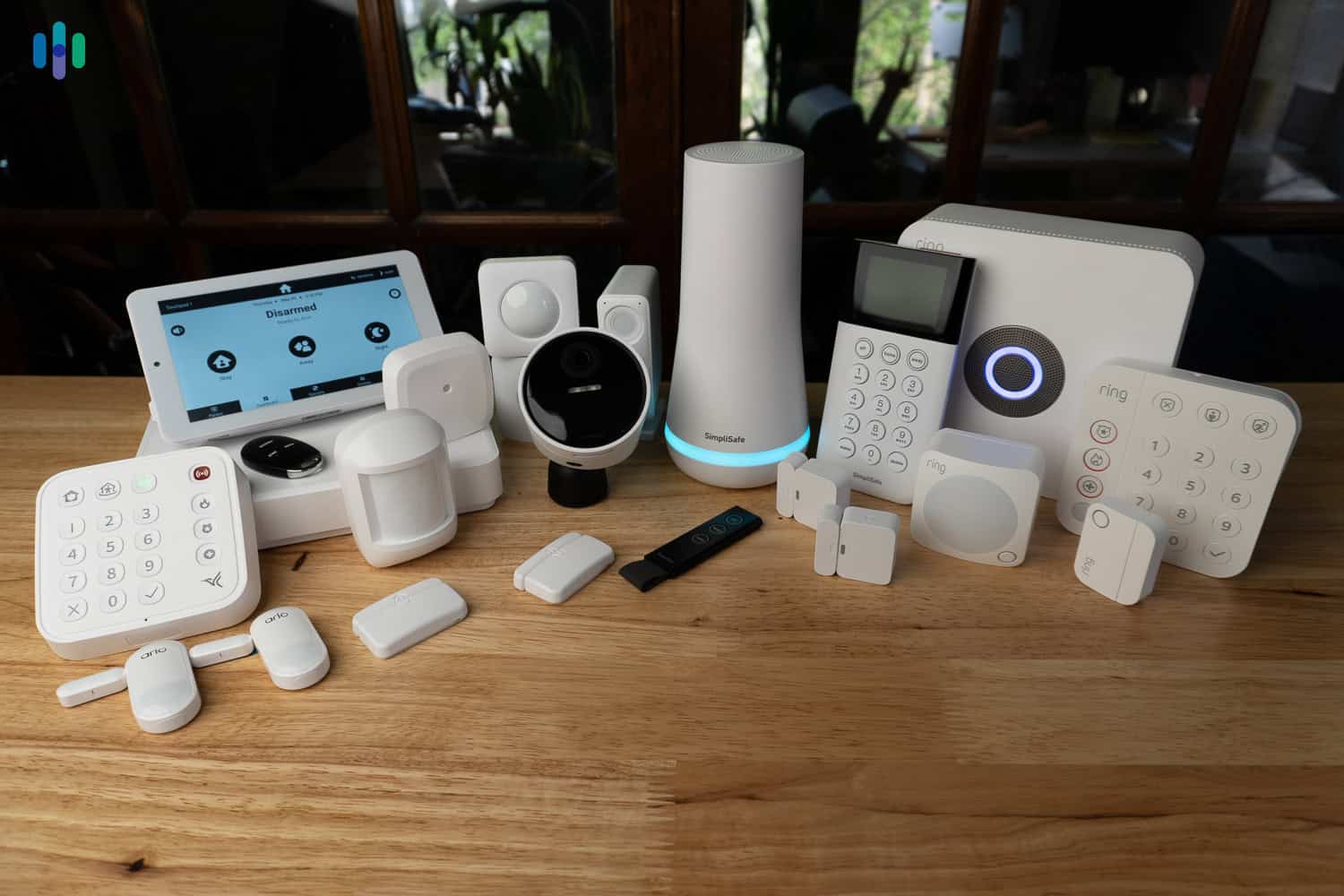
If the thermostat is the executive board, sensors are the frontline employees. Motion sensors are a premier time-saver, eliminating the need for manual lighting checks and solving the "forgetfulness" problem in bathrooms, hallways, and garages.
However, the real "pro move" in 2025 is the integration of contact sensors on windows and doors. When a contact sensor detects that a window has been left open for more than two minutes, it can trigger the smart thermostat to pause the HVAC system. This prevents the "cooling the neighborhood" scenario that plagues many households during the transition seasons.
For those looking to shave minutes off their daily routine, NFC (Near Field Communication) tags are the ultimate time-saving hack. These inexpensive stickers can be placed on a nightstand or by the front door. A single tap of your phone against the tag can trigger a complex "Bedtime" mode: locking the doors, arming the security system, lowering the thermostat, and turning off all "vampire" plugs. This removes the need to navigate multiple apps or wait for voice commands to be processed.
5. High-Efficiency Smart Appliances: The Heat Pump Revolution
When it comes to major investments, the focus for 2025 is the "Heat Pump Revolution." Traditional appliances are being replaced by smart, inverter-driven units that offer massive efficiency gains.
- Smart Washers: Modern front-loaders use 25% less energy and 33% less water than top-loading models. Smart sensors now weigh the load and adjust the water level and detergent dispense to the exact milliliter, preventing resource waste.
- Heat Pump Dryers: Unlike traditional vented dryers that blast heat (and your expensive climate-controlled air) outside, heat pump dryers recirculate air in a closed loop. They offer a 50% energy saving potential over traditional models.
- Smart Refrigerators: These units use inverter compressors that run at variable speeds rather than a simple on/off cycle. This reduces the 24/7 power draw and extends the life of the appliance.
Investing in these high-efficiency appliances is less about the "smart" screen on the front and more about the internal sensors that optimize performance. When your washer can "talk" to your dryer to tell it exactly how damp the clothes are, the cycle time is minimized, saving both time and electricity.

The 'Automation Recipe' Pack: Routines for Instant Savings
To maximize your ROI, you need a strategy. Use the following "recipes" to configure your devices for the highest impact.
| Routine Name | Trigger | Action | Practical Effect |
|---|---|---|---|
| Workday Away | Phone leaves home radius | Thermostat +4°F; All smart plugs OFF | Saves $15-20/month on cooling/standby. |
| Pre-Peak Window | 2:00 PM (Weekdays) | Blinds Close; Dishwasher starts | Shifts 20% load to lower-rate hours. |
| 10 PM Vampire Kill | Time is 10:00 PM | Power cut to office & media center | Eliminates $5-10/month in phantom load. |
| Window Pause | Contact Sensor (Open) | HVAC enters "Fan Only" mode | Prevents HVAC strain; saves unit longevity. |
Future-Proofing: Matter & Mesh Wi-Fi
The most expensive mistake a homeowner can make in 2025 is buying into a closed ecosystem. To ensure long-term ROI, every device you purchase should be Matter compatible. Matter is the new industry standard that allows devices from Apple, Google, Amazon, and Samsung to talk to each other locally, without relying on slow cloud servers. This ensures that if you switch from an iPhone to an Android, your home doesn't become "dumb."
Furthermore, none of these automations will function reliably without a Mesh Wi-Fi system. A standard router often struggles to reach the sensors in far corners of the house or the garage. A mesh system provides the stable foundation necessary for "instant" automation. If a motion sensor takes three seconds to turn on a light because of poor Wi-Fi, you’ve lost the time-saving benefit.
FAQ
Q: Are smart home upgrades really worth the upfront cost? A: Yes, if you prioritize "passive" savings. A smart thermostat usually pays for itself within 12-18 months. Smart plugs pay for themselves even faster if used on high-draw electronics like older TVs or desktop computers.
Q: Which upgrade should I start with if I'm on a budget? A: Start with a smart thermostat. It offers the single largest reduction in monthly utility bills. Following that, a 4-pack of smart plugs and a few motion sensors can be acquired for under $100 and will immediately impact your "vampire draw."
Q: Do these devices work if my internet goes down? A: If you choose Matter-compatible devices and a local hub, most of your basic automations (like motion sensors triggering lights) will continue to function. Cloud-based features, like remote control via your phone from another city, will require an active connection.
The modern smart home is no longer about the "cool factor"—it’s about operational efficiency. By targeting the largest energy sinks in your home and automating the repetitive tasks that eat into your day, you aren't just buying gadgets; you are buying back your time and securing your financial future. Start with the thermostat, kill the vampire loads, and let your home start paying you back.