Quick Facts
- Worst Safety Fail: Galaxy Note 7 due to severe battery fire risk and global FAA flight bans.
- Worst Durability: Original Galaxy Fold featuring a fragile display that failed within days of release.
- Worst Value: Galaxy Note 20 for offering a plastic build and 60Hz screen at a $1,000 flagship price.
- Worst Software: Samsung Behold II, often cited for extreme TouchWiz lag and lack of Android updates.
- Worst Gimmick: Samsung UpStage with its confusing dual-sided design and terrible battery life.
- Market Disappointment: Galaxy S5, which missed internal sales targets by 40 percent in 2014.
Samsung’s most notable smartphone failures include the Galaxy Note 7, which was permanently discontinued following global reports of battery combustion and fires. Other significant missteps include the original Galaxy Fold, which faced immediate screen durability issues, and budget models like the Galaxy J2 that lacked basic sensors such as an ambient light sensor. These failed samsung phone models highlight the risks of aggressive engineering and unpolished software in the competitive mobile landscape.
Samsung is currently a titan of the mobile industry, with the S24 Ultra and its folding Z series defining the cutting edge. However, the road to dominance has been littered with catastrophic hardware failures and bizarre design choices. For every success story, there is a device that suffered from thermal runaway, software bloat, or simply a terrible value proposition. To understand why Samsung’s current devices are so refined, we must look back at the worst smartphones the company ever released.
The Safety Catastrophe: Samsung Galaxy Note 7 Recall History
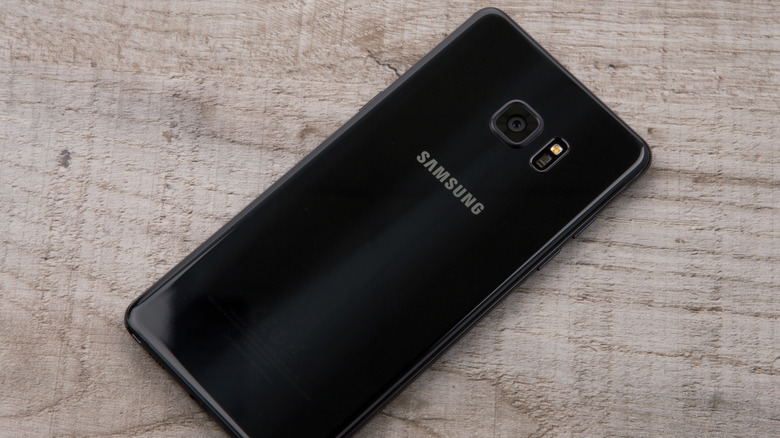
The Galaxy Note 7 is not just one of the failed samsung phone models; it is the most infamous disaster in consumer electronics history. Launched in 2016, the device was initially praised for its stunning symmetrical design and HDR display. Within weeks, reports surfaced of phones smoking, sparking, and exploding. The technical cause was a manufacturing defect in the batteries where the negative poles reached the rounded cell end, an issue exacerbated by an aggressive 19.4% battery-to-body ratio.
Samsung attempted a recall and replacement, but the nightmare continued when replacement devices utilizing batteries from ATL also caught fire due to protruding welds and thin insulation. This double failure cost Samsung an estimated $17 billion in recovery costs and lost revenue.
- Product recall: Over 2.5 million units recalled globally.
- Regulatory impact: The FAA and other global aviation authorities strictly banned the device from all aircraft.
- Engineering Legacy: The incident forced Samsung to implement an 8-Point Battery Safety Check to prevent future cases of battery combustion.
Engineering Over-Ambition: The Original Galaxy Fold
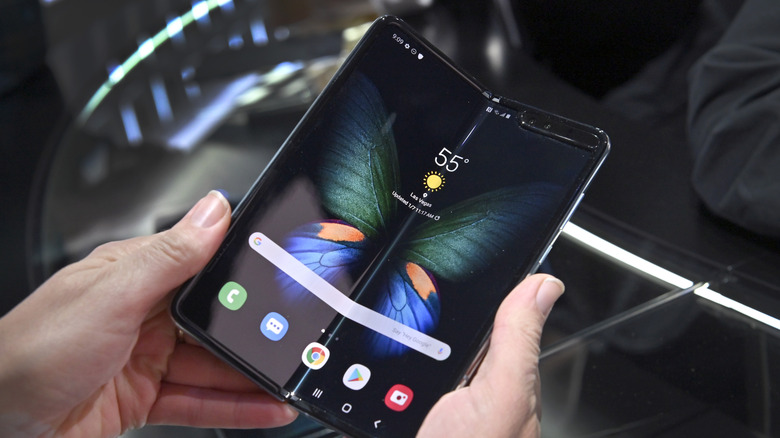
The unveiling of the Samsung Galaxy Fold was meant to be a historical milestone. Instead, it became a case study in early adopter risks. Reviewers discovered that removing a clear film from the display—which looked like a standard disposable screen protector—irreparably damaged the panel. Furthermore, the hinge design allowed debris to enter behind the screen, causing immediate display durability issues.
While the current Z Fold series is reliable, the first generation was a classic example of unrefined hardware engineering. Samsung had to delay the launch by five months to reinforce the hinge and wrap the protective layer around the edges of the frame to prevent peeling.
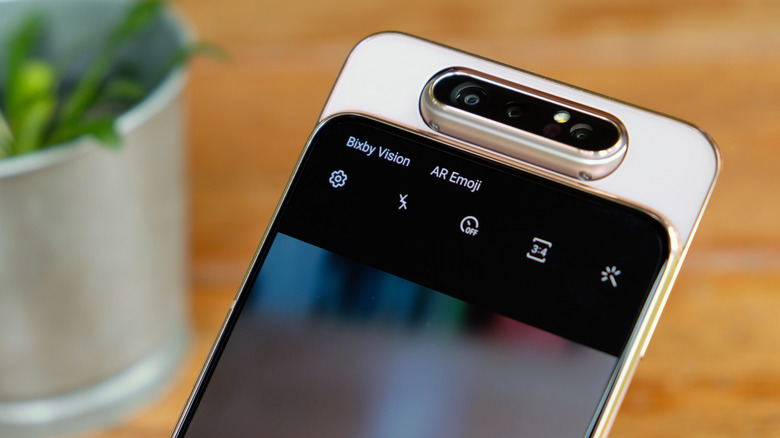
Similar engineering over-ambition was seen in the Galaxy A80. It attempted to eliminate the notch with a motorized rotating camera. While impressive, these motorized parts were dust magnets and created additional points of mechanical failure. When identifying top 10 worst smartphones, the risks of buying motorized pop up camera phones usually stem from long-term reliability concerns that the A80 proved to be true.
The Software Slog: TouchWiz Bloat and Tablet Fails
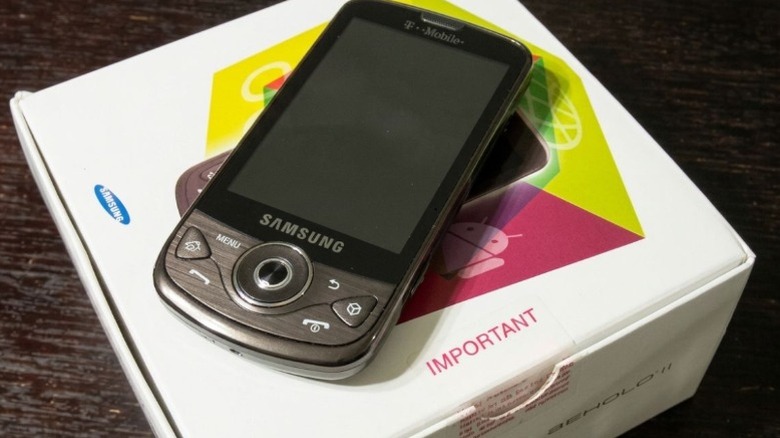
Before the sleek One UI we use today, Samsung owners struggled through the TouchWiz era. This software skin was notorious for profound user interface lag and excessive software bloat. The Samsung Behold II was perhaps the peak of this frustration. Despite having decent hardware for 2009, the software was incredibly slow, and Samsung famously abandoned the device shortly after launch, leaving users stuck with an outdated version of Android.
- Lag and Overhead: TouchWiz was so resource-heavy that it often slowed down flagship processors.
- Duplicate Apps: Samsung insisted on including its own versions of every Google app, from browsers to voice assistants like the unloved S-Voice.
- Tizen Flops: Early attempts to move away from Android, such as the Samsung Z1, failed because they lacked a robust third-party app ecosystem.
Value Disparity: Flagships That Felt Like Budget Phones
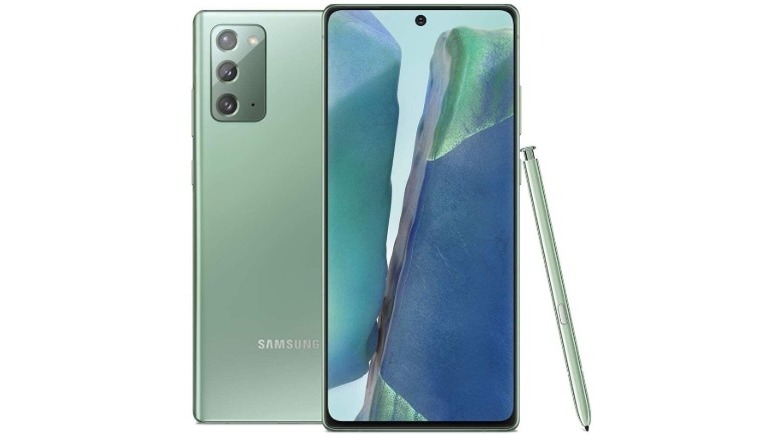
Sometimes a phone isn't a failure because it breaks, but because it feels like a rip-off. The base Galaxy Note 20 is a prime example. In 2020, Samsung charged $1,000 for a phone that featured a plastic back (marketed as Glasstic), a 60Hz refresh rate screen, and no expandable storage. Compared to the Note 20 Ultra or rival flagships, the value proposition was non-existent.
Similarly, the Galaxy S5 was considered a market disappointment. In 2014, it sold 12 million units in its first three months, a figure that was 40 percent lower than the company's internal expectations. Users were put off by the dimpled plastic design that many compared to a band-aid.
Flagship Specs vs. Reality: The Note 20 Disparity
| Feature | Galaxy Note 20 (Base) | Galaxy Note 20 Ultra |
|---|---|---|
| Build Material | Reinforced Polycarbonate (Plastic) | Gorilla Glass Victus |
| Display Refresh Rate | 60Hz | 120Hz Variable |
| Resolution | 1080p | 1440p |
| Storage | Fixed 128GB | Expandable via MicroSD |
| Price at Launch | $999 | $1,299 |
Forgotten Flops: The Gimmick Era
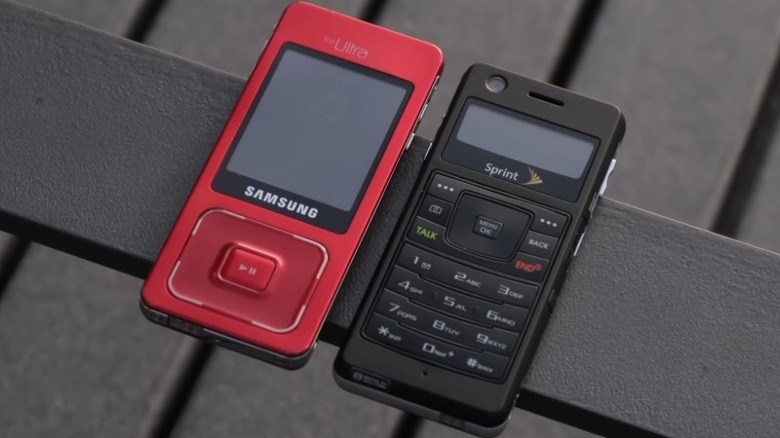
Throughout the mid-2000s and early 2010s, Samsung threw every possible idea at the wall. The Samsung UpStage was one of the strangest failed samsung phone models list entries. It featured a dual-sided design where one side was a dedicated MP3 player and the other was a tiny-screened phone. Switching between the two was clunky, and the battery was split between the phone and a case, making it impractical for travel.
Then there was the Galaxy Beam, a phone with a built-in projector. While it was a cool party trick, the projector drained the battery in under two hours and made the phone incredibly thick and heavy. These budget smartphones with poor performance to avoid didn't just fail because they were cheap; they failed because they replaced utility with gimmicks.
The Low-End Letdowns: Galaxy J2 and Budget Omissions
While the flagship disasters get the headlines, many users suffered through the Galaxy J2 series. This device was often sold at low prices but lacked basic hardware engineering essentials. Most notably, Samsung omitted the ambient light sensor. This meant the phone could not automatically adjust its brightness, forcing users to manually slide the brightness bar every time they walked outside. The lack of basic sensors combined with significant software bloat made the J2 a miserable experience for anyone on a budget.
FAQ
What is considered the worst phone?
While many phones have flaws, the Galaxy Note 7 is widely considered the worst phone in history. Its status isn't just due to performance, but because it posed a physical safety hazard. It is the only modern smartphone that was universally banned from air travel and became the center of a total global recall of 2.5 million devices.
Which phone is banned in the US?
The Galaxy Note 7 is effectively banned in the US and the rest of the world. After the second recall, Samsung disabled the remaining units via software updates that prevented them from charging. Furthermore, the Department of Transportation issued an order in 2016 banning the device from all US flights, labeling it a hazardous material.
Which phone is banned in America?
Aside from the Note 7 recall, America has seen various bans on brands like Huawei and ZTE due to national security concerns. However, regarding Samsung specifically, the Note 7 remains the only model that was federally banned from transportation systems due to fire risk.
Is Samsung worse than iPhone?
This is subjective and depends on the era. While Samsung has had higher-profile hardware failures like the Note 7, Apple has faced its own issues, such as "Antennagate" on the iPhone 4 and "Bendgate" on the iPhone 6 Plus. Today, both brands offer high-quality reliability, with Samsung leading in display and camera hardware innovation while Apple excels in ecosystem integration.
Which is the weakest phone?
The original Galaxy Fold is often cited as the weakest flagship phone due to its highly fragile display. Unlike standard glass screens, the initial Fold used a plastic polymer that could be punctured with a fingernail. In the budget segment, devices like the Galaxy J2 are considered "weak" due to their use of outdated chipsets and the omission of standard sensors.
Samsung’s journey to the top has been a volatile one. From the charred remains of the Note 7 to the plastic compromises of the Note 20, these failures have served as expensive lessons in safety, value, and engineering. However, it is through these flops that Samsung developed the rigorous testing standards that make today's Galaxy devices some of the best on the market.
Do you have a Samsung horror story? Did you buy an original Fold or struggle with an old TouchWiz device? Let us know in the comments below.