In the world of high-end technology, the court of public opinion is often presided over by those who scream the loudest on Reddit and social media. When Apple unveiled the Vision Pro at its eye-watering $3,499 price point, the verdict was swift: it was a "heavy," "overpriced," "scuba mask" with "no games." But to view the Vision Pro through the lens of a consumer gaming peripheral is a category error of the highest order.
As a critic who has spent decades analyzing the ROI of high-end hardware, I see a different narrative unfolding. While the general public fixates on the lack of a native Netflix app, professionals in surgery, aerospace, and industrial design are quietly integrating this device into workflows where it is not just useful—it is transformative. Professionals find value in the Apple Vision Pro because its high-end hardware, specifically the dual-chip architecture and micro-OLED displays, enables critical tasks like surgical planning and industrial design that consumer-grade headsets simply cannot handle.
Before we dive into the data, let’s reconcile the gap between what the average user sees and what the specialist requires.
| Feature | Consumer Perception | Professional Reality |
|---|---|---|
| Price Point | $3,499 is "ridiculous" for a media player. | Competitive compared to $100k+ industrial simulators. |
| Hardware Specs | "Overkill" for watching Disney+. | Essential 23-million-pixel fidelity for detail-oriented work. |
| Weight & Comfort | Too heavy for an 8-hour gaming session. | Acceptable for a 90-minute high-stakes surgical procedure. |
| Ecosystem | Lacks AAA games and popular social apps. | Robust support for Unity, Medical VR, and CAD visualization. |
The Hardware Benchmark: Why 'Overkill' for Consumers is 'Essential' for Pros
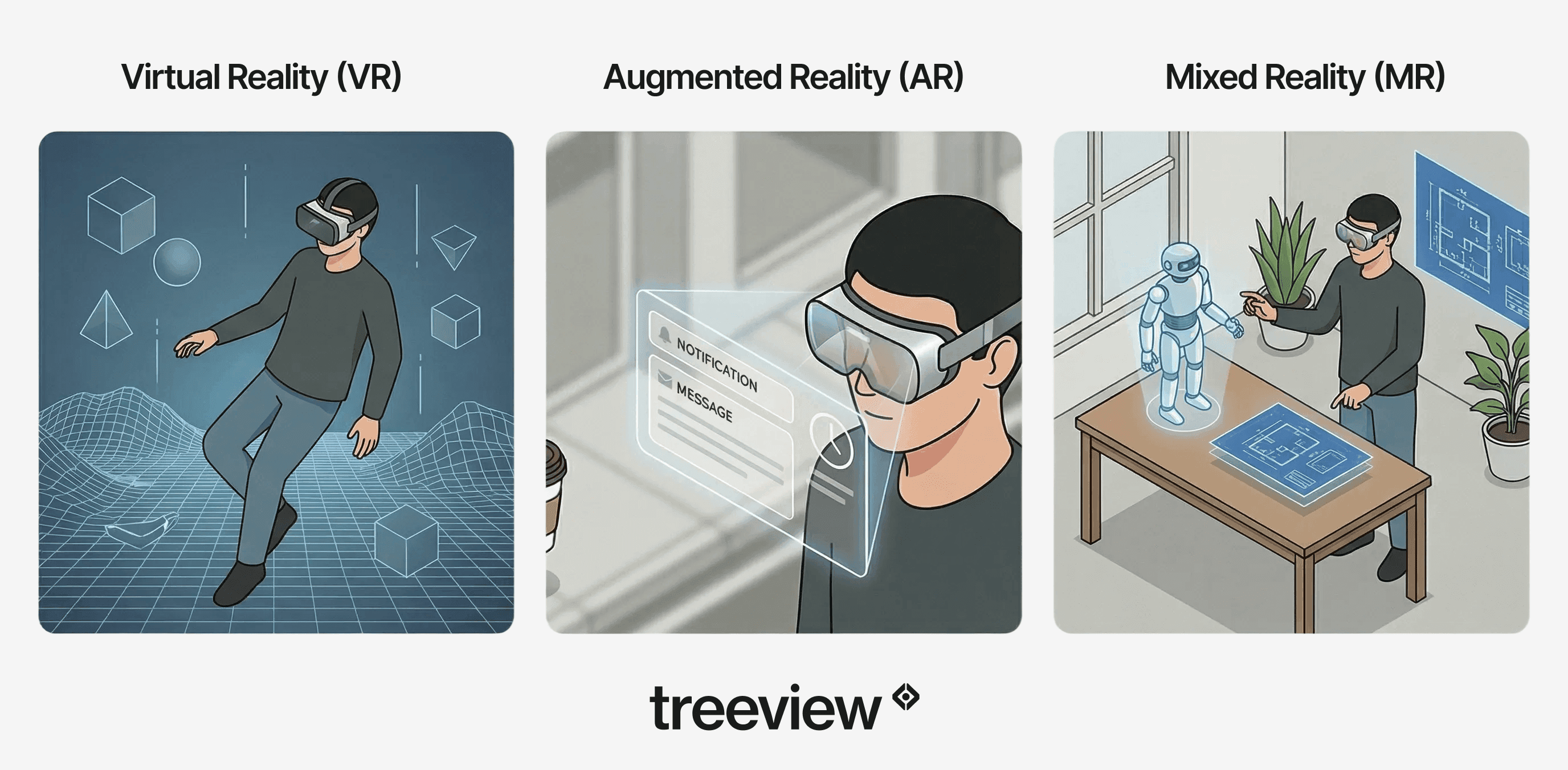
To understand why the "haters" are missing the mark, we must look at the silicon. The Vision Pro isn’t just a headset; it’s a dual-processor workstation strapped to your face. The combination of the M2 (and the impending M5) for general processing and the R1 for sensor input is what separates "spatial computing" from "virtual reality."
The primary professional applications for Apple Vision Pro include medical visualization, spatial prototyping, high-end simulation, and deep-focus productivity using tools like Microsoft 365. For a consumer, the industry-leading micro-OLED displays—which pack 23 million pixels into a space the size of a postage stamp—might seem like a luxury for watching movies. For a professional, it is the 2026 benchmark for high-end mixed reality hardware quality.
In industrial design, fidelity isn't a "nice-to-have"; it’s the difference between spotting a structural flaw in a 3D model and missing it. The R1 chip processes sensor data with a 12-millisecond latency—faster than the blink of an eye. This eliminates the "lag" that causes motion sickness in cheaper headsets like the Quest 3, allowing professionals to work in mixed reality for extended periods without the vestibular mismatch that plagues lower-end hardware.
Medical Revolution: From Precision Planning to Live Surgery
The most compelling data for the Vision Pro’s utility comes from the operating room. Medical professionals utilizing Vision Pro for surgical procedures report significant improvements in effectiveness and a notable reduction in surgical field risk.
Platforms like Medivis are already using the device to overlay patient anatomy directly onto the surgical site. Traditionally, a surgeon has to look away from the patient to a 2D monitor to check an MRI or CT scan. With the Vision Pro, that data is "anchored" in 3D space.
"The ability to see a patient's internal vascular structure as a holographic overlay before the first incision is made isn't just a gimmick," says one neurosurgeon. "It reduces cognitive load and increases the precision of our approach."
The device's high-fidelity occlusion—the ability to realistically place digital objects behind physical ones—allows for a level of anatomical visualization that was previously restricted to multi-million dollar institutional equipment. When framed against the cost of a dedicated surgical navigation system, the $3,499 price tag is practically a rounding error.
Industrial Design & Engineering: The F1 and Aerospace Standard
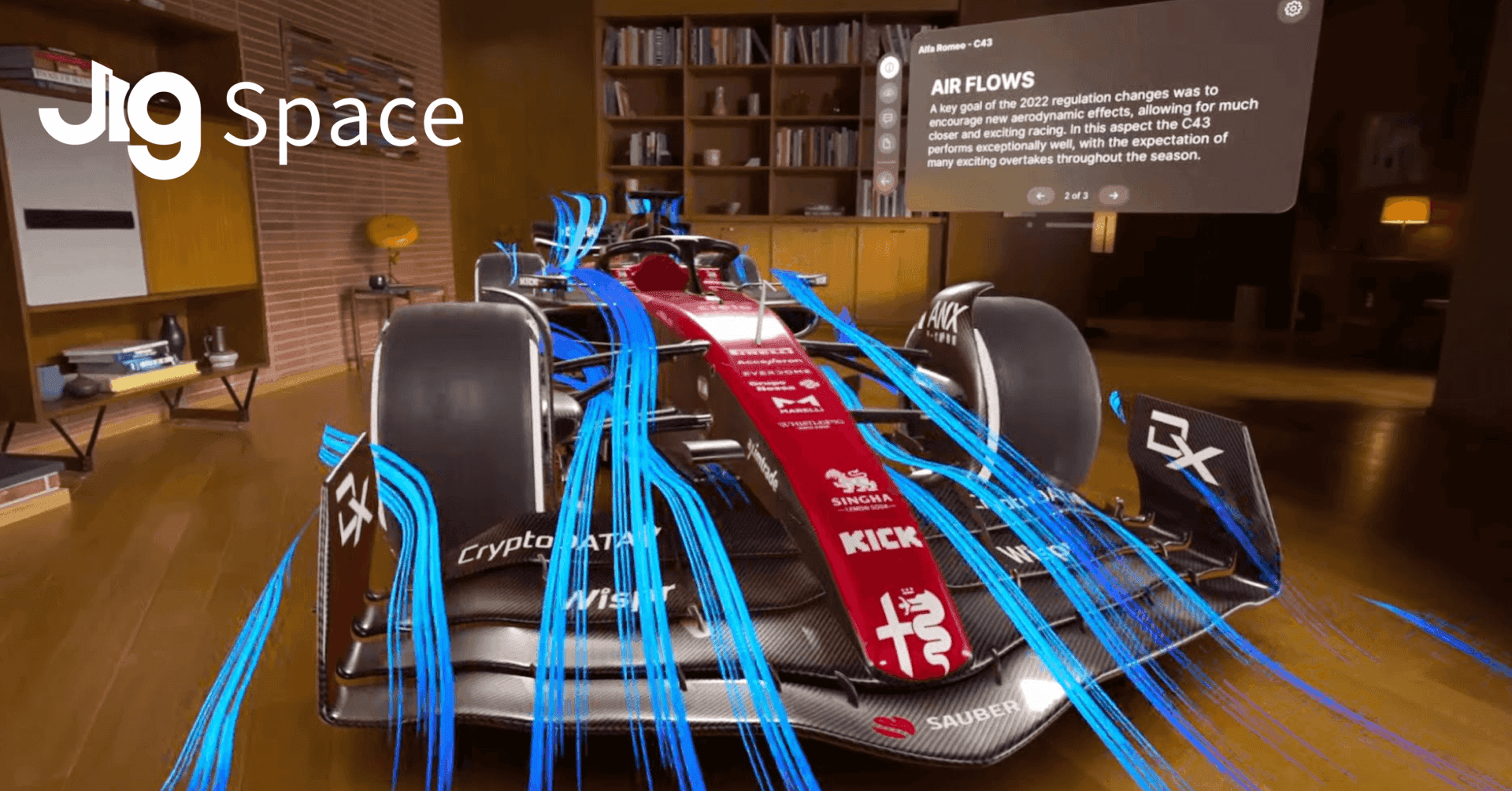
In the high-stakes world of Formula 1, aerodynamics is a game of millimeters. Using applications like JigSpace, engineers can visualize 3D CAD data of a car's air intake or wing assembly in real-time. Instead of squinting at a flat screen, they can walk around the part, pull it apart, and see the airflow simulations (Digital Twins) rendered with high-fidelity textures.
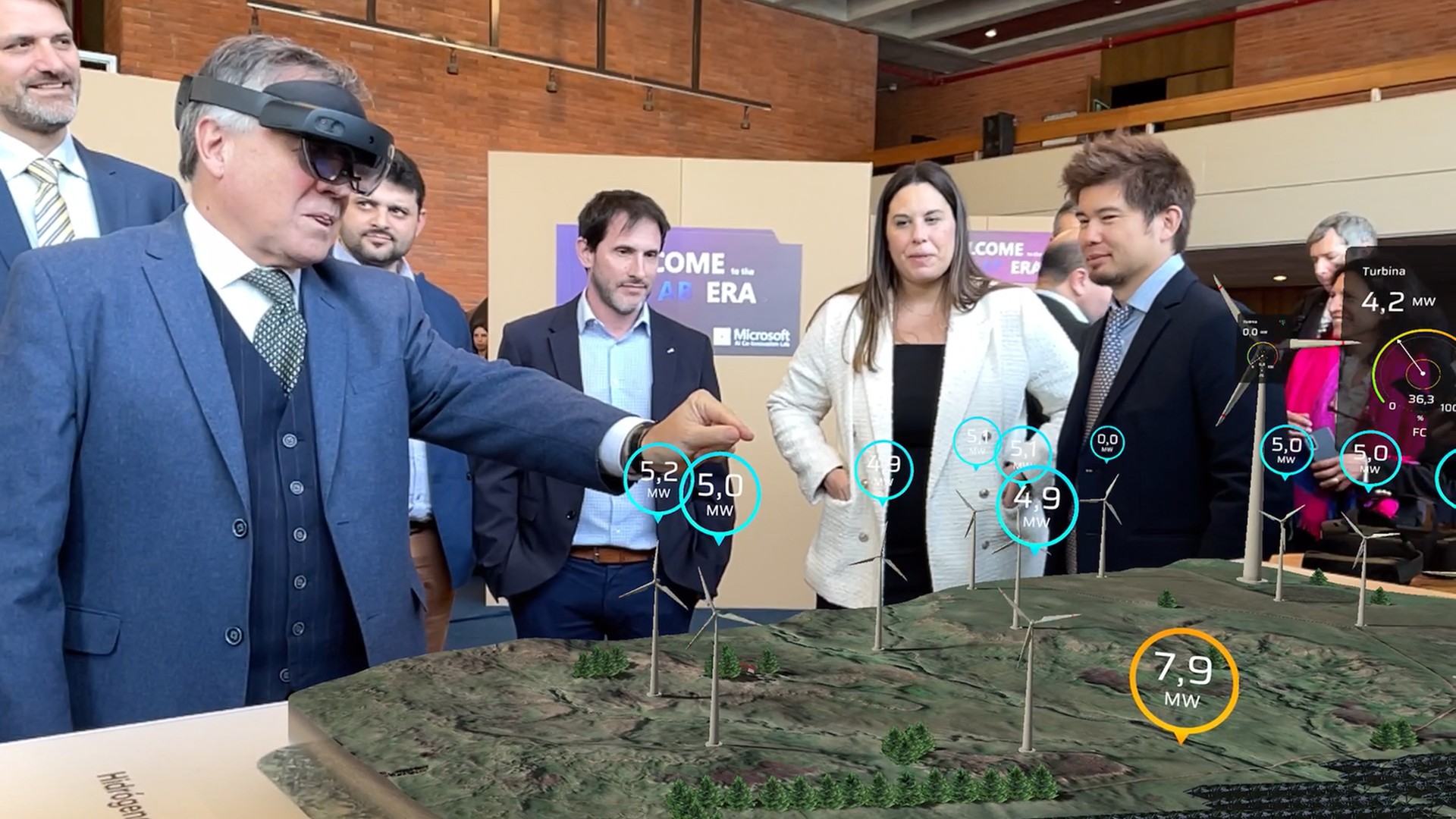
This extends to the aerospace industry and renewable energy sectors. Companies are collaborating with Microsoft and Treeview to integrate AI-powered predictive models into spatial environments. By creating a "Digital Twin" of a wind turbine or a jet engine, technicians can simulate various failure states and maintenance procedures in a safe, cost-effective virtual environment before touching a single bolt.
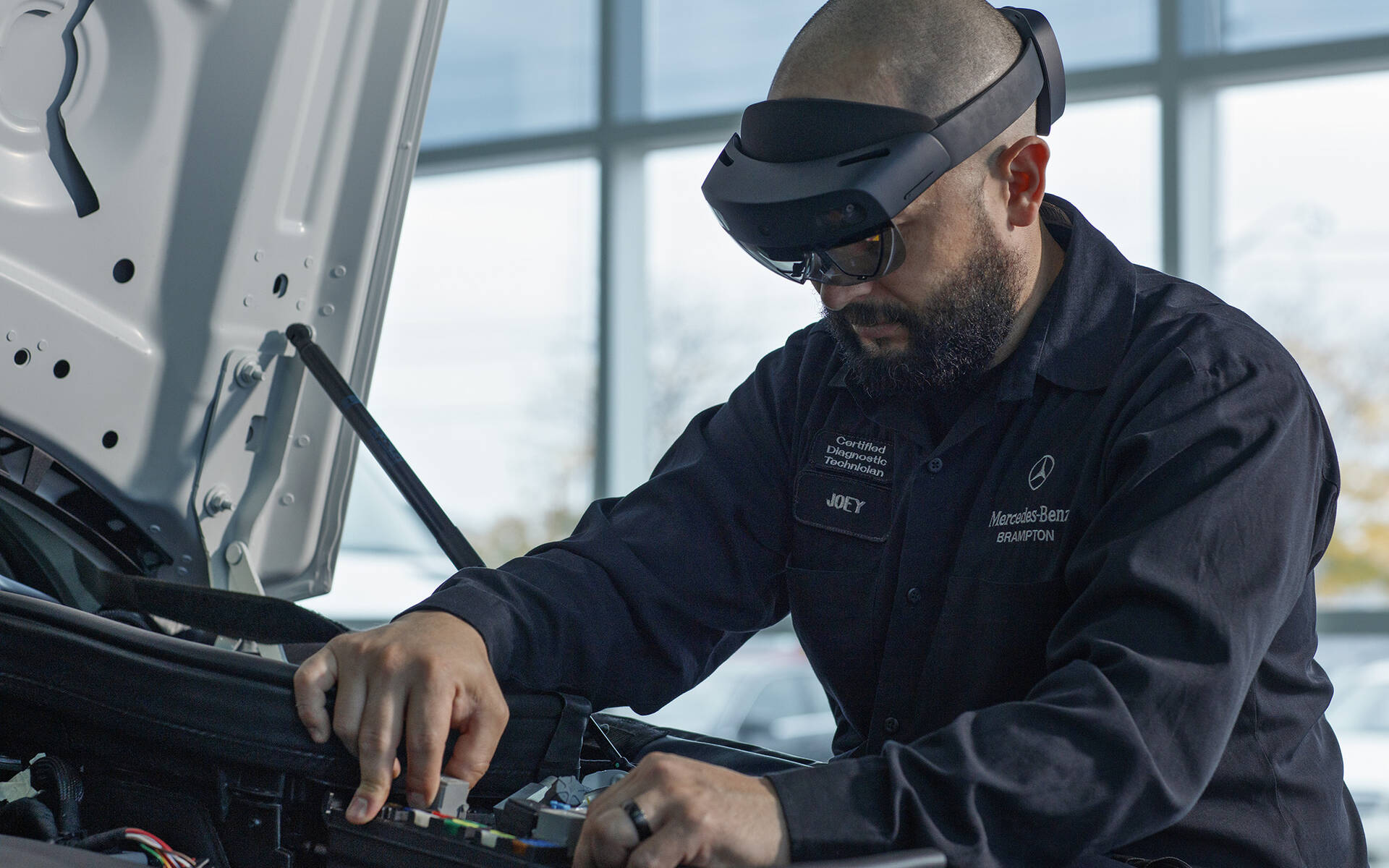
Mercedes-Benz has already begun deploying spatial AR for global expert collaboration. When a technician in a remote dealership encounters a complex transmission issue, a master technician at headquarters can "dial in" via the Vision Pro. They see exactly what the local technician sees and can "draw" in 3D space, highlighting the specific component that needs adjustment.
The ROI Argument: Why $3,499 is Actually 'Cheap'
Let’s talk numbers. To a consumer, $3,499 represents a very expensive vacation or a down payment on a car. To a business, it’s a capital expenditure (CapEx) that pays for itself through efficiency.
While the $3,499 price point is high for consumers, it is considered competitive in professional sectors compared to the cost of specialized medical machinery and enterprise training equipment. Consider the following comparisons:
- Medical Imaging: A dedicated surgical holographic workstation can cost upwards of $150,000.
- Flight Simulation: High-fidelity flight trainers for pilots cost millions; a Vision Pro-based simulation suite can handle procedural training for a fraction of that cost.
- Industrial Design: The cost of 3D printing a full-scale prototype can run into the thousands per iteration. Visualizing that prototype in spatial computing is essentially free after the initial hardware purchase.
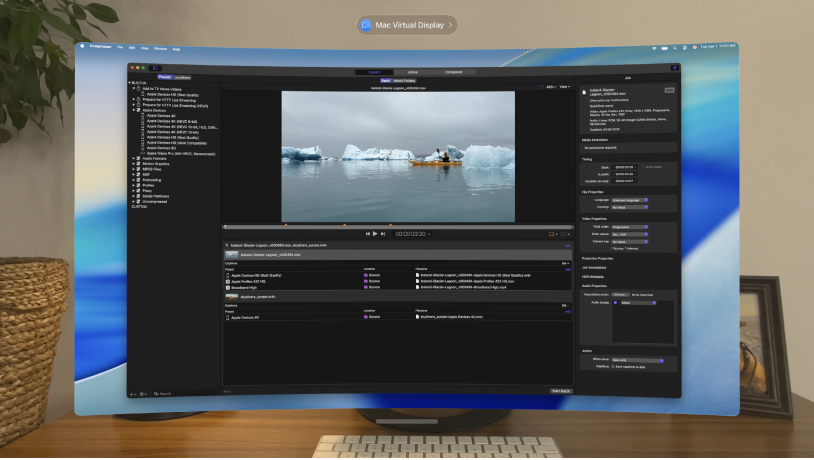
Furthermore, the "Mac Virtual Display" feature allows knowledge workers—coders, editors, and financial analysts—to replace a $5,000 multi-monitor setup with a single headset that offers an infinite, portable workspace. When you factor in the productivity gains from "deep focus" environments (environments that block out office distractions), the ROI becomes even clearer.
The visionOS Ecosystem: Building the Future of Enterprise
Apple isn't just selling hardware; they are building the infrastructure for the next decade of enterprise software. The shift from "AR overlays" (which often feel jittery or disconnected) to "Spatially Aware Systems" is what defines visionOS.
Development platforms like Unity, Unreal Engine, and Apple's own Xcode are prioritizing visionOS because it offers a level of security and privacy that competitors lack. Optic ID—which uses iris scanning for authentication—ensures that sensitive medical or industrial data remains secure. This level of system-level data processing is a prerequisite for regulated industries like healthcare and defense.
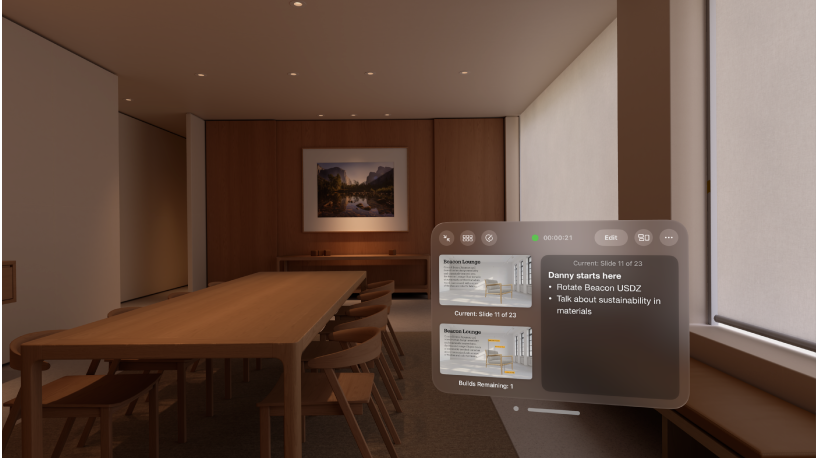
Even standard productivity tools are being reimagined. Keynote, for instance, allows a speaker to practice their presentation on a "virtual stage," providing a spatially accurate environment that mimics a real auditorium. This isn't for the casual hobbyist; it's for the executive who cannot afford to miss a beat in a high-stakes keynote.
Explore the Apple Vision Pro Enterprise Solutions →
FAQ
Q: Is the Apple Vision Pro worth it for a regular person? A: Currently, probably not. Unless you are an early adopter with significant disposable income, the device is currently over-engineered for casual entertainment. Its true value lies in professional and enterprise workflows.
Q: How does the Vision Pro compare to the Meta Quest 3 for work? A: The Quest 3 is an excellent consumer device for gaming and light productivity. However, the Vision Pro’s 4K-per-eye micro-OLED displays and M2/R1 processing power provide the visual fidelity and low latency required for high-stakes tasks like medical imaging and precision engineering that the Quest 3 cannot match.
Q: Will the price eventually come down? A: Historically, Apple releases a "Pro" model first to establish the tech benchmark (and let professionals pay for the R&D), followed by a more affordable "non-pro" consumer version. We expect a more consumer-friendly price point in the 2026-2027 window.
The Bottom Line
The "haters" are right about one thing: the Vision Pro is not a mass-market consumer product. But they are wrong to think that makes it a failure. By delivering a "feat of engineering" that solves real-world problems in medicine, engineering, and high-end design, Apple has successfully set the benchmark for the next era of computing. For the professional who needs precision, fidelity, and a portable infinite workspace, $3,499 isn't a price tag—it’s an investment.