For decades, the hallmark of a "serious" home audio system was the presence of monolithic tower speakers that occupied as much floor space as a small armchair. However, as our living environments become more streamlined and our technology more efficient, the tides of the audio industry have shifted. In 2026, the era of the bulky floor-stander is being superseded by the rise of high-performance bookshelf units that deliver studio-grade sound without the architectural footprint.
Market analysis for 2026 indicates that 68% of home audio enthusiasts now prefer active bookshelf speakers over traditional passive setups. This shift is driven by the integration of high-fidelity Bluetooth features and space-saving internal amplification. Perhaps more compelling for the budget-conscious listener is the "90% Rule": recent acoustic testing demonstrates that high-quality bookshelf speakers under $300 can achieve roughly 90% of the mid-range clarity found in premium units costing upwards of $1,000. For most listeners, that remaining 10% isn't worth a 300% price increase.

Quick Picks: Best Bookshelf Speakers for Every Listener
If you are looking for an immediate recommendation, the following three models represent the pinnacle of the sub-$300 market in 2026. For overall performance, the Klipsch Reference R-50M remains the gold standard. If your priority is absolute value, the Edifier R1280DBs offers an unbeatable price-to-performance ratio. Finally, for those prioritizing a modern, wireless aesthetic in a tight space, the Audio-Technica AT-SP3X is the premier choice.
| Model | Price (Est.) | Type | Best For |
|---|---|---|---|
| Klipsch R-50M | $299 | Passive | Cinematic sound & high-end detail |
| Edifier R1280DBs | $159 | Active | Budget value & subwoofer expansion |
| Audio-Technica AT-SP3X | $269 | Active | Turntable setups & wireless ease |
| Polk Monitor XT15 | $179 | Passive | Dolby Atmos & Hi-Res audio |
| PreSonus Eris 3.5 | $149 | Active | Desk-bound creators & neutrality |
| ELAC Debut 2.0 B6.2 | $289 | Passive | Transparent mids & wall-placement |
| Victrola Tempo | $199 | Active | Social listening & modern aesthetics |
The Fundamental Choice: Active vs. Passive Speakers
Before diving into specific models, you must decide between active (powered) and passive speakers. Active speakers are the most popular choice for budgets under $300 because they include built-in amplifiers. This eliminates the need to purchase an expensive external receiver, effectively doubling your purchasing power. You simply plug them into a wall outlet and connect your phone via Bluetooth or your turntable via RCA.
Passive speakers, on the other hand, require an external amplifier or receiver to function. While this adds to the total cost, it allows for greater customization and future upgrades. In a small-to-medium room, bookshelf speakers (whether active or passive) often outperform bulky towers. By providing better imaging and clarity in tight spaces, they avoid the "boomy" bass resonance that often plagues larger speakers when placed too close to walls.
Buyer’s Tip: If you are building a system from scratch on a strict $300 budget, go Active. If you already own a vintage receiver or plan to build a massive 7.1 home theater over time, choose Passive.
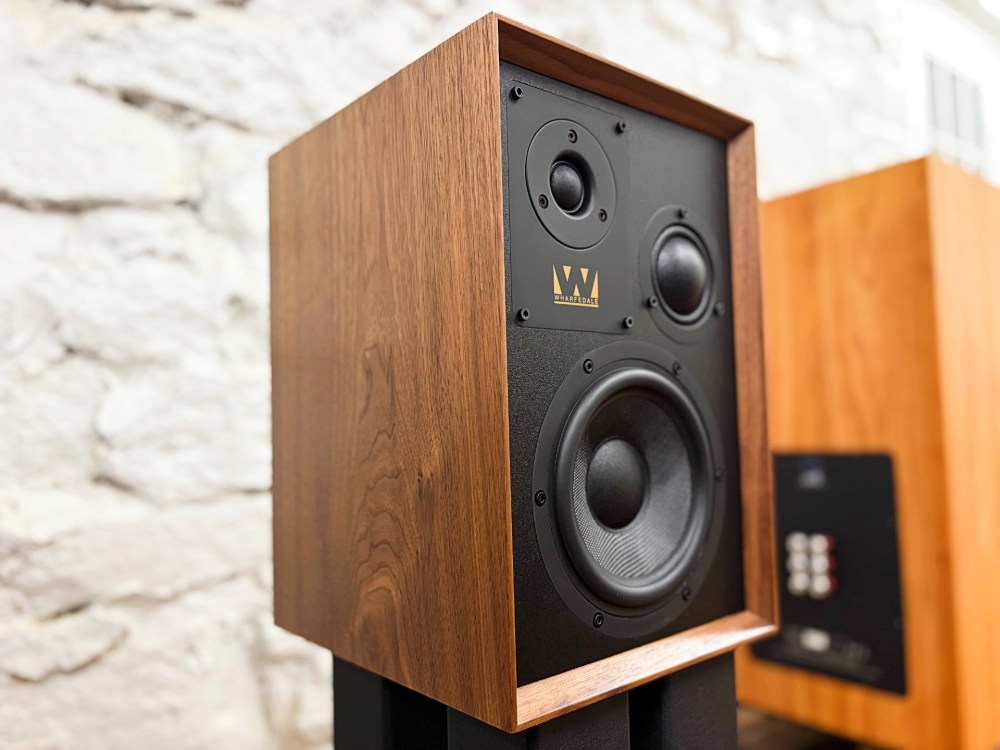
1. Klipsch Reference R-50M: Best Overall Performance
The Klipsch R-50M is a masterclass in efficiency. Utilizing their proprietary 90° x 90° Tractrix Horn technology, these speakers provide exceptional high-frequency directivity. This means the sound is aimed directly at your ears rather than bouncing off the ceiling or floor, resulting in a cleaner, more cinematic soundstage.
- Key Specs: 5.25" Spun Copper Woofers, 300W peak power, 1" Aluminum LTS tweeter.
- Why it wins: Its sensitivity is high, meaning it doesn't require a massive amplifier to sound loud and clear.
Pros:
- Incredibly detailed high frequencies.
- Iconic copper-and-black aesthetic that looks premium.
- Excellent for both music and home theater.
Cons:
- Passive design requires an external amp.
- The "bright" sound signature can be fatiguing for some listeners during long sessions.
2. Edifier R1280DBs: The Best Value for Budget Audiophiles
Edifier has dominated the entry-level market for years, and the R1280DBs is their most refined offering yet. For under $200, you get a complete audio solution with Bluetooth 5.0 and a dedicated "Sub-out" port. This last feature is crucial; if you ever feel the bass is lacking, you can simply plug in a powered subwoofer later to transform the system.
- Key Specs: 42W RMS, Bluetooth 5.0, Dual RCA inputs, Optical/Coaxial inputs.
- Highlight: The 'Soundfield Spatializer' expands the soundstage, making these small units sound like a much larger system.
Pros:
- Incredible price point for an active system.
- Includes a remote control and all necessary cables.
- Classic wood-grain finish options.
Cons:
- Bass can get a bit muddy at maximum volume.
- Not as detailed in the high-end as the Klipsch or ELAC models.
3. Audio-Technica AT-SP3X: Best for Compact Wireless Connectivity
The AT-SP3X is designed for the modern listener who wants a cable-free environment without sacrificing the warmth of high-quality audio. While Audio-Technica is famous for its turntables, these speakers prove they understand the output side of the equation just as well.
- Key Specs: 30W total power, 3" woofers, dual RCA jacks for wired connection.
- Use Case: Ideal for placing on a bookshelf or a small nightstand where space is at a premium.
Pros:
- Extremely compact footprint.
- Multipoint Bluetooth allows you to stay connected to two devices at once.
- Very balanced, neutral sound profile.
Cons:
- Lacks the deep bass "thump" of larger 5-inch woofer models.
- Minimalist design may be too plain for some.
Check Price on Audio-Technica →
4. Polk Audio Monitor XT15: Best Affordable Hi-Res Audio
The Polk Monitor XT15 is a rarity in this price bracket: a speaker certified for Hi-Res Audio. With a Terylene dome tweeter capable of reaching frequencies up to 40kHz, it captures the air and nuance of high-resolution tracks that other budget speakers might clip.
- Key Specs: Dolby Atmos and DTS:X compatible, 5.25" dynamically balanced woofer.
- Benefit: Seamless integration with Polk’s larger Monitor XT series if you decide to expand to a full surround sound system.
Pros:
- Exceptional clarity for vocal-heavy music.
- Very sturdy cabinet construction reduces unwanted resonance.
- Timber-matched with other Polk speakers.
Cons:
- Requires a decent amplifier to reach its full potential.
- Large physical depth may make it difficult to fit on shallow shelves.
5. PreSonus Eris 3.5 (Gen 2): Best for Desktop and Creators
If you spend your time editing video, producing podcasts, or simply want an honest representation of your music at a desk, the PreSonus Eris 3.5 is the "Studio Monitor" of the group. Unlike "lifestyle" speakers that boost the bass to sound better, these aim for a flat, accurate frequency response.
- Key Specs: 50W Class AB amplification, woven composite woofers for stiff, clean bass.
- Feature: Front-panel acoustic tuning knobs allow you to adjust the treble and bass to fit your specific room acoustics.
Pros:
- Accurate, "pro-sumer" sound quality.
- Front-facing headphone jack and volume knob for easy access.
- Great value for home office setups.
Cons:
- Very "clinical" sound—not as warm or "fun" as the Edifiers.
- Small 3.5-inch woofers lack deep low-end.
6. ELAC Debut 2.0 B6.2: Best for High-Frequency Clarity
Designed by legendary audio engineer Andrew Jones, the ELAC Debut 2.0 B6.2 is often cited by critics as the speaker that "should cost double." Its standout feature is the front-firing port. Most bookshelf speakers have ports in the back, meaning if you push them against a wall, the bass becomes distorted. The ELACs can be placed anywhere without issue.
- Key Specs: 1-inch cloth dome tweeter, 6.5-inch aramid fiber woofer.
- Highlight: The larger 6.5-inch woofer provides the most substantial bass response in this list without needing a separate subwoofer.
Pros:
- Massive, room-filling sound.
- Exceptionally transparent mid-range.
- Flexible placement thanks to front ports.
Cons:
- It is a large "bookshelf" speaker—measure your space before buying.
- The design is a bit industrial and utilitarian.
7. Victrola Tempo: Best for Aesthetic & Social Listening
Victrola has reinvented itself for 2026, moving away from "suitcase" players into legitimate Hi-Fi. The Tempo is their flagship bookshelf model, designed to be the centerpiece of a living room. It features modern Auracast technology, allowing you to broadcast your music to other Auracast-enabled speakers throughout your home.
- Key Specs: Wood-grain finish, Bluetooth 5.3, integrated pre-amp.
- Use Case: Perfect for those who want their technology to look like furniture.
Pros:
- Stunning mid-century modern design.
- Excellent social features for parties.
- Very warm, inviting sound signature.
Cons:
- Not as technically precise as the ELAC or Klipsch models.
- The wood finish is a laminate, not solid hardwood.
How to Shop: Key Features to Consider Before Buying
Selecting the right speaker is as much about your environment as it is about the hardware. Before finalizing your purchase, consider these three pillars of home audio:
1. Connectivity Needs
In 2026, Bluetooth is standard, but not all Bluetooth is equal. Look for Bluetooth 5.0 or higher to ensure a stable connection and better range. If you are a vinyl enthusiast, ensure the speakers (if active) have RCA inputs. For those connecting to a TV, an Optical (Toslink) input is preferred to reduce lag and improve dialogue clarity.
2. Room Size Matching
A common mistake is buying speakers that are too small for a large room or too large for a small one.
- 100–150 sq ft (Bedroom/Office): Look for 3" to 4" woofers.
- 150–250 sq ft (Living Room): Look for 5.25" to 6.5" woofers. Wattage also matters; for a standard living room, 40W to 60W RMS is generally the "sweet spot" for comfortable listening without distortion.
3. Cabinet Construction
The "box" matters as much as the "speaker." Look for cabinets made of MDF (Medium Density Fiberboard) rather than thin plastic. MDF is denser and reduces "cabinet coloration"—the unwanted vibration of the box itself. Internal bracing is another sign of quality, as it ensures the only thing moving is the speaker driver, not the speaker housing.
FAQ
Q: Do I need a subwoofer with bookshelf speakers? A: It depends on your genre preference. For jazz, folk, and classical, a 5.25" woofer is usually sufficient. For EDM, Hip-Hop, or cinematic action movies, you will likely want to add a powered subwoofer later to capture the sub-bass frequencies (below 50Hz).
Q: Can I use these for my TV instead of a soundbar? A: Absolutely. In fact, a pair of $300 bookshelf speakers will almost always provide better "stereo separation" and a wider soundstage than a $300 soundbar. Just ensure the speakers have an Optical or HDMI ARC input, or use an RCA-to-3.5mm adapter from your TV's headphone jack.
Q: How far apart should I place my speakers? A: For the best stereo imaging, place them 4 to 8 feet apart, forming an equilateral triangle with your primary listening position. Try to keep them at "ear level" when you are seated.
Ready to Upgrade Your Sound?
High-quality home audio is no longer a luxury reserved for those with thousands of dollars to spare. Whether you choose the surgical precision of the Klipsch R-50M or the incredible value of the Edifier R1280DBs, you are stepping into a world of clarity that standard smart speakers simply cannot match.
Our Recommendation: If you want the best "set-it-and-forget-it" experience, go with the Edifier R1280DBs. Its built-in power and Bluetooth connectivity make it the easiest entry point into the world of high-fidelity audio.