Quick Facts
- Launch Date: November 15, 2001 (North America).
- RAM: 64MB Unified DDR SDRAM (100% more than the PlayStation 2’s 32MB).
- Processor: Custom 733 MHz Intel Pentium III.
- Storage: First console with a built-in 8GB Internal Hard Drive, eliminating the need for memory cards.
- Graphics: Nvidia NV2A GPU capable of 480p, 720p, and even 1080i output.
- Launch Title Success: Halo: Combat Evolved sold over 1 million units within five months, setting a new gold standard for console shooters.
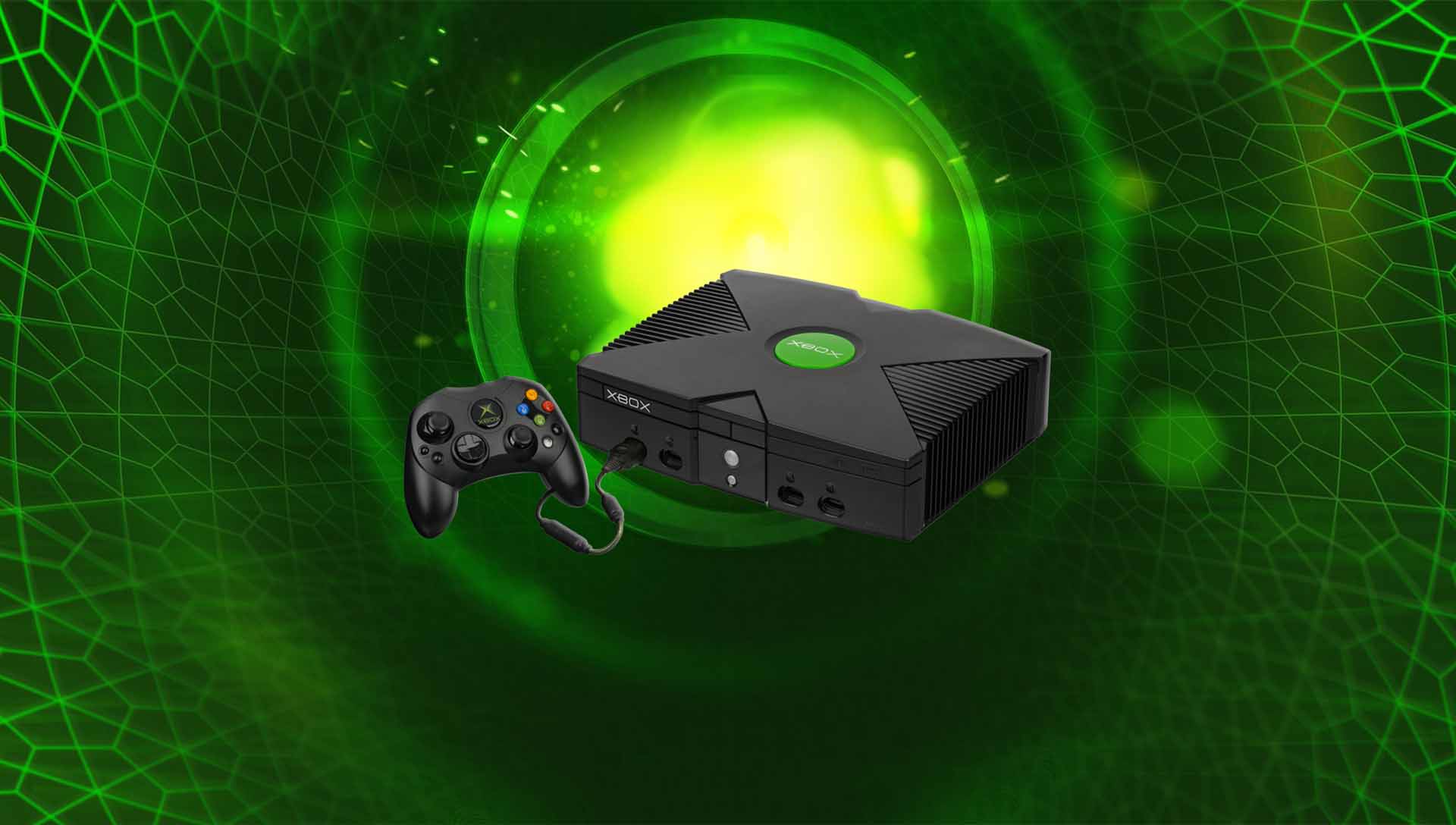
In the autumn of 2001, the video game industry was not a level playing field; it was a Sony-dominated empire. The PlayStation 2 had already established a year-long head start, boasting a massive library and a DVD player that turned it into a Trojan horse for living rooms worldwide. When Microsoft—a software company famous for spreadsheets and operating systems—announced its entry into the hardware race, the skepticism was palpable. However, the original Xbox didn’t just enter the race; it lapped the competition by fundamentally changing the "infrastructure" of gaming.
The original Xbox outpaced its rivals by offering double the RAM (64MB) of the PlayStation 2 (32MB) and including a standard built-in hard drive as a foundational component rather than an expensive peripheral. This wasn’t just a power play; it was a paradigm shift. While Sony and Nintendo were refining the traditional console model, Microsoft was essentially shrinking a high-end gaming PC into a black-and-green "muscle machine."
The Muscle Machine: Breaking Down the 64MB RAM Advantage
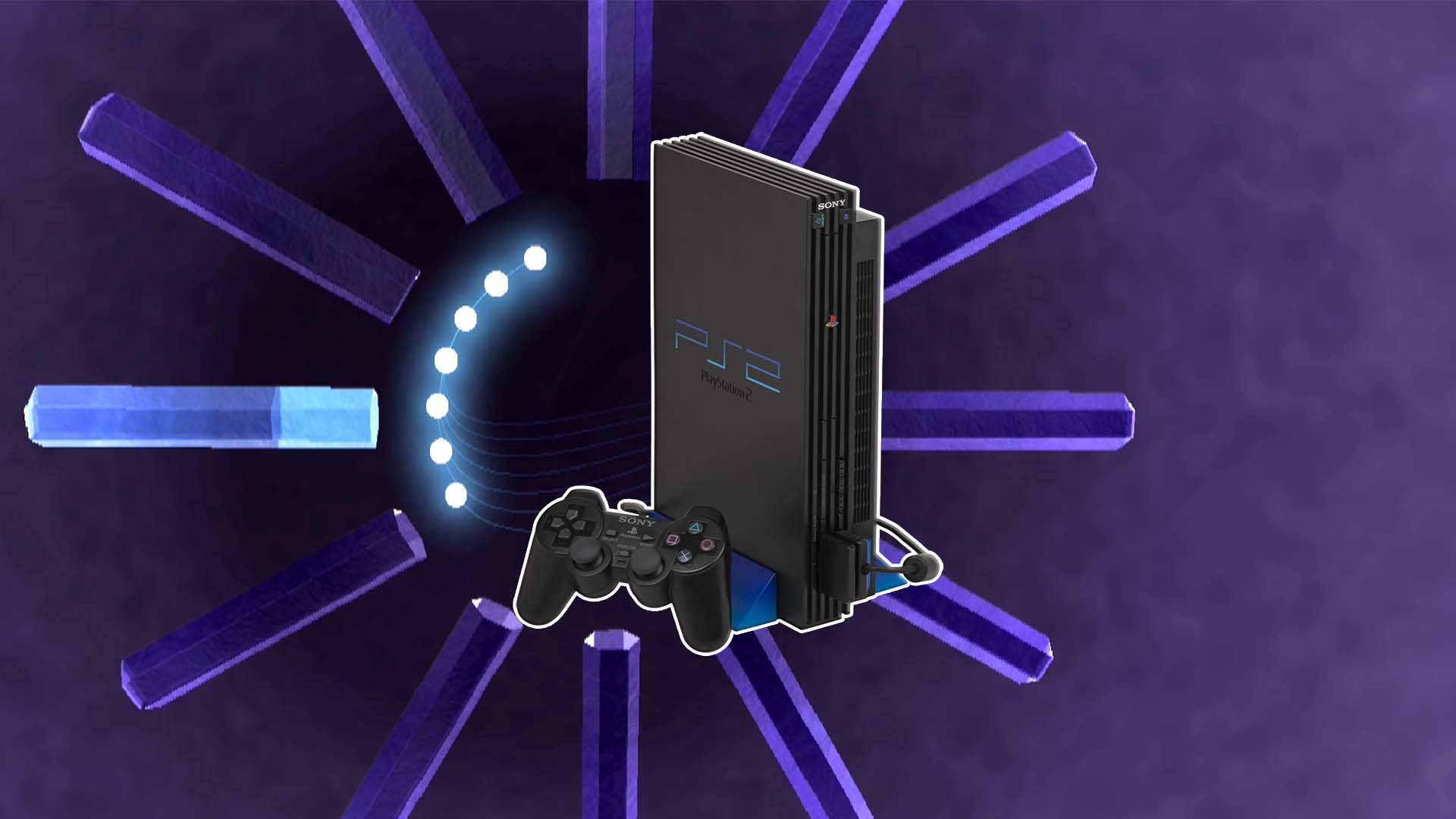
To understand the Xbox's dominance, one must look at the architecture of its memory. In the early 2000s, memory was the most expensive and precious resource for developers. The PlayStation 2 operated on 32MB of main RDRAM, supplemented by 4MB of VRAM. Microsoft’s decision to utilize 64MB of unified DDR SDRAM gave the Xbox a massive overhead that its competitors simply couldn’t match.
The "unified" nature of this RAM was the secret sauce. Instead of being locked into specific pools for graphics or system tasks, the console could dynamically allocate resources where they were needed most. This allowed for:
- High-Resolution Textures: Xbox titles frequently featured sharper, more detailed textures that didn't "shimmer" or blur like those on the PS2.
- Draw Distance: Games could render vast, sweeping vistas without the "fog of war" common in 5th and 6th-generation titles.
- Complex Geometry: Characters and environments had higher polygon counts, leading to more rounded, realistic shapes.
Statistically, the Xbox possessed 100% more unified RAM than the PlayStation 2. This wasn't a marginal improvement; it was a generational leap disguised as a mid-cycle launch. It allowed developers to port PC games to the Xbox with minimal compromises, a feat that was virtually impossible on the PlayStation 2 without significant visual downgrades.
Beyond Memory: The 8GB Internal Hard Drive Significance
If the 64MB of RAM was the Xbox’s engine, the 8GB internal hard drive (HDD) was its high-capacity fuel tank. Before 2001, console gaming relied on external memory cards—notorious for their limited storage and high price tags. Microsoft’s decision to include a hard drive as a standard feature was a radical investment in gaming infrastructure.
The HDD provided three critical advantages that redefined the user experience:
- The End of the "Memory Card Tax": Players no longer had to delete old save files to make room for new ones. For the first time, your console was a library, not just a player.
- Data Caching: The Xbox used the HDD to cache game data. This drastically reduced loading times compared to the PS2 and GameCube, which had to pull every bit of data directly from the optical disc.
- Custom Soundtracks: In a move that felt like pure magic at the time, users could "rip" their physical CDs onto the Xbox hard drive. Games like Project Gotham Racing and Grand Theft Auto III allowed players to listen to their own music while playing, a feature that wouldn't become standard elsewhere for years.
Microsoft's decision to use a 733 MHz Intel Pentium III processor gave the Xbox the raw performance needed to deliver higher resolutions and sharper textures than its competitors. This CPU, combined with the HDD, made the Xbox feel less like a toy and more like a high-performance workstation.

Halo: Combat Evolved – The Hardware’s Proof of Concept
Every great console needs a "killer app," and Halo: Combat Evolved was more than just a game; it was a technical manifesto. Before Halo, the first-person shooter (FPS) was considered a PC-centric genre. Controllers were seen as too clunky for the precision required for shooters. Bungie and Microsoft proved the world wrong by optimizing Halo specifically for the Xbox hardware and its "Duke" controller.
Halo redefined the industry by proving that complex first-person shooters with sophisticated AI and vehicle physics could be perfectly optimized for console gamepads. The game’s legendary "Silent Cartographer" level showcased what the 64MB of RAM could actually do: it featured a seamless transition from a massive outdoor beach landing to cramped underground corridors, all with advanced lighting and physics that left PS2 owners in awe.
The AI in Halo was also a direct beneficiary of the Xbox’s CPU and RAM. Elites would dive for cover, Grunts would flee when their leaders were killed, and Jackals would lock their shields—behaviors that required significant processing power to calculate in real-time alongside the game's physics engine.
The 6th Generation Power Comparison: Xbox vs. PS2 vs. GameCube
When we strip away the marketing fluff and look at the raw specifications, the disparity between the major players of the 6th generation becomes clear. The Xbox was, by nearly every metric, the most powerful consumer electronics device of its era.
| Feature | Microsoft Xbox | Sony PlayStation 2 | Nintendo GameCube |
|---|---|---|---|
| CPU | 733 MHz Intel Pentium III | 294 MHz "Emotion Engine" | 485 MHz IBM "Gekko" |
| RAM | 64MB Unified DDR | 32MB RDRAM + 4MB VRAM | 24MB Main + 16MB A-Memory |
| Storage | 8GB Internal HDD | Memory Card (External) | Memory Card (External) |
| Online | Built-in Ethernet (Broadband) | Optional Adapter | Optional Adapter |
| Max Resolution | 1080i (Select titles) | 480i / 480p | 480p |
While the GameCube was a compact and efficient powerhouse with its IBM Gekko processor, it was hampered by its proprietary mini-DVDs, which lacked the storage capacity for the high-res textures the Xbox could handle. The PS2, despite its massive market share, often struggled with "jaggies" and lower frame rates due to its complex and aging Emotion Engine architecture.

Market Impact and the Blueprint for Modern Gaming
The Xbox was a "market disruptor" in the truest sense. In its first 45 days on the market, the Xbox sold 1.5 million units in North America. This immediate hardware credibility allowed Microsoft to survive the initial onslaught of Sony’s dominance.
However, the legacy of the original Xbox isn't just in sales numbers; it’s in the blueprint it laid out for the next 20 years of gaming. By including a built-in Ethernet port and a hard drive, Microsoft anticipated a future of digital distribution and online multiplayer long before their competitors did.
Xbox Live, launched in 2002, transformed the console from a local entertainment box into a global social hub. Titles like MechAssault and later Halo 2 utilized the internal HDD for downloadable content (DLC) and patches—concepts that were virtually non-existent on consoles before the Xbox arrived.

Critic's Insight: The original Xbox was a calculated gamble. Microsoft knew they couldn't beat Sony on library depth in year one, so they beat them on infrastructure. Every time you download a game today or play an online match without a separate adapter, you are using the DNA of the 2001 Xbox.
FAQ
Q: Did the original Xbox actually support 1080i? A: Yes, though very few games utilized it. Titles like Dragon’s Lair 3D and Enter the Matrix supported 1080i output, which was a staggering technical feat for a 2001 console.
Q: Why was the original "Duke" controller so large? A: The "Duke" was designed to accommodate the massive internal circuit boards required for its features at the time. While criticized for its size, it paved the way for the "Controller S," which became the template for the modern Xbox controller.
Q: Could the PS2 have had a hard drive? A: Sony did eventually release a network adapter and a 40GB HDD for the PS2, but because it wasn't a "standard" feature, very few developers optimized their games to use it, unlike on the Xbox where every developer could count on the HDD being there.
Conclusion
The original Xbox was more than just a powerful console; it was the bridge between the PC and the living room. By doubling the RAM of its nearest rival and standardizing the internal hard drive, Microsoft didn't just compete—they redefined what a game console was capable of. Halo: Combat Evolved served as the perfect proof of concept, showing that raw power, when harnessed correctly, could create experiences that were simply impossible elsewhere. As we look at the high-speed SSDs and massive memory pools of today’s Series X and PS5, it is clear that the race started by the 64MB RAM and 8GB HDD of 2001 is still being run today.