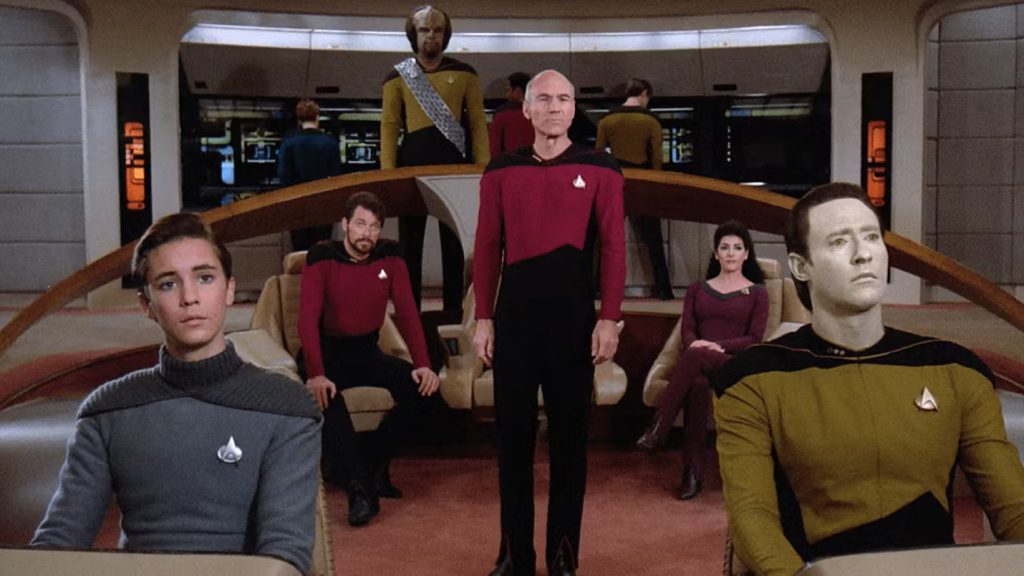
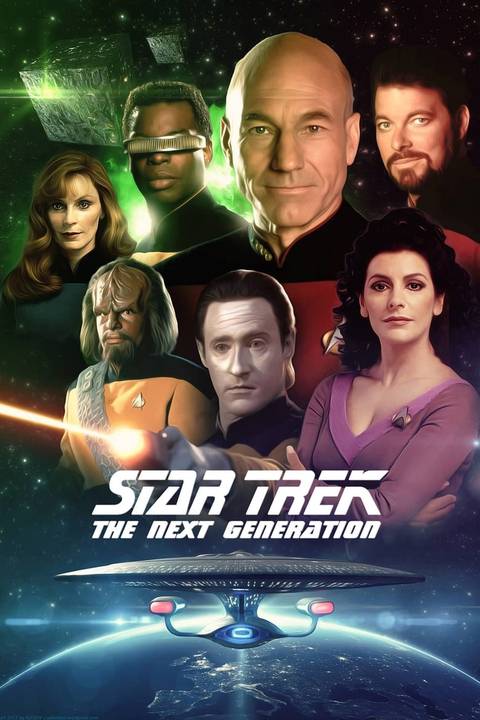
For most fans of the Star Trek franchise, the bridge of the USS Enterprise-D represents the pinnacle of optimistic futurism. Over seven seasons, Star Trek: The Next Generation (TNG) cemented its legacy as a masterpiece of science fiction, currently boasting a formidable 8.7/10 rating on IMDb and a stellar 92% critical score on Rotten Tomatoes. However, even the most legendary voyages encounter turbulence. According to Michael Dorn, the man who brought the Klingon warrior Worf to life across a record-breaking 285 franchise appearances, the show’s journey nearly ended before it truly began—thwarted by an episode so controversial that its own cast members now lobby for its removal from history.
The Icon Who Almost Saw the Future End Prematurely
When Michael Dorn first stepped onto the bridge in 1987, he wasn't just wearing heavy prosthetics; he was carrying the weight of a franchise trying to prove it could survive without Captain Kirk. Yet, during the filming of the show’s first season, Dorn felt a distinct sense of dread. It wasn't the demanding makeup chair or the technobabble that worried him—it was the quality of the scripts.
In recent retrospective interviews, Dorn has been candid about his early skepticism. During an appearance on the Inside of You podcast, Dorn revealed that he was convinced the show would be canceled after Season 1. The primary culprit for this lack of confidence was a specific hour of television that deviated so sharply from the series’ progressive mission that it left the cast in a state of collective shock. While TNG eventually found its footing, those early episodes were a minefield of "rookie mistakes," none more explosive than the Season 1 episode "Code of Honor."
'Code of Honor': The Infamous Season 1 Stumble
To understand why "Code of Honor" remains the "worst" episode in Michael Dorn’s eyes, one must look at the narrative it attempted to construct. The plot involves the Enterprise visiting the planet Ligon II to acquire a rare vaccine needed to combat a plague on a Federation colony. While there, the Ligonians kidnap Security Chief Tasha Yar, leading to a "trial by combat" involving poisoned hand-claws and a struggle for succession among the planet’s elite.
On paper, the premise sounds like a standard Star Trek morality play. In execution, however, it became a disaster of optics. The Ligonians were portrayed entirely by Black actors, depicted as a "primitive" culture obsessed with ritualistic combat and status, utilizing tropes that critics and cast members alike have decried as deeply rooted in 19th-century colonialist stereotypes.
The statistical contrast is jarring. While The Next Generation is celebrated globally for its enlightened view of humanity, "Code of Honor" is consistently ranked by fans as the lowest-rated episode of the entire seven-year run. The episode felt like a regression—a betrayal of the "IDIC" (Infinite Diversity in Infinite Combinations) philosophy that Gene Roddenberry spent his life promoting. For Dorn, the episode wasn't just bad television; it was an embarrassment that threatened the credibility of the entire ensemble.
'A Racist Piece of S***': The Cast’s 30-Year Backlash
If Michael Dorn is the critic of "Code of Honor," Jonathan Frakes (Commander William Riker) is its most vocal prosecutor. Frakes, who has spent decades both in front of and behind the camera for Star Trek, has never minced words regarding the episode. He has famously referred to it as a "racist piece of s***" during various convention panels and has spent over 30 years campaigning for the episode to be pulled from rotation or, at the very least, labeled with a disclaimer.
"It was an embarrassment to the franchise's legacy of progressivism. We knew it while we were filming it, and it hasn't aged a day better since 1987." — Jonathan Frakes
The behind-the-scenes atmosphere during the filming of "Code of Honor" was equally fraught. The episode's original director, Russ Mayberry, was reportedly fired mid-production by creator Gene Roddenberry. According to cast accounts, including those from Denise Crosby (Tasha Yar) and Brent Spiner (Data), the racial undertones of the direction were impossible to ignore. Crosby noted that the cast felt uncomfortable with the "tribal" depictions, while Spiner has often joked—with a hint of genuine regret—about the episode's lack of creative merit.
For Michael Dorn, the frustration was twofold. As the first major Black actor to lead a Star Trek series as a series regular (in a role that required him to be unrecognizable beneath Klingon makeup), seeing a guest cast of Black actors relegated to such regressive stereotypes was a bitter pill to swallow. It represented a "failure of the morality play" that Star Trek is supposed to be.
Beyond the Controversy: Michael Dorn’s Redemption Picks
Fortunately, the trajectory of The Next Generation shifted upward shortly after this Season 1 nadir. As the writing staff stabilized and the actors found their voices, the show transitioned from clunky allegories to sophisticated philosophical dramas. For Michael Dorn, this evolution is best represented by his "Redemption Picks"—episodes that corrected the course and proved why the show deserved its legendary status.
When asked about his favorite TNG episode, Dorn consistently cites Season 4’s "The Drumhead." Interestingly, this episode was directed by none other than Jonathan Frakes.
A Study in Contrast: The Worst vs. The Best
| Feature | Code of Honor (The Worst) | The Drumhead (The Best) |
|---|---|---|
| Season | Season 1, Episode 4 | Season 4, Episode 21 |
| Director | Russ Mayberry (Fired) | Jonathan Frakes |
| IMDb Rating | 5.2/10 | 8.6/10 |
| Primary Theme | Primitive "Trial by Combat" | Philosophical Justice & Paranoia |
| Cast Sentiment | "Embarrassment" / "Racist" | "Masterpiece" / "Essential" |
"The Drumhead" serves as the perfect foil to "Code of Honor." Instead of relying on physical combat and shallow tropes, it explores the dangers of McCarthyism and the erosion of civil liberties within the Federation. Dorn’s performance as Worf in this episode is pivotal, as the character must grapple with his own biases and the realization that a "witch hunt" can happen even in a supposedly enlightened society.
Dorn also holds a special place in his heart for his later work on Star Trek: Deep Space Nine. He points to Klingon-centric episodes like "Soldiers of the Empire" and "Once More Unto the Breach" as his creative peaks. These episodes allowed him to explore Worf’s heritage with dignity, nuance, and a lack of the "primitive" stereotypes that plagued the early days of TNG.
The Legacy of The Next Generation’s Evolution
The story of Michael Dorn’s distaste for "Code of Honor" is ultimately a story of growth. It is rare for a franchise to acknowledge its failures so publicly, but the Star Trek cast has never been shy about holding their own show to a higher standard. This internal criticism is likely why the series was able to course-correct so effectively, jumping from the shaky ground of Season 1 to a 92% Rotten Tomatoes score by its conclusion.
Today, "Code of Honor" remains a "black sheep" of the Trek family—a reminder of what happens when a progressive vision is poorly executed. However, it also serves as a benchmark. Without the lessons learned from that failure, we might never have received the intellectual depth of "The Drumhead" or the epic scale of Worf’s journey across two series. For Dorn, Frakes, and the rest of the crew, the "worst" episode ever made was a necessary wake-up call that ensured the Enterprise would truly go where no one had gone before.
Revisit the TNG Legacy on Paramount+ →
FAQ
Q: Why do Michael Dorn and Jonathan Frakes specifically hate 'Code of Honor'? A: Both actors cite the episode's use of offensive racial stereotypes. The depiction of an all-Black alien race as "primitive" and "tribal" contradicted the progressive, inclusive future Star Trek aimed to represent. Frakes has even called for it to be removed from television rotations.
Q: Is 'Code of Honor' still available to watch? A: Yes, the episode is still part of the official Star Trek: TNG catalog on streaming platforms like Paramount+. However, it is frequently skipped by fans during re-watches and is often accompanied by discussions of its controversial production history.
Q: What is Michael Dorn's highest-rated episode as Worf? A: While ratings vary by platform, "The Drumhead" (TNG) and "The Way of the Warrior" (DS9) are among the most critically acclaimed episodes featuring Michael Dorn's Worf.
Are you a Trekkie who agrees with Michael Dorn, or do you think there's a different Season 1 episode that deserves the "worst" title? Let us know your rankings in the comments below!