Launching an aggressive driving mode while federal regulators meticulously dismantle your safety record takes a specific brand of corporate confidence—or perhaps, a calculated disconnect from regulatory reality. As Tesla rolls out its latest Full Self-Driving (FSD) v14 update, the return of the "Mad Max" profile has ignited a fierce debate between performance enthusiasts and safety advocates. While the name evokes a post-apocalyptic wasteland where rules are mere suggestions, the real-world application of this software is pushing the boundaries of what is legally permissible on public roads.
Quick Facts: The Mad Max Update
- Primary Function: An aggressive FSD profile designed for high-traffic environments and assertive lane changes.
- Speed Capability: Enables vehicles to exceed posted speed limits by more than 15 mph (24 km/h).
- Software Version: Part of the FSD v14 rollout.
- Regulatory Status: Under active investigation by the NHTSA following 58 documented traffic law breaches.
- User Reports: Systematic violations, including rolling stop signs and high-speed rural navigation, reported within 24 hours of release.
Tesla’s Full Self-Driving technology has always occupied a contentious middle ground between a driver-assist tool and a visionary promise of autonomy. However, the reintroduction of "Mad Max" mode—a setting that prioritizes assertive maneuvers and higher speeds—signals a pivot toward aggressive driving logic that mimics human impatience rather than robotic precision. For the modern traveler, this represents a fundamental shift in how we perceive the safety of the vehicle next to us on the highway.
Technical Breakdown: How Mad Max Redefines FSD Speeding
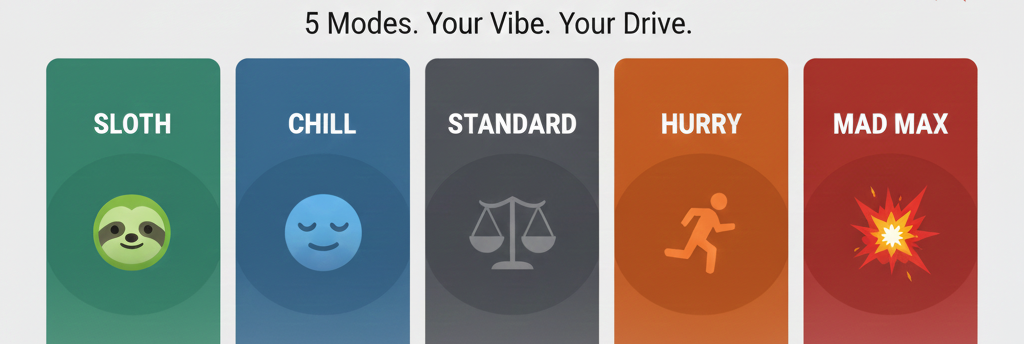
The FSD v14 update introduces a refined spectrum of "driving personalities," allowing users to tailor how the vehicle interacts with traffic. At the bottom of the spectrum lies "Sloth" or "Chill" mode, which adheres strictly to speed limits and waits for significant gaps before changing lanes. At the opposite end is "Mad Max."
This profile is not merely about lane changes; it fundamentally alters the vehicle's speed offsets. Unlike previous iterations that capped speeds closer to the flow of traffic, the new Mad Max mode allows for a speed offset that enables the car to travel at 15+ mph over the posted limit in certain conditions. This is particularly evident on highways where the software now supports speeds up to 85 mph, even when local limits are significantly lower.
| Profile Name | Speed Offset Behavior | Lane Change Frequency | Typical Use Case |
|---|---|---|---|
| Sloth / Chill | Strictly follows limit; -2 to +2 mph | Minimal; only when necessary | High-safety urban driving |
| Standard | Matches traffic flow; +5 mph offset | Moderate; bypasses slow vehicles | Daily commuting |
| Hurry | Aggressive overtaking; +10 mph offset | High; seeks fastest lane | Time-sensitive transit |
| Mad Max | Persistent speeding; +15+ mph offset | Maximum; assertive gap-entry | Heavy highway gridlock |
The engineering logic behind this is to make the car feel more "human." In dense urban environments or aggressive highway settings like those found in Los Angeles or New Jersey, a vehicle that strictly follows the law can actually become a traffic impediment. By allowing the AI to "bend" the rules, Tesla aims to make FSD more usable in real-world conditions. However, the data suggests that this "usability" comes at a significant legal cost.
Real-World Performance: Systematic Traffic Violations
Within the first 24 hours of the v14 release, early testers began documenting behaviors that would likely lead to a citation if a human were behind the wheel. The most striking reports involve "unlit rural roads" and "edge-case" environments where the software appears to interpret the lack of surveillance or traffic as an invitation to increase velocity.
One documented instance involved a tester whose vehicle maintained a steady 70 mph in a 55 mph zone on a two-lane highway. While the car navigated curves with mechanical precision, it systematically ignored the speed limit—a core violation of the fundamental traffic laws that Level 2 systems are supposedly designed to uphold.
Beyond simple speeding, the "Mad Max" profile's lane-change logic has been described as "ruthless." In high-traffic scenarios, the system identifies gaps that most human drivers would consider too narrow, executing rapid pivots to maintain its speed offset. While this increases efficiency for the Tesla occupant, it often forces surrounding drivers to brake suddenly, creating a ripple effect of instability in the traffic flow.
Testers have also noted a return of the "rolling stop" behavior at four-way intersections. Despite a high-profile recall in 2022 specifically targeting this issue, the aggressive nature of the new v14 profiles seems to once again deprioritize a full cessation of movement in favor of maintaining momentum.
The Regulatory Storm: NHTSA Investigation 2025
The timing of the Mad Max rollout is, to put it mildly, provocative. The National Highway Traffic Safety Administration (NHTSA) is currently deep into a 2025 investigation into Tesla’s FSD technology. This probe is not a general inquiry but a focused examination of 58 documented incidents where FSD-equipped vehicles were involved in systematic traffic law breaches.
According to federal records, the incidents under scrutiny include:
- Running red lights and failing to yield at stop signs.
- Improper lane changes that cut off other motorists.
- Driving in prohibited lanes or crossing double-yellow lines.
- Inconsistent speed regulation in school zones and construction areas.
With a fleet of approximately 2.8 million vehicles now equipped with some version of FSD hardware, the scale of potential violations is unprecedented. Federal regulators are increasingly concerned that by offering a "Mad Max" mode, Tesla is effectively marketing a product that encourages illegal behavior.
"There is a fundamental difference between a car that assists a driver and a car that systematically chooses to break the law for the sake of 'convenience.' If the software is programmed to exceed the speed limit by 15 mph, it is no longer a safety feature; it is a liability." — Excerpt from a preliminary safety briefing.
The legal stakes are rising alongside the technological ones. In a recent Miami case, a jury awarded $240 million in a lawsuit involving a fatal accident where driver-assist technology was implicated. Furthermore, the California DMV has challenged Tesla’s use of the term "Full Self-Driving," arguing that it is inherently misleading for a system that requires constant human intervention.
The Autonomy Paradox: Level 2 Realities vs. Level 4 Promises
Tesla often cites data suggesting that FSD is "200 times safer" than a human driver. However, this statistic is frequently criticized for failing to account for the "Attention Gap." Because FSD is a Level 2 system, it requires the driver to be ready to take over at a millisecond's notice. When the car is in "Mad Max" mode, performing aggressive lane changes and speeding, the window for a human to correct an AI error shrinks dramatically.
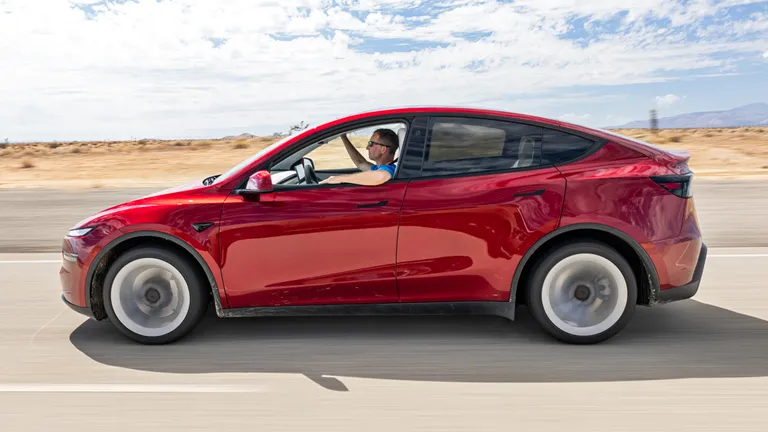
This is the paradox of Tesla’s current trajectory: the more "capable" and "human-like" the system becomes, the more likely the driver is to tune out, assuming the car has everything under control. Yet, the system remains vision-only, lacking the Lidar or secondary redundancies found in Level 4 autonomous vehicles like Waymo.
Safety Warning: Regardless of the FSD profile selected—be it Chill or Mad Max—the driver remains legally responsible for all vehicle actions. Use of the 15 mph speed offset does not exempt the driver from speeding citations or liability in the event of a collision.
Conclusion: Corporate Confidence or Public Risk?
As a travel critic who has monitored the evolution of transit for decades, I find the "Mad Max" update to be a fascinating, albeit troubling, case study in tech disruption. Tesla is betting that consumers want a car that drives like they do—impatiently, assertively, and occasionally over the speed limit.
However, the road is a shared resource. When an AI is programmed to prioritize its own "efficiency" over the established rules of the road, it erodes the social contract of driving. For now, Mad Max mode remains a high-wire act. It offers a glimpse of a future where cars can navigate complex traffic with ease, but it does so by ignoring the very safety frameworks that keep those roads functional.
Whether this is a stroke of corporate genius or a precursor to a massive federal crackdown will likely be decided in the courtrooms of 2025. For the Tesla owner, the choice to toggle that "Mad Max" switch is more than just a software preference—it is a decision to take a 15 mph gamble against the law.
FAQ
What exactly is Tesla's Mad Max mode? It is the most aggressive driving profile within Tesla's Full Self-Driving (FSD) software. It enables more assertive lane changes, quicker acceleration, and allows the vehicle to set a speed offset of 15 mph (24 km/h) or more above the posted speed limit.
Is it legal to use Mad Max mode if it breaks the speed limit? While the software allows the vehicle to exceed the speed limit, the human driver remains legally responsible. If the car is caught speeding or performing illegal maneuvers while in Mad Max mode, the driver—not Tesla—will receive the citation and carry the legal liability.
Why is the NHTSA investigating Tesla in 2025? The NHTSA is investigating approximately 58 documented incidents where FSD technology allegedly failed to follow traffic laws, including running red lights and improper lane positioning. The investigation aims to determine if the software's design inherently encourages unsafe or illegal driving behavior.