In the history of robotics, we often look for the "giant leaps"—the humanoid machines that walk like us or the rovers that traverse Martian plains. However, the most profound shift in 21st-century engineering may be occurring at a scale nearly invisible to the naked eye. We are witnessing a transition from passive micro-machinery to true silicon intelligence at the microscopic level.
Researchers at the University of Michigan and the University of Pennsylvania have recently unveiled the world's first autonomous micro-robot, a machine no larger than a grain of salt that possesses the capability to sense, think, and act independently. This is not merely a smaller version of existing tech; it is a fundamental reimagining of what a robot can be. Measuring at a scale that makes a human hair look like a redwood tree, this device is 100 times smaller than the landmark 'Squirt' robot developed at MIT in 1989, effectively ending a 40-year barrier in sub-millimeter autonomy.

The Breakthrough: Silicon Intelligence at the Micro-Scale
For decades, the challenge of microscopic robotics wasn't just size—it was the "brain." While we could build tiny structures, they remained "dumb," requiring external wires, magnetic fields, or chemical gradients to move. The Michigan-Penn collaboration has bypassed this by integrating a fully functional 55-nanometer computer directly onto the robot's chassis.
This isn't a remote-controlled toy; it is an autonomous agent. The robot follows a "Sense-Think-Act" cycle. It gathers environmental data via onboard sensors, processes that data using its internal logic gates, and executes a physical response. This level of integrated autonomy at this scale was previously considered a decade away from reality.
| Feature | 1989 'Squirt' (MIT) | 2024 Autonomous Micro-Robot |
|---|---|---|
| Size | ~5 cm | ~0.5 mm (Salt-grain sized) |
| Onboard Computing | Basic logic circuits | 55nm CMOS Computer |
| Power Source | Battery | 75nW Solar Cells |
| Autonomy | Tethered/External Control | Fully Autonomous |
| Sensors | Basic Contact | Integrated Temp (0.3°C accuracy) |
Inside the 'Salt Grain': 55nm Computing and Solar Power
To understand the magnitude of this achievement, one must look at the power constraints. Traditional batteries are massive relative to this robot. Instead, the team utilized high-efficiency 75-nanowatt solar cells. These cells harvest ambient light to power the onboard CMOS (Complementary Metal-Oxide-Semiconductor) circuits.
The engineering feat here is the efficiency. The robot operates on a power budget that wouldn't even wake up a standard smartphone, yet it manages to power:
- An onboard clock for timing operations.
- Logic circuits that function as the "brain."
- Integrated temperature sensors that are accurate to within 0.3 degrees Celsius.
- Actuators that drive movement.
By removing the need for tethers or external magnetic manipulation, the researchers have created a machine that can be "dropped" into an environment and left to complete its mission. It is the ultimate "set it and forget it" tool for the microscopic world.
The Sense-Think-Act Cycle: How It Moves Without Moving Parts
Movement at the micro-scale is a nightmare of physics. At this size, water doesn't feel like a liquid; it feels like thick corn syrup or tar. To navigate this "viscous regime," the robot doesn't use traditional motors or gears. Instead, it utilizes platinum electrodes.
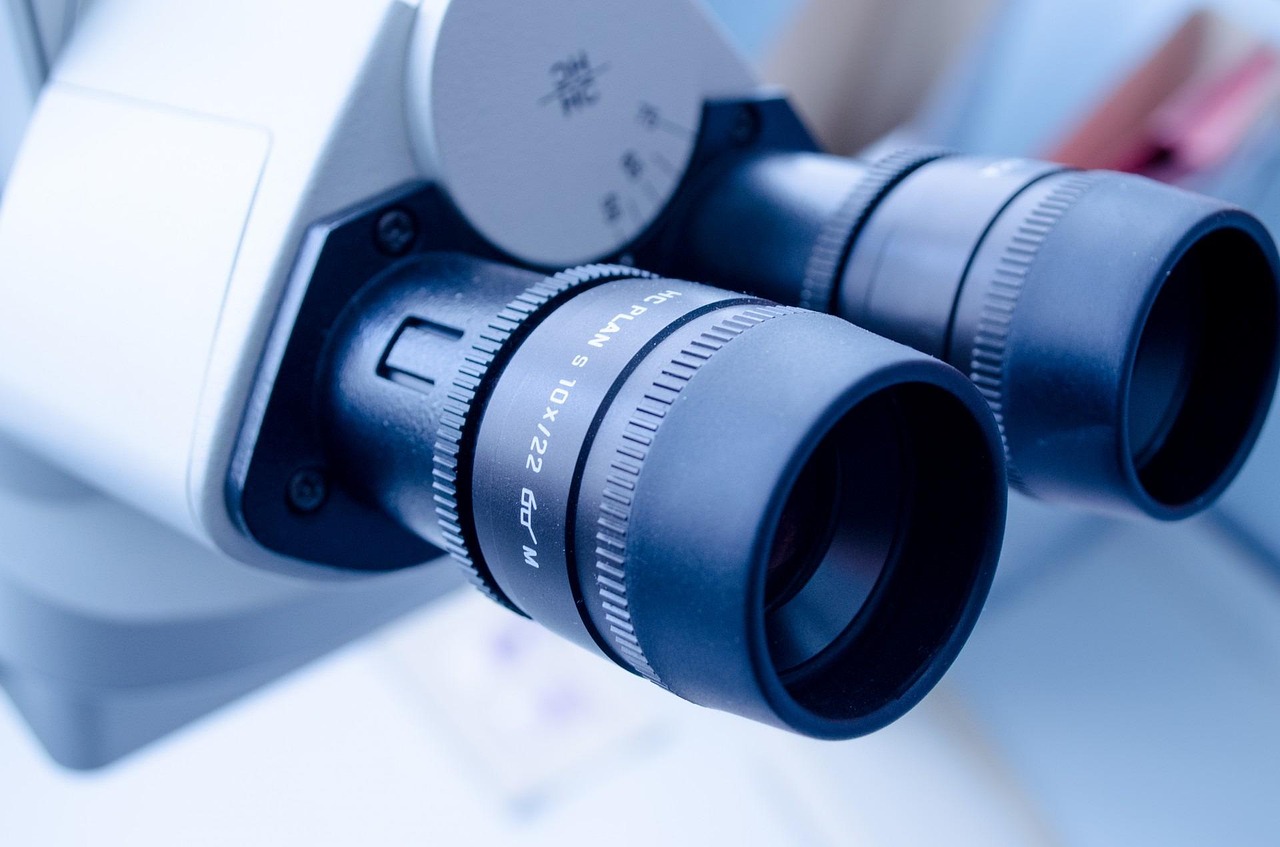
By sending electrical pulses through these electrodes, the robot "nudges" ions in the surrounding fluid. This creates a localized electric field that propels the robot forward. The programming is handled via light pulses—a process where researchers can "flash" instructions to the robot before it begins its task. Once active, the robot communicates its findings through a "waggle dance." Much like a honeybee, the robot moves in specific patterns or frequencies to signal that it has reached a certain temperature or pH level, which researchers can then read through a microscope.

This breakthrough solves the "autonomy gap." We have moved from "dumb" particles that go where the magnet tells them, to "smart" agents that can decide to move left because they sensed a temperature drop to the right.
Medical Revolution: The 10-Year Path to the Bloodstream
As a critic who evaluates the long-term viability of emerging tech, the medical implications here are the most compelling. We are looking at a 10-year outlook for these robots to enter human clinical trials. The potential to transform internal medicine is staggering.
- Targeted Drug Delivery: Instead of flooding a patient's entire body with chemotherapy, a swarm of these robots could be injected to seek out the specific chemical signatures of a tumor and release the payload only at the source.
- Nerve Repair: Because of their size, these robots could potentially act as microscopic "scaffolds" or "welders," helping to bridge gaps in damaged neural pathways.
- Real-time Monitoring: Imagine a "living" diagnostic tool that stays in the bloodstream for 24 hours, monitoring cell health and pH levels, and then reporting back via high-frequency movement.
- Non-Invasive Microsurgery: Performing cellular-level repairs without a single incision.
The ability to operate independently within the human circulatory system would represent the greatest leap in medical technology since the invention of the antibiotic.
Accessibility and Manufacturing: The Penny-Cost Robot
Perhaps the most disruptive aspect of this technology is not its size, but its scalability. Unlike many laboratory breakthroughs that cost millions to replicate, these micro-robots are designed for mass production using standard semiconductor fabrication techniques.
The researchers estimate that these robots can be produced for roughly $0.01 per unit.
This extreme cost-efficiency changes the "policy" of robotics. It moves the technology from the realm of elite research institutions into the hands of the masses. In fact, the project's success was already demonstrated by high school students who were able to operate the tech using nothing more than $10 microscopes and basic light sources.
However, from an objective standpoint, we must acknowledge the current limitations:
- Saltwater Biocompatibility: While the robots work in lab fluids, the high salinity of human blood can corrode platinum electrodes over time.
- Environmental Recovery: How do we "collect" millions of penny-sized robots once their task is complete?
- Power Depth: Solar power works under a microscope, but inside the human body, alternative power sources (like ultrasonic or glucose-based energy) will be required.
The 2026 Robotics Landscape: From Micro-bots to Humanoids
As we look toward 2026, the robotics landscape is bifurcating. On one end, we see the rise of humanoid giants like Tesla Optimus Gen 3 and LG’s CLOi, designed to navigate the human world. On the other end, we have this Michigan-developed micro-bot, designed to navigate the cellular world.
The shift is clear: We are moving from lab prototypes to real-world commercial deployment. While humanoid robots will change how we work, these microscopic autonomous agents will change how we live and how we heal. The convergence of 55nm computing with microscopic fluid dynamics is no longer a "Marvel movie" fantasy; it is a proven engineering reality.
The "salt-grain" robot represents the first time we have successfully shrunk the "brain" and the "body" into a single, autonomous microscopic unit. The implications for industry, medicine, and environmental monitoring are limited only by our ability to program them.
FAQ
How does the robot "think" without a traditional battery? The robot utilizes highly efficient 75-nanowatt solar cells that harvest light to power a 55-nanometer CMOS computer. This computer processes sensor data and controls the robot's movement using very little energy, eliminating the need for bulky batteries.
Can these robots be used in the human body today? Not yet. While the "Sense-Think-Act" cycle is proven, the 10-year path to medical application involves making the robots biocompatible with the harsh environment of human blood and finding ways to power them where sunlight cannot reach.
Are they expensive to produce? No. Because they are manufactured using the same silicon lithography used for computer chips, they can be mass-produced for about one cent ($0.01) per robot.
Are you ready for the micro-robotics revolution? Stay ahead of the curve in technology and medical innovation by subscribing to our weekly deep dives.