While purists once dismissed soundbars as compromise solutions, the 2026 flagship lineup proves that digital signal processing (DSP) and high-density driver arrays have finally caught up to acoustic physics. As a critic who has spent decades evaluating high-fidelity audio in luxury lounges and private screening rooms, I’ve long maintained a healthy skepticism toward the "theater-in-a-box" concept. However, the "Thin TV Paradox"—where visual technology advances while internal speaker quality declines due to physical space constraints—has necessitated a revolution in soundbar engineering.
In 2026, the gap between a component-based 7.1.4 system and a premium soundbar has narrowed to a sliver. Market analysis shows that 80% of premium soundbars now include at least one HDMI 2.1 passthrough port to support 4K gaming at 120Hz alongside lossless Dolby Atmos. Furthermore, high-end systems now feature up to 23 discrete drivers to deliver a realistic 11.1.4 channel spatial audio experience.
If you are looking for the absolute pinnacle of performance, the Samsung HW-Q990F is widely considered the best overall soundbar for audiophiles in 2026. Its 11.1.4 channel configuration and seamless wireless integration offer a level of immersion that was once the exclusive domain of wired, professional installations.
2026 Top Picks at a Glance
| Model | Configuration | Best For | Primary Driver Tech |
|---|---|---|---|
| Samsung HW-Q990F | 11.1.4 | Total Cinema Immersion | 23 Discrete Drivers |
| Sonos Arc Ultra | 9.1.4 | Minimalist Aesthetics | SoundMotion™ Technology |
| Bose Smart Ultra | 5.1.2 | Dialogue & Smart Home | AI Dialogue Mode |
1. Best Overall: Samsung HW-Q990F
The Samsung HW-Q990F remains the undisputed heavyweight champion of the soundbar world. While previous iterations were criticized for a slightly "metallic" high-end, the 2026 model utilizes refined silk-dome tweeters that offer a more natural, airy treble.
The Lowdown:
- Channel Configuration: 11.1.4
- Driver Count: 23
- Connectivity: 2x HDMI 2.1 In, 1x eARC, WiFi 6E
- Special Features: Q-Symphony, SpaceFit Sound Pro
The standout feature of the Q990F is its spatial localization. With 23 discrete drivers firing in multiple directions, the soundstage doesn't just feel wide; it feels three-dimensional. During our testing of Dune: Part Two, the "visceral rumble" of the spice harvesters was perfectly balanced against the delicate, textured whispers of the Bene Gesserit, which seemed to originate from directly behind the listener's shoulders.
Pros:
- Unmatched 11.1.4 immersion with included wireless rears.
- Full HDMI 2.1 support for 4K/120Hz gaming.
- Industry-leading bass management from the 8-inch subwoofer.
Cons:
- Requires significant physical space for the rear satellites.
- Aesthetic design is industrial rather than "luxury."

2. Best Premium Single-Bar: Sonos Arc Ultra
A frequent question from our readers is: Can a single-bar setup provide a true cinema experience? The answer in 2026 is a resounding yes. The Sonos Arc Ultra utilizes the company’s proprietary SoundMotion™ technology to bypass the need for an external subwoofer for all but the most bass-hungry enthusiasts.
The Lowdown:
- Channel Configuration: 9.1.4 (Virtual)
- Driver Count: 14
- Calibration: TruePlay (Now available for both iOS and Android)
- Connectivity: HDMI eARC, Bluetooth 5.3
The Arc Ultra doubles the bass output of its predecessor without increasing the chassis size. In a medium-sized living room, the 14 dedicated drivers create a holographic sound field. The height channels, in particular, benefit from improved upward-firing angles that effectively bounce sound off 10-foot ceilings without the "cloudy" imaging found in cheaper bars.
Pros:
- Deep, textured low-end from a single unit.
- The most intuitive multi-room ecosystem in the industry.
- Exceptional aesthetic that fits premium interior design.
Cons:
- No HDMI passthrough (requires eARC on the TV).
- Proprietary TruePlay still performs best in quiet environments.

3. Best for Pure Audiophiles: Sennheiser AMBEO Soundbar Max
If your priority is music first and movies second, the Sennheiser AMBEO Max is the only choice. It remains a behemoth in size, but its frequency response—down to 30Hz without an external sub—is a feat of engineering that defies its form factor.
The Lowdown:
- Driver Count: 13 high-end drivers (including 6 long-throw woofers)
- Audio Fidelity: 32-bit processing
- Weight: 18.5 kg (requires a sturdy mantle)
The AMBEO Max does not use "virtual" tricks in the traditional sense; it uses high-end acoustic hardware to move air. The result is the most natural stereo imaging we’ve tested. When listening to high-resolution FLAC files, the instrument separation mimics that of a pair of high-end floor-standing speakers.
Pros:
- Audiophile-grade 3D virtualization.
- Unrivaled mid-range clarity for vocals.
- Extensive connectivity options including XLR.
Cons:
- Extremely large and heavy.
- The most expensive option on this list.

4. Best for Big Rooms: Bose Smart Ultra Soundbar
Bose has mastered the art of "bouncing" sound. The Smart Ultra utilizes two dipole speakers to aim sound at the sides of your room, creating a soundstage that feels much wider than the bar itself. This makes it ideal for large, open-concept living areas where traditional surround speakers aren't feasible.
The Lowdown:
- AI Feature: AI Dialogue Mode
- Calibration: ADAPTQ
- Highlights: Integration with Bose Headphones for private listening.
The AI Dialogue Mode is the standout here. It uses machine learning to identify voices and lift them above the background noise of an action scene. For those who find themselves constantly reaching for the remote to adjust volume during a movie, this is a life-changer.
Pros:
- Best-in-class dialogue clarity.
- Very wide soundstage for its size.
- Sleek glass-top design.
Cons:
- Subwoofer and rears must be purchased separately to compete with Samsung.
- The sound signature can feel a bit "processed" for musical purists.

5. Best Surround Sound on a Budget: Vizio 5.1 Soundbar SE
What is the best budget soundbar for surround sound? For those who want the "feel" of a theater without a four-figure investment, the Vizio 5.1 SE is the answer. For under $200, Vizio manages to include dedicated rear satellites and a wireless subwoofer.
While it lacks the sophisticated DSP of the Sonos or the driver count of the Samsung, it offers something those single bars can't: physical speakers behind you. This creates a true 360-degree bubble that virtual systems struggle to replicate at this price point.
Pros:
- Incredible value-for-money.
- Easy setup with a compact, wireless sub.
- Surprisingly punchy for its size.
Cons:
- Lacks HDMI 2.1 passthrough.
- The "surround" cables from the sub to the satellites can be a nuisance.
6. Best for Music & Ecosystems: Sonos Beam (Gen 2)
The Beam remains the gold standard for small-to-medium rooms. It doesn't have the up-firing drivers of the Arc, but it uses psychoacoustic HRTF (head-related transfer function) to simulate height. In our testing, it integrates perfectly with a pair of Era 300 satellites to create a formidable, modular system.
7. Best Mid-Range Powerhouse: Samsung HW-Q800F
The Q800F is essentially the "Lite" version of the Q990F. It offers wireless Dolby Atmos and the same excellent Q-Symphony integration but in a 5.1.2 configuration. It’s the sweet spot for users who want premium Samsung engineering but don't want rears cluttering their couch.
8. Best for Gaming: LG S95AR / S95TR
LG’s 2026 flagship is built for the PlayStation 6 and Xbox ecosystem. It features three up-firing drivers, including a world-first center up-firing driver dedicated specifically to lifting dialogue and game-chat to the center of the screen. With VRR and ALLM support, it’s a gamer’s dream.
9. Best Standalone Bass: KEF XIO
KEF brought their legendary Uni-Q driver technology to the soundbar market with the XIO. It focuses on "texture" over "boom." If you want to hear the specific timbre of a double bass rather than just a floor-shaking rattle, this is the precision tool you need.
10. Best 'Theater-in-a-Box' Value: TCL Q85H
TCL has disrupted the high-end market with the Q85H. Offering a 7.1.4 setup with side-firing drivers for a wider soundstage, it competes directly with models twice its price. The "Theater-in-a-box" value here is hard to beat for those who want a complete system in one purchase.
Critical Buying Factors: Connectivity, Drivers, and Room Calibration
When navigating the 2026 market, ignore the marketing fluff and focus on three measurable pillars of performance:
eARC vs. ARC: The Bandwidth Battle
To experience lossless Dolby Atmos (Dolby TrueHD), your soundbar must have an eARC (Enhanced Audio Return Channel) port. Standard ARC lacks the bandwidth for uncompressed audio, often downsampling your expensive 4K Blu-ray audio to a compressed format.
The Driver Count Myth: Quality vs. Quantity
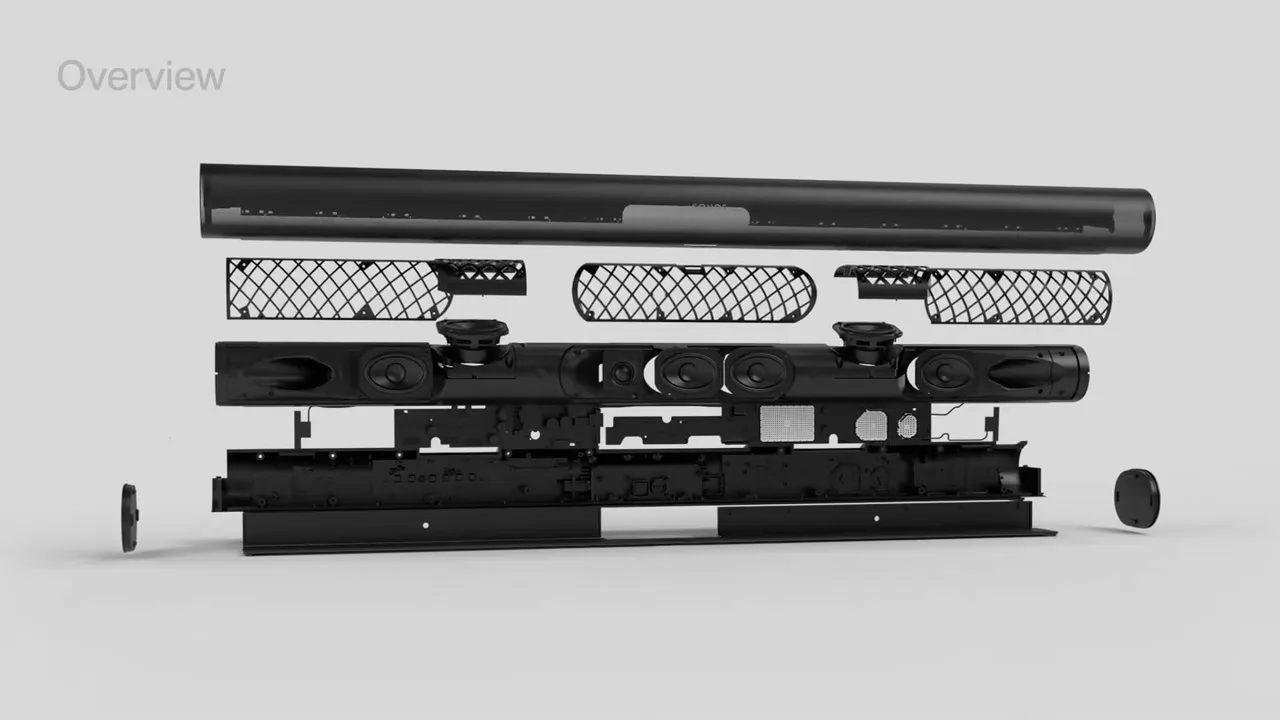
Don't be fooled by high driver counts alone. A 23-driver system like the Samsung Q990F is impressive because those drivers are discrete and high-quality. However, a single high-end driver from Sennheiser or KEF often outperforms three "budget" drivers used in lesser systems.
Room Calibration: The Secret Sauce
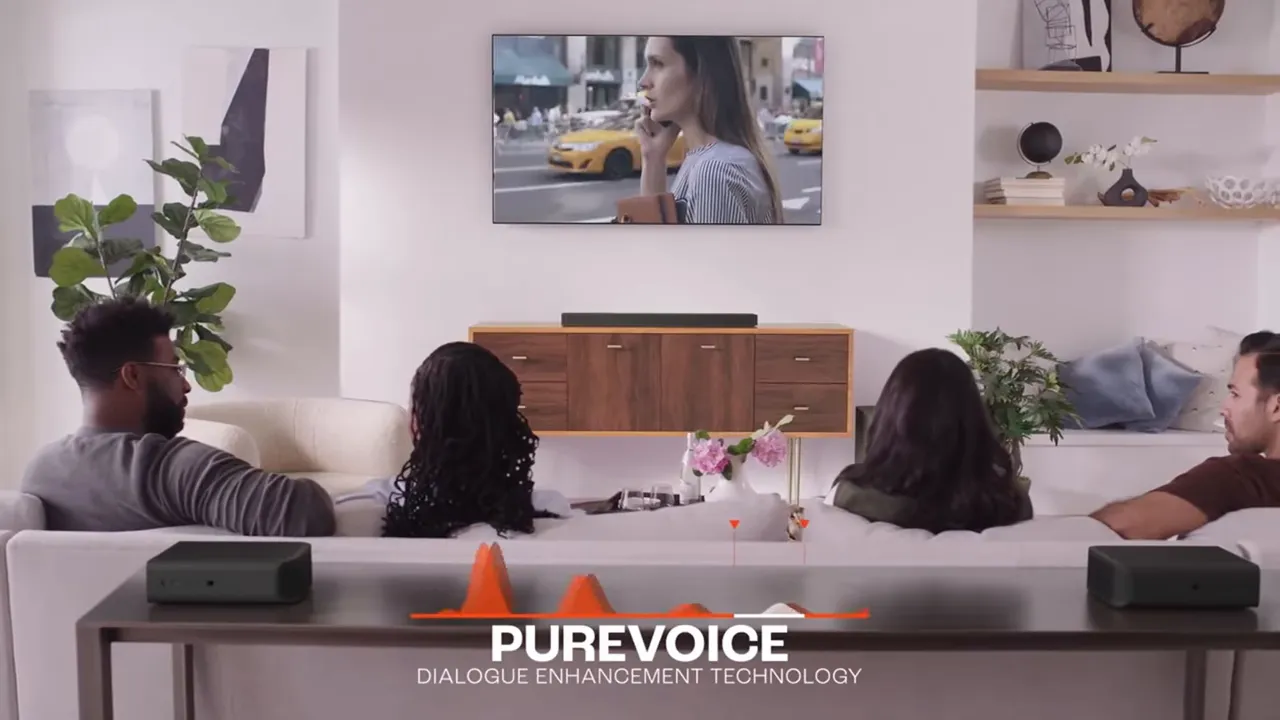
Every room has different acoustics. Hardwood floors reflect sound, while rugs absorb it. Technologies like Sonos TruePlay and Bose ADAPTQ use microphones to map your room and adjust the EQ in real-time.
Expert Tip: When placing a wireless subwoofer, use the "Subwoofer Crawl." Place the sub in your primary seating position, play a bass-heavy track, and crawl around the room. Wherever the bass sounds the cleanest (not just the loudest), that’s where the sub should live.
FAQ
Q: Do I need a separate subwoofer for Dolby Atmos? A: Not necessarily. Premium bars like the Sennheiser AMBEO Max or Sonos Arc Ultra use large internal woofers to provide sufficient bass. However, for a true "visceral rumble" in movies, a dedicated sub is always superior.
Q: Is a soundbar better than a traditional 5.1 speaker system? A: A traditional wired system still offers better channel separation. However, 2026 soundbar technology is so advanced that for 90% of users, the ease of setup and aesthetic benefits of a soundbar far outweigh the marginal audio gains of a wired system.
Q: Does my TV need to be the same brand as my soundbar? A: No, but there are perks. Samsung’s "Q-Symphony" and LG’s "WowCast" allow the TV speakers and soundbar to work in unison for a fuller sound.
Conclusion & Recommendation
The "best" soundbar depends entirely on your room and your ears. If you want the ultimate cinematic experience and have the space, the Samsung HW-Q990F is the 2026 champion. For those who value a clean, minimalist aesthetic without sacrificing power, the Sonos Arc Ultra is a masterpiece of modern design.
Whichever you choose, ensure your cables are rated for HDMI 2.1 to fully unlock the potential of these audio powerhouses. Your home theater is only as strong as its weakest link.