The recent complications surrounding the return of China’s Shenzhou-20 mission highlight a sobering reality of modern space exploration: the frontier is becoming increasingly crowded and hazardous. Much like the technical hurdles that sidelined Boeing’s Starliner earlier this year, the Shenzhou-20 mission faced an unexpected and high-stakes extension. However, whereas the Starliner faced propulsion system anomalies, the Chinese mission was threatened by an external, more persistent adversary—space debris.
Originally scheduled to depart the Tiangong space station on November 5, 2025, the Shenzhou-20 return mission was abruptly postponed following the discovery of structural damage. A suspected strike by micrometeoroid or small space debris caused visible cracks in a critical porthole window, prompting the China Manned Space Agency (CMSA) to initiate an exhaustive safety assessment. This delay ultimately extended the crew's tenure to 204 days. The mission concluded successfully on November 14, 2025, when astronauts Chen Dong, Chen Zhongrui, and Wang Jie touched down in Inner Mongolia. Their safe return was not facilitated by their original craft, but by the Shenzhou-21 spacecraft, which was repurposed as a dedicated rescue vehicle.
The Anatomy of a Crisis: Identifying the Damage
The transition from a routine rotation to a rescue operation began with a routine visual inspection. Engineers monitoring telemetry and high-resolution video feeds identified what appeared to be penetrating cracks in the thermal protection layer of one of the Shenzhou-20 return capsule's porthole windows. In the unforgiving vacuum of space, even a microscopic fissure can lead to catastrophic depressurization during the intense heat and vibration of re-entry.
To confirm the severity of the damage, the CMSA utilized the Tiangong station’s external robotic arm, equipped with advanced 40x micro-imaging cameras. These instruments provided high-fidelity telemetry review, allowing ground controllers in Beijing to examine the "orbital birdshot" impact site in granular detail. The assessment was clinical: while the inner pressure hull remained intact, the integrity of the outer ablative shield and the transparency layer was compromised beyond the safety margins required for a manned atmospheric descent.
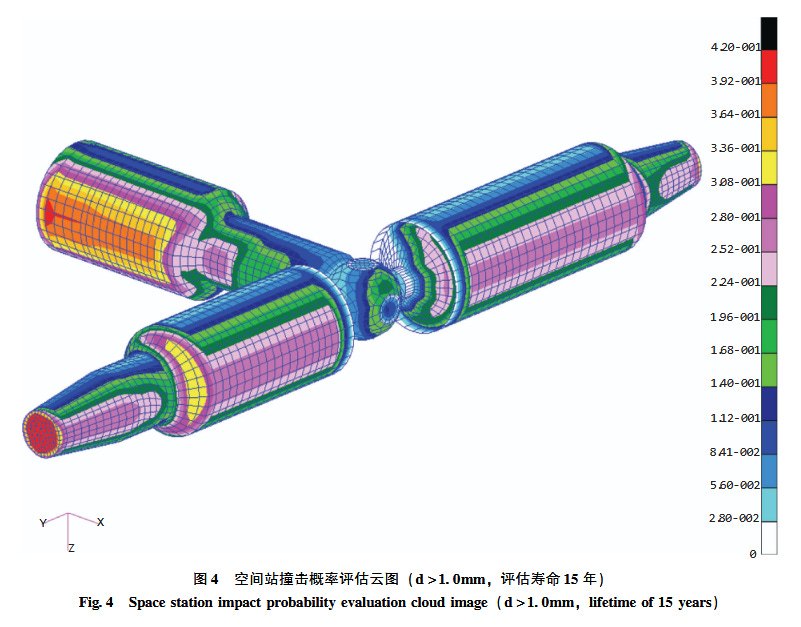
The mission’s duration, which reached 204 days by the time of landing, underscores the logistical pressure placed on the Tiangong life support systems. While the station is designed for long-term habitation, an unplanned extension involving three additional personnel—given the overlapping arrival of the next crew—requires precise management of oxygen, water, and caloric supplies.
China’s 'Space Lifeboat' Protocol: The Rescue Strategy
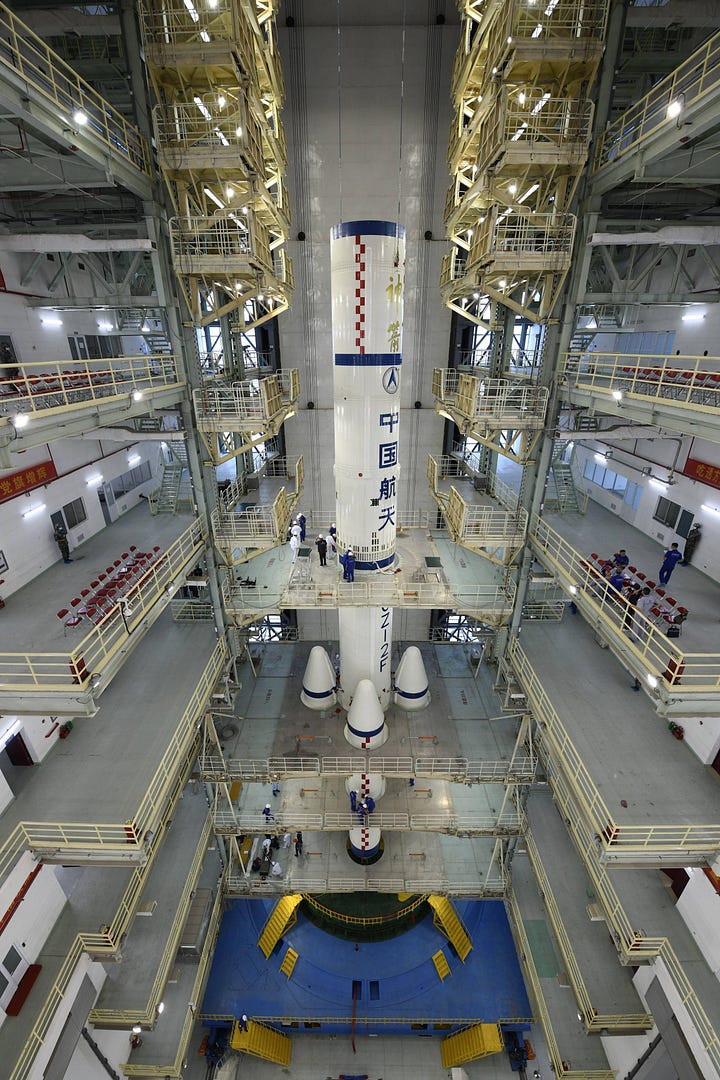
The resolution of the Shenzhou-20 crisis was not a product of improvisation, but rather a testament to China’s "launch one, back up one" rolling standby strategy. Since the early days of the Tiangong program, the CMSA has maintained a secondary rocket and spacecraft in a state of near-readiness at the Jiuquan Satellite Launch Center. This protocol ensures that if a crew is stranded, a rescue vehicle is always within a predictable launch window.
In this instance, the standard 30-to-45-day launch preparation cycle was compressed into a frantic 16-day emergency flow. This was achieved through a "parallel" model for rocket assembly, where quality control checks and component integration occurred simultaneously across multiple shifts.
Expert Insight: "The ability to compress a crewed launch schedule by over 50% without compromising safety margins is a significant indicator of the maturity of the Long March 2F production line," notes Dr. Lin Wei, a senior aerospace analyst. "It demonstrates a shift from experimental launches to a standardized, industrial-scale space transport system."
The rescue backup plan followed a rigorous four-step sequence:
- Immediate Assessment: Ground teams used robotic arm imaging to determine if the damaged Shenzhou-20 could be repaired in situ or if a replacement was mandatory.
- Activation of the Standby: The Shenzhou-21 spacecraft, originally slated for the next crew rotation, was fast-tracked and reconfigured for a "passenger-only" ascent to maximize fuel and cargo margins.
- Automated Docking: The rescue craft docked autonomously with the Tiangong core module, providing a fresh, undamaged return vehicle for the stranded trio.
- Asset Disposal: The damaged Shenzhou-20 capsule was eventually de-orbited remotely to burn up in the atmosphere, preventing it from becoming further space debris.
Mission Timeline: Standard vs. Emergency Cycle
| Phase | Standard Timeline (Days) | Shenzhou-20 Emergency (Days) |
|---|---|---|
| Rocket Assembly & Testing | 25-30 | 10 |
| Spacecraft Integration | 10-15 | 4 |
| Launch Pad Preparation | 5 | 2 |
| Total Prep Time | 40-50 Days | 16 Days |
The Return of the Shenzhou-20 Crew
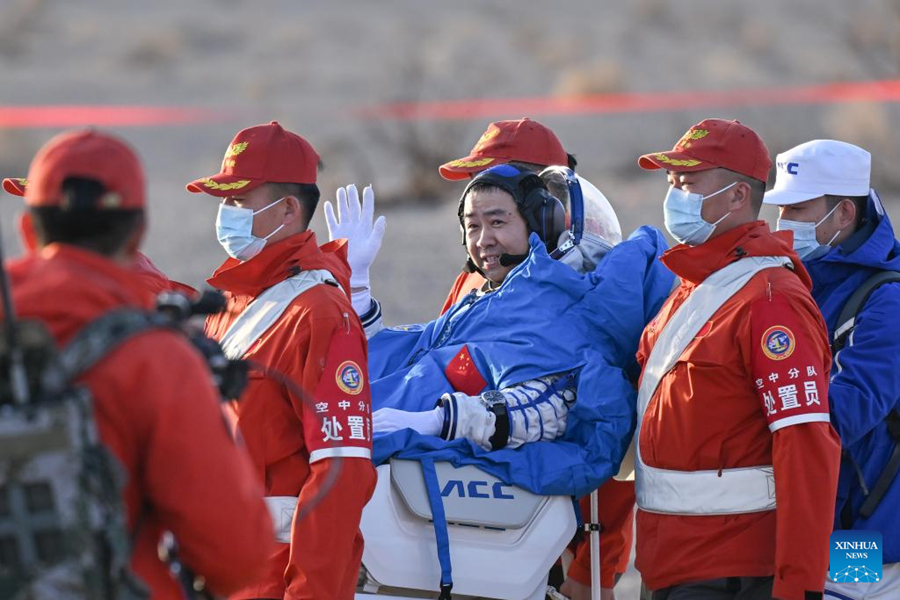
The climax of the mission occurred in the early hours of November 14, 2025. Chen Dong, Chen Zhongrui, and Wang Jie boarded the Shenzhou-21 spacecraft, which had been specially reconfigured to accommodate their return. To minimize the physical toll on the astronauts after their extended stay, the CMSA implemented a "3-circle rapid return trajectory" for the first time in a rescue scenario.
This trajectory reduces the time spent in the cramped return capsule from nearly 24 hours to approximately 9 hours by optimizing the orbital phasing maneuvers. At 3:45 a.m. EST, the capsule’s parachutes deployed over the Dongfeng landing site in Inner Mongolia. The successful touchdown marked the end of a mission that began as a scientific expedition and ended as a masterclass in orbital emergency management.
The Role of Shenzhou-22: Rescue Plus Resupply
With Shenzhou-21 used as the rescue vehicle for the outgoing crew, the CMSA faced a secondary challenge: how to maintain the station's operational tempo. The solution was the accelerated launch of Shenzhou-22. This mission served a dual purpose: it carried the replacement crew and delivered specialized repair kits to address the damage sustained by the station's exterior.
Shenzhou-22's cargo manifest included advanced polymer-based repair devices designed to seal micro-cracks in porthole surfaces—a direct response to the Shenzhou-20 incident. Furthermore, the CMSA has already positioned Shenzhou-23 as the new rolling standby, ensuring that the "lifeboat" chain remains unbroken. This continuous backup model is becoming the gold standard for long-term habitation in Low Earth Orbit (LEO).
LEO: Navigating a Cosmic Dumping Ground
The Shenzhou-20 incident is a localized symptom of a global orbital crisis. According to Georgetown University research, the band of space surrounding Earth is currently home to over 34,000 trackable objects larger than 10 cm. These objects travel at orbital velocities—roughly 17,500 mph—where even a fragment the size of a marble carries the kinetic energy of a hand grenade.
The real danger, however, lies in the millions of pieces of debris smaller than 1 cm that remain untraceable by current radar systems. This "orbital birdshot" is a direct result of decades of satellite launches, spent rocket stages, and historical events like the 2007 anti-satellite (ASAT) tests which shattered single objects into thousands of lethal fragments.
Key Statistics:
- Trackable Objects (>10cm): 34,000+
- Estimated Debris (1-10cm): 900,000
- Collision Speed: Up to 17,500 mph (28,000 km/h)
- Impact Energy: A 1cm piece of aluminum can penetrate several inches of solid steel at these speeds.
The Tiangong space station, like the International Space Station (ISS), must perform frequent "Collision Avoidance Maneuvers" (CAMs) to dodge known debris. But as the Shenzhou-20 window crack proves, the unknown fragments are just as dangerous. This incident will likely accelerate international calls for stricter debris disposal regulations and the development of active debris removal (ADR) technologies.
Conclusion: The New Standard for Orbital Safety
The saga of Shenzhou-20 serves as both a warning and a reassurance. It warns us that the debris environment in LEO is deteriorating faster than our ability to clean it, turning routine missions into high-risk gambles. Yet, it also reassures us that the infrastructure for space rescue is becoming more robust.
China’s ability to pivot from a standard mission to a complex rescue operation within 16 days demonstrates an institutional maturity that was largely absent during the early decades of the space race. As we look toward more ambitious missions to the Moon and Mars, the "lifeboat" protocols established during the Shenzhou-20 mission will likely become the blueprint for survival in the deep-space era.
For those following the evolution of space policy and safety, this mission is a definitive case study in risk mitigation. The "cosmic dumping ground" is here to stay, but so is the ingenuity required to navigate it.
Monitor the Latest Tiangong Mission Updates →
FAQ
Q: Why couldn't the Shenzhou-20 crew just use their original spacecraft to return? A: While the pressure hull of the original Shenzhou-20 capsule was likely intact, the cracks in the porthole window compromised the structural integrity of the thermal protection system. During re-entry, temperatures reach thousands of degrees; any structural weakness in a window or seal could lead to a catastrophic failure. The risk was deemed unacceptable by the CMSA.
Q: How does the CMSA track the debris that caused the damage? A: Most debris smaller than 10 cm is currently untraceable by ground-based radar. The damage to Shenzhou-20 was likely caused by one of these smaller fragments. The CMSA relies on a combination of ground-based tracking for larger objects and physical shielding (Whipple shields) on the station to protect against smaller impacts.
Q: Will this delay affect future missions to the Tiangong Space Station? A: Yes. The rescue operation necessitated the "advancing" of the Shenzhou-21 and Shenzhou-22 launch schedules. This has led to a minor reshuffling of the mission calendar for 2026 to ensure that the "rolling backup" spacecraft are always ready and that the crew rotation remains balanced.