The aerial photography landscape is currently navigating a period of significant turbulence. For years, DJI has maintained a near-monopoly on the consumer drone market, but recent legislative headwinds—specifically the "Countering CCP Drones Act"—have left American pilots questioning the long-term viability of their fleets. Whether you are a professional photographer concerned about future serviceability or a hobbyist seeking a more budget-friendly entry point, the market for DJI alternatives has matured significantly in 2024.
Currently, the best alternatives to DJI drones include the Potensic Atom SE for those seeking the ultimate price-to-performance ratio, the HoverAir X1 for creators focused on portable social media content, and the Autel Robotics Evo Lite Plus for high-end cinematic production. For travelers, the Autel Evo Nano Plus offers a compelling geofence-free experience, while the EMAX Tinyhawk II serves as the gold standard for those looking to master the visceral world of FPV (First Person View) flight.
| Model | Max Resolution | Weight | Flight Time | Primary Advantage |
|---|---|---|---|---|
| Potensic Atom SE | 4K @ 30fps | 248.8g | 31 Mins | Best Value / No FAA Reg |
| HoverAir X1 | 2.7K @ 30fps | 125g | 11 Mins | Autonomous Selfies |
| Autel Evo Lite+ | 6K @ 30fps | 835g | 40 Mins | Pro-Grade Low Light |
| Autel Evo Nano+ | 4K @ 30fps | 249g | 28 Mins | No Geofencing |
| EMAX Tinyhawk II | 600TVL (Analog) | 43.5g | 4 Mins | Durability / FPV Entry |
1. Best Overall Value: Potensic Atom SE
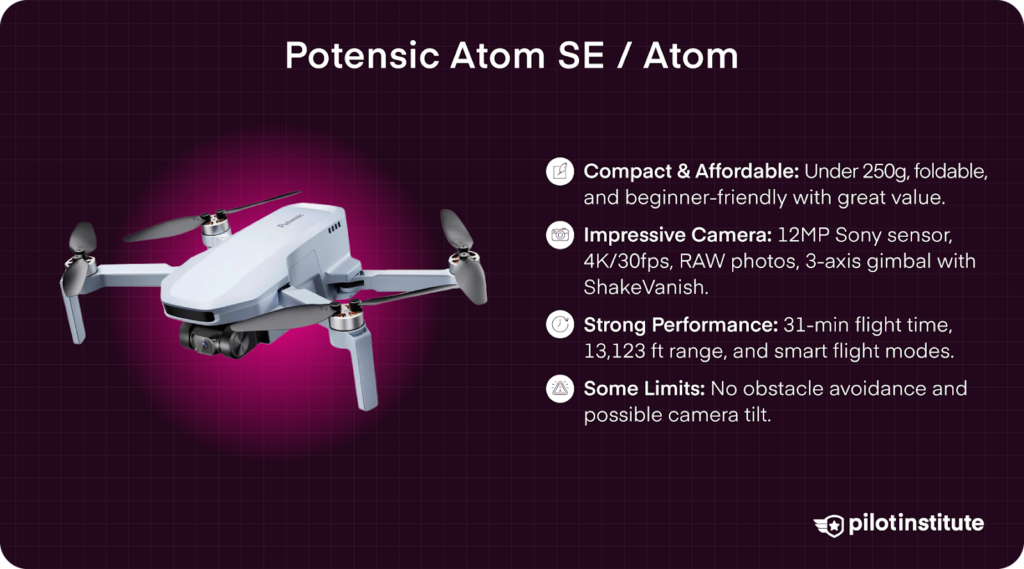
For the pragmatic pilot, the Potensic Atom SE represents the most logical departure from the DJI ecosystem. While DJI’s Mini series often commands a premium for its brand name, Potensic has engineered a platform that mirrors the essential flight characteristics of a professional drone at a fraction of the cost.
The technical achievement here is one of precision. The Potensic Atom SE provides 4K video at 30 fps and a respectable 2.5-mile transmission range, all while weighing exactly 248.8 grams. This is a critical metric: it keeps the aircraft exactly 0.2 grams below the FAA’s mandatory registration threshold for recreational flyers. From a data-driven perspective, you are receiving 90% of the utility of a DJI Mini 2 SE for roughly 70% of the price.
However, objectivity requires acknowledging the compromises. Unlike higher-end models, the Atom SE relies on "ShakeVanish" electronic image stabilization rather than a 3-axis mechanical gimbal. In high-wind scenarios—though the drone handles Level 5 winds admirably—the footage can occasionally exhibit the digital artifacts common in software-based stabilization.
Pros & Cons
- Pros: Sub-250g weight avoids FAA registration; exceptional wind resistance for its size; highly competitive price point.
- Cons: Lacks physical 3-axis gimbal; no obstacle avoidance sensors; limited intelligent flight modes compared to Autel.
2. Best for Social Media & Selfies: HoverAir X1
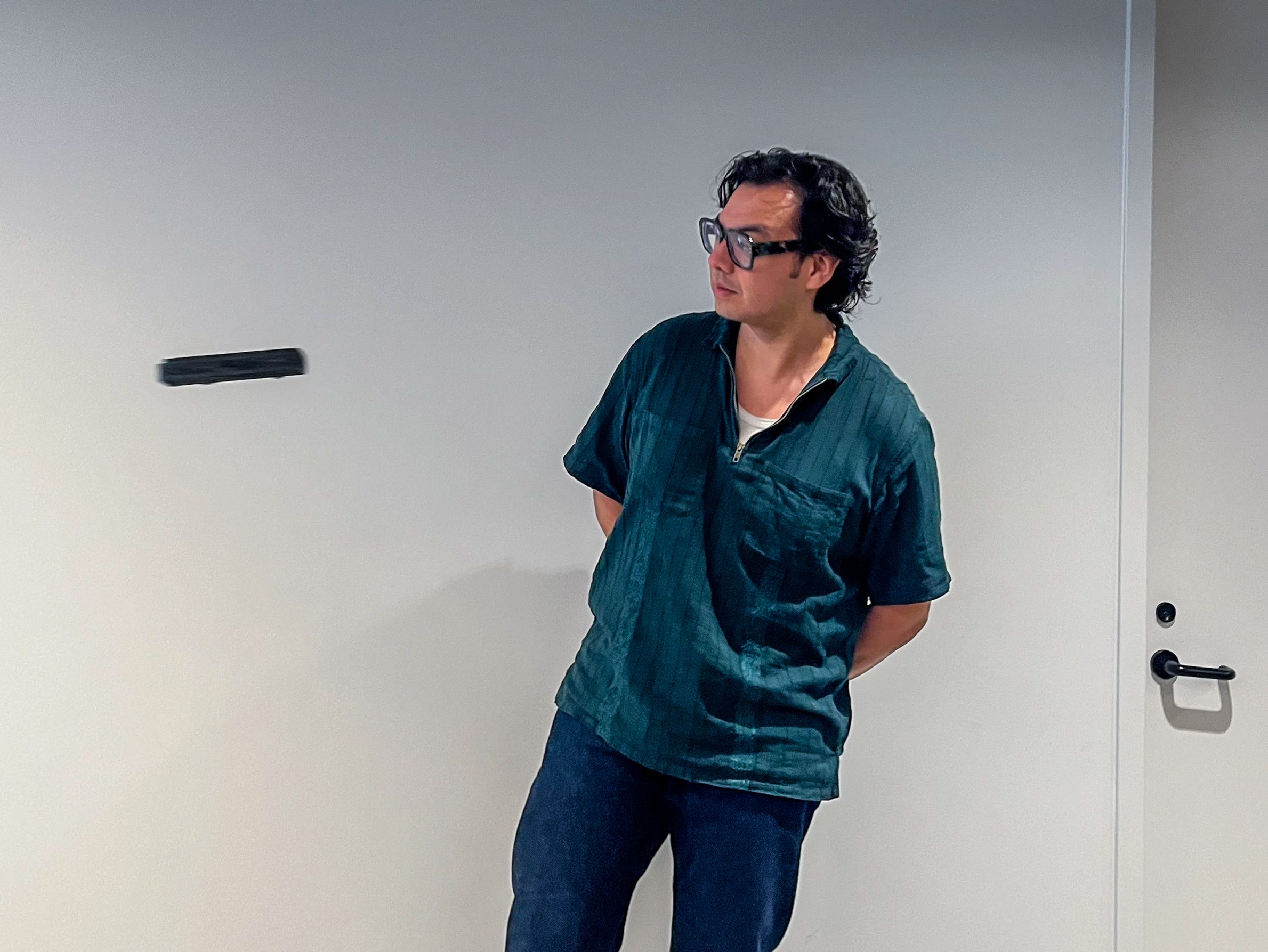
The HoverAir X1 is less of a "drone" in the traditional sense and more of a "flying camera." For travel influencers and solo adventurers who find the logistics of a remote controller cumbersome, the X1 offers a revolutionary workflow. It dispenses with the controller entirely, opting for a palm-launch mechanism and AI-driven autonomous flight paths.
At a mere 125 grams, it is roughly half the weight of its "mini" competitors. Its unique value proposition lies in its five pre-programmed flight modes: Hover, Follow, Orbit, Bird’s Eye, and Zoom Out. During our testing, the "Follow" mode proved surprisingly robust, maintaining a lock on the subject even through moderate foliage, a feat many GPS-dependent drones struggle with.
The trade-off is found in its specialized nature. With a top speed of only 15.7 mph and a 2.7K resolution limit, this is not a tool for sweeping cinematic landscapes or high-speed chase shots. It is a specialized device designed to replace the selfie stick, and in that specific niche, it is peerless.
Pros & Cons
- Pros: Fully enclosed propellers for indoor/safe use; zero learning curve with palm launch; ultra-lightweight.
- Cons: Short 11-minute battery life; 2.7K resolution is lower than the industry 4K standard; poor performance in high winds.
View on HoverAir Official Store →
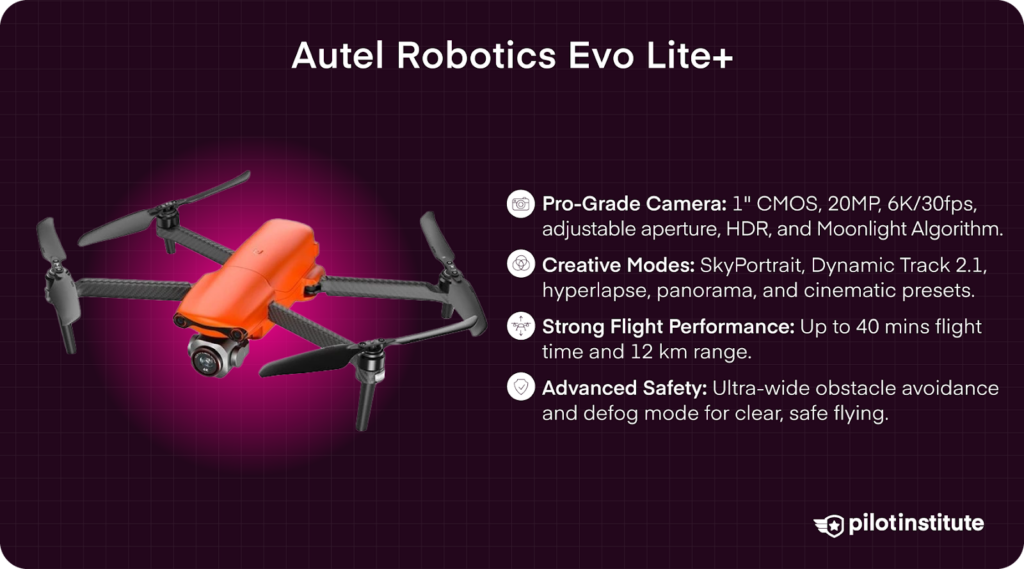
3. Best for High-End Photography: Autel Robotics Evo Lite Plus
If your requirements trend toward professional-grade cinematography, the Autel Robotics Evo Lite Plus is the primary challenger to DJI’s Air and Mavic series. From an analytical standpoint, the Lite Plus is a beast of endurance. It features a high-capacity 6,175 mAh battery, delivering up to 40 minutes of flight time. This is approximately 25-30% longer than typical entry-level consumer drones and even outperforms several "Pro" models in the DJI lineup.
The "Lite" moniker is somewhat of a misnomer. The drone houses a massive 1-inch CMOS sensor capable of 6K video and 20MP stills. More importantly for the serious critic, it features an adjustable aperture ranging from f/2.8 to f/11. This allows pilots to manage exposure and depth of field physically rather than relying solely on shutter speed or ND filters, a level of control usually reserved for aircraft twice its price.
However, potential buyers must note the weight. At 835g, this drone requires FAA registration and compliance with Remote ID regulations. For the professional, this is a standard operating procedure, but for the casual traveler, it adds a layer of bureaucratic friction.
Pros & Cons
- Pros: Industry-leading 40-minute flight time; 1-inch sensor provides superior dynamic range; adjustable physical aperture.
- Cons: Weight exceeds registration-free thresholds; significantly larger footprint than "Mini" drones; higher price point.
4. Best Geofence-Free Traveler: Autel Robotics Evo Nano Plus
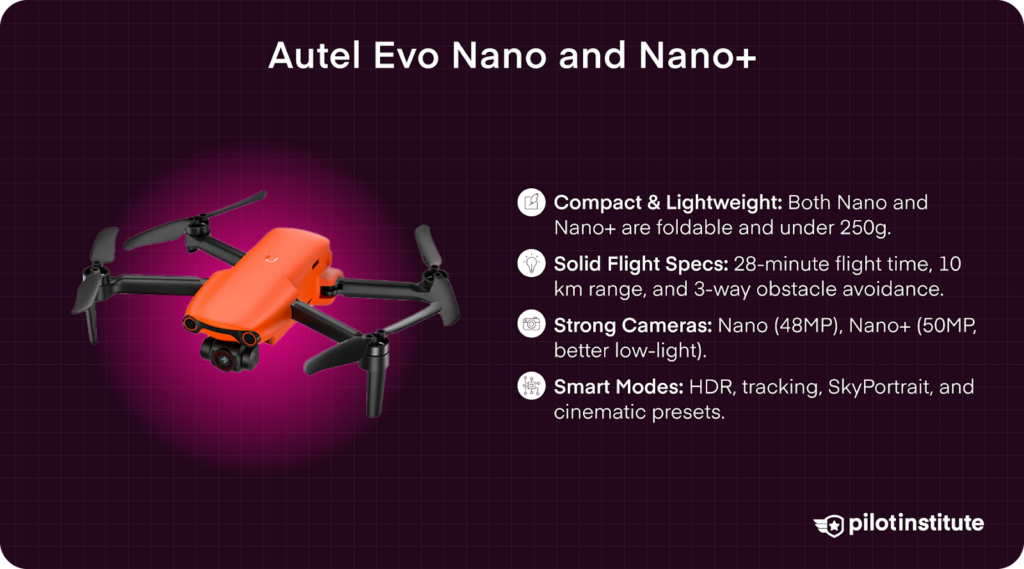
One of the most frequent complaints regarding DJI aircraft is the restrictive geofencing software, which can prevent take-off in legally flyable areas due to outdated or overly cautious database entries. This is where Autel Robotics differentiates itself. Autel drones, including the Evo Nano Plus, do not utilize geofencing. This places the responsibility for airspace compliance directly on the pilot, providing a "pure" flying experience that many veteran aviators prefer.
The Nano Plus is the "traveler’s choice" for a reason. It packs a 1/1.28-inch sensor with an f/1.9 aperture—noticeably wider than most competitors. This allows for significantly better low-light performance, capturing usable 4K footage during the "blue hour" when smaller sensors typically succumb to digital noise.
Furthermore, it manages to include three-way obstacle avoidance sensors while staying under the 250g limit. It is a dense, high-tech package that offers a level of safety and image quality that justifies its premium over the Potensic Atom SE.
Pros & Cons
- Pros: No geofencing restrictions; excellent f/1.9 aperture for low light; includes obstacle avoidance.
- Cons: Battery life is slightly shorter than the DJI Mini 4 Pro; software app can be less intuitive than DJI Fly.
5. Best for Beginners & Racing: EMAX Tinyhawk II
To understand the full spectrum of the drone world, one must look beyond the "flying tripods" of photography and toward the kinetic experience of FPV. The EMAX Tinyhawk II is the definitive entry point for this category. Unlike the GPS-stabilized drones mentioned above, the Tinyhawk requires manual control, offering a raw, visceral connection to flight that can be both challenging and immensely rewarding.
The Tinyhawk II is built from a rugged polypropylene frame, designed specifically to survive the inevitable crashes that come with learning FPV. At just 43.5 grams, it is a "micro" drone that can be safely flown indoors. While its 1080p camera won't be winning any cinematography awards, the goal here is not the footage—it is the skill of flight.
Expert Tip: FPV flight has a steep learning curve. I recommend spending at least 5-10 hours in a flight simulator (like Liftoff or VelociDrone) before attempting to fly the Tinyhawk II in "Acro" mode. Your wallet and your neighbors will thank you.
Pros & Cons
- Pros: Extremely durable; affordable entry into FPV; can be flown safely indoors.
- Cons: Very short battery life (3-5 minutes); high learning curve for beginners; analog video signal is susceptible to interference.
Buyer’s Guide: What to Look for Beyond DJI
When stepping outside the DJI ecosystem, the criteria for a "good" drone shift. You are no longer just buying hardware; you are buying into a different philosophy of flight and data management.
Understanding the Sub-250g Threshold
The 249-gram limit is the most significant regulatory benchmark in consumer drones. In the United States, drones under this weight used for recreational purposes do not require FAA registration. However, if you plan to use your drone for any commercial purpose (even a monetized YouTube channel), you must register the aircraft and hold a Part 107 certificate, regardless of weight.
Connectivity and Remote ID
As of 2024, the FAA requires most drones to broadcast Remote ID information. While DJI has integrated this seamlessly, some older or ultra-budget alternatives may require external broadcast modules. All drones on this list, with the exception of the micro-sized Tinyhawk II, are designed with modern compliance in mind, but always verify the specific firmware status before your first flight.
The New Standard for Battery Life
Five years ago, 20 minutes was considered impressive. Today, 30 minutes is the baseline. As demonstrated by the Autel Evo Lite Plus, the industry is pushing toward the 40-minute mark. When comparing value, always look at the "Fly More" or "Premium" bundles—extra batteries are almost always cheaper when purchased as part of a kit.
FAQ
Do all non-DJI drones require FAA registration? No. Drones weighing under 249 grams, such as the Potensic Atom SE and Autel Evo Nano Plus, typically avoid mandatory FAA registration for recreational use in the U.S. However, all commercial use requires registration and a Part 107 license.
Are there drones without geofencing? Yes. Autel Robotics is the most prominent manufacturer that does not use geofencing. While their drones will provide warnings about nearby restricted airspace, they do not programmatically prevent the drone from taking off, leaving the legal responsibility entirely with the pilot.
Can I use DJI accessories with these drones? Generally, no. Propellers, batteries, and controllers are almost never cross-compatible between brands. If you are switching from DJI to Autel or Potensic, you should expect to invest in a completely new ecosystem of accessories.
Conclusion
The "DJI Ban" discussions have highlighted a fundamental truth for drone enthusiasts: diversity is the key to a resilient hobby or business. While DJI’s products are undeniably polished, they are no longer the only viable option. Whether you prioritize the raw value of the Potensic Atom SE, the creative freedom of the HoverAir X1, or the professional specs of the Autel Evo Lite Plus, the current market proves that you don't need a DJI logo to achieve professional-grade aerial results.
Evaluate your specific needs—be it weight, sensor size, or the absence of software restrictions—and choose the tool that fits your mission. The sky remains open, and the competition has never been better.