Imagine you are cruising down a coastal highway, the rhythmic hum of your autonomous vehicle (AV) providing a sense of futuristic tranquility. Then, the sky darkens. A sudden Pacific squall hits, blurring the windshield into a sheet of grey. Most of us assume that the sophisticated suite of sensors—Lidar, Radar, and high-definition cameras—is better equipped than the human eye to navigate this. We’ve been sold a narrative of superhuman perception. However, as a travel critic who has spent a decade scrutinizing the intersection of luxury, infrastructure, and technology, I can tell you that the reality is far more fragile.
The uncomfortable truth is that rain creates an "invisible wall" for self-driving cars. While a human driver might squint and slow down, an autonomous system faces a fundamental physics problem: rain scatters and reflects Lidar laser pulses, creating a "noise curtain" that effectively hides real objects while generating thousands of false signals. In moderate rainfall, the very technology we rely on to prevent accidents loses the majority of its ability to see the most vulnerable road users—pedestrians.
The Physics of Ghosting: How Rain Blinds Lidar
To understand why autonomous vehicles struggle, we must first look at how they "see." Unlike humans, who rely on passive vision (collecting ambient light), most high-end AVs use Lidar—Light Detection and Ranging. These sensors emit millions of infrared laser pulses every second, measuring how long it takes for that light to bounce off an object and return. This creates a high-resolution 3D map of the environment, often called a "point cloud."
In clear conditions, Lidar is breathtakingly accurate. But when it rains, every droplet becomes a tiny, spherical mirror. When a laser pulse hits a raindrop, it doesn't just pass through; it refracts and scatters. Some of the light reflects directly back to the sensor prematurely, while the rest is diverted away from the target.
This phenomenon creates what engineers call the "noise curtain." To the vehicle's computer, the air is no longer empty; it is filled with thousands of phantom "objects" (the raindrops themselves). The AI must then decide: is that a pedestrian stepping off the curb, or is it just a dense cluster of rain reflecting light? When the system becomes overwhelmed by this noise, it often defaults to a "filtering" mode, which unintentionally scrubs out real, low-contrast objects—like a person in a dark raincoat.

The Terrifying Math of Safety Gaps
As a critic, I deal in data, not marketing fluff. While autonomous vehicle companies frequently highlight millions of miles driven, they rarely break those miles down by weather conditions. Independent testing and recent atmospheric studies have revealed a significant safety gap that should give every early adopter pause.
The degradation of detection capability is not linear; it is exponential. Consider these statistics:
The 60% Detection Drop: During moderate rainfall—defined as 10 to 20 millimeters per hour—Lidar sensors typically lose approximately 60% of their pedestrian detection capability. At this level, the "noise" from the rain is sufficient to obscure the distinct shape of a human body at standard braking distances.
The 90% Failure Threshold: In heavy rainfall conditions (reaching 40mm per hour), the effectiveness of autonomous pedestrian detection plummets to just 10% of normal performance. In these conditions, the vehicle is effectively driving blind to anyone not encased in a large, metal, reflective box (like another car).
The distance factor complicates this further. In clear weather, a Lidar sensor might detect a pedestrian at 200 meters. In moderate rain, that reliable detection range might shrink to 30 meters. At 65 miles per hour, 30 meters provides less than one second of reaction time—far below the threshold required for a safe, controlled stop. This creates a "safety vacuum" where the car may not even realize a collision is imminent until the moment of impact.
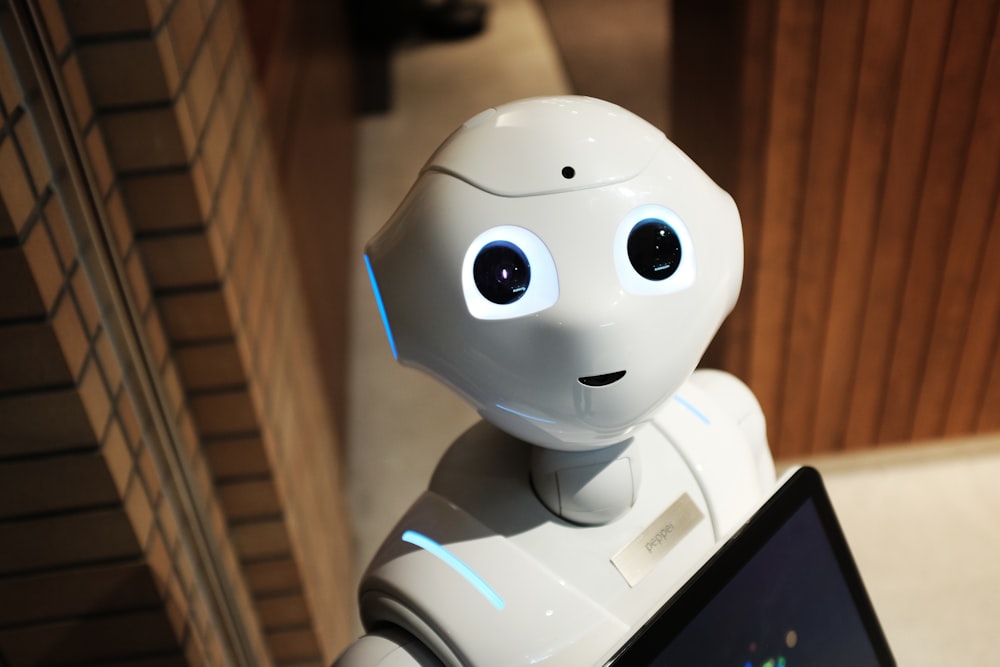
System 1 vs. System 2: Can AI Reason Through the Storm?
The problem isn't just the hardware; it’s the "brain" interpreting the data. In cognitive psychology, humans operate using "System 1" (fast, intuitive pattern matching) and "System 2" (slow, logical reasoning). Current autonomous systems are masterfully proficient at System 1. They have seen millions of images of pedestrians, and they are excellent at matching those patterns.
However, rain introduces "edge cases" that require System 2 thinking. When a car splashes through a puddle, creating a massive plume of white spray, a human driver intuitively understands that there isn't a solid white wall appearing out of nowhere. We use context and logic to "see through" the splash.
An AV, however, sees a sudden, dense cluster of points in its Lidar cloud. If the software is too sensitive, it will slam on the brakes for a splash of water (a "false positive"). If it is too "smooth," it might ignore the splash—and the child who happened to be standing behind it. This "March of Nines"—the quest for 99.9999% reliability—is currently stalled by these chaotic weather variables. The AI lacks the "common sense" to differentiate between a hazardous obstacle and a temporary atmospheric disturbance.
The Industry Schism: Vision-Only vs. Sensor Fusion
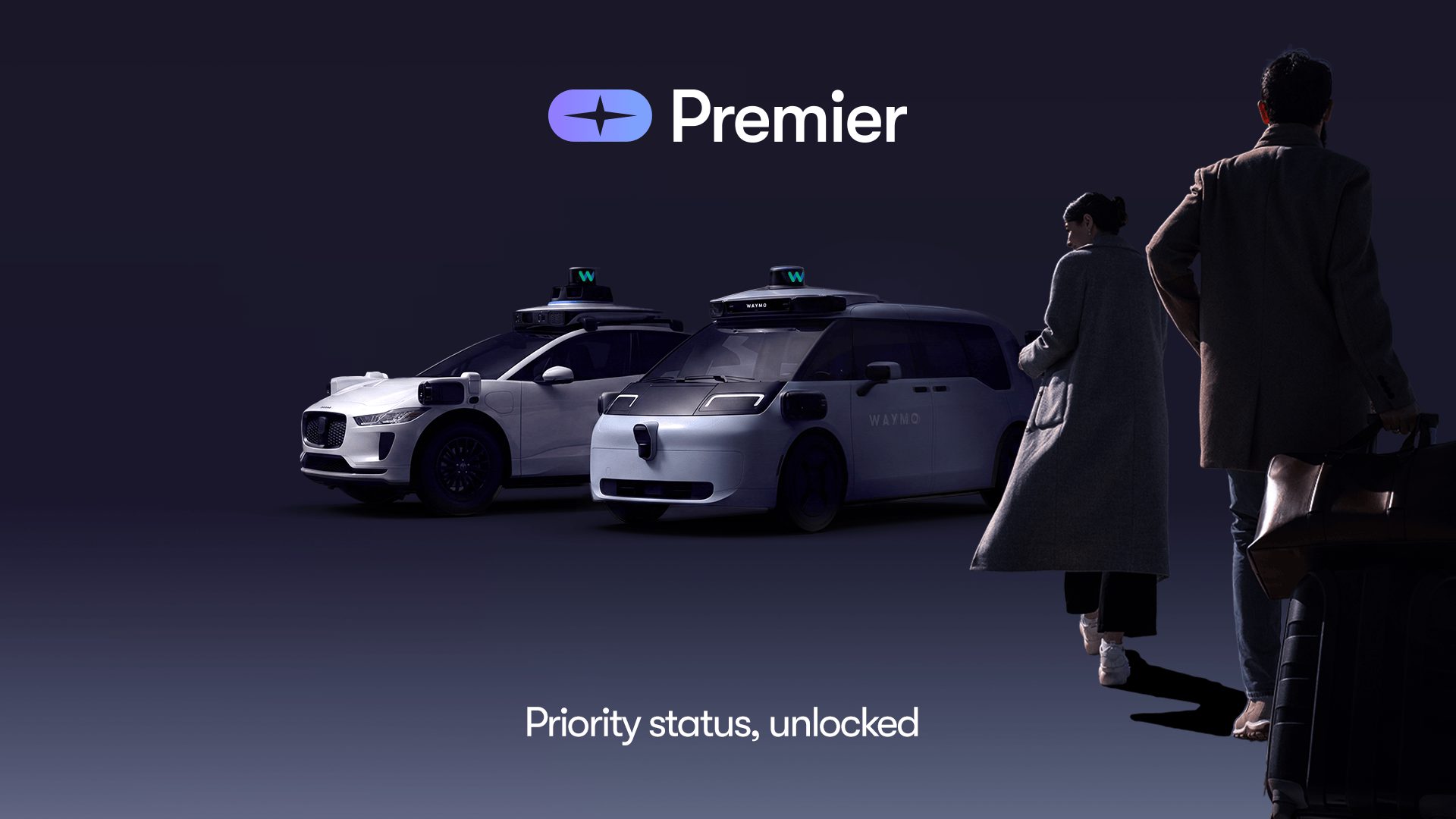
There is a civil war currently raging in the autonomous vehicle industry regarding how to solve this "rain problem." On one side, we have the "Vision-Only" camp, led most notably by Tesla. On the other, the "Sensor Fusion" camp, which includes players like Waymo and Cruise.
As an objective observer, the differences are stark:
| Feature | Vision-Only (e.g., Tesla) | Sensor Fusion (e.g., Waymo) |
|---|---|---|
| Primary Sensors | High-res Cameras | Lidar + Radar + Cameras |
| Rain Performance | Struggles with visibility/blur | Redundancy through Radar |
| Pedestrian Logic | Occupancy Networks (3D space) | Cross-referencing multiple data streams |
| Weakness | Hydroplaning and low-light blur | Lidar "Noise Curtain" in heavy rain |
| Reliability Strategy | AI "guesses" based on video | Radar "sees" through rain/fog |
The "Sensor Fusion" approach is currently the gold standard for safety, primarily because of Radar. Unlike Lidar, Radar uses radio waves, which have a much longer wavelength. These waves can pass through raindrops almost entirely unimpeded. While Radar doesn't provide the high-resolution "shape" of a pedestrian, it is excellent at detecting movement and velocity through a storm. By layering Radar over a struggling Lidar signal, the car has a better chance of realizing that something—even if it's blurry—is moving in its path.
Practical Implications for Human Drivers
So, where does this leave the traveler, the commuter, and the tech enthusiast? For now, it leaves us in the driver’s seat—literally and figuratively.
The irony of autonomous vehicle development is that the technology is most likely to fail exactly when we need it most. On a clear, sunny Tuesday at noon, self-driving cars are nearly flawless. But on a dark, rainy Friday night when the driver is tired and the visibility is poor—the exact moment a "safety assistant" would be most valuable—the system is at its weakest.
Currently, most Level 3 systems (where the car can drive itself but requires the human to intervene) will issue a "disengagement" request the moment the rain becomes too heavy for the sensors to handle. This is the "Guardian Angel" paradox: you are the backup for a system that is failing because the conditions are too dangerous for it, which means they are likely also dangerous for you.
If you are operating a vehicle with advanced driver-assist features in the rain, remember:
- Do not rely on "Autopilot" or "Full Self-Driving" for pedestrian detection in precipitation. The sensors are statistically likely to miss low-contrast objects.
- Manual intervention is non-negotiable. If the wipers are on high, your feet should be on the pedals and your hands on the wheel.
- Distance is your friend. Since the sensor range is drastically reduced, increasing your following distance compensates for the car's "short-sightedness."
The dream of a car that can whisk us through a thunderstorm while we nap in the back seat is still precisely that—a dream. Until we solve the fundamental physics of the "noise curtain," the human eye and the human brain remain the most sophisticated safety tools on the road.
FAQ
Q: Can’t we just use cameras to solve the rain problem? A: Cameras suffer from their own set of issues in rain, including lens flare from streetlights, water droplets obscuring the view (acting like a lens), and a lack of depth perception in low-contrast "grey-out" conditions. While "Vision-Only" systems are improving, they currently lack the redundancy needed for high-stakes weather.
Q: Is there any self-driving car currently safe to use in a heavy downpour? A: No consumer vehicle currently on the market is rated for fully autonomous operation in heavy rain. Most Level 2 and Level 3 systems will either disengage or significantly degrade in performance. Professional "Robotaxi" fleets often have remote human operators or strict operational limits that keep them off the road during severe storms.
Q: Will future sensors be able to see through rain? A: Engineers are working on "Thermal Cameras" and higher-frequency Radar, which could theoretically provide better pedestrian silhouettes through rain. However, these are currently expensive and not yet standard in production vehicles.
Learn More About AV Safety Standards →
James Wright is a Senior Travel Critic who focuses on the intersection of logistics, luxury, and the future of transport. His work aims to provide travelers with the objective truth behind the marketing sheen of modern technology.