Quick Facts: Case File Skynet-1A
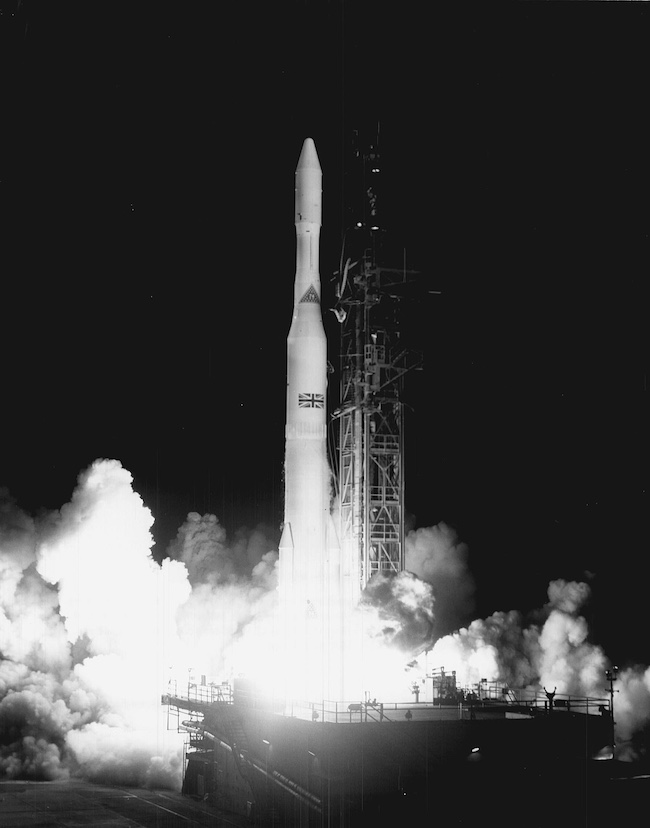
- Launch Date: November 22, 1969
- Launch Vehicle: US Air Force Delta Rocket
- Original Mission: Secure military communications for British forces (East of Suez)
- Status: Defunct (since early 1970s)
- Original Position: 22,369 miles (36,000 km) above the Indian Ocean
- Current Position: 22,369 miles (36,000 km) above the Americas (105 degrees West)
- The Mystery: No official record exists of who commanded the satellite to move 105 degrees across the geostationary arc.
The Satellite That Defied Physics
In the silent, vacuum-sealed theater of Earth's orbit, objects generally follow the laws of celestial mechanics with predictable rigidity. When a satellite "dies," it is typically boosted into a graveyard orbit or left to drift according to the gravitational tugs of the Earth, Moon, and Sun. However, Skynet-1A, the United Kingdom's oldest piece of space hardware, has broken the script.
The Skynet-1A mystery refers to the spacecraft being found 22,369 miles above the Americas, far from its expected graveyard orbit over the Indian Ocean, with no official records of the move. For decades, it was assumed that this relic of the Cold War was drifting harmlessly over the region it once served. Instead, it was discovered halfway around the world, parked in a location that required active, intentional navigation.
As a critic of logistics and policy, I find the lack of a "paper trail" in military operations of this scale to be the most fascinating aspect of the case. In the world of international travel and transit, a missing ship or an unaccounted-for aircraft triggers global investigations. In the geostationary arc, apparently, a 1,000-pound military asset can migrate across oceans without a single signed requisition form.
A Pioneer of the Cold War: What is Skynet-1A?
To understand the mystery, we must first understand the machine. Launched in November 1969—just months after Neil Armstrong took his "one small step"—Skynet-1A was the United Kingdom's first military communications satellite. It was the crown jewel of British signals intelligence, designed to provide secure relay communications for British forces stationed in Africa, the Middle East, and Southeast Asia.
Skynet-1A is the oldest British spacecraft still in orbit, surviving for over 55 years. It was built by the American company Philco-Ford and launched by the U.S. Air Force, representing a peak of Anglo-American technological cooperation during the height of the Cold War.
"Skynet-1A was a technological marvel for its time. It wasn't just a radio in the sky; it was a symbol of Britain's continued global reach during a period of imperial contraction." — Analysis from retired orbital mechanics researchers.
The satellite was only operational for a few years. By the early 1970s, its systems had failed, and it was expected to remain a permanent, albeit dead, resident of the Indian Ocean's orbital slot. Because it was positioned in a geostationary orbit—matching the Earth's rotation to stay over a fixed point—it should have stayed relatively local even after it stopped working.
The Great Orbital Shift: From the Indian Ocean to the Americas
The current position of Skynet-1A is not just a minor drift; it is a significant relocation. The satellite is currently positioned at an altitude of approximately 22,369 miles (36,000 km) above the Earth's surface, but its longitude has shifted to 105 degrees West.
To explain why this is an anomaly, we must look at the physics of "Gravity Wells." Earth’s gravity is not perfectly uniform. There are regions in the geostationary arc where gravity pulls objects toward certain "stable" points.
The 'Marble in a Bowl' Analogy
Imagine the geostationary orbit as a circular track around the Earth. On this track, there are "dips" or "bowls" created by gravitational variations.
- The Indian Ocean: This was where Skynet-1A was supposed to stay.
- The Americas: This is one of the "gravity wells" where debris naturally settles.
- The Drift: If you place a marble at the edge of a bowl, it will roll to the bottom. However, Skynet-1A didn't just "roll." To get from its original position to its current "bowl" above the Americas, it had to be given a significant push to overcome the intervening gravitational ridges.
Without a functioning thruster and a command from Earth, Skynet-1A could not have made this journey. It would have needed to be active in the mid-to-late 1970s to perform the maneuvers necessary to reach 105 degrees West. The statistical probability of this happening by accident—via a collision or natural "slingshot"—is virtually zero.
The Prime Suspect: Who Commandeered the Move?
If the UK Ministry of Defence (MoD) claims they didn't move it, and the British Royal Air Force (RAF) has no record of the command, we must look at the partners involved in the project. Experts, including Dr. Stuart Eves, believe the U.S. Air Force likely moved the satellite in the late 1970s during a period of shared control with the RAF.
The evidence points toward a facility known as the "Blue Cube"—the U.S. Air Force's Satellite Control Facility in Sunnyvale, California. During the 1970s, the UK and the US shared "Oakout" sessions, where control of the Skynet satellites was handed over to American operators during maintenance or for backup purposes.
The Case for US Involvement
- Operational Control: The US had the technical means and the ground stations to command the satellite when it was out of range of the UK’s Oakhanger facility.
- Strategic Utility: In the mid-70s, the US may have needed a temporary relay over the Americas and "borrowed" the aging Skynet-1A to fill a gap in their own constellation.
- Missing Documentation: Much of the technical logging from this era was paper-based and has since been lost, destroyed, or remains classified under Cold War protocols.
While the move remains officially undocumented, the lack of a "smoking gun" is typical of 1970s-era military bureaucracy. It is highly probable that an American controller, acting under a verbal agreement or an undocumented directive, fired the thrusters to move the satellite toward the US gravity well, where it could be better monitored—or perhaps used—one last time before it finally died.
Why This 50-Year-Old Mystery Matters Today
As a travel critic, I often discuss the congestion of our airways and the importance of air traffic control. Space is no different. The mystery of Skynet-1A is not just a historical curiosity; it represents a modern security and safety risk.
1. The Danger of Orbital Debris Skynet-1A is a "zombie" satellite. It is a half-ton piece of metal moving through an increasingly crowded geostationary arc. Because it is located in a gravity well, it isn't sitting still; it is oscillating back and forth like a pendulum. This "wandering" path brings it dangerously close to active, multi-billion-dollar telecommunications satellites.
2. Legal and Political Liability Who is responsible if Skynet-1A hits a modern satellite? Under international space law, the "launching state" is liable. Because Skynet-1A was a UK-owned asset launched by a US rocket, a collision would trigger a diplomatic and legal nightmare. The fact that its last movements are unrecorded makes the liability trail even murkier.
3. Future Solutions: Space Junk Removal The Skynet-1A case highlights the urgent need for "Active Debris Removal" (ADR). Companies and space agencies are currently developing technologies to snare defunct satellites and move them into safer graveyard orbits.
- Harpoons and Nets: Concepts being tested by the UK's RemoveDEBRIS mission.
- Robotic Arms: Sophisticated "tow trucks" designed to grab satellites.
- Magnetic Capture: Using magnets to influence the spin and trajectory of dead metal objects.
| Feature | Skynet-1A Detail |
|---|---|
| Current Altitude | ~36,000 km |
| Weight | ~285 kg (at launch) |
| Material | Aluminum, electronics, volatile fuel remnants |
| Risk Level | High (due to uncontrolled oscillation) |
The story of Skynet-1A is a reminder that our actions in space have long-lasting consequences. Just as we must manage the environmental impact of travel on Earth, we must account for the "ghosts" we leave behind in the heavens. Whether moved by a secret Cold War directive or a forgotten bureaucratic fluke, Skynet-1A remains a silent witness to the dawn of the space age—and a warning for its future.
FAQ
Why didn't Skynet-1A burn up in the atmosphere? Because it is in geostationary orbit (22,369 miles up), it is far too high for atmospheric drag to pull it down. Unlike low-Earth orbit satellites that fall back within years, geostationary satellites will remain in orbit for millions of years unless intentionally moved.
Is Skynet-1A related to the Skynet from the Terminator movies? Fortunately, no. The British military chose the name "Skynet" in the late 1960s, long before James Cameron's films. However, the coincidence has certainly helped keep the mystery of this satellite in the public eye.
Can we still "talk" to the satellite? No. The batteries and solar cells are long dead. It is a "dark" object, detectable only by radar and powerful telescopes.
Take Action: Support Space Sustainability
The mystery of Skynet-1A underscores the importance of the "CleanSpace" initiative and the Long-term Sustainability (LTS) Guidelines for Outer Space Activities. We must advocate for clearer "rules of the road" in orbit.
Learn More About Space Debris Management →
If you found this investigative look into our orbital history compelling, share this article with a fellow space enthusiast. The more we look up, the better we can protect what’s down here.