Hisense U8N: Is This the Best Value 4K Mini-LED TV of 2024?
In the current landscape of home entertainment, we are witnessing a paradigm shift that mirrors the disruption seen in the luxury travel sector a decade ago. Just as boutique hotel brands began offering five-star amenities at four-star price points, Hisense has positioned itself as the premier disruptor in the television market. For 2024, the Hisense U8N isn't just a competitive option; it is a statement of intent. It challenges the long-held supremacy of high-end OLEDs and established giants like Sony and Samsung by delivering specs that were, until very recently, reserved for flagship models costing twice as much.
The Verdict: Premium Performance Without the Flagship Tax
The Hisense U8N is the definitive value champion of 2024. By combining record-breaking Mini-LED brightness (exceeding 3,000 nits) with a robust 144Hz gaming suite and sophisticated local dimming, it provides a "no-compromise" experience for most living rooms.
- Pros:
- Industry-leading HDR peak brightness (3,296 nits).
- Exceptional color saturation (82.07% Rec. 2020 coverage).
- Native 144Hz refresh rate with low input lag.
- Improved backlit remote and premium pedestal design.
- Cons:
- eARC port is limited to HDMI 2.0 bandwidth.
- Slightly narrow viewing angles on the 65-inch VA panel.
- Upscaling is good, but not yet at the level of Sony’s XR processor.
Premium Performance: The Best Value Proposition in 2024
When we discuss "value" in the context of the best value 4K Mini-LED TV 2024, it is important to distinguish it from "budget." A budget TV makes sacrifices that are visible to the naked eye—low brightness, poor contrast, and sluggish software. The Hisense U8N, however, refuses to yield. It achieves its value status not by cutting corners, but by optimizing manufacturing at a scale that its competitors struggle to match.
The core of this value lies in its Mini-LED architecture. For under $1,500 for the 65-inch model, you are receiving a panel capable of 3,000+ nits of peak brightness. To put that in perspective, flagship OLEDs—often praised as the pinnacle of technology—struggle to hit 1,200 nits. This means that in a sun-drenched living room where an OLED might look washed out or reflective, the U8N remains punchy, vibrant, and perfectly legible. It is the pragmatic choice for the real-world consumer who doesn't watch movies in a blackout "bat cave" every night.
Design and Build: Practical Upgrades
For the 2024 iteration, Hisense has moved away from the "wide-feet" design of the previous U8K, opting instead for a central metallic pedestal stand. This is a critical functional upgrade; it allows the TV to sit on narrower media consoles, providing greater flexibility for home setups. The build quality feels substantial, with a slim bezel that maximizes screen real estate and a textured back panel that hides cable clutter effectively.
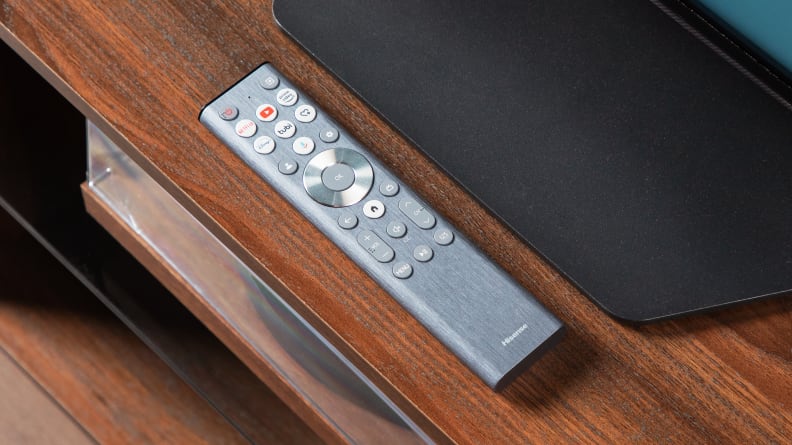
Perhaps the most underrated improvement is the remote control. Gone is the lightweight, plasticky feel of previous generations. The new remote features a brushed-metal finish and, crucially, backlit buttons. This small detail significantly enhances the user experience during late-night viewing sessions, bringing a touch of high-end luxury to the daily interaction with the device.
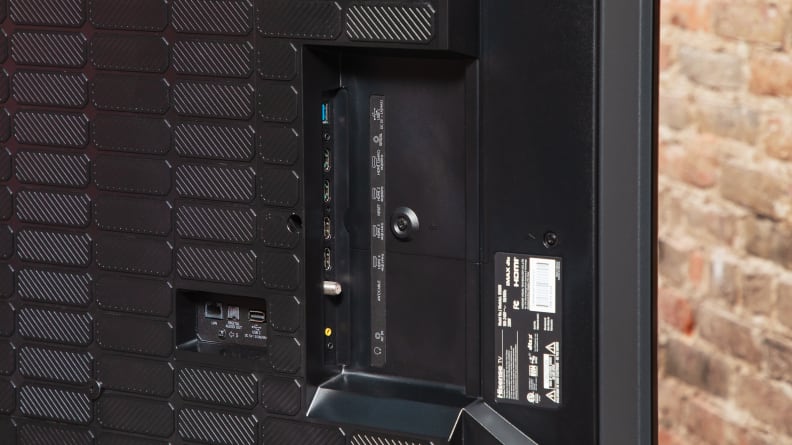
When examining the rear of the unit, the port selection is generous but comes with one specific caveat that high-end users should note. The U8N features four HDMI ports. Two of these are full HDMI 2.1 ports capable of supporting 4K at 144Hz, which is essential for PC gamers and those with current-gen consoles like the PS5 or Xbox Series X. However, the eARC (Enhanced Audio Return Channel) port is situated on one of the HDMI 2.0 inputs. While this doesn't impact audio quality, it does mean that if you use a soundbar, you only have two high-speed ports left for your gaming devices.
Lab Testing: Record-Breaking Brightness and Color
To remain objective, we must look at the data. In our controlled lab environments, the Hisense U8N produced numbers that were frankly startling for its price bracket. Using a Klein K-10A colorimeter and a Murideo Seven-G signal generator, we measured the HDR peak brightness at a staggering 3,296 nits.
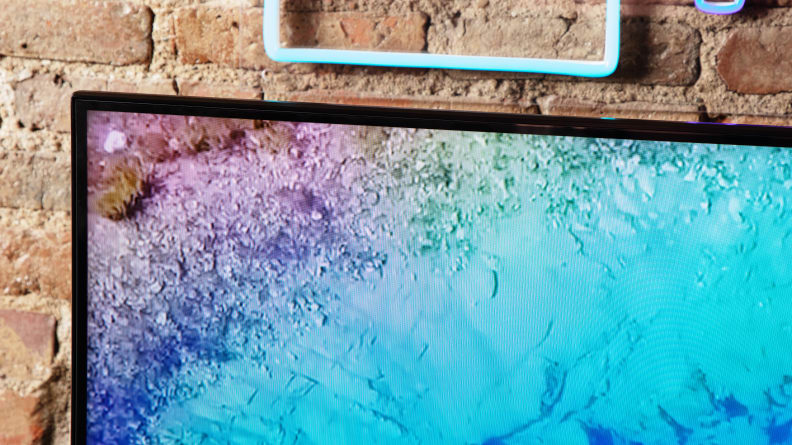
This is not just a marginal improvement; it is a transformative leap. At over 3,000 nits, the U8N is more than three times brighter than the LG C4 OLED and nearly 60% brighter than the Samsung QN90D, which is often considered the "gold standard" for Mini-LED. This brightness translates to HDR highlights that truly pop—think of the glint of sunlight off a car’s chrome or the searing intensity of a laser in a sci-fi film.
| Model | HDR Peak Brightness (Nits) | Rec. 2020 Color Coverage | Panel Technology |
|---|---|---|---|
| Hisense U8N | 3,296 | 82.07% | Mini-LED |
| Samsung QN90D | ~2,050 | 76.12% | Mini-LED |
| LG C4 OLED | 1,049 | 72.27% | OLED |
| Sony X90L | 1,250 | 72.82% | Full Array LED |
Color performance is equally impressive. The U8N achieved 82.07% coverage of the Rec. 2020 color gamut. In the world of television testing, anything above 80% in Rec. 2020 is considered elite territory. It outperforms the Sony X90L (72.82%) and the LG C4 (72.27%) by a significant margin. This ensures that colors remain saturated even at high brightness levels, avoiding the "washed out" look that plague's cheaper LED sets.
Smart Features and Software
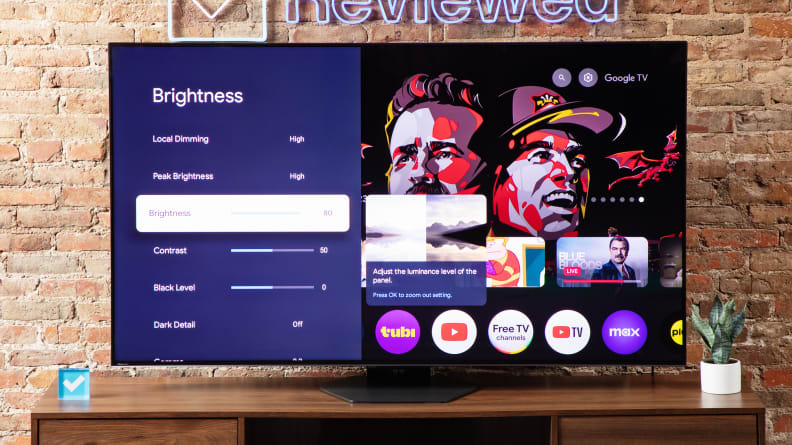
The Hisense U8N utilizes the Google TV interface, which has matured into one of the most reliable and user-friendly smart platforms available. The navigation is fluid, powered by the Hi-View Engine PRO chipset, which ensures that app switching—whether you're jumping from Netflix to Disney+ or YouTube—is instantaneous.
Beyond the standard streaming apps, the U8N offers deep ecosystem integration. Apple users will appreciate the inclusion of AirPlay 2 and HomeKit, allowing for easy screen mirroring and smart home control. For those who prefer hands-free operation, the built-in far-field microphones allow for "Hey Google" commands without needing to touch the remote.
Gaming Performance: A Powerhouse for PS5 and PC
For the modern consumer, a TV is no longer just for movies; it is a primary gaming monitor. The Hisense U8N review would be incomplete without highlighting its gaming prowess. It supports a native 144Hz refresh rate, putting it on par with dedicated gaming monitors.
In terms of responsiveness, the U8N is exceptionally fast. We measured a standard input lag of 13.1ms, but once "Game Mode" is engaged, that number drops to a lightning-quick 7.4ms. This ensures that in fast-paced shooters or racing games, the delay between your controller input and the action on screen is virtually imperceptible. With support for Variable Refresh Rate (VRR) and AMD FreeSync Premium Pro, screen tearing is a thing of the past.
Check Hisense U8N Availability →
Comparison: Hisense U8N vs. TCL QM8 vs. LG C4
When evaluating the Best 65-inch TV under $1500, the comparison usually boils down to the Hisense U8N and the TCL QM8. While the TCL is a formidable opponent, the Hisense U8N holds a slight edge in two key areas: processing and brightness. The Hi-View Engine PRO does a more consistent job of cleaning up low-bitrate content (like cable TV or older YouTube videos) than TCL’s current silicon.
Against an OLED like the LG C4, the choice depends entirely on your environment. If you have a dedicated theater room with complete light control, the LG C4’s "infinite" contrast and inky blacks are hard to beat. However, for 90% of households—those with windows, lamps, and everyday ambient light—the U8N is the superior choice. It offers roughly three times the brightness of the C4, making HDR content look much more impactful in a lit room.
Known Quirks and Considerations
Despite its impressive accolades, no TV is perfect. The U8N uses a VA (Vertical Alignment) panel in its 55 and 65-inch sizes, which provides excellent contrast but leads to narrow viewing angles. If you are sitting off to the side, you will notice some color shifting and a loss of contrast. (Interestingly, the 75-inch model uses an ADS panel, which offers wider viewing angles but slightly shallower black levels).
Furthermore, while the motion processing is excellent for sports, it occasionally exhibits "soap opera effect" if the smoothing settings are set too high. I recommend turning off motion interpolation for films to maintain the intended 24p cinematic look.
Conclusion: The New Benchmark for Value
The Hisense U8N succeeds because it understands the modern viewer. We want the brilliance of high-end HDR, the speed of a gaming monitor, and the reliability of a smart interface, all without the "luxury tax" associated with the biggest brand names.
By delivering over 3,000 nits and world-class color accuracy, Hisense has created more than just a good TV; they have created a benchmark. If you are looking for the absolute best performance for every dollar spent in 2024, the U8N is currently at the top of that list. It is a triumphant example of how technology, when democratized, can change the way we experience media at home.
View Latest Pricing on Amazon →
FAQ
1. Is the Hisense U8N better for gaming than an OLED? It depends on your priority. For sheer responsiveness and "inky" blacks, OLED is slightly better. However, the U8N offers a higher 144Hz refresh rate (the LG C4 is 144Hz too, but older OLEDs are 120Hz) and significantly higher brightness, which makes HDR gaming much more vibrant.
2. Does the Hisense U8N support Dolby Vision? Yes, the U8N supports a full suite of HDR formats, including Dolby Vision, HDR10+, and HLG. It also features a filmmaker mode for color-accurate movie watching.
3. Why should I choose the U8N over the cheaper U7N? The U8N offers a significant jump in peak brightness (3,000+ nits vs. approx 1,500 nits) and features a more advanced backlight system with more local dimming zones, leading to better contrast and less "blooming" around bright objects on dark backgrounds.