For years, the dream of "glasses-free 3D" has occupied a precarious space between science fiction and consumer-grade gimmickry. We remember the early 2010s—a landscape littered with 3D televisions that required clunky active-shutter glasses and smartphones like the HTC Evo 3D that offered little more than a headache-inducing novelty. However, technology rarely stays stagnant. With the release of the ZTE Nubia Pad 3D II, we are seeing the first legitimate attempt to marry 5G connectivity and sophisticated Artificial Intelligence with lightfield display technology. It isn't just a tablet with a depth effect; it is the world’s first 5G and AI-powered eyewear-free 3D tablet, utilizing liquid crystal lenses and real-time AI eye-tracking to deliver an immersive experience that finally feels mature.
The Visual Leap: 80% More Resolution, 100% More Brightness
The primary criticism of the first-generation Nubia Pad 3D was the trade-off. To get the 3D effect, users often had to sacrifice brightness and tolerate a "screen door" effect where the resolution seemed to drop significantly. The second generation addresses these technical hurdles with brute force and smarter engineering. By integrating a 12.1-inch 2.5K display with a 144Hz refresh rate, ZTE has created a canvas that is as fluid as any flagship tablet on the market.
The magic happens behind the glass. The Nubia Pad 3D II utilizes a specialized liquid crystal lens layer combined with AI eye-tracking. Unlike the static parallax barriers of the past, this system uses the front-facing sensors to track the user’s pupils in real-time, adjusting the 3D image to match the viewing angle. The result is an 86-degree ultra-wide viewing angle that significantly reduces the "sweet spot" frustration found in earlier models. In terms of raw output, the second generation achieves an 80% increase in 3D resolution and a staggering 100% boost in 3D brightness compared to the original model.
| Feature | Nubia Pad 3D (Gen 1) | Nubia Pad 3D II (Gen 2) |
|---|---|---|
| Display | 12.4-inch (2.5K) | 12.1-inch (2.5K) |
| Refresh Rate | 120Hz | 144Hz |
| 3D Brightness | Standard | 100% Increase |
| 3D Resolution | Standard | 80% Increase |
| Processor | Snapdragon 888 | Snapdragon 8 Gen 2 |
| Connectivity | Wi-Fi Only | 5G + Wi-Fi 6E |
| Charging | 33W Fast Charge | 66W Fast Charge |
Neovision 3D Anytime: Solving the Content Problem
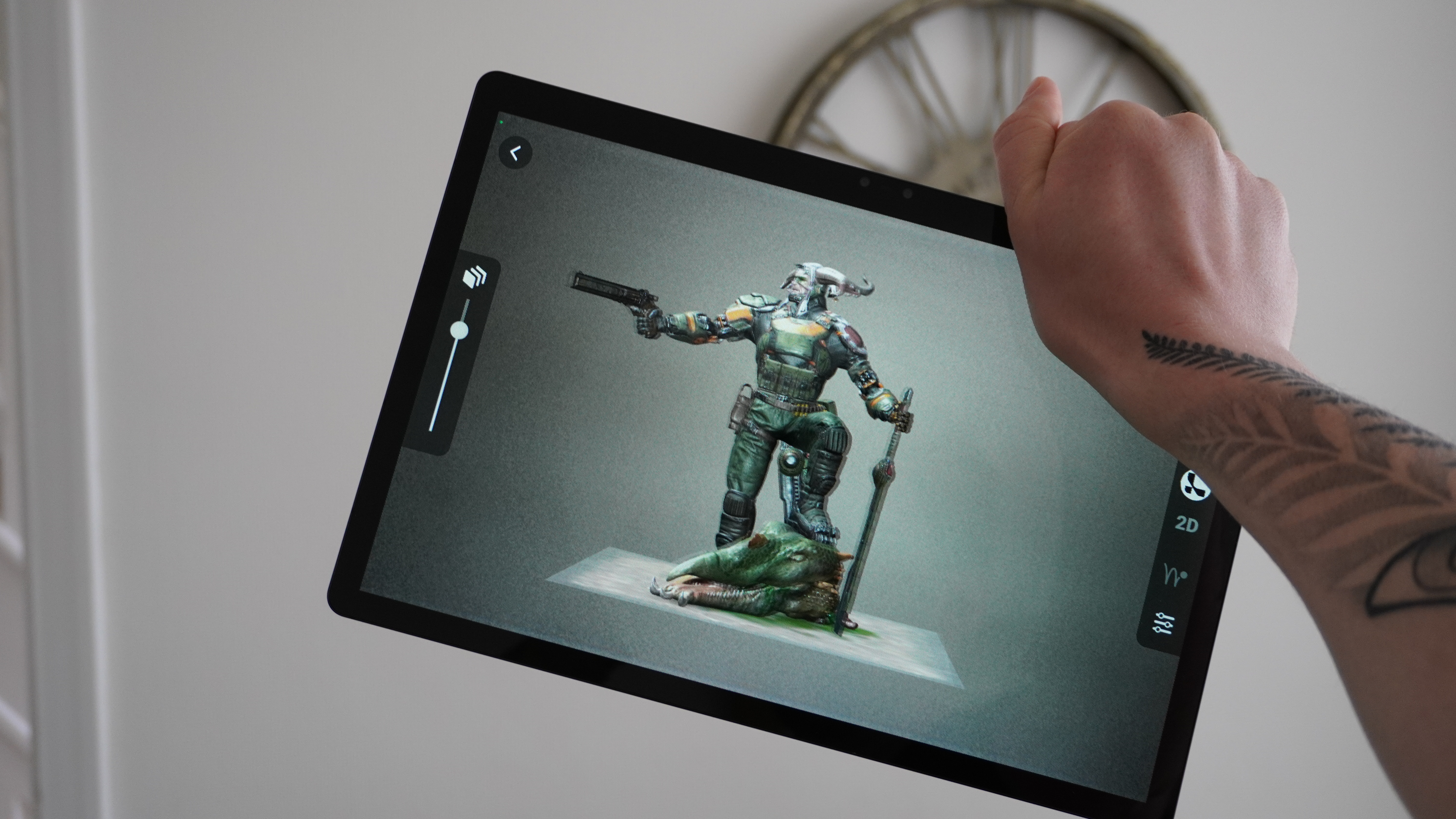
The "chicken and egg" problem has haunted 3D technology for decades: why buy the hardware if there is no content? ZTE’s solution is Neovision 3D Anytime. Instead of relying solely on native 3D files (which are still relatively rare), the tablet employs an advanced AI neural network to convert 2D content into 3D in real-time. Whether it is a standard YouTube video, a Netflix stream, or a high-fidelity mobile game, a single click layers depth onto the image.
Critic’s Note: While AI upscaling can occasionally produce artifacts in complex scenes, the real-time conversion on the Pad 3D II is remarkably stable. It adds a layer of immersion to architectural walkthroughs and nature documentaries that a standard flat panel simply cannot replicate.
The ecosystem is further bolstered by professional-grade support. The tablet supports Miracast for 3D projection and offers a cross-screen 3D preview mode. For creators working in CAD or 3D modeling, this allows for a portable, glasses-free way to present work to clients in a format that feels tangible.
The 'Super Biomimetic Eye': 3D Content Creation in Your Hands
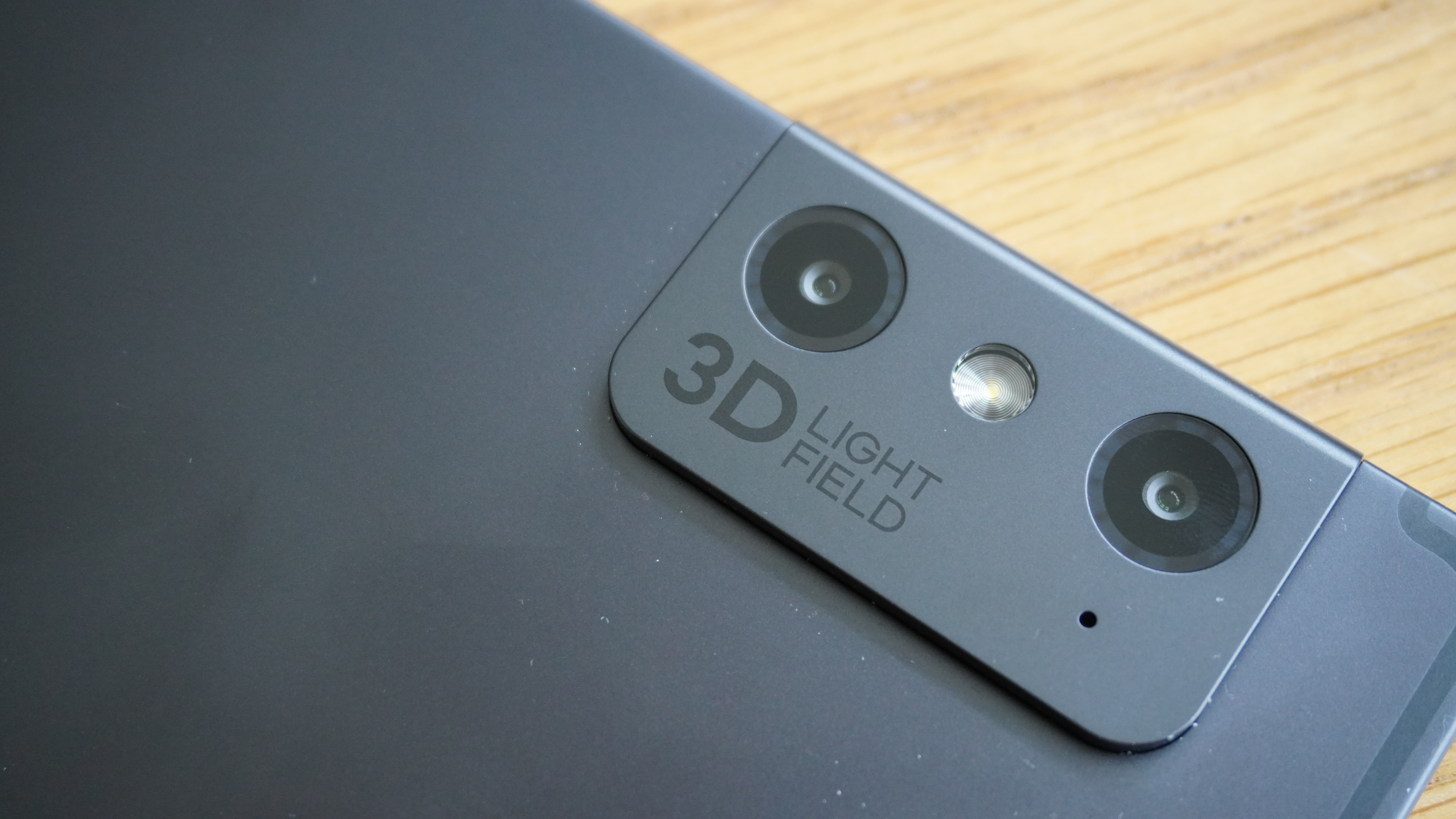
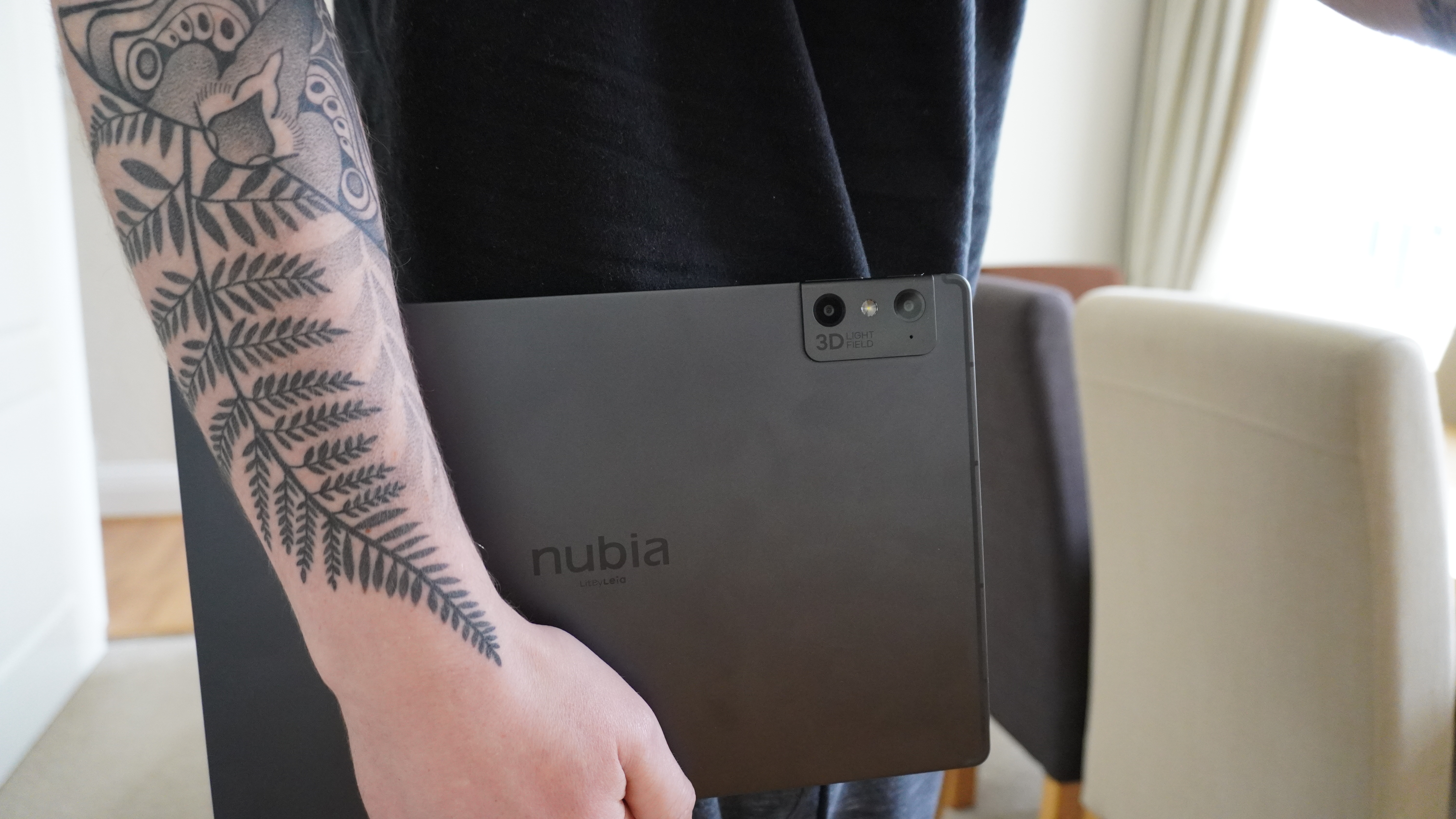
While the consumption of 3D media is the primary draw, the Nubia Pad 3D II is also a potent creation tool. The device features a dual 13MP rear camera system and dual 8MP front cameras, dubbed the "Super Biomimetic Eye." This isn't just branding; the system is designed to mimic human binocular vision.
The most impressive advancement here is the shooting range. ZTE has achieved a 2.5x increase in the optimal 3D shooting range. This means you no longer have to be at a precise, awkward distance from your subject to capture a usable 3D photo or video. For the travel photographer or the high-end real estate agent, the ability to capture a room or a landscape with actual depth—and then show it to a client on the same device without needing VR goggles—is a workflow revolution.
Under the Hood: Flagship Specs and 5G Connectivity
Objectively, if you stripped away the 3D capabilities, the Nubia Pad 3D II would still stand as a formidable flagship tablet. Powering the experience is the Qualcomm Snapdragon 8 Gen 2 chipset, paired with LPDDR5X RAM and UFS 4.0 storage. This hardware stack ensures that the heavy lifting required for AI eye-tracking and 2D-to-3D conversion doesn't result in thermal throttling or lag.
The inclusion of 5G is a strategic masterstroke. 3D data streams are significantly heavier than their 2D counterparts. By integrating 5G support (covering most global mainstream bands), ZTE has transformed the tablet from a home-bound novelty into a truly mobile workstation. Whether you are downloading large 3D assets on the go or streaming high-bitrate 3D media, the connectivity matches the ambition of the screen.
Power management has also seen a necessary upgrade. A 10,000 mAh battery provides the endurance needed for the power-hungry 144Hz 3D display, while 66W fast charging ensures that downtime is kept to a minimum—a vital feature for professionals who can't afford to be tethered to a wall.
The Verdict: Who is the Nubia Pad 3D II Actually For?
After extensive analysis, it is clear that the Nubia Pad 3D II is no longer a mere "proof of concept." It is a specialized tool that excels in specific environments. While it may not replace the iPad Pro for the average student, its value proposition for specific niches is undeniable:
- Professional Creators: Architects, medical illustrators, and 3D designers who need a portable way to showcase depth-heavy work.
- Luxury Tech Enthusiasts: Those who want the absolute bleeding edge of display technology and are tired of the iterative "flat" updates from major manufacturers.
- Education & Training: The 3D effect offers a pedagogical advantage in fields like biology or mechanical engineering, where spatial understanding is paramount.
The pricing reflects its status as a high-end, niche device. It is an investment in a future where the screen is no longer a barrier between the viewer and the subject. While the "mainstream" may still be a few years away from adopting 3D as a standard, ZTE has successfully proven that the technology is ready for prime time—provided you have the vision to use it.
FAQ
Do I need special content to see the 3D effect?
While native 3D content provides the best experience, the Nubia Pad 3D II features "Neovision 3D Anytime" technology, which uses an AI neural network to convert standard 2D videos, games, and photos into 3D in real-time with a single click.
Does the 3D effect cause eye strain?
The second-generation model uses AI eye-tracking to adjust the image to your specific viewing angle, which significantly reduces the dizziness and strain associated with older 3D technologies. However, like any high-refresh-rate screen, moderation is recommended.
Can it be used as a normal tablet?
Absolutely. You can toggle the 3D mode off at any time. When in 2D mode, it functions as a high-performance Android tablet with a 144Hz 2.5K display, ideal for productivity, web browsing, and standard gaming.