Quick Facts
- JV Formation: Partnership between Airbus (75%) and MTU Aero Engines (25%) officially starting operations in 2027.
- Technology Focus: Development of a 1.2-megawatt hydrogen-electric aircraft engine based on HEROPS technology.
- Climate Goal: Target of reducing total flight climate impact by up to 95% compared to traditional kerosene engines.
- Architecture: Propulsion via proton exchange membrane fuel cells converting hydrogen into electricity.
- Certification Target: Collaboration on establishing new EASA certification standards for megawatt-class propulsion.
- Roadmap Milestone: Integrated ground testing and flight testing scheduled to lead toward a 2035 commercial entry.
Airbus and MTU Aero Engines have officially launched a joint venture to develop a megawatt-class electric aircraft engine, signaling a massive shift in aerospace decarbonization. This hydrogen-electric aircraft engine represents the next frontier beyond traditional jet engines, aiming for a 95% reduction in climate impact. The collaboration combines Airbus’s aircraft integration expertise with MTU’s engine design capabilities to accelerate the transition to zero-emission flight. The entity aims to lead the testing and certification of megawatt-class propulsion systems based on hydrogen fuel cell technology.
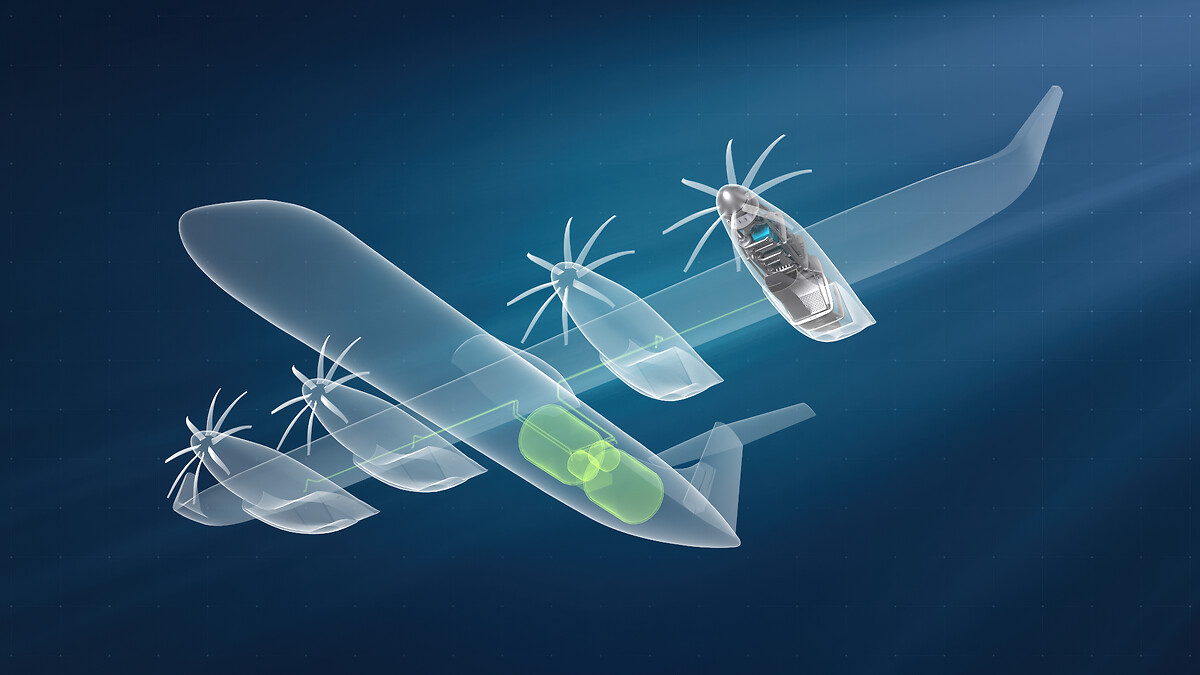
The New Industry Titan: Airbus and MTU's Joint Venture
The aviation world witnessed a historic realignment at the Paris Air Show when two of Europe’s most influential electric aircraft engine manufacturers decided to merge their expertise. By establishing a joint venture with a valuation exceeding 1.2 billion euros, Airbus and MTU Aero Engines have moved from experimental research into a concrete industrial phase. Airbus holds a 75% majority stake, focusing on the systemic integration of the engine into the airframe, while MTU Aero Engines holds 25% and leads the charge on the actual power unit development.
This is not a small-scale laboratory project. Setting the stage for full-scale aerospace decarbonization, this partnership involves the brightest minds in the industry, led by figures like Bruno Fichefeux from Airbus and Dr. Stefan Weber from MTU. With MTU generating roughly 7.5 billion euros in annual revenue and powering some of the world’s most successful commercial fleets, their commitment to the electric aircraft engine marks a point of no return for net-zero 2050 targets.
The joint venture, expected to begin operations in 2027, is designed to consolidate intellectual property and supply chain resources. For electric aircraft companies, this move is a signal that the era of small, two-seater hobbyist planes is evolving into a serious pursuit of commercial-grade regional aviation. The goal is clear: to scale propulsion technology to the point where it can move 100 passengers over hundreds of miles without burning a single drop of jet fuel.
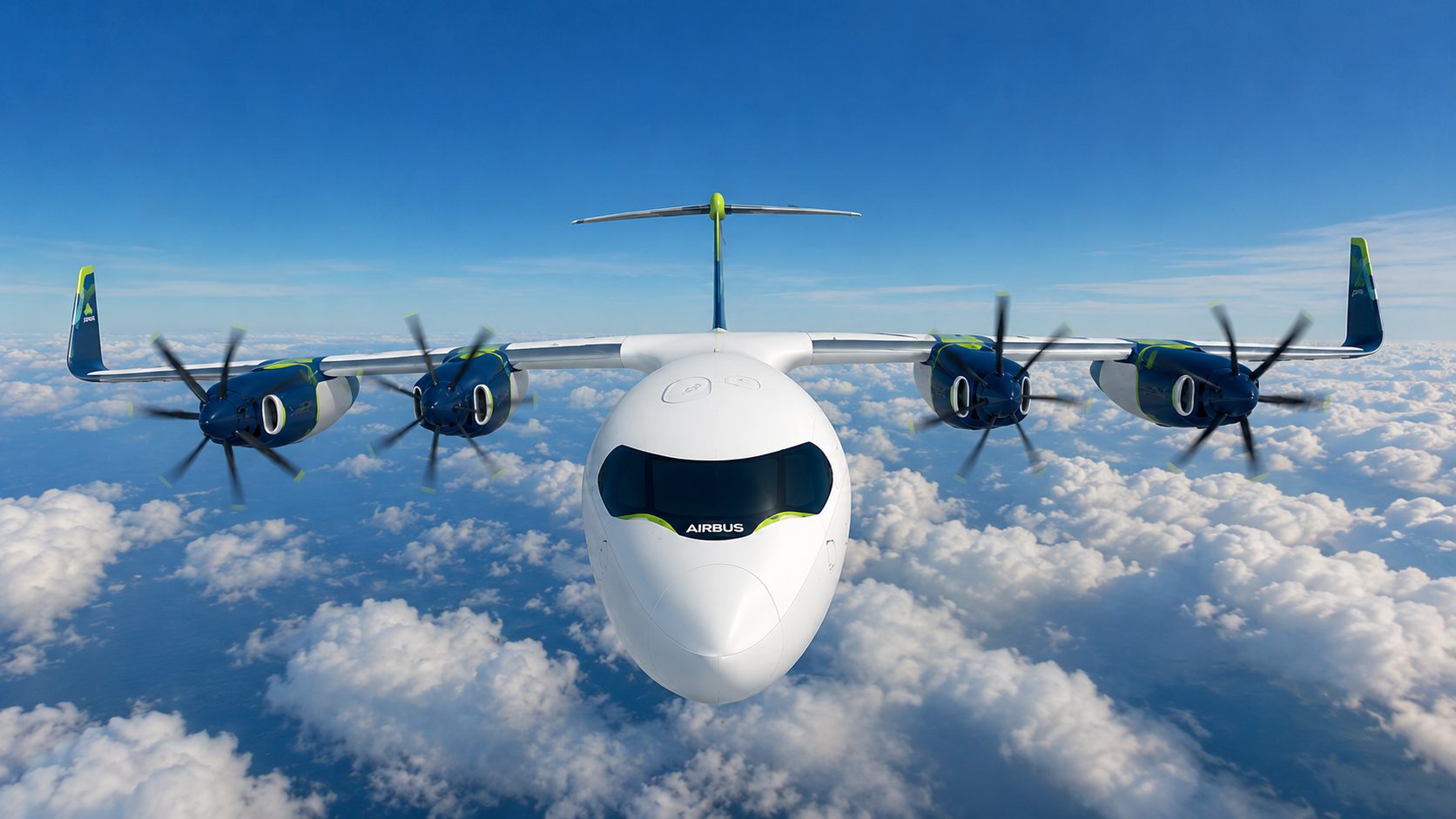
Hydrogen Combustion vs. Fuel Cells: The Technical Shift
In the early days of the ZEROe project, there was significant debate regarding hydrogen combustion vs fuel cell aircraft technology. While burning hydrogen in a modified gas turbine is a viable option for larger long-haul aircraft, Airbus and MTU have pivoted their joint venture heavily toward fuel cells for regional applications. A primary reason is the total elimination of nitrogen oxides (NOx) and particulates, which are still present in combustion engines despite the lack of carbon dioxide.
At the heart of this shift is the hydrogen fuel cell aircraft technology known as Clean Aviation HEROPS (Hydrogen-Electric Regional Operable Propulsion System). This 1.2-megawatt propulsion unit works by taking hydrogen from a tank and oxygen from the ambient air, passing them through a proton exchange membrane. This chemical reaction generates a stream of electricity that powers high-speed motors, which in turn spin the propellers. The only byproduct is pure water vapor and heat.
Managing that heat is one of the greatest engineering hurdles. Because fuel cells operate at much lower temperatures than jet engines, they require massive thermal management systems to dissipate waste heat without adding too much weight or aerodynamic drag.
| Feature | Hybrid Electric Aircraft Engine | Hydrogen-Electric Aircraft Engine |
|---|---|---|
| Primary Energy | Kerosene + Electricity | Liquid Hydrogen |
| Power Output | 500kW - 1MW (Assisted) | 1.2MW+ (Standalone) |
| Emission Profile | Reduced CO2/NOx | Zero CO2, Zero NOx, Water Only |
| Storage Requirement | Standard fuel tanks + Batteries | Cryogenic liquid hydrogen tanks |
| Best Application | Short-haul narrowbody | Regional 50-100 seaters |
The 3-Step Industrial Roadmap to 2035 (and Beyond)
Transitioning from a prototype to a commercial hydrogen powered aircraft timeline requires a disciplined, multi-phase approach. The joint venture has laid out a roadmap that takes the HEROPS demonstrator from the ground to the sky within the next decade.
Phase 1: Maturing Building Blocks
The first phase involves perfecting the individual components: the stacks, the power electronics, and the high-performance motors. This is where the JV leverages MTU’s experience in engine certification to ensure every wire and valve can withstand the rigors of flight. Engineers are currently refining the stacks to increase power density—the ratio of power produced to the weight of the hardware.
Phase 2: Aligning R&T Roadmaps
By 2027, the focus shifts to full system integration. This means connecting the engine to the flight control systems and the onboard liquid hydrogen tanks. This phase is crucial for meeting EASA certification standards, as regulators must write the rulebook for electric propulsion as the technology is being built.
Phase 3: Flight Demonstrator and List of Electric Aircraft
The final phase involves the flight test bed. Airbus plans to use a modified A380 as a flying laboratory, mounting the electric aircraft engine to the fuselage to monitor its behavior in real-world atmospheric conditions. This will eventually lead to a new list of electric aircraft entering the market, likely starting with a regional high-wing aircraft designed for 800-nautical-mile routes.
The Reality Check: Infrastructure and Cryogenics
While the engineering of the engine is progressing rapidly, we must face an industrial reality check. Scaling this technology isn't just about the motor; it’s about the fuel. Hydrogen must be stored as a liquid at -253 degrees Celsius to be dense enough for flight. This requires advanced cryogenic hydrogen storage solutions that can keep the fuel cold for hours without adding excessive weight.
Furthermore, the world’s airports are currently set up for kerosene, not liquid hydrogen. Developing hydrogen aircraft refueling infrastructure is a multi-billion dollar undertaking. It requires specialized piping, cooling stations, and safety protocols that don't yet exist at a commercial scale. This is why many experts see Sustainable Aviation Fuel (SAF) as the essential bridge. While SAF can be used in today’s engines to reduce carbon footprints, the long-term goal for the Airbus/MTU partnership remains the complete airborne energy transition to hydrogen.
Airbus is currently leading research into liquid hydrogen tanks that use metallic and composite materials to strike a balance between weight and thermal insulation. If the infrastructure lags behind the engine development, even the most efficient electric aircraft engine will remain grounded.
Competitive Landscape: How Airbus/MTU Compares to GE and Rolls-Royce
The race to dominate the zero-emission aviation market is heating up. Experts predict a total market value of $134.6 billion by 2030, with a 19% CAGR for the hybrid-electric niche. While Airbus and MTU are betting big on hydrogen fuel cells, other giants are taking different paths.
GE Aerospace and Safran, through their CFM RISE program, are focusing on open-fan architectures and hybrid electric aircraft engine configurations that improve fuel burn in traditional gas turbines. On the other hand, the electric aircraft engine rolls royce team has successfully tested their own electric propulsion systems, recently completing record-breaking flights with the "Spirit of Innovation," the world's fastest electric plane.
However, the Airbus and MTU JV is unique in its focus on a megawatt-class propulsion system designed specifically for regional jet-sized aircraft rather than small commuters. By focusing on the 1.2-megawatt threshold, they are positioning themselves to capture the most lucrative segment of the regional market, where the demand for decarbonization is highest.
FAQ
How do electric aircraft engines work?
Electric aircraft engines use electricity to power a high-torque motor that rotates a propeller or fan. In the case of the Airbus and MTU partnership, this electricity is generated onboard by a hydrogen fuel cell, which converts liquid hydrogen and oxygen into electrical energy through a chemical reaction.
What are the advantages of using electric engines in aviation?
The primary advantage is the elimination of direct CO2 and NOx emissions, especially when using hydrogen fuel cells. Additionally, electric engines are significantly quieter than traditional combustion turbines, which can reduce noise pollution around airports and potentially allow for more flexible flight paths.
What is the main challenge facing electric aircraft propulsion?
The biggest challenge is energy density. Batteries are currently too heavy for large-scale flight, which is why the industry is moving toward hydrogen fuel cells. Furthermore, managing the heat produced by these high-power systems and developing the necessary airport infrastructure for hydrogen fueling are significant hurdles.
How do electric aircraft engines compare to traditional jet engines?
Traditional jet engines burn kerosene to create thrust, producing carbon and nitrogen oxides as a byproduct. Electric engines are more efficient in converting energy to motion and offer a 95% reduction in total climate impact, though they currently provide less power-to-weight density for long-haul missions.
Are there any electric planes currently in commercial service?
There are no large-scale commercial electric aircraft in service for passenger transport yet. However, small two-seater electric planes like the Pipistrel Velis Electro are used for pilot training, and several regional prototypes are undergoing flight testing for entry into service later this decade.
When will electric engines be used for long-haul flights?
Current battery and fuel cell technologies are best suited for short and medium-range flights. Long-haul flight requires such immense energy that experts believe hydrogen combustion or Sustainable Aviation Fuel (SAF) will be the primary solution for the foreseeable future, with fully electric or hybrid systems likely appearing on long-haul routes decades from now.
Conclusion & The Future of Flight
The joint venture between Airbus and MTU is more than just a corporate agreement; it is a declaration of intent for the entire aerospace industry. By combining MTU’s expertise in propulsion and electric aircraft propulsion system maintenance with Airbus’s radical ZEROe vision, the partnership is solving the "how" of sustainable flight.
The journey toward 2035 is filled with technical challenges—from the complexities of cryogenic hydrogen storage to the massive investments needed for airport infrastructure. Yet, the reward is a future where air travel no longer carries a heavy environmental price tag. As the 1.2-megawatt HEROPS project moves toward its first flight, the world watches to see if these two titans can successfully navigate the engineering and regulatory skies to achieve net-zero 2050 targets. For travelers and engineers alike, the horizon of zero-emission aviation has never looked more promising.