Quick Facts
- Deployment Date: June 2026 at the Lincoln Memorial Reflecting Pool.
- Core Technology: Physical AI utilizing mobile LVT surveillance towers with a sensing-thinking-acting loop.
- Renovation Context: A high-stakes project valued between $14 million and 16 million dollars.
- Specific Incident: Reported vandalism involving a 350-foot gash in the new pool liner.
- Key Features: Real-time tracking, automated deterrence (strobe lights/alarms), and spatial intelligence.
- Security Outcome: Integration of high-tech surveillance led to at least six arrests and seven citations.
A $14 million renovation project at the National Mall just got a high-tech bodyguard. Trump is deploying physical ai cameras to protect the Reflecting Pool, utilizing advanced architecture and real-time tracking to prevent vandalism. Physical ai refers to artificial intelligence systems that interact directly with the physical world through a sensing-thinking-acting loop. Unlike digital-only models, physical ai integrates computer vision, sensor fusion, and edge computing to interpret its environment and exert a physical response, such as automated tracking or triggering deterrents like spotlights and alarms.
The Hardware: Anatomy of Physical AI Surveillance Technology
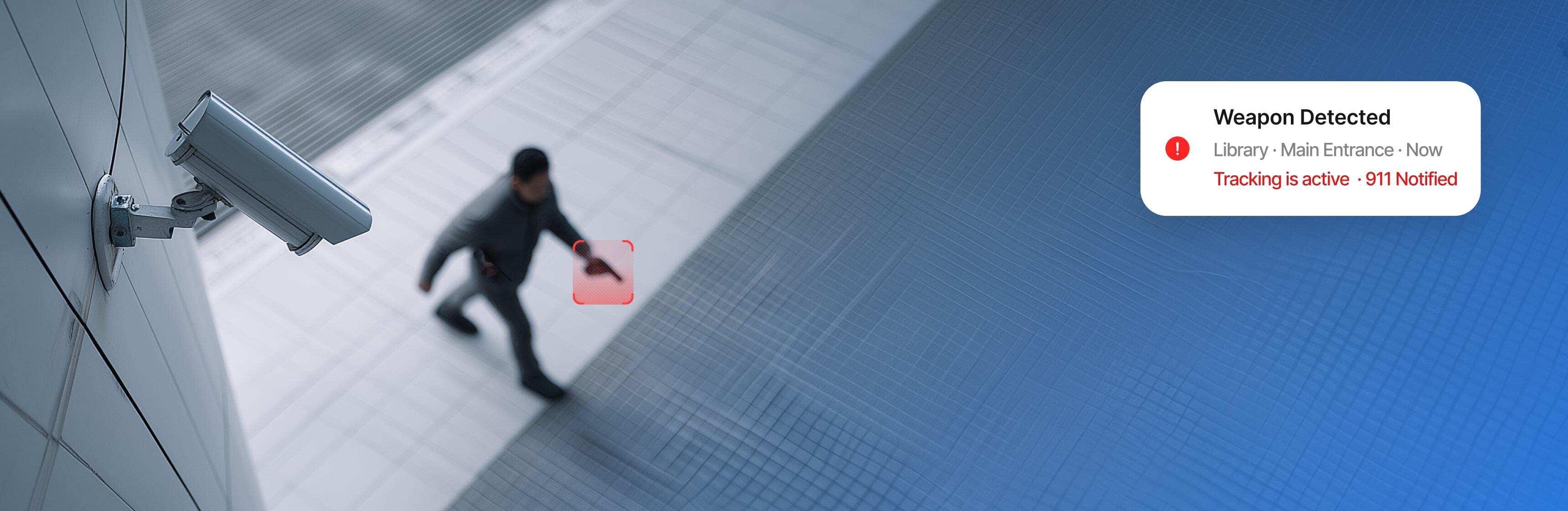
The security landscape at the National Mall has shifted from passive observation to active intervention. The primary hardware behind this shift consists of mobile security units provided by LiveView Technologies (LVT). These towers are not your standard CCTV poles; they represent a sophisticated application of physical ai surveillance technology. Each unit is self-powered via solar arrays and houses a suite of sensors designed to dominate the surrounding environment through machine perception.
When we look at the hardware specifications, these units are purpose-built for deploying physical ai at the edge. By processing data locally on the tower rather than sending every frame to a distant cloud server, the system achieves sub-two-second response times. This speed is critical when the goal is to stop a vandal before they can damage a sensitive industrial-grade coating. The towers utilize high-definition thermal sensors and optical cameras to maintain a 360-degree digital perimeter.

Standard surveillance requires a human to watch a screen and decide to act. However, physical ai real-time tracking automates this logic. If an unauthorized individual crosses a geofence near the pool liner at 3:00 AM, the system doesn't just record the event. It identifies the human form using computer vision, tracks their movement across the plaza, and engages automated deterrence measures like high-intensity strobe lights and pre-recorded verbal warnings.
Hardware Spec Sheet: LVT Mobile AI Units
| Feature | Specification | Purpose |
|---|---|---|
| Processor | NVIDIA Jetson Edge AI Platform | Local data processing and object detection |
| Connectivity | Dual-Sim 5G / Satellite Backup | Constant uptime and remote monitoring |
| Power Source | Triple-panel Solar + High-density Battery | 24/7 operation in off-grid environments |
| Sensors | 4K Optical + FLIR Thermal | Multi-spectral threat detection |
| Deterrents | 110dB Siren + 5000 Lumen Strobe | Immediate physical response to intrusion |
| Mobility | Rapid-deploy Trailer Base | Relocatable based on infrastructure needs |
The Intelligence: Decoding Physical AI Architecture
To understand why this deployment is a milestone, we have to look deeper into the physical ai architecture. In the tech world, there is often confusion between embodied ai vs physical ai. While embodied AI often refers to robots (like humanoid assistants) that navigate complex environments, physical ai is a broader term encompassing any system that closes the loop between sensing the world and taking a physical action in it.
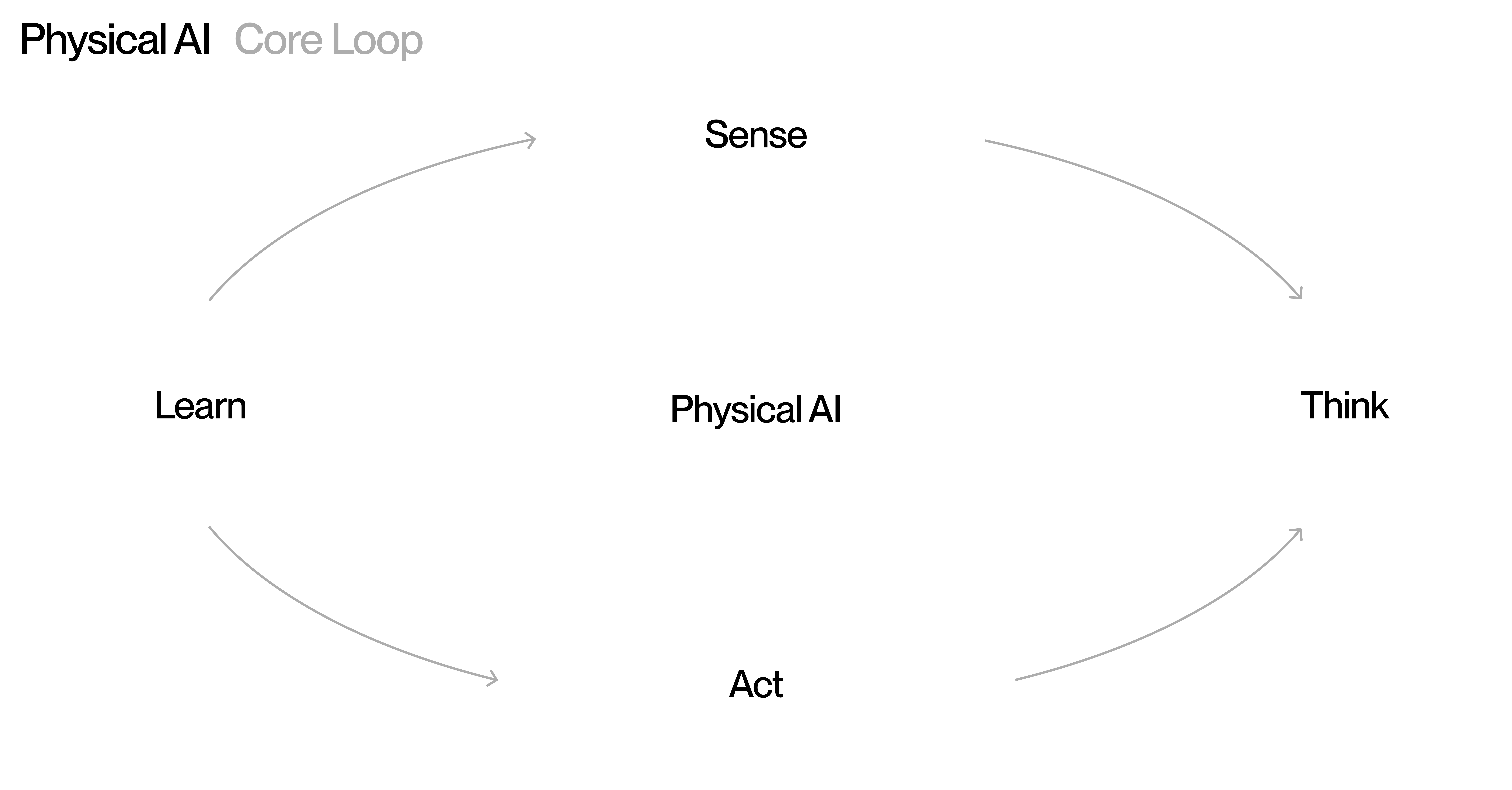
The bedrock of this system is the sensing-thinking-acting loop. Here is a breakdown of how physical ai sensing thinking acting loop works at the Reflecting Pool:
- Sense: The system uses sensor fusion to combine data from thermal cameras, optical lenses, and even acoustic sensors. It perceives the environment as a 3D space rather than a 2D image.
- Think: This is where edge computing shines. Using deep learning models, the system classifies objects. It can distinguish between a stray dog, a blowing trash bag, and a human climbing over a barricade. It analyzes intent through gait analysis and spatial positioning.
- Act: Once a threat is verified, the system takes physical action. This could be swiveling a camera to follow a person (active tracking) or triggering a spotlight to "paint" the intruder, letting them know they are being watched.
This architecture moves beyond traditional security because it provides spatial intelligence. It understands the "Digital Twin" of the Lincoln Memorial. If a person steps onto the specific area where the new 'American flag blue' coating is curing, the system recognizes the spatial violation immediately. It eliminates the latency of human decision-making, providing a level of perimeter security that was previously impossible without a massive, 24/7 human guard presence.
Claims vs. Reality: The $16 Million Vandalism Controversy
The deployment of these advanced systems was not a proactive choice but a reactive necessity. In June 2026, the administration highlighted a series of security breaches that threatened the integrity of the Lincoln Memorial Reflecting Pool’s renovation. According to official reports, the high-tech surveillance was a response to significant damage.
President Trump alleged that vandals had managed to cut a 350-foot gash into the pool’s newly installed liner. This liner is no ordinary pool tarp; it is an industrial-grade material designed to keep the pool functional for decades. The repair costs and the potential for the damage to delay the reopening of the National Mall for the US 250th Anniversary celebrations created a political and logistical firestorm.
Critics and supporters have engaged in a heated debate over the severity of the damage versus the intensity of the surveillance. This is where physical ai task verification plays a role. By using recorded metadata and spatial mapping, authorities can provide an immutable record of events.
| The Claim (Administration) | The Technical Reality |
|---|---|
| A 350-foot intentional gash was cut. | Spatial intelligence logs confirm unauthorized perimeter breaches. |
| Vandalism was politically motivated. | AI identifies "objects of interest" but cannot confirm motive without human intel. |
| The system prevents all future damage. | Physical AI serves as a deterrent but requires physical barriers to be 100% effective. |
| Surveillance is necessary for the $16M investment. | Economic ROI is high given the cost of manual 24/7 patrols. |
The use of physical ai cameras allows for infrastructure monitoring that goes beyond security. These sensors can also track environmental factors like algae blooms or water temperature fluctuations, providing a holistic view of the pool's health. While the vandalism sparked the deployment, the long-term utility of the system lies in protecting the 16 million dollar investment from both human and natural threats.

2026 Milestone: Securing the 250th US Anniversary
The timing of this deployment is no coincidence. June 2026 is the eve of the United States' 250th anniversary. With the eyes of the world turning toward Washington D.C.—and the upcoming World Cup shortly thereafter—the National Mall is under immense pressure to look pristine and remain safe.
In this context, the Reflecting Pool is more than just a body of water; it is a symbol of national stability. Utilizing physical ai examples like the LVT towers is a strategic move to modernize federal asset protection. Traditionally, securing a site like the Lincoln Memorial required dozens of park police officers on rotating shifts. By moving toward an automated, edge-deployed model, the administration is betting on technology to provide more reliable coverage at a lower long-term cost.
The ROI of these systems is often realized within 12 to 36 months. When you consider the cost of labor, insurance, and the expense of repairing high-grade infrastructure like the "American flag blue" liner, physical ai becomes an obvious choice for large-scale public works. It offers a way to scale security without scaling the headcount of the police force, allowing human officers to focus on complex tasks rather than staring at empty walkways.
As we move toward a future where our physical infrastructure is "alive" with machine perception and real-time analytics, the Reflecting Pool project serves as a high-visibility case study. Whether you view it as essential security or a high-tech spectacle, the technical efficiency of these systems is undeniable.

FAQ
What is a physical AI example?
A common physical ai example is an autonomous mobile security tower that detects an intruder and automatically activates a spotlight to track them. Other examples include self-driving delivery robots that navigate sidewalks or industrial robotic arms that use vision to sort varying materials on a moving conveyor belt without human programming for each specific item.
What companies are working on physical AI?
Several major tech players and startups are leading the field. NVIDIA provides much of the underlying edge computing hardware. Tesla is heavily involved through its robotics and autonomous driving divisions. In the security sector, companies like LiveView Technologies (LVT) and Verkada are pioneers in combining cloud logic with physical hardware responses for site protection.
Is physical AI the next big thing?
Many industry experts believe it is. While the last decade focused on generative AI and digital chatbots, the next frontier is bringing that intelligence into the real world. As hardware becomes more efficient and 5G connectivity more prevalent, the ability for machines to perceive, reason, and act in physical spaces will transform everything from construction and logistics to public safety.
What are the 4 types of AI?
Computer scientists generally categorize AI into four types based on capability: Reactive Machines (can only respond to current situations), Limited Memory (can learn from past data, like self-driving cars), Theory of Mind (understanding human emotions/intent, currently theoretical), and Self-Aware AI (possessing its own consciousness, which does not yet exist).