Quick Facts
- Deal Value: High seven-figure multimillion-dollar agreement
- Launch Date: Expected late 2027
- Venue: New Hard Rock Hotel, Las Vegas
- Production Site: Pinewood Studios, Buckinghamshire
- Featured Tech: Cutting-edge volumetric rendering and digital avatars
- Confirmed Guests: Digital versions of Dua Lipa and Kiki Dee
Elton John has reportedly signed a seven-figure deal for a permanent hologram residency at the new Hard Rock Hotel in Las Vegas that is designed to continue after his death. This groundbreaking agreement for hologram concerts ensures that the legendary performer can maintain a presence on the global stage through advanced digital resurrection, allowing his music and persona to reach future generations long after he has retired from physical touring.
From 'Spooky' to Strategic: Elton's Change of Heart
It was not long ago—specifically in a 2018 interview—that Elton John expressed a deep skepticism toward the idea of being digitally resurrected. At the time, he referred to the concept of digital doubles as spooky and dismissed the idea of posthumous hologram concert tours. However, as 2024 draws to a close, the narrative has shifted dramatically. Following the conclusion of his massive Farewell Yellow Brick Road tour and facing recent health challenges, including significant vision impairment, the necessity for a digital double has become a strategic reality.
The pivot toward hologram concerts represents a masterclass in estate monetization. For a legacy artist like Elton John, maintaining a physical presence on stage forever is an impossibility, but maintaining a commercial one is now within reach. By signing this seven-figure deal, the artist is following in the footsteps of previous famous hologram performances that have proved the market's appetite for nostalgia-driven, high-tech experiences. This transition isn't just about the music; it is about ensuring that the Elton John brand remains a cornerstone of the live entertainment industry for decades to come.
The move marks a significant shift for legacy artists who are looking for ways to preserve their artistic standards. By being involved in the creation of his digital avatar now, Elton can ensure the movements, the piano flourishes, and the vocal nuances meet his personal approval. This is no longer just a "spooky" projection; it is a meticulously crafted digital resurrection designed to be the definitive version of the performer.
Technology Explained: How It Actually Works
When we talk about this upcoming show, many people ask: how do hologram concerts work? It is important to clarify that we aren't looking at 3D laser projections floating in thin air. Instead, the industry relies on a sophisticated blend of motion capture and real-time CGI. While the marketing materials often use the term hologram, the reality involves what are known as digital avatars or ABBAtars.
The production process typically starts at a facility like Pinewood Studios in Buckinghamshire. There, the artist wears a specialized suit covered in sensors. Every subtle movement—from the tilt of the head to the way a finger hits a piano key—is recorded and mapped. This data is then used to build a high-fidelity 3D model through a process called facial rigging. During the actual residency, these digital beings are projected onto high-resolution LED displays or specialized transparent screens, supported by theatrical lighting and immersive entertainment systems that trick the eye into seeing a solid, three-dimensional form.
Elton's production will utilize technology described as more advanced than the ABBA Voyage residency in London, which has reportedly sold approximately one million tickets per year since its debut. While ABBA set the benchmark for volumetric rendering, the 2027 Elton John residency aims to push the boundaries further with even more realistic rendering and seamless integration of guest stars.
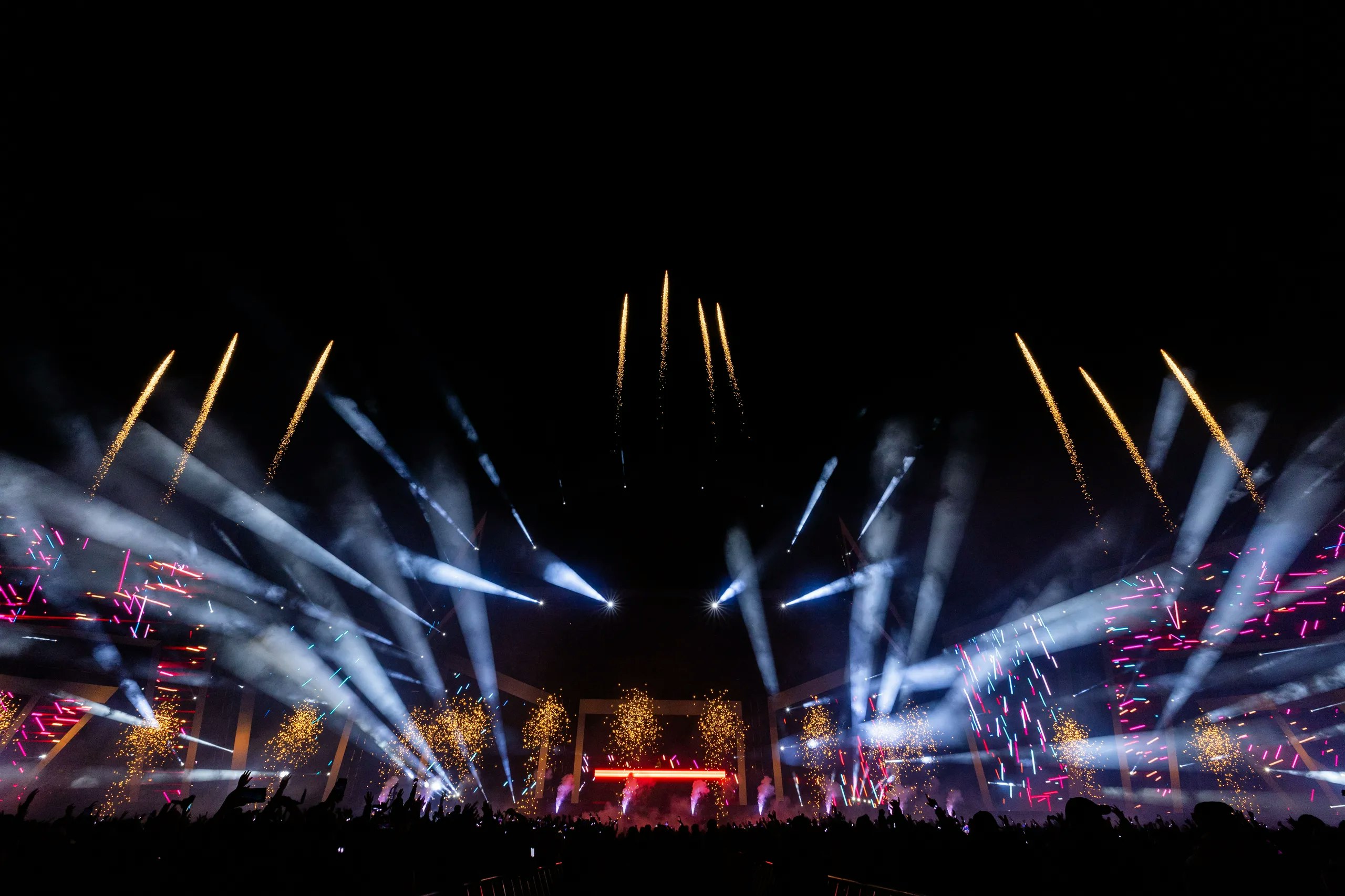
There is a major difference between digital avatars and holograms in the traditional sense. True holograms are created using laser light interference, but they are difficult to scale for a large theater. The virtual residencies we see today are essentially high-octane CGI films that react to the environment in real-time, allowing the visual illusion to remain consistent whether you are sitting in the front row or the back of the house. This level of detail is necessary to answer the growing consumer question: are hologram concerts worth it? For those who missed the chance to see a legend in person, these shows offer the closest possible experience.
The Las Vegas Experience: Residency Details
The upcoming Las Vegas residency project is expected to launch in 2027 and will feature holographic performances from Elton John as well as collaborators Dua Lipa and Kiki Dee. This partnership with Hard Rock International is a massive win for the new Hard Rock Hotel, which is being designed specifically to house these types of high-tech spectacles.
The move toward hologram residencies las vegas is part of a broader trend in spectacle tourism. People travel from around the world to the Nevada desert not just for gambling, but for experiences that they cannot find anywhere else. By featuring digital recreations of Elton performing "Cold Heart" alongside Dua Lipa or "Don't Go Breaking My Heart" with Kiki Dee, the show provides a "best of" experience that never ages or fatigues.
To better understand why this model is taking over, consider how it compares to the traditional touring world:
| Feature | Traditional Live Performance | Digital Hologram Residency |
|---|---|---|
| Artist Presence | Physical and tangible | Digital reconstruction |
| Scalability | Limited by health/schedule | Infinite performances |
| Visual Effects | Lighting and pyrotechnics | CGI and impossible environments |
| Predictability | Varied night-to-night | Studio-perfect consistency |
| Longevity | Finite career span | Posthumous potential |
For the fans, the value proposition is clear. You get a perfect vocal performance, the most iconic costumes, and a visual show that uses real-time CGI to create environments that a physical stage simply couldn't support. Whether you are a dedicated audiophile or a casual listener, the scale of this production marks a new era for music technology.
FAQ
What is a hologram show concert?
A hologram show concert is a live performance that uses digital avatars, usually created via motion capture and high-resolution projection technology, to simulate the presence of a performer on stage. These shows blend pre-recorded performances with live lighting and sound to create an immersive, lifelike experience.
Who has had a hologram concert?
Several major artists have been featured in hologram concerts, including ABBA with their highly successful Voyage residency, Roy Orbison, Whitney Houston, and the famous Coachella "performance" by Tupac Shakur. Elton John is the latest major star to join this group.
When was the first hologram concert?
While experimentation occurred earlier, the first major cultural moment for this technology was in 2012, when a digital avatar of Tupac Shakur appeared on stage at the Coachella Valley Music and Arts Festival. This sparked the modern industry of digital resurrection for musicians.
Is the Abba hologram concert worth it?
Industry experts and fans generally agree that the ABBA Voyage residency is worth it, as it has maintained high ticket sales and critical acclaim since its debut. The technology is so convincing that many viewers forget they are watching digital avatars rather than human performers.
How much does a hologram of a person cost?
The cost of creating a professional hologram for a residency can range from a few million to tens of millions of dollars. The price depends on the complexity of the motion capture, the detail of the facial rigging, and the scale of the projection system required for the venue.
As we look toward hologram concerts 2026 and 2027, the line between the physical and the digital continues to blur. Elton John's move into this space isn't just a farewell; it’s a new beginning. Stay tuned as we track the development of this residency and the cutting-edge tech that will bring the Rocket Man back to the stage for years to come.