Quick Facts
- Total Crypto Demand: Retail and institutional investors generated over $1.1 billion in demand across major digital exchanges.
- Failure Point: The primary intermediary, xStocks, could not secure the required underlying share allocations from traditional underwriters.
- Impacted Platforms: Users on Binance, Bybit, Bitget, and MEXC experienced total subscription cancellations.
- Performance Gap: While crypto platforms saw a 0% fulfillment rate, traditional brokers like Fidelity and SoFi secured 25% of their requested demand.
- Capital Loss: Binance's SPCXx campaign alone locked up $557 million from 27,700 users before issuing mandatory refunds.
- Regulatory Shift: The SEC Jan 2026 Joint Statement has since reclassified these synthetic wrappers as high-risk security-based swaps.
Tokenized stocks are digital tracker certificates providing price exposure to underlying assets on a blockchain. While they promise fractional ownership and 24/7 trading, the SpaceX failure demonstrated that they often function as digital IOUs that lack a 1:1 relationship with real-world equity when institutional allocation preferences prioritize traditional banks.
The SpaceX Scandal: $1.1 Billion in Failed Promises
The 2026 SpaceX IPO was intended to be the "Netscape moment" for the digital asset industry. As Elon Musk’s aerospace giant reached a staggering $2.1 trillion valuation, the hype for pre-IPO access reached a fever pitch. Digital asset exchanges marketed SPCXX as a way for the average person to grab a piece of history. However, by June 2026, it became clear that the bridge between decentralized finance and Wall Street was broken.
The scale of the failure was unprecedented. While traditional underwriters like Goldman Sachs and Morgan Stanley were managing the official book-building process, a parallel world of tokenized stocks was being built on exchanges like Binance and Bybit. In a matter of weeks, the xStocks platform and its partners reported over $1 billion in customer demand for these digital shares.
The bottleneck occurred because the supply of real shares did not exist on the blockchain. Crypto platforms relied on xStocks, an intermediary that promised to source shares from the primary underwriters. When the IPO was oversubscribed by four times, the underwriters prioritized their long-standing institutional clients. This left the tokenized stocks platform with zero allocation, forcing a mass cancellation of orders that left tens of thousands of investors holding nothing but refund notices.
Under the Hood: How Do Tokenized Stocks Work?
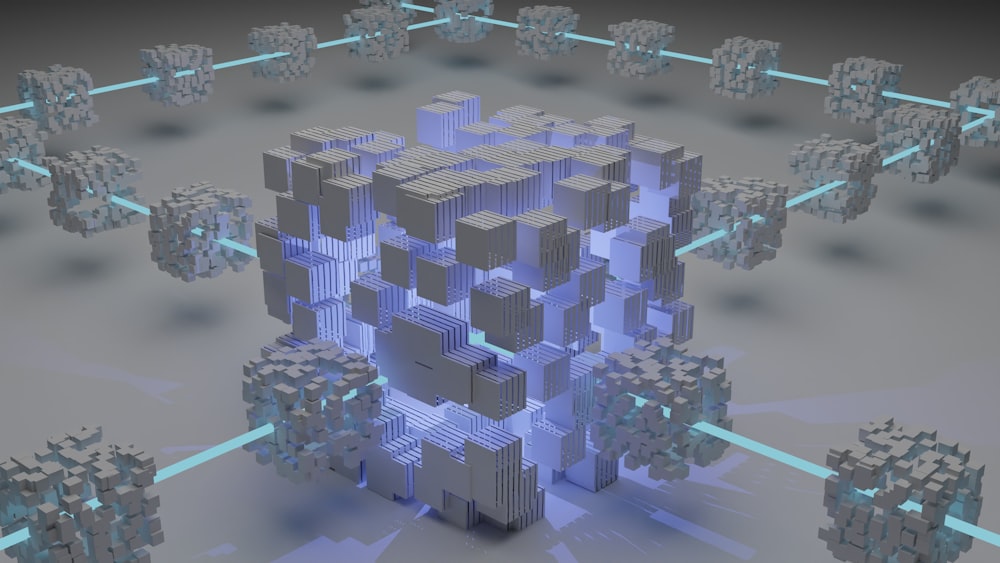
To understand why this happened, we have to look at the mechanics of how do tokenized stocks work in the current market. Most of these assets are not the actual shares of the company. Instead, they operate as tracker certificates. These are synthetic products where a token represents a contract that mimics the price movement of the underlying asset.
The system is split into two distinct layers:
- The Ledger Layer: This is what the user sees. It is the blockchain where the SPCXX token is minted, traded, and stored in a wallet.
- The Ownership Layer: This is the traditional financial system. It involves custodians, brokers, and clearinghouses that hold the actual paper shares or digital entries at the local depository.
The SpaceX failure highlighted a settlement failure in the connection between these layers. Because xStocks acted as a single point of failure, the entire digital ecosystem was paralyzed when the underwriters refused to deliver the underlying asset. Unlike real world assets (RWA) that are fully collateralized from day one, several of these pre-IPO tokens were effectively "naked" promises. This means the issuer was collecting money before they actually had the stock in hand, creating a pro-rata distribution nightmare when the supply came back as zero.
The Risks: Are Tokenized Stocks Safe?
For many retail investors, the fundamental question is: are tokenized stocks safe? The xStocks scandal suggests that the answer depends entirely on the structure of the token. When you buy a synthetic wrapper, you are not a shareholder of the company. You do not have voting rights, and you do not have a direct claim on dividends. Instead, you have a claim against the issuer of the token.
This creates significant counterparty risk. If the issuer or the intermediary becomes insolvent, the token holder is often treated as an unsecured creditor. Furthermore, the regulatory environment is tightening. Following the January 28, 2026 SEC Joint Statement, many of these products are being viewed as unauthorized security-based swaps.
The lack of institutional allocation access means that even if you have the funds, you are at the mercy of the financial supply chain. The Binance SpaceX pre-IPO tokenized subscription campaign alone attracted approximately $557 million, yet not a single share was delivered. This is a stark reminder that even the largest exchanges cannot bypass the rules of traditional finance when it comes to IPOs.

Verified Providers: Navigating the Tokenized Stocks List
Despite the binance tokenized stocks failure and the broader xStocks collapse, the concept of tokenization is not dead. However, the market is shifting toward 1:1 backed models and away from synthetic IOUs. If you are looking at a tokenized stocks list today, you need to verify how the underlying share custody is handled.
The following table shows the performance gap between tokenized platforms and traditional brokers during the SpaceX event:
| Provider Type | Allocation Success | Backing Method | Voting Rights |
|---|---|---|---|
| Traditional Brokers (Fidelity/SoFi) | 25% | Direct Ownership | Yes |
| 1:1 Backed RWAs (Ondo/Dinari) | 8% | Fully Collateralized | No |
| Synthetic Exchanges (xStocks partners) | 0% | Tracker Certificates | No |
If you want to stay safe, look for providers that focus on on-chain securities rather than price-tracking derivatives. Companies like Backed Finance and Dinari are working to ensure that every token represents a legal claim to a specific share held by a regulated custodian. When researching how to verify tokenized stock backing, always look for a public proof-of-reserve or a third-party audit of the custody account.
The downsides of tokenization were laid bare in 2026, but for those who value fractional share ownership and global access, the future lies in transparency, not just technology.
FAQ
What are tokenized stocks?
Tokenized stocks are digital representations of equity in a public or private company that exist on a blockchain. They allow investors to buy fractions of an expensive share and trade them outside of traditional market hours, though they often rely on a synthetic contract rather than direct legal ownership.
Are tokenized stocks worth it?
They can be worth it for investors who live in regions with limited access to US markets or for those who want to buy very small amounts of high-priced shares. However, the SpaceX scandal proved that the risks of not receiving the actual shares during an IPO can outweigh the convenience.
What are the downsides of tokenization?
The main downsides include counterparty risk, where the issuing platform might fail to deliver the asset, and the lack of shareholder rights like voting or dividends. Additionally, many tokenized stocks suffer from lower liquidity compared to their counterparts on the Nasdaq or NYSE.
Can you buy tokenized stocks in the USA?
The legality of tokenized stocks USA is a complex issue. While some platforms offer them, the SEC has increased scrutiny on synthetic wrappers, often classifying them as security-based swaps which requires the platform to follow strict registration and disclosure rules that many crypto exchanges avoid.
Who is leading tokenization?
Currently, companies focused on real world assets such as Ondo Finance, Dinari, and Backed Finance are leading the move toward compliant, fully-backed tokenization. These firms prioritize 1:1 collateralization and legal clarity over the high-leverage synthetic models that failed during the xStocks crisis.