Quick Facts
- ANC (Active Noise Cancellation): Designed for the listener. It uses internal and external microphones to generate "anti-noise" waves that cancel out background sounds like jet engines or traffic.
- ENC (Environmental Noise Cancellation): Designed for the person on the other end of your call. It uses dual-microphone arrays and algorithms to ensure your voice remains clear while suppressing background chatter and wind.
- 2026 Market Standard: Mid-range headphones ($80–$200) now deliver 85-90% of the noise-canceling performance found in $300+ flagship models.
- Effectiveness: High-quality ANC can reduce ambient noise by 20 to 30 decibels, significantly lowering the risk of long-term hearing damage and cognitive fatigue.
- Hybrid ANC: The gold standard for 2026. It combines "Feedforward" and "Feedback" microphones to suppress a wider range of frequencies than standard ANC.
In the rapidly evolving landscape of 2026 audio technology, the jargon can feel as deafening as the noise we are trying to escape. As a critic who has spent decades testing gear in the world’s loudest airport lounges and most chaotic metropolitan centers, I have observed a recurring point of confusion for consumers: the alphabet soup of ANC and ENC. While both technologies aim to "cancel noise," they serve fundamentally different purposes. To choose the right pair of headphones, one must first decide who deserves the silence: you, or the person you are talking to.
The primary difference is the intended beneficiary. ANC blocks the world out for you, allowing you to enjoy your music or a moment of silence in a crowded cabin. ENC, conversely, filters the world out for your colleagues or family during a phone call. In 2026, the best hardware integrates both, but understanding the nuances of each is essential for making a value-driven purchase.
Section 1: Active Noise Cancellation (ANC) Explained
Active Noise Cancellation is an engineering marvel that relies on the physics of sound waves. To understand it, imagine sound as a series of peaks and valleys. ANC microphones "listen" to the ambient noise—the low-frequency hum of an air conditioner or the roar of a Boeing 787—and immediately generate an "inverse" sound wave. When these two waves meet, they undergo destructive interference, effectively neutralizing the sound before it reaches your eardrum.
Spec Box: Hybrid ANC Definition: A sophisticated system utilizing both external (Feedforward) and internal (Feedback) microphones. Benefit: While Feedforward ANC catches noise before it enters the ear cup, Feedback ANC catches what leaks in. Together, they offer a more consistent "bubble of silence" across both low and mid-range frequencies.
The data suggests that effective ANC technology can reduce ambient noise levels by 20 to 30 decibels. For the frequent traveler, this is not just a luxury; it is a health intervention. Sustained exposure to environmental noise above 70 decibels can lead to increased stress levels and tinnitus. By lowering that floor, ANC allows you to listen to audio at much lower volumes, protecting your hearing over the long term.
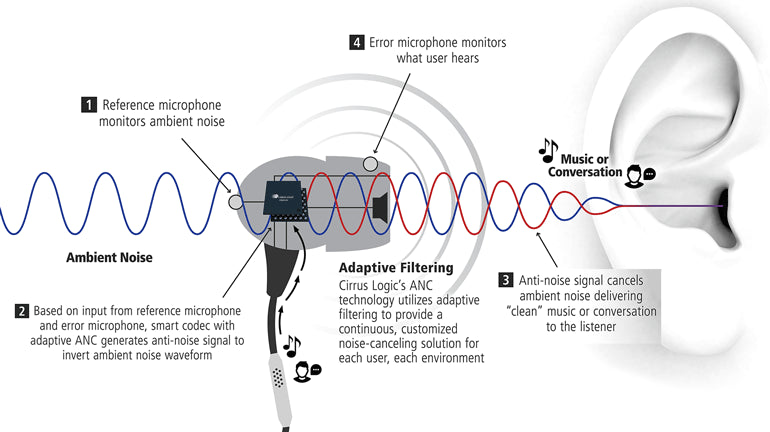
By 2026, the industry has largely moved toward "Adaptive ANC." Rather than a simple on/off switch, these systems use AI-driven processors to adjust the intensity of the cancellation in real-time based on your environment. If you move from a quiet library to a gusty street corner, the microphones recalibrate instantly to prevent that "suction" feeling often associated with older ANC models.
Section 2: Environmental Noise Cancellation (ENC) Explained
If ANC is a shield, ENC is a filter. Environmental Noise Cancellation is a microphone-focused technology designed solely for outgoing audio. If you have ever taken a Zoom call in a bustling coffee shop and were told you sounded "surprisingly clear," you have ENC to thank.
ENC typically utilizes a dual-microphone array. One microphone is positioned to capture your voice (the "voice mic"), while the other is oriented toward the environment (the "reference mic"). A Digital Signal Processor (DSP) then compares the two signals. It identifies the common frequencies between both—which represent the background noise—and subtracts them, leaving only the isolated frequency of your voice to be transmitted.
It is a common misconception that ENC improves your music listening experience in loud environments. It does not. Since ENC is purely a microphone-oriented technology, it has zero impact on the audio being played back into your ears. If you are wearing earbuds that feature ENC but lack ANC, you will still hear every bit of that subway screech or office chatter; only the person on the other end of the line will be spared the noise.
Section 3: Head-to-Head Comparison: ANC vs. ENC
To clarify the decision-making process, I have summarized the key distinctions in the table below. In 2026, many consumers realize that they need both, but if you are on a budget, you must prioritize based on your daily workflow.
| Feature | Active Noise Cancellation (ANC) | Environmental Noise Cancellation (ENC) |
|---|---|---|
| Primary Goal | Silence for the user. | Clarity for the caller. |
| Beneficiary | The person wearing the headphones. | The person on the other end of the call. |
| Hardware | Internal and external microphones + DSP. | Dual/Multi-microphone arrays + DSP. |
| Impact on Music | Significant; creates a quiet soundstage. | None; only affects the microphone. |
| Battery Impact | Moderate to High (requires power to cancel). | Minimal (only active during calls). |
| 2026 Standard | Hybrid Adaptive ANC. | AI Beamforming Microphones. |
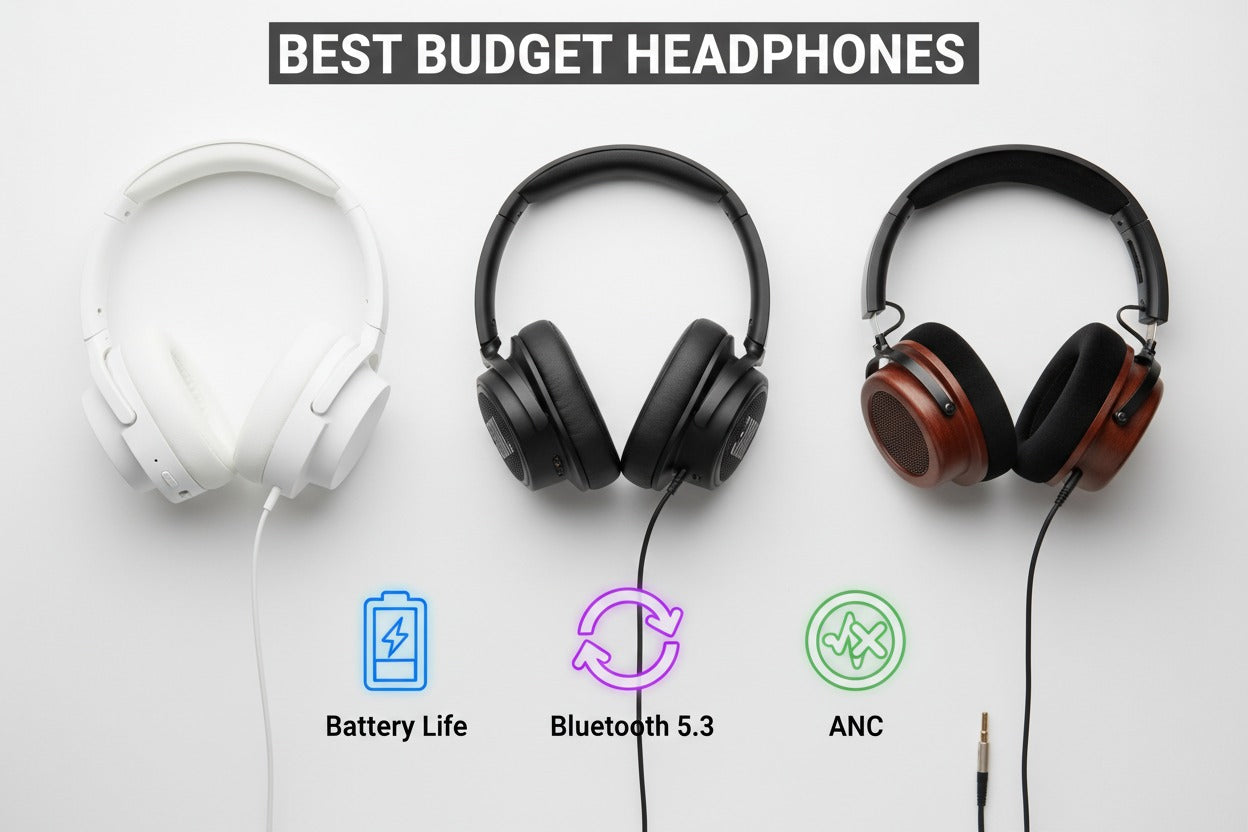
Choosing between these often comes down to your "audio lifestyle." If your primary use case is focused on consumption—podcasts, music, and movies—ANC is your priority. If your day is dominated by "contribution"—meetings, client calls, and voice memos—ENC is the non-negotiable feature.
Section 4: The 2026 Value Equation: How Much Should You Pay?
We have reached a fascinating plateau in audio technology. In previous years, high-end noise cancellation was a luxury reserved for those willing to pay a "Bose or Sony tax" of $350 or more. As of 2026, the market has shifted dramatically.
Objective testing shows that mid-range noise-canceling headphones priced between $80 and $200 now achieve 85-90% of the performance levels found in flagship models. This "diminishing returns" threshold means that for most users, a $150 pair of Hybrid ANC headphones from a reputable mid-tier brand will provide a nearly identical experience to a $450 luxury pair.
Wright’s Insight: In 2026, don't pay for the brand name; pay for the chip. The latest Mediatek and Qualcomm audio silicon found in mid-range gear is often more efficient than the custom chips used in legacy flagships from three years ago.
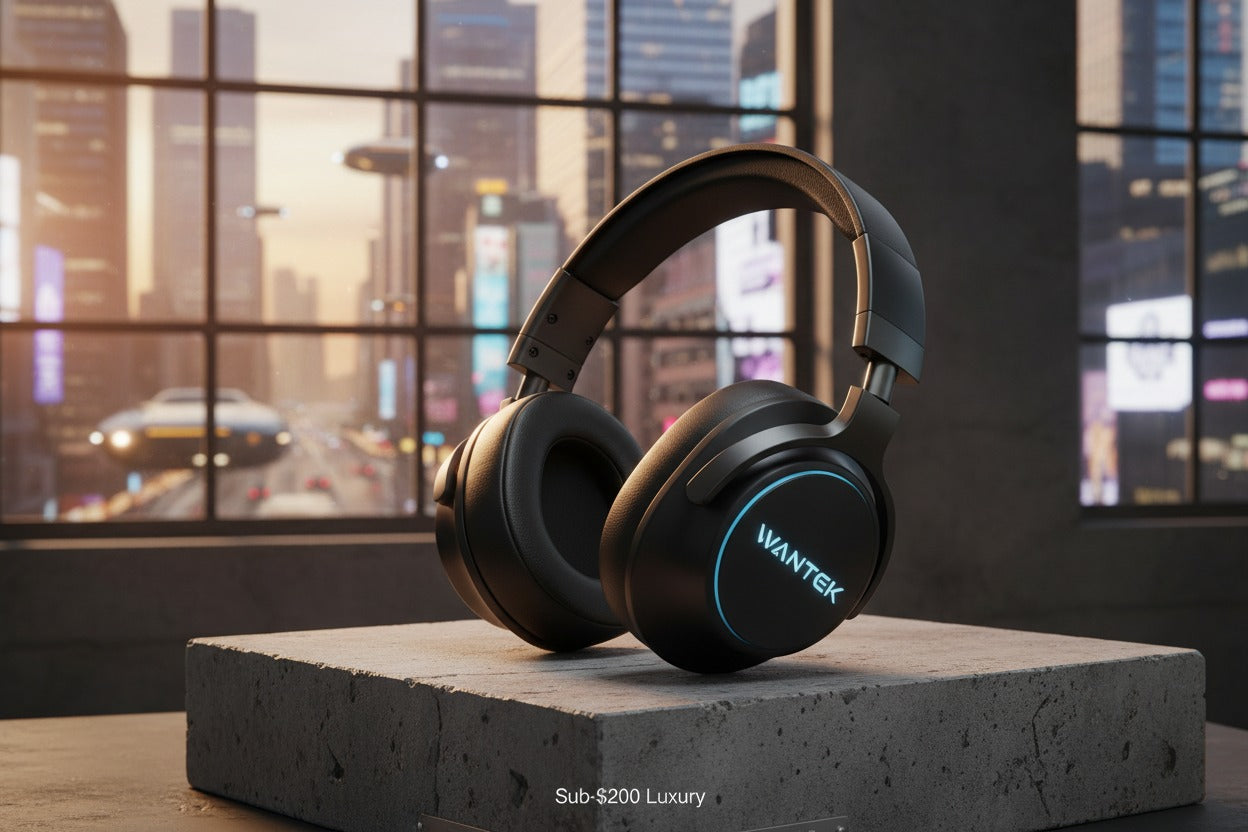
When evaluating value, look for the "Hybrid" label. If a product at the $80 price point only lists "ANC," it is likely using a Feedforward-only system, which struggles with higher-frequency noises like human speech. Always verify that it is Hybrid ANC before committing.
Section 5: Intent-Based Selection Guide
To make this guide actionable, I’ve categorized the top 2026 audio requirements based on typical user profiles.
The Urban Commuter
If your life involves subways, buses, and city streets, you are battling low-frequency rumbles and sudden high-frequency screeches.
- Priority: High-intensity Hybrid ANC with a strong "Transparency Mode" (to hear traffic for safety).
- Key Feature: Wind-reduction algorithms for ANC mics.
The Remote Professional
If your home office is a shared space or a coffee shop, your professional reputation relies on how you sound to others.
- Priority: Multi-mic ENC with "Beamforming" technology.
- Key Feature: Sidetone (the ability to hear your own voice during calls) to prevent you from shouting.
The Frequent Flyer
For those of us spending hundreds of hours at 35,000 feet, comfort and battery life are as important as the silence itself.
- Priority: Long-wear ergonomics and 40+ hours of battery life with ANC enabled.
- Key Feature: Pressure-relief valves to prevent the "cabin pressure" feeling in your ears.
View Our Top Rated Travel Headphones →
Section 6: Advanced Buying Tips
Beyond the ANC/ENC debate, several technical factors will determine the longevity of your purchase in 2026.
1. The Codec Hierarchy Even the best noise cancellation can't save a poor audio signal. Ensure your headphones support high-bitrate codecs like LDAC or aptX Adaptive. If you are an iPhone user, high-quality AAC implementation is still the standard.
2. Passive Isolation: The Forgotten Foundation Active technology is only half the battle. Passive isolation—the physical seal created by the ear tips or cups—is the foundation of great sound. If the headphones don't fit well, ANC has to work twice as hard, leading to faster battery drain and lower audio fidelity. Memory foam tips are often a worthwhile $20 aftermarket investment.
3. Bluetooth 5.4 and Multipoint Pairing By 2026, Bluetooth 5.4 is the baseline for stable connections and lower latency. More importantly, ensure the device supports Multipoint Pairing, allowing you to stay connected to your laptop for a call (utilizing ENC) and your phone for music (utilizing ANC) simultaneously.
FAQ
Can noise-canceling headphones cause headaches? Some users experience a feeling of "ear pressure" with ANC. This is due to the brain perceiving the lack of low-frequency sound as a change in atmospheric pressure. If you are sensitive, look for headphones with "Adaptive" or "Adjustable" ANC levels.
Does ANC work for gaming? Yes, but be wary of latency. While ANC will block out your PC's fan noise, standard Bluetooth can cause a delay between the action and the sound. Look for headphones with a "Low Latency Mode" or a 2.4GHz wireless dongle.
Is ENC the same as CVC? Clear Voice Capture (CVC) is a proprietary version of ENC developed by Qualcomm. While the branding is different, the goal—filtering background noise for calls—is identical.
Conclusion
The choice between ANC and ENC is not a matter of which technology is "better," but which one solves your specific problem. For the traveler and the music lover, Hybrid ANC is the essential investment that preserves both your sanity and your hearing. For the professional navigating a world of hybrid work, ENC is the silent partner that ensures your voice is the only one heard in the boardroom.
As we move through 2026, the gap between "budget" and "premium" is closing. You no longer need a corporate expense account to afford world-class silence. Focus on the $100–$180 sweet spot, prioritize Hybrid ANC, and ensure the ENC mic array fits your call volume.