Quick Facts
- Incident Date: March 2026
- Target Entity: Los Angeles County Metropolitan Transportation Authority (LA Metro)
- Primary Impact: 500TB of data wiped and 700GB of internal data stolen
- Infrastructure Affected: Approximately 1,400 servers and digital passenger services
- Threat Actor: Black Shadow (linked to the Iranian Ministry of Intelligence and Security)
- Attack Vector: AI-refined scripts targeting VMware vCenter virtualization layers
- Operational Status: Physical rail and bus operations remained functional via manual overrides
The LA Metro cyberattack serves as a landmark case in critical infrastructure cyber security, demonstrating how state-sponsored actors leverage AI to bypass traditional defenses. Protecting such systems requires robust critical infrastructure protection strategies that prioritize the isolation of Operational Technology (OT) from corporate IT networks.
The Technical Breach: From IT Hijack to OT Infiltration
When we look at the mechanics of the LA Metro breach, it becomes clear that this wasn't just a simple malware infection. This was a methodical, tiered infiltration. The incident, which was detected in March 2026, began in the administrative environments of the agency. Specifically, the perpetrators gained access to internal systems via VMware vCenter environments. For those of us who live in the world of server management, vCenter is the holy grail for a hacker. It is the centralized management platform for virtualized hosts, and if you control it, you control the entire fleet of virtual machines.
Once the attackers established a foothold, they began a process known as lateral movement. They didn't just stay in the corporate email or payroll servers. They moved across the network to find the bridge between IT systems and Operational Technology. In this case, the hackers successfully accessed a rail yard management and train control display identified as Division 11. This represents one of the most concerning critical infrastructure cybersecurity examples in recent memory because it shows that the air gap between office computers and physical train controls is becoming increasingly porous.
The attack wasn't just about spying; it was about destruction. Reports indicate that the intruders used a destruction-first strategy, performing massive data wipes that deleted roughly 500TB of information. This was designed to cripple the agency's ability to recover. When you wipe the backups and the primary configurations simultaneously, you aren't just slowing down a business; you are paralyzing a government entity. For the IT teams at LA Metro, this meant a grueling forensic process. Every one of the approximately 1,400 servers had to be manually inspected and verified before being brought back online to ensure no dormant backdoors remained. This provides a sobering lesson in protecting operational technology in public transit: if you don't secure the virtualization layer, you lose the entire stack.
The AI Multiplier: How Hackers Optimized the Attack
What sets the 2026 incident apart from previous state-sponsored campaigns is the use of generative AI to refine the attack sequence. Forensic attribution suggests that the group known as the Black Shadow or Ababil of Minab utilized AI-aided exploits to iterate their malicious scripts. In the past, writing a script that can bypass a specific security patch might take days of manual trial and error. With tools like ChatGPT or specialized malicious LLMs, hackers can now automate the debugging of their exploits in real-time.
This AI multiplier allowed the hackers to move with unprecedented speed. By the time the intrusion was detected, the damage was already localized in the core server rooms. This is a terrifying evolution in state-sponsored cyber warfare. We are no longer just fighting human minds; we are fighting the collective speed of machine learning. The attackers were able to stay one step ahead of the initial detection routines by constantly shifting the signature of their wiper malware.
Understanding how to detect state-sponsored cyber attacks now requires a shift in focus. We can't just look for known file hashes anymore. Security professionals must monitor for behavioral anomalies—for instance, an administrative account suddenly accessing 400 virtual disks in three minutes. This event proves that the defensive side of critical infrastructure cyber security must adopt AI-driven monitoring at the same pace the offensive side is adopting AI-driven attack vectors.
Historical Sidebar: Bowman Avenue Dam vs. LA Metro
To understand the gravity of the LA Metro attack, we have to look back at the 2013 Bowman Avenue Dam incident. A decade ago, Iranian hackers accessed the control system of a small dam in New York via a simple cellular modem. It was a wake-up call, but the impact was limited because the dam was small and the access was relatively shallow.
The 2026 LA Metro breach shows how far state-sponsored capabilities have matured. While the Bowman Avenue incident was about proof of concept, the LA Metro breach was about high-volume logistical disruption. The theft of at least 700 gigabytes of internal data—including emails, backups, and databases—indicates a dual-purpose mission: long-term intelligence gathering combined with immediate public disruption.
The Domino Effect: Why Transportation is a High-Value Sector
In the landscape of national security, transportation is one of the most vital critical infrastructure sectors. It is the "connective tissue" of a city. When a rail network is targeted, the impact ripples through several other sectors. If trains stop moving, workers can't get to power plants, logistics for food delivery break down, and emergency services are hindered by increased road congestion.
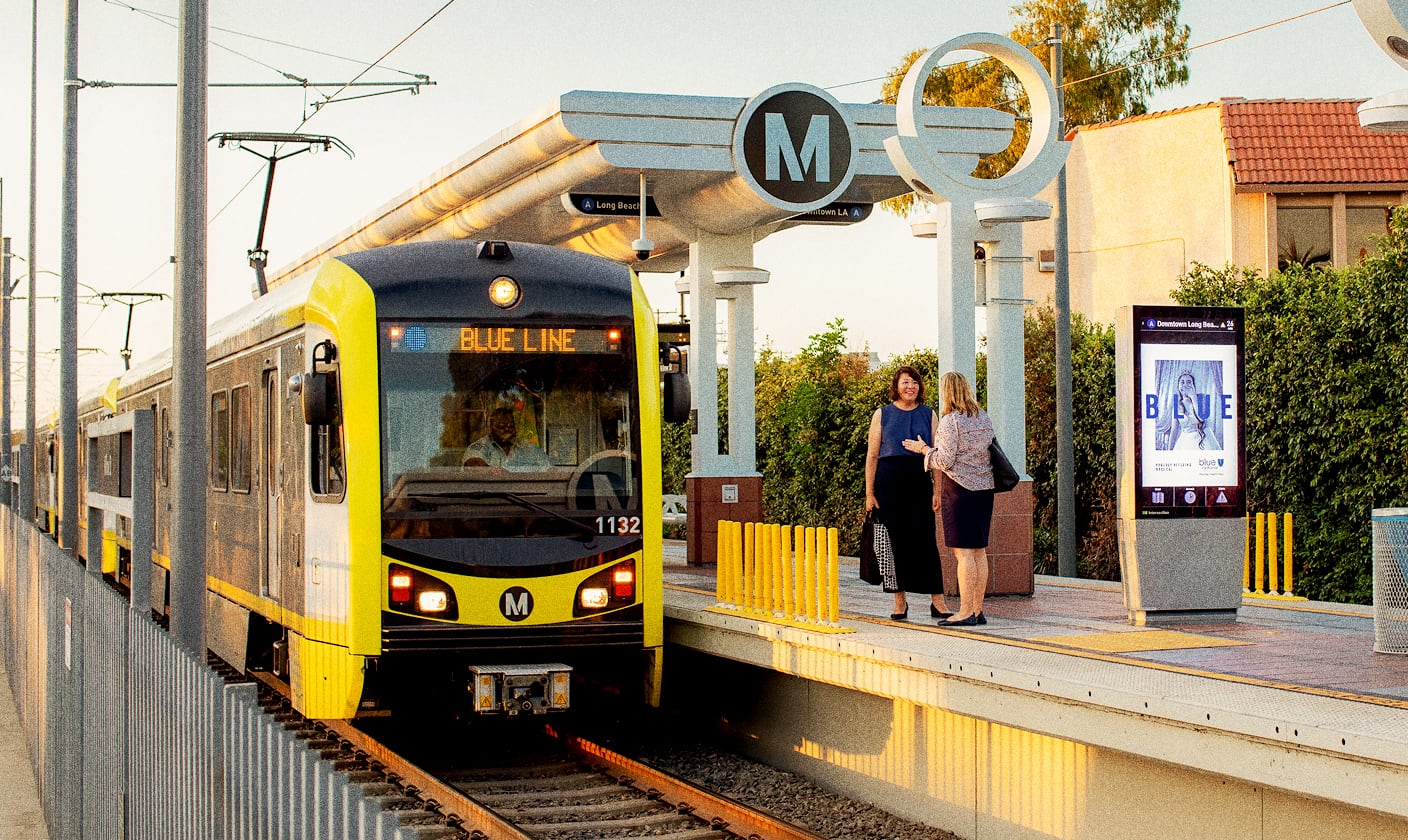
The Iranian-linked hackers targeted LA Metro specifically to exploit this interdependence. Even though physical rail and bus operations were not affected due to manual overrides and redundant safety systems, the digital side was paralyzed. Digital passenger services, real-time tracking, and automated fare collection were all offline. This creates a "perception of failure" that is often more valuable to a state-sponsored actor than the actual physical destruction of a bridge or track. It undermines public trust in the government’s ability to maintain basic services.
This is a classic example of geopolitical retaliation. By hitting a major American transit hub, the attackers send a message without needing to fire a single kinetic weapon. In the world of critical infrastructure protection, we must recognize that our IT systems are now the primary front line for diplomatic and military friction.
Defensive Roadmap: Securing Critical Infrastructure
So, how do we stop this from happening to the next city? Improving critical infrastructure cyber security requires moving away from the "castle and moat" mentality. We have to assume the adversary is already inside the network. Here is a roadmap based on critical infrastructure cybersecurity best practices and frameworks like NIST and the CIS Critical Security Controls.
- Hardened Network Segmentation: This is the most crucial step in securing transportation systems from cyber attacks. Corporate IT networks (where employees check email) must be physically or logically separated from the Operational Technology (OT) networks that control the rail yards. There should be no direct path from a vCenter console in the office to a train control display in Division 11.
- Granular Identity Management: We need to move toward a Zero Trust architecture. Every administrative action in a VMware vCenter environment should require multi-factor authentication and be logged in an immutable ledger. State-sponsored actors often rely on stolen credentials; making those credentials useless without a second physical token is a primary defense.
- Routine Integrity Audits: Organizations must conduct regular audits of their virtualization layers. This isn't just about scanning for viruses; it's about verifying that the configuration of the hypervisor hasn't been modified to allow lateral movement.
- Resilience-First Disaster Recovery: Given that hackers are now wiping 500TB at a time, your backups cannot be on the same network as your production data. Mitigating cyber risks in government transportation networks requires "immutable backups"—data that cannot be deleted or changed for a set period, even by an administrator.
The recovery at LA Metro was slow because they had to manually verify 1,400 servers. While this was the correct forensic move, it highlights a need for automated system restoration tools that can rebuild server environments from known-good code in hours rather than weeks.
FAQ
What is critical infrastructure in cybersecurity?
Critical infrastructure in cybersecurity refers to the physical and virtual assets, systems, and networks that are so vital to a nation that their incapacitation or destruction would have a debilitating effect on security, national economic security, or national public health and safety. This includes power grids, water systems, and transportation networks like LA Metro.
What is an example of critical infrastructure?
An example of critical infrastructure is a metropolitan rail system's signaling and control network. These systems manage the safe movement of trains and ensure that passengers are protected from collisions, making them a primary target for actors interested in causing public disruption.
What are the 17 critical infrastructure sectors?
The United States identifies 16 (often cited as 17 in broader contexts) critical infrastructure sectors, including Chemical, Commercial Facilities, Communications, Critical Manufacturing, Dams, Defense Industrial Base, Emergency Services, Energy, Financial Services, Food and Agriculture, Government Facilities, Healthcare and Public Health, Information Technology, Nuclear Reactors, Materials and Waste, Transportation Systems, and Water and Wastewater Systems.
Is cybersecurity a dying field?
No, cybersecurity is an expanding and evolving field. As state-sponsored actors integrate AI into their attack methodologies and target high-value assets like critical infrastructure sectors, the demand for skilled professionals who understand both IT and Operational Technology is at an all-time high.
Securing our future requires more than just better firewalls; it requires a fundamental shift in how we build and manage the systems that keep our cities moving. The LA Metro incident is a warning shot. Let's make sure we're listening.