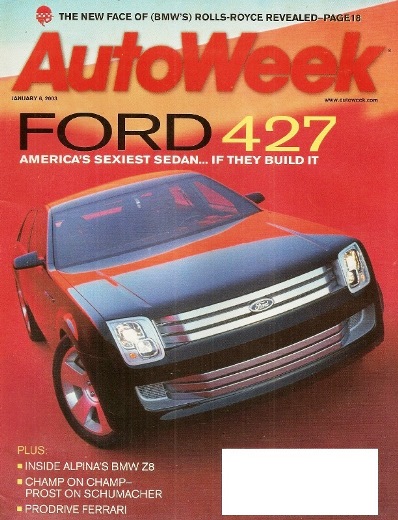
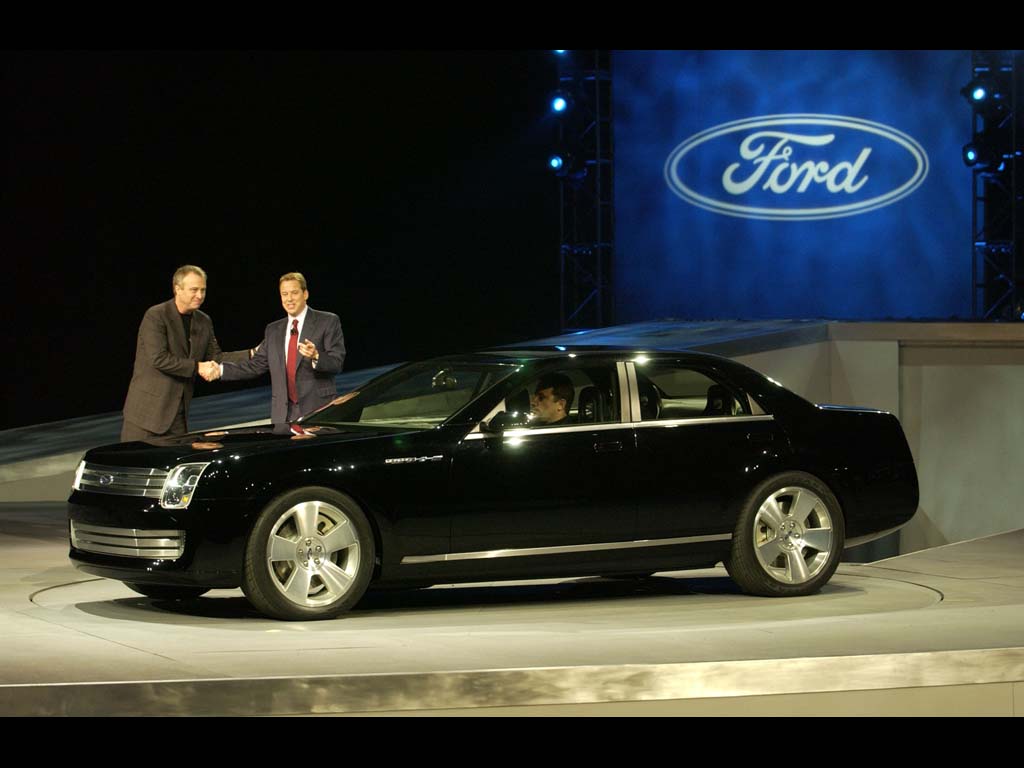
In the cold January air of the 2003 North American International Auto Show in Detroit, Ford Motor Company unveiled a vehicle that felt less like a concept car and more like a manifesto. At a time when the American full-size sedan was arguably in a state of identity crisis, caught between the soft-riding heritage of the Crown Victoria and the looming threat of European performance luxury, Ford dropped a sledgehammer: the Ford 427 Concept. It was a vehicle that managed to look both backward toward the golden era of the 1960s and forward toward a future that, unfortunately, never quite arrived in the way we hoped.
Quick Facts: The 2003 Ford 427 Concept
- Engine: 7.0-liter (427 cubic inches) Naturally Aspirated V10
- Power: 590 HP @ 6,500 rpm
- Torque: 509 lb-ft @ 5,500 rpm
- Transmission: Six-speed manual
- Weight Advantage: Aluminum engine block is 70 lbs lighter than the 5.4L Cobra R V8
- Specific Output: 84.32 bhp per liter
- Design Philosophy: "A Navy Seal in an Armani Suit"
The Renaissance of the American Sedan
The early 2000s were a pivotal moment for the "Big Three." The SUV boom was in full swing, but there was a palpable hunger for a return to the "Total Performance" era of the 1960s. When Ford designers pulled the silk off the 427 Concept, the industry took a collective breath. This wasn't just another fiberglass shell with a futuristic interior; it was a fully realized vision of what an American performance flagship should be.
The "427" nameplate carries a weight that few other numbers in automotive history can match. It evokes the spirit of the Le Mans-winning GT40s and the legendary Galaxie lightweights that dominated drag strips. However, the 2003 concept wasn't a retro-pastiche. It was a modern interpretation of "brute strength in a tailored tuxedo," a design language that Ford desperately needed to redefine its sedan lineup.
Exterior Design: A Sinister Noir Aesthetic
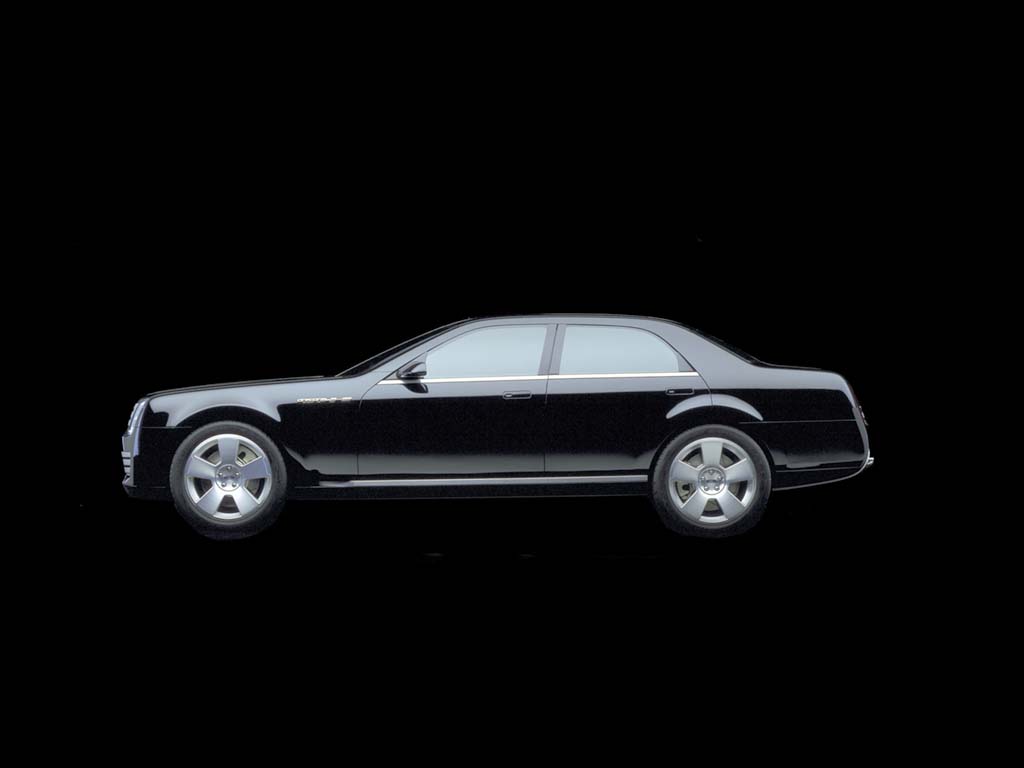
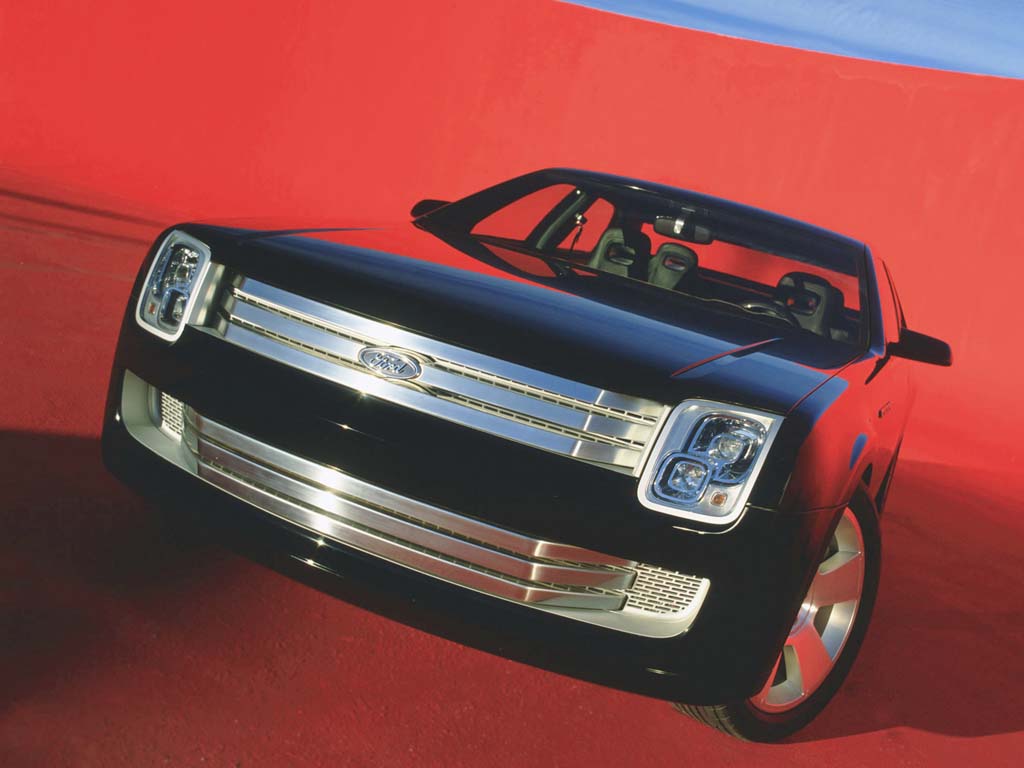
The 427 Concept’s visual presence is often described as "Film Noir" on wheels. It possessed a sinister, low-slung pose that looked as though it were carved from a single block of obsidian. The design team, led by J Mays and Doug Gaffka, opted for a "clean-sheet" approach that prioritized proportions over gimmicks.
"We wanted to create a car that was like a Navy Seal in an Armani suit—someone who looks great at a formal event but could take you down in a heartbeat." — Chris Theodore, former Ford Vice President of Product Development.
The "Armani Suit" was characterized by long, horizontal lines and a remarkably clean silhouette. There were no flared wings or unnecessary vents. Instead, the car relied on its massive 115-inch wheelbase and 19-inch five-spoke wheels to communicate its intentions. The finish featured brushed billet aluminum trim that provided a cold, industrial contrast to the deep black paint.
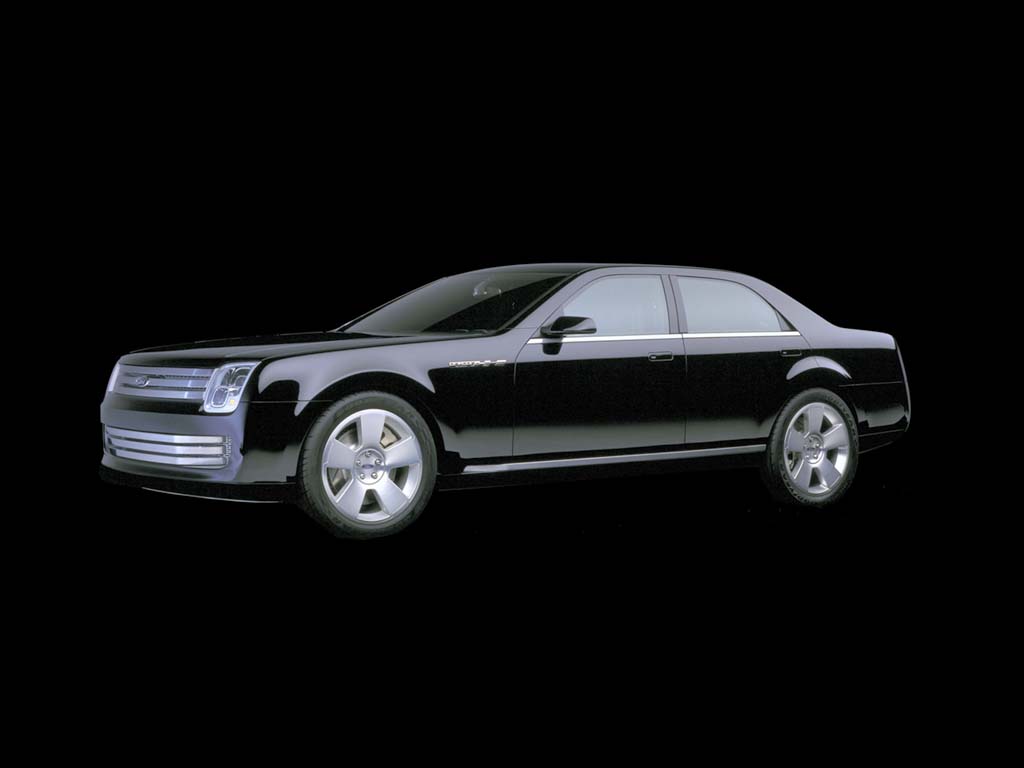
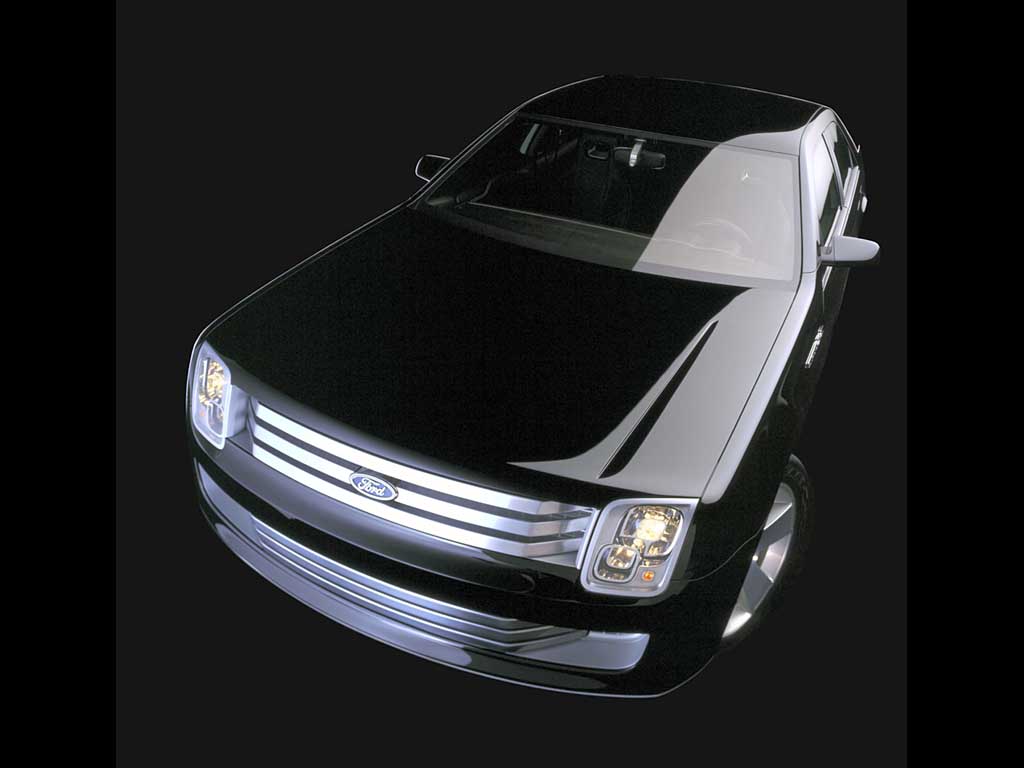
The front fascia was perhaps its most striking feature. The vertical, stacked headlamps were a sophisticated nod to the 1965-1967 Ford Galaxie, while the thick, three-bar grille would eventually become a signature look for the entire Ford production lineup. It was an aesthetic of restraint—one that didn't need to scream to be heard.
The Heart of the Beast: The Surprise V10
While the exterior whispered of elegance, the powertrain screamed of raw, unadulterated American muscle. Most expected a traditional pushrod V8 to reside under the hood of something named "427." Instead, Ford’s engineering "skunk works" team delivered a masterpiece of modern architecture: a 7.0-liter (427 cubic inches) V10 engine.
This engine was not simply a truck motor modified for a car. It was a sophisticated, naturally aspirated powerhouse based on Ford's modular engine architecture. The engineering team used a Siamese bore aluminum block with 95mm liners, resulting in a displacement of exactly 6,996cc. The naturally aspirated V10 achieved a specific output of 84.32 bhp per liter, reaching its peak power of 590 HP at 6,500 rpm.
Technical Specification Comparison
| Feature | Ford 427 Concept (7.0L V10) | Mustang Cobra R (5.4L V8) |
|---|---|---|
| Engine Type | 90-degree V10 | 90-degree V8 |
| Displacement | 7.0 Liters (427 cu in) | 5.4 Liters (330 cu in) |
| Horsepower | 590 HP @ 6,500 rpm | 385 HP @ 6,250 rpm |
| Torque | 509 lb-ft @ 5,500 rpm | 385 lb-ft @ 4,250 rpm |
| Block Material | Cast Aluminum | Cast Iron |
| Engine Weight | Approx. 70 lbs lighter than 5.4L V8 | Standard Heavyweight |
One of the most impressive feats of this V10 was its weight management. Despite having two more cylinders and a larger displacement, the all-aluminum V10 was approximately 70 pounds lighter than the 5.4-liter 32-valve V8 used in the 2000 Mustang Cobra R. This weight savings allowed the 427 Concept to maintain a more balanced weight distribution, enhancing its handling characteristics and proving that massive displacement didn't have to mean massive bulk.
The engine was mated to a robust six-speed manual transmission, sending power exclusively to the rear wheels. This was a "driver's car" in the truest sense—a full-size sedan that demanded skill and offered visceral rewards.
Interior: The Fighter Jet Cockpit
Stepping inside the Ford 427 Concept was a departure from the "noir" exterior. If the outside was an Armani suit, the inside was the cockpit of a stealth fighter. The cabin was finished in handcrafted black leather with distinctive cornmeal stitching, creating a high-contrast, premium environment.
The layout was unashamedly driver-centric. It featured four individual bucket seats, ensuring that every passenger experienced the car’s performance from a position of support and comfort. A full-length center console ran from the dashboard to the rear seats, housing the short-throw shifter for the six-speed gearbox.
The instrumentation was a blend of classic and modern. Simple, large analog gauges provided vital information, but they were backlit with a "fiery red glow" that added to the car's aggressive, high-stakes persona. There were no digital screens or infotainment menus to distract the driver—only the tactile feel of the leather steering wheel and the mechanical connection to the V10 ahead.
Legacy and Impact: Why Wasn't it Built?
In the years following its debut, the Ford 427 Concept became one of the most requested production cars in Ford’s history. Fans clamored for a V10 sedan that could challenge the likes of the BMW M5 or the Mercedes-Benz E55 AMG. So, why did it remain a concept?
Ultimately, the 427 Concept was a victim of timing and shifting corporate priorities. Ford’s performance focus in the mid-2000s was laser-targeted on two icons: the "Retro-Futurist" 2005 Mustang and the legendary Ford GT supercar. Bringing a bespoke V10 sedan to market would have required a dedicated rear-wheel-drive platform that Ford simply wasn't ready to invest in at the time.
However, the 427's DNA lived on. Its influence can be seen in:
- The Ford Fusion (2006-2012): The three-bar grille and clean, horizontal lines were lifted directly from the 427 Concept.
- The Ford Five Hundred: While far more conservative, the "tall sedan" proportions and clean surfaces echoed the concept's restraint.
- The Lincoln Continental (2017): The return to a long, elegant, and powerful sedan flagship for the Ford family can trace its stylistic roots back to that 2003 Detroit debut.
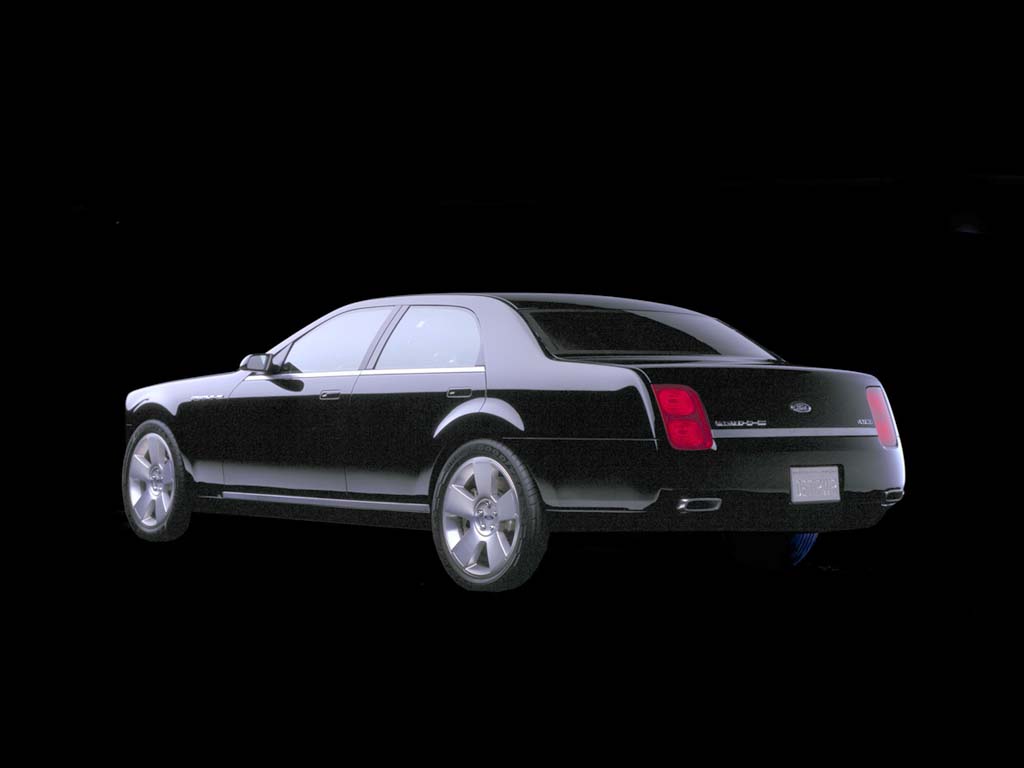
In retrospect, the 427 Concept represents a "lost golden age" for Ford—a moment when they proved they could out-style the Europeans and out-muscle the domestic competition in a single, elegant stroke. It remains a high-water mark of American automotive design, a reminder that sometimes, the most sophisticated thing you can build is a Navy Seal in a very well-tailored suit.
FAQ
Was the Ford 427 Concept engine ever used in a production car? No. The naturally aspirated 7.0L V10 was a "skunk works" project specifically for the 427 Concept. While Ford produced V10 engines for its Super Duty trucks and vans, the 427's aluminum-block, high-revving modular V10 was a unique engineering exercise that never reached the assembly line.
What platform was the Ford 427 Concept based on? The 427 Concept was built on a modified version of Ford’s DEW98 platform, which also underpinned the Lincoln LS, the Ford Thunderbird, and the Jaguar S-Type. This rear-wheel-drive architecture was known for its excellent handling but was ultimately deemed too expensive for a mass-market Ford sedan.
How does the 427 Concept compare to modern performance sedans? With 590 horsepower and a manual transmission, the 427 Concept would still be a formidable performer today. For comparison, a modern Cadillac CT5-V Blackwing produces 668 hp, but the 427's naturally aspirated V10 would offer a more linear power delivery and a unique exhaust note that few modern turbocharged cars can replicate.
Are you a fan of American performance history? Stay updated on the latest automotive news, heritage reviews, and industry updates by subscribing to our newsletter. Whether it's the revival of a classic nameplate or the future of electric muscle, we bring you the data-driven analysis you need.