SpaceX sent its Starship V2 prototype out with a glorious, intentional bang, closing a chapter of iterative testing that most observers would consider the most successful developmental phase in aerospace history. But as the dust settles over the Gulf of Mexico, the industry’s attention has pivoted sharply toward its successor. We are no longer looking at mere "prototypes" for suborbital hops; with the arrival of Starship V3 (or "Block 3"), we are entering the era of the first truly orbital-capable, fully reusable transport system.
This is not a minor refresh. In my years covering destination logistics and high-stakes infrastructure, I have rarely seen a hardware evolution move this aggressively from "proof of concept" to "industrial workhorse." Starship V3 represents a radical redesign aimed at fulfilling NASA’s Artemis lunar ambitions and Elon Musk’s Martian manifest. It is taller, lighter, more powerful, and designed for a launch cadence that challenges our current understanding of orbital access.
The Retirement of V2 and the Dawn of Block 3
The success of Flight 4 and Flight 5 proved that the Super Heavy booster could be caught and the Ship could survive reentry. However, V2 was always a transitional vehicle—a bridge between the early "Starhopper" days and a functional deep-space fleet. V2 allowed SpaceX to solve the "teething pains" of heat shield tiles and flap aerodynamics, but it lacked the payload efficiency required for complex lunar missions.
As SpaceX transitions to V3, the focus shifts from "Can it fly?" to "How often can it fly, and at what cost?" The V3 architecture is the first designed with the full understanding of the stresses encountered during those high-velocity reentries. It moves away from the "prototyping" mindset toward a standardized, mass-producible aerospace asset.
Technical Specs: What Makes Starship V3 the World's Most Powerful?
The most immediate change to Starship V3 is its physical presence. The vehicle is approximately 5 feet (1.5 meters) taller than its predecessor, a change that primarily facilitates larger propellant tanks. This extra volume is critical for the "long-haul" logistics of space travel—specifically, the propellant required for orbital maneuvers and deep-space injection.
What are the main upgrades for Starship V3? The core evolution involves four pillars: a taller airframe, the integration of Raptor 3 engines, a simplified structural assembly, and the addition of specialized docking adapters for in-orbit refueling. Unlike previous iterations, V3 is designed to be a "tanker" as much as it is a "transporter."
| Specification | Starship V2 | Starship V3 |
|---|---|---|
| Total Height (Stack) | 121 Meters | 122.5+ Meters |
| Engine Model | Raptor 2 | Raptor 3 |
| Booster Thrust | ~7,590 tf | ~8,400+ tf |
| Primary Structural Method | Horizontal Rings | Vertical Seam ("Soda Can") |
| Grid Fins | 4 (Standard) | 3 (50% Larger) |
Perhaps the most ingenious change is the structural shift. To explain this, engineers often use the "Soda Can" analogy. If you imagine a soda can, it is traditionally made of rings stacked horizontally. However, V3 is moving toward single-seam vertical welding. Imagine taking a single sheet of steel and "zipping" it up vertically. This reduces the number of weld points, which are traditionally the heaviest and weakest parts of the rocket. By reducing weld mass, SpaceX can increase payload capacity without increasing the weight of the steel itself.

Under the Hood: The Raptor 3 Engine Overhaul
If the airframe is the body, the Raptor 3 is the heart. The Raptor 3 is a masterclass in "de-complexifying" high-performance machinery. It is roughly 25% lighter than the Raptor 2, achieving this by integrating many of the previously external fluid lines and sensors directly into the internal castings of the engine.
The performance metrics are staggering:
- Thrust: Raptor 3 generates 280 tons of thrust, up from the 230 tons of Raptor 2.
- Specific Impulse: Approximately 350 seconds, maintaining elite efficiency in vacuum and sea-level environments.
- Durability: The most notable change is the lack of an external heat shield. Raptor 3 is designed to be "naked" within the engine bay, using its own regenerative cooling and simplified architecture to withstand the heat of ascent and the "backwash" of reentry.
For the travel-minded analyst, the Raptor 3 represents the difference between a high-maintenance exotic car and a reliable commercial jet engine. It is built for a 2026 launch date where the goal isn't just to survive one flight, but to be ready for another in a matter of days.
Super Heavy V3: A Clean-Sheet Redesign
The Super Heavy booster—the massive first stage—has undergone its own "clean-sheet" redesign for the V3 era. The most visible change is the reduction in the number of grid fins.
How has the Super Heavy booster changed for V3? While V2 used four grid fins for steering, V3 features only three. To compensate for the loss of a fourth fin, these three fins are 50% larger and significantly more robust. This change serves a dual purpose: it reduces the weight and complexity of the hydraulic systems while providing a larger "surface area" for the launch tower's "chopstick" arms to catch during recovery.
Additionally, the hot-staging ring—the perforated section where the Ship’s engines ignite while still attached to the booster—is now integrated directly into the forward dome of the booster. In V2, this was a separate, heavy component. Integrating it directly into the structure saves thousands of kilograms in dry mass, a crucial factor in the quest for full reusability.
Ground Infrastructure: The Role of Pad 2 and Florida Expansion
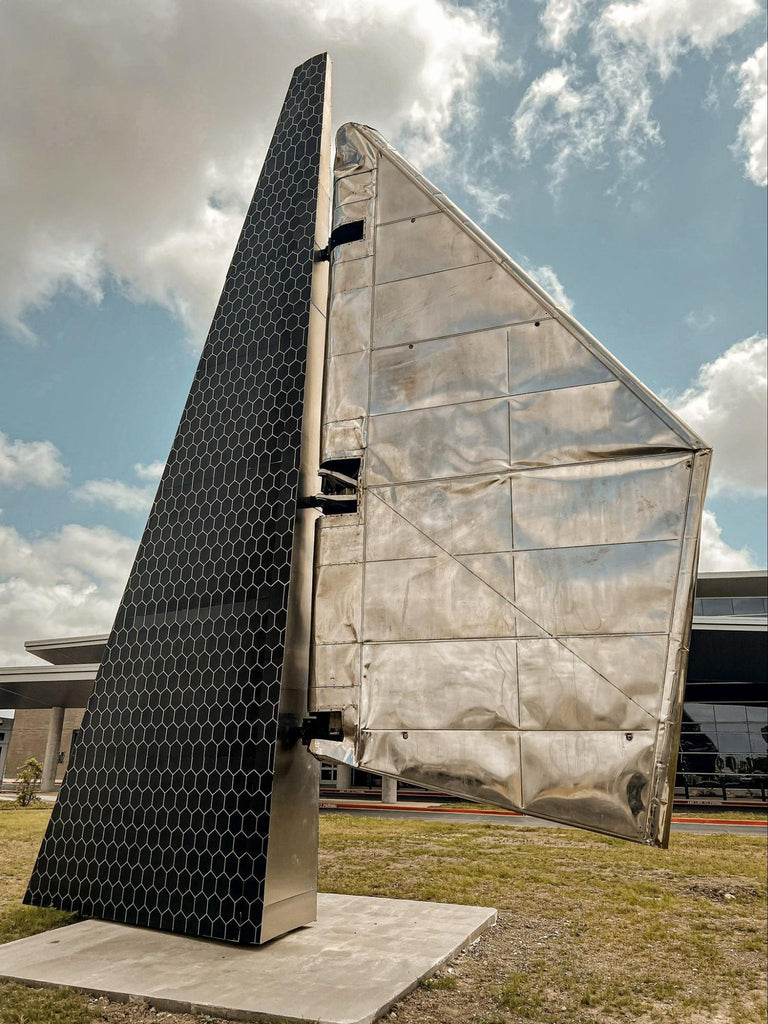
From a "travel critic" perspective, the destination of Starbase itself is evolving. The construction of "Pad 2" at Boca Chica reveals SpaceX’s long-term operational strategy. While Pad 1 (the "donut mount") was a learning laboratory, Pad 2 utilizes a cuboid frame design that is faster to build and easier to repair after the acoustic violence of a 33-engine launch.
We are also seeing the logistics of a multi-site operation come to life. The barge Marmac 31 is now a frequent sight, transporting Starships from the production facilities in Texas to the historic Launch Complex 39A in Florida. This dual-coast strategy is essential for meeting the high launch cadence demanded by NASA. The advanced water-cooled steel plates and the new integrated flame trench systems at both sites suggest that SpaceX is preparing for a "shuttle-like" frequency of departures.
Mission Milestones: NASA Artemis and Orbital Refueling
The stakes for V3 are astronomical because NASA has bet $4 billion on the Starship HLS (Human Landing System) variant to return humans to the lunar surface. However, getting a vehicle as large as Starship to the Moon requires a logistical feat never before attempted: orbital refueling.
How many tanker flights are needed for a lunar mission? A single lunar mission using the Starship V3 architecture may require between 10 and 40 tanker flights. This wide range depends on the boil-off rate of the cryogenic propellant and the efficiency of the transfer. Starship V3 includes new docking adapters and internal plumbing designed specifically for this "gas station in the sky" model.
The first orbital propellant transfer demonstration is currently scheduled for late 2025 or early 2026. This will be the "make or break" moment for the Artemis program. Without the ability to move hundreds of tons of liquid oxygen and methane between two V3 vehicles in orbit, the dream of a permanent lunar base remains grounded.
Launch Timeline: When Will V3 Fly?
When will SpaceX launch Starship V3? Following the planned retirement of the V2 prototypes in late 2025 (likely after Flight 11 or 12), Starship V3 is scheduled to attempt its first orbital test flights in 2026.
The launch cadence projections for V3 are aggressive. SpaceX aims for a baseline of 12 to 15 flights in 2026 to satisfy the immediate needs of the Starlink Gen2 constellation. However, if the "catch" recovery system for both the booster and the ship is proven reliable by midyear, internal projections suggest the company could reach up to 50 flights per year.
This level of frequency would fundamentally change the economics of space. It would move from a "luxury boutique" model of one-off launches to a "commercial freight" model. As a travel analyst, I see this as the beginning of the "Golden Age" of orbital logistics.

FAQ
Is Starship V3 safe for human travel yet? Not yet. V3 is primarily a cargo and tanker platform. While the HLS variant for NASA will carry astronauts, a dedicated "Crew Starship" with full life-support systems is a separate development track that will follow the successful validation of V3's orbital and reentry capabilities.
Why did SpaceX move from four grid fins to three? It is a classic case of "the best part is no part." By enlarging the remaining three fins, SpaceX achieved the same steering authority with less weight, fewer hydraulic actuators, and a simpler profile for the launch tower to "catch" during recovery.
How does V3 impact the Starlink program? V3 is the first vehicle large enough to efficiently deploy the full-sized Starlink V2/V3 satellites. The internal "Pez dispenser" mechanism in V3 is significantly larger, allowing SpaceX to launch hundreds of satellites in a single mission, drastically lowering the cost of global satellite internet.
Join the Journey
The evolution of Starship is the most significant story in modern transportation. Whether you are a space enthusiast or a logistical professional, the 2026 debut of V3 will be a watershed moment.