In the early weeks of 2024, a headline rippled through the UK cycling community and global tech blogs alike: North Yorkshire Police had seized an e-bike capable of 103.8 mph. To the casual observer, it sounded like a terrifying glimpse into a lawless, high-speed future. To an engineer or a seasoned critic, however, the figure felt less like a breakthrough and more like a mathematical impossibility—or at the very least, a catastrophic failure of equipment waiting to happen.
As we look toward 2026, the e-bike market is undergoing a radical maturation. Regulators are tightening their grip, and consumers are increasingly demanding transparency over marketing hyperbole. The truth behind the "100mph e-bike" is a complex cocktail of "no-load" testing errors, illegal software "unlocks," and a fundamental misunderstanding of the physics governing two-wheeled transport. For the discerning rider, understanding why these numbers don't add up is essential not just for legal compliance, but for basic survival.
The Legal Wall: Why 100mph is Legally a Motorcycle
The most immediate barrier to triple-digit speeds is not battery capacity or motor torque, but the firm hand of international law. In the United Kingdom, the definition of an Electrically Assisted Pedal Cycle (EAPC) is rigid. To remain a "bicycle" in the eyes of the law, a vehicle must be pedal-assisted, its motor must not exceed a continuous rated power of 250 watts, and the electrical assistance must cut out the moment the speedometer hits 15.5 mph.
When a bike is modified to hit 100 mph, it represents a staggering 570% increase over the legal speed limit. At that point, the vehicle ceases to be an e-bike. It becomes, in every legal sense, an unregistered, uninsured, and un-homologated motorcycle.
Legal Alert: California SB 1271 & The 2026 Standard Starting in 2026, new regulations like California's SB 1271 will require all e-bikes sold to have a permanent, fire-safe UL 2849 certification. More importantly, it mandates that manufacturers prevent "easy" tampering with speed controllers. The "Wild West" era of high-speed kit bikes is rapidly closing.
Beyond the UK, even the more liberal Class 3 standards in the US cap assistance at 28 mph. Why the discrepancy? Because once a vehicle exceeds 30 mph, the safety requirements for the rider (helmets, licensing) and the vehicle (turn signals, mirrors, DOT-approved tires) shift into an entirely different category of risk management.
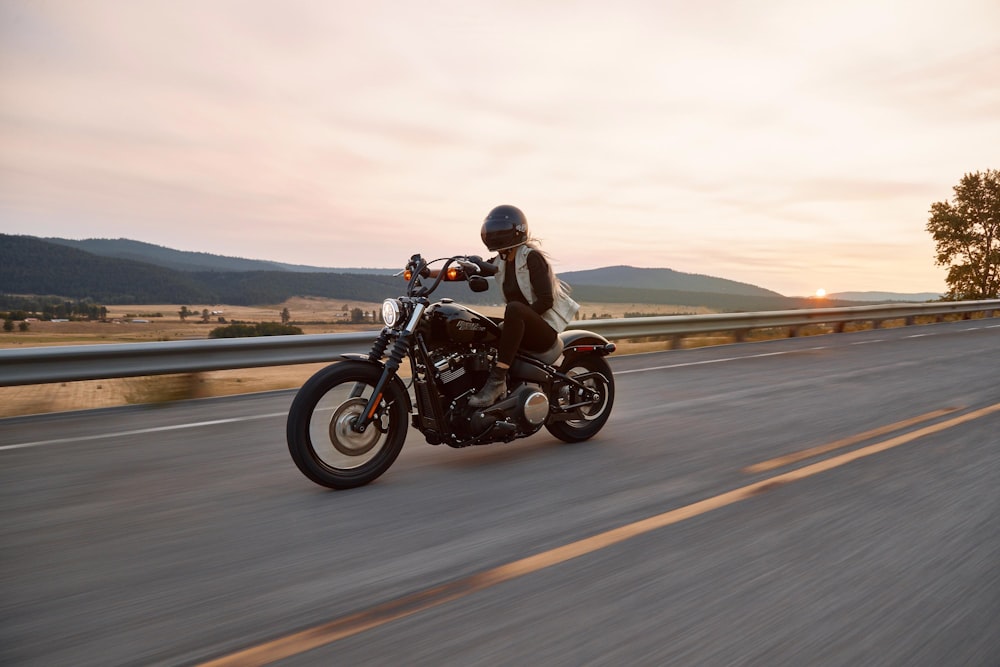
Physics and Engineering: Why Standard Frames Fail
To understand why a 100mph e-bike is a death trap, we have to look at kinetic energy. The formula ($KE = 1/2 mv^2$) tells us that energy increases with the square of the velocity. A bike traveling at 100 mph has roughly 40 times the kinetic energy of a bike traveling at the legal 15.5 mph limit.
Standard bicycle components are simply not designed to dissipate this energy.
The Braking Crisis
Most high-end e-bikes use mechanical or hydraulic disc brakes designed for mountain biking. While these are excellent for stopping a 25kg bike at 20 mph on a trail, they reach their thermal limit almost instantly at triple-digit speeds. At 100 mph, the friction between the pad and the rotor generates enough heat to "glaze" the pads or even boil the brake fluid, leading to total brake failure.
Structural Integrity and "The Death Wobble"
Bicycle frames are engineered for lightness and vertical compliance. At 100 mph, aerodynamic forces and gyroscopic effects change the game. Standard alloy frames and thin-gauge spokes are susceptible to high-speed oscillations, commonly known as the "death wobble." Without the heavy-duty rake and trail geometry of a motorcycle, a bicycle frame will begin to vibrate uncontrollably, leading to a high-side crash that no bicycle helmet could protect against.
| Feature | Standard E-Bike (EAPC) | Reported 100mph "E-Bike" | Motorcycle Equivalent |
|---|---|---|---|
| Top Speed | 15.5 mph (assisted) | 100+ mph | 100+ mph |
| Motor Power | 250W | 15,000W+ (Estimated) | 20,000W - 100,000W |
| Braking System | 180mm Hydraulic Disc | Standard Bicycle Disc (Dangerous) | 320mm Dual-Floating Rotors |
| Weight | 20kg - 30kg | 40kg - 60kg | 150kg - 200kg |
| Frame Material | 6061 Aluminum / Carbon | Modified Bicycle Alloy | Tubular Steel / Perimeter Alloy |
Market Benchmark: What Do 'High-Power' E-Bikes Actually Do?
To put the 100mph claim into perspective, let’s look at the legitimate market leaders for 2026. Take the Segway Xafari or the Xyber, which are often cited as high-performance machines. These bikes utilize mid-drive motors with peak outputs between 750W and 1300W. Even with that significant power, they are engineered to reach a safe, governed top speed of 28 mph (Class 3).
To push a standard-shaped bicycle to 100 mph, an engineer would need to overcome massive wind resistance (drag). Calculations suggest this would require over 10 times the power of a standard high-performance e-bike motor—roughly 15,000 to 20,000 watts. Such a motor requires a battery pack so large and heavy that it would be impossible to fit within a traditional bicycle frame without it looking like a full-sized electric motorcycle.
When we hear reports of a 103.8 mph e-bike, experts suspect a "no-load" reading. This occurs when a bike is put on a stand and the motor spins the wheel without any weight or wind resistance. While the speedometer might show 100 mph, the moment that wheel touches the pavement, the motor would likely stall or burn out under the actual physical load required to reach that speed.
The Dangers of Illegal Modifications
The surge in "super e-bikes" is driven by aftermarket kits—unregulated batteries and controllers sourced from unverified manufacturers. These modifications present two primary risks:
- Thermal Runaway: Most 100mph claims involve over-volting batteries. Without the UL-certified Battery Management Systems (BMS) required by 2026 standards, these batteries are prone to "thermal runaway," leading to explosive fires that cannot be extinguished with standard water-based extinguishers.
- Mechanical Fatigue: As discussed, the hardware is the weak link. Aftermarket motors can provide enough torque to literally rip the rear dropouts off a standard aluminum frame.
Furthermore, there is the issue of liability. If you are involved in an incident on a modified bike, you are riding an unregistered motor vehicle. This means you are personally liable for all damages, and in many jurisdictions, you face criminal charges for operating an uninsured vehicle without a license.

Safe Performance Alternatives for 2026
If you are looking for performance, the answer isn't "more speed," but "better engineering." The 2026 market offers bikes that feel fast and capable while staying within the boundaries of safety and law.
Top Recommendations:
- Aventon Level 3: A flagship Class 3 commuter that balances a 750W motor with exceptional hydraulic braking. It provides a "quick" feel without sacrificing structural integrity. Explore Aventon Performance →
- Velotric Discover 2: Known for its torque-sensing technology, this bike offers smooth acceleration that makes hill climbing feel effortless, proving that "performance" is about power delivery, not just top speed. View Velotric Specs →
For those who need off-road capability, look for bikes featuring 27.5" x 3" tires. This "mid-fat" setup offers a much larger contact patch, providing the stability and grip needed to handle the 28 mph speeds of a Class 3 bike safely.

FAQ
Are e-bike speed limiters easy to remove? On older or cheaper models, it was often as simple as a software hack or clipping a wire. However, 2026-compliant bikes are moving toward "anti-tamper" firmware and hardware-level encryption to prevent these modifications, as manufacturers face heavy fines for selling easily modifiable units.
What happens if I'm caught with an illegal e-bike in the UK? Police have the power to seize the vehicle permanently. You can be fined, receive points on your driving license (even if you weren't driving a car), and face prosecution for driving without insurance, MOT, or a valid motorcycle helmet.
Is a 750W motor enough for steep hills? Absolutely. For most riders, 750W of peak power combined with a high-torque mid-drive motor is more than enough to conquer 15% gradients. Raw wattage is often a marketing distraction; what matters for hills is "Newton-meters" (Nm) of torque.
Conclusion
The 100mph e-bike is a myth born of technical errors and dangerous "garage-mod" culture. While the headline of a triple-digit bicycle is captivating, the reality is a vehicle that defies the laws of both physics and the road. As we move into a more regulated 2026 landscape, the industry is finally moving away from the "faster is better" race and toward a focus on safety, reliability, and certified engineering.
High-performance e-biking isn't about hitting 100 mph; it's about the freedom of a 30-mile commute that feels effortless, the stability of a well-engineered frame, and the peace of mind that comes with knowing your brakes won't fail when you need them most. Ride smart, ride legal, and remember: if the numbers look too good to be true, they probably are.