For decades, the automotive world whispered about a ghost. In the hallowed halls of Corvette lore, the story of the first-ever Corvette was treated less like history and more like a Greek tragedy. It was the "Holy Grail" that didn't exist—a prototype that had supposedly been sacrificed to the gods of safety testing or unceremoniously crushed in a Detroit scrapyard.
But as any seasoned historian will tell you, the paper trail of a legend rarely ends at the shredder. The disappearance of 1953 Corvette Chassis 001—internally known by General Motors as Engineering Number 3950—is a saga of industrial evolution, a vanishing act that lasted half a century, and a miraculous recovery that has rewritten the early chapters of American sports car history.
The Birth of an Icon: 1953 Corvette Production Context
To understand why Chassis 001 is so significant, one must look at the frantic environment of 1953. Chevrolet was in a race against time to prove that an American manufacturer could produce a sports car capable of rivaling the European imports that GIs had fallen in love with after World War II.
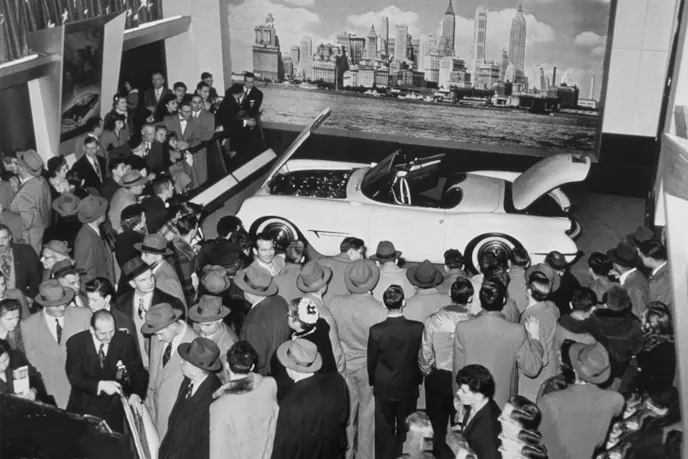
The result was "Project Opel," a secret endeavor that moved from a clay model at the Waldorf Astoria Motorama to a production reality in less than a year. Because the car was so revolutionary, particularly its use of glass-reinforced plastic (fiberglass), the first few units weren't just cars; they were rolling laboratories.
In the inaugural 1953 production run, only 300 Corvettes were produced. Of those 300, historical records indicate that only 183 were actually delivered to customers during that initial year. The rest were used for promotion, testing, and engineering refinement. Chassis 001 was the pioneer of this fleet, the primary "test bed" used to determine if this fiberglass experiment was even viable for the road.
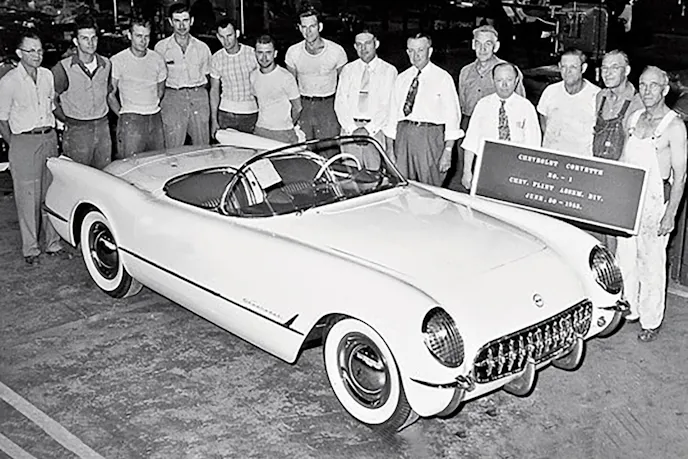
The early fiberglass bodies were experimental, and Chassis 001 served as the primary test bed for these innovative materials. The layup of the fiberglass on these early cars was thick, uneven, and far more primitive than the streamlined processes used just a few years later.
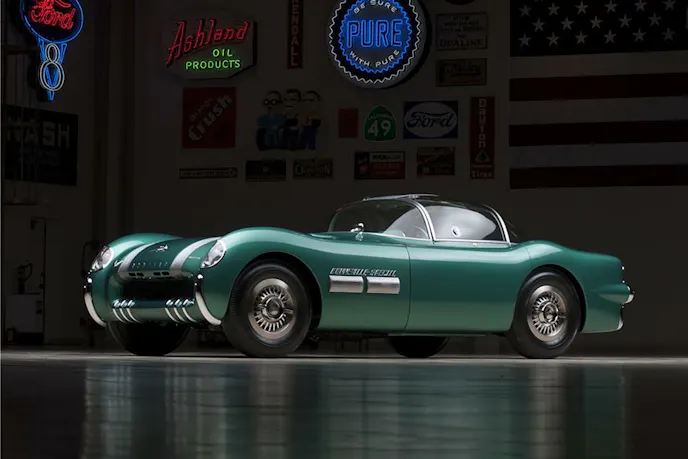
VIN 001 vs. Engineering Number 3950
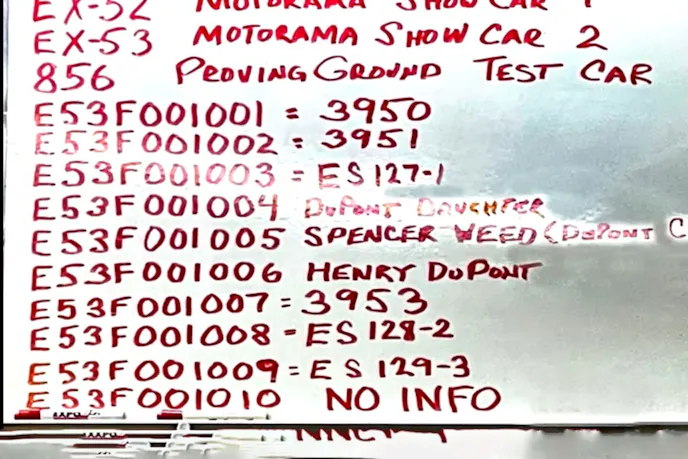
One of the greatest points of confusion in Corvette history is the distinction between a VIN and an Engineering Number. In the early 1950s, GM used internal tracking numbers for their prototype and test vehicles.
What happened to the first Chevrolet Corvette? The first Corvette, identified as Chassis 001 or Engineering Number 3950, was a GM test bed that vanished for decades. While rumors suggested it was destroyed in fire tests, it actually survived as a development mule until it was eventually sold out of the GM system and lost to history. It was discovered in a restoration shop by historian Corey Petersen, who identified it via unique structural markers.
Chassis 001 did not start its life with a standard production VIN. Instead, it was designated as Engineering Number 3950. This car was the "mule" used for quality control, stress testing, and parts fitting. While the public assumed the first Corvette was the one with "001" on the VIN plate, the physical first chassis was 3950.
Vanished for Decades: The Myths of Destruction
For over 50 years, the consensus among experts like NCRS (National Corvette Restorers Society) founders was that Chassis 001 was gone. The theories were numerous and varied:
- The Burn Test: Some historians believed the car was used for flammability testing to see how quickly the new fiberglass body would succumb to fire.
- The Scrapyard: Standard GM policy for experimental vehicles often dictated their destruction to avoid liability or the leaking of trade secrets.
- The Motorama Ghost: Others believed it had been stripped to provide parts for the 1954 production cycle.
These myths were reinforced by the fact that the car's trail went cold in the mid-1950s. While VIN 002 and 003 were accounted for, the very first platform seemed to have dissolved into the ether. But the paper trail didn't end at the scrapyard—it simply went underground.
The Discovery: How Corey Petersen Found a Ghost
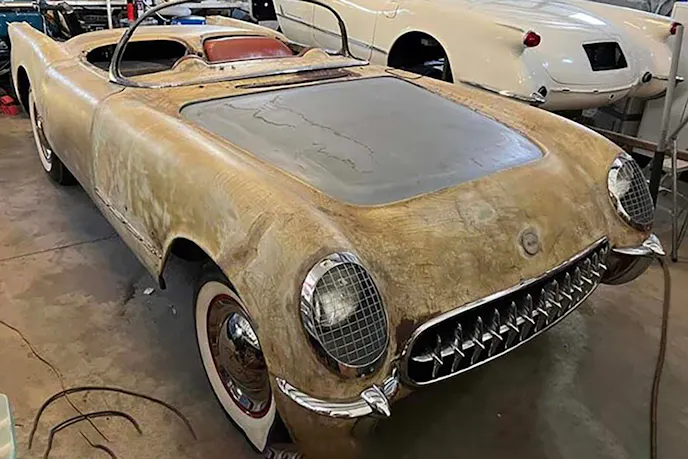
The recovery of Chassis 001 is a masterclass in persistence. Corvette historian Corey Petersen didn't find the car in a prestigious museum or at a high-end auction. He found it through a tip that led him to a small restoration shop where the car had been sitting, largely unrecognized, for years.
The car had an unpaid service bill and a confused identity. To the casual observer, it looked like a modified, somewhat beat-up 1953 Corvette. But to an expert eye, the anomalies were shouting. Petersen noticed features that shouldn't have been there—experimental welds, unusual fiberglass thickness, and components that predated the standard production line.
Where is the first Corvette today? The car is currently owned by Corvette historian Corey Petersen. After years of verification, it is undergoing a meticulous restoration to return it to its 1953 experimental configuration, ensuring that the foundational piece of Corvette history is preserved for future generations.
Proving the Pedigree: 22 Unique Modifications
Identifying a car that was never meant for the public requires a forensic audit. When Petersen and his team stripped back the layers of paint and subsequent repairs, they found a total of 22 documented experimental variations that distinguish Engineering Number 3950 from the other 299 Corvettes built in 1953.
Why is 1953 Corvette Chassis 001 unique? Unlike standard production models, Chassis 001 (Number 3950) featured 22 unique engineering modifications, including a recessed floor with trapdoors for testing and experimental fuel filler guards.
Comparison: Production 1953 vs. Engineering 3950
| Feature | Standard 1953 Production | Engineering Number 3950 |
|---|---|---|
| Floor Plan | Flat fiberglass floor | Recessed floor with experimental trapdoors |
| Fuel Filler | Standard 1953 exterior flap | Prototype 1954-style fuel filler guard |
| Chassis Stamp | Standard production VIN sequence | Internal "3950" engineering stampings |
| Fiberglass Layup | Semi-standardized thickness | Variable, hand-laid "experimental" thickness |
| Internal Brackets | Mass-produced steel brackets | Hand-fabricated, one-off test brackets |
The most compelling piece of evidence was the "trapdoor" system in the floor. These were designed to allow engineers to observe the chassis and suspension in motion during road tests—a feature that would never be included in a consumer vehicle.
The Future of Chassis 001
The discovery of Engineering Number 3950 has sent shockwaves through the NCRS and the wider automotive community. It effectively moves the "start date" of the Corvette's physical history back by months.
Corey Petersen’s restoration philosophy is one of extreme accuracy. He isn't aiming to make the car look like a shiny, perfect 1953 Corvette that you might see on a Concours lawn. Instead, he is returning it to its experimental configuration. This means preserving the "flaws," the hand-welded brackets, and the prototype components that make it the true ancestor of every Corvette that has followed since.
This find serves as a reminder that the world of automotive exploration is never truly finished. Somewhere in a dusty workshop or a mislabeled storage unit, the next "ghost" is waiting to be found.
Frequently Asked Questions
Is the first Corvette ever made for sale? Currently, Chassis 001 is not on the open market. It is part of Corey Petersen's private collection and is undergoing a multi-year historical restoration. Given its significance, its value is essentially "priceless," likely reaching deep into the seven-figure range if it were ever auctioned.
How do we know for sure it’s Chassis 001? The identification was confirmed through a combination of GM's archival engineering records, physical "3950" stamps found on the car, and the presence of 22 specific engineering modifications that were only documented in internal GM test bed reports.
What happened to VIN 001? While Engineering Number 3950 is the first physical chassis, VIN 001 (the first car designated for potential production) has its own complex history. For a long time, the two were confused, but historians now distinguish between the engineering test bed (3950) and the production-sequence cars.
Are you a fan of classic automotive history?
Stay updated on the restoration progress of Chassis 001 and other rare finds by subscribing to our regional deep-dives.