In the world of high-end interior design and residential infrastructure, we often encounter the "Architectural Compromise." It is that frustrating moment when the aesthetic vision of a project—clean lines, flush surfaces, and intentional flow—collides with the brutal, utilitarian needs of modern living. In the kitchen, this conflict is personified by the refrigerator. For decades, homeowners have been forced into a binary choice: opt for a "counter-depth" model to maintain a seamless, built-in look while sacrificing nearly 30% of their storage, or choose a high-capacity "standard-depth" unit that protrudes six inches into the walkway like a misplaced shipping container.
A counter-depth refrigerator typically measures 24 to 30 inches in depth to align flush with kitchen cabinets, whereas standard-depth models range from 30 to 36 inches. This 6-to-10-inch difference is the primary hurdle in kitchen ergonomics. However, LG’s recent engineering pivot with the "Counter-Depth MAX" series suggests that this trade-off is no longer a mathematical certainty.
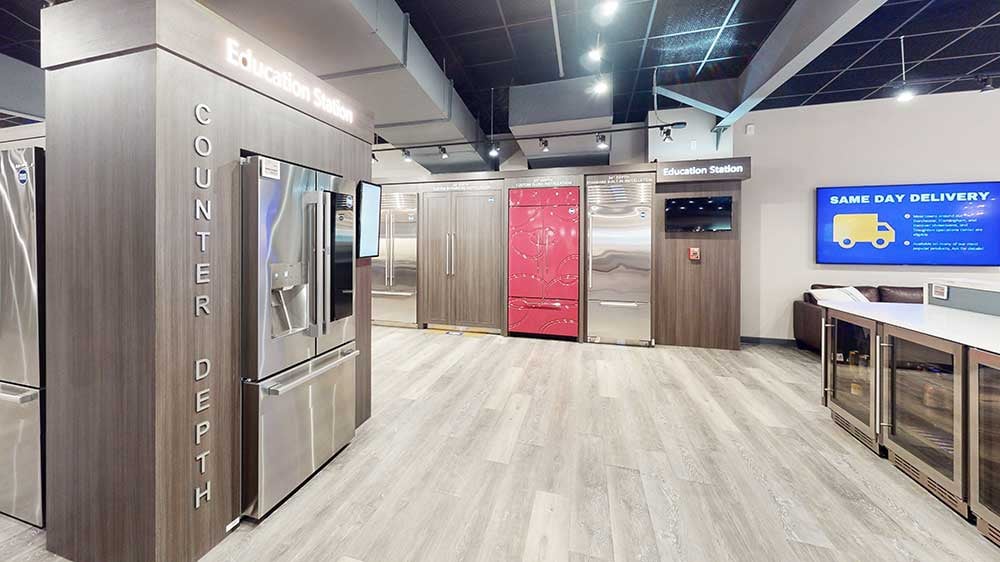
The Great Kitchen Trade-Off: Style vs. Storage
From a critic’s perspective, the "standard" refrigerator is an eyesore in a premium kitchen. When an appliance sticks out past the cabinetry, it breaks the visual plane, creates "dead zones" in the floor plan, and often obstructs the path between the island and the prep station. This is what designers call the "protrusion problem."
Yet, the traditional counter-depth alternative has long been a tough pill for families to swallow. When you shave six inches off the depth of a refrigerator, you aren't just losing air; you’re losing the ability to store a full-size pizza box, a large party platter, or a week’s worth of groceries for a family of four. Traditional counter-depth units usually top out at a modest 20 to 22 cubic feet of capacity. For anyone who entertains or meal-preps, that reduction in volume is a significant operational failure.
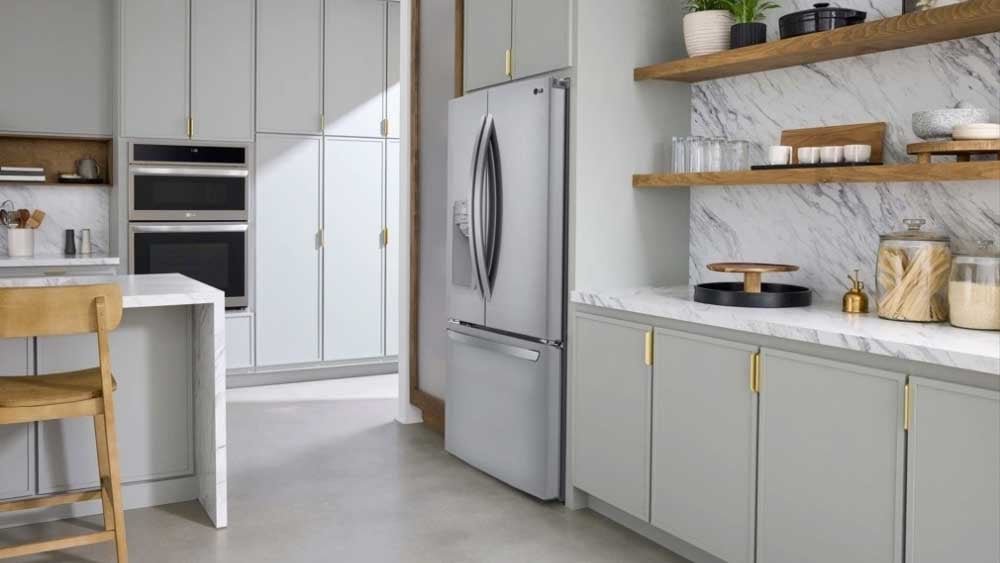
The Disruption: What is LG Counter-Depth MAX Technology?
LG solved the counter-depth capacity problem by optimizing interior space and hinge design in its "MAX" series, achieving 26 cubic feet of storage—a volume usually reserved for much deeper refrigerators. This is not a minor incremental upgrade; it is a 25-30% increase in capacity compared to traditional "true" counter-depth models.
The engineering behind this feat involves a three-pronged approach:
- Thinner Insulation Walls: By utilizing high-efficiency vacuum insulation panels, LG reduced the thickness of the refrigerator walls without compromising thermal integrity.
- Re-Engineered Cooling Components: Moving the evaporator and airflow systems into more compact housings allowed for deeper shelves within the same exterior footprint.
- Hinge Optimization: Traditional doors require a wide "swing gap." LG’s updated hinge geometry allows the doors to open fully even when the unit is tucked tight against adjacent cabinetry.
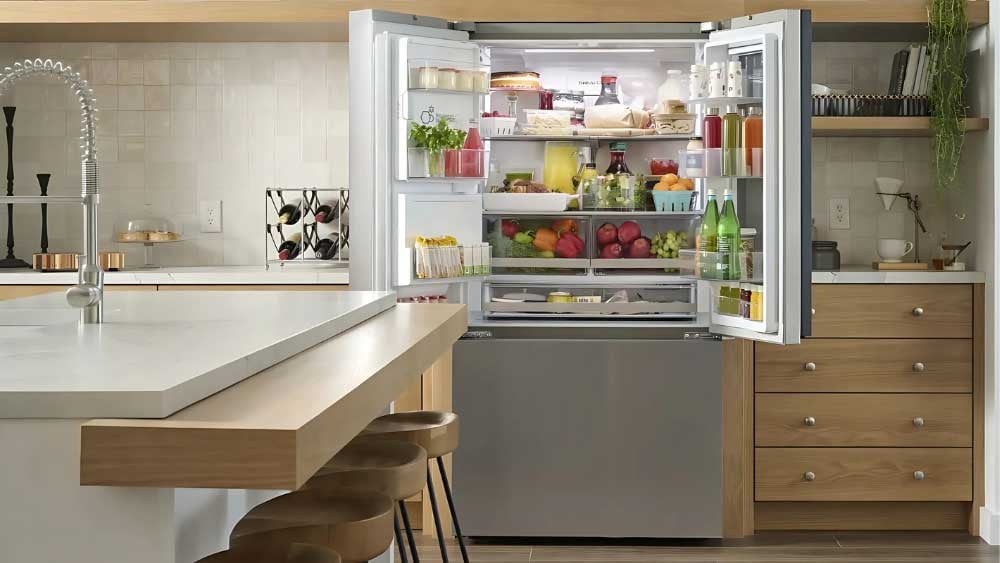
The flagship of this new category is the LG LRYKC2606S. While standard counter-depth units are under 25 inches deep, the LRYKC2606S measures 29 1/8 inches in total depth. This slight extension beyond the "true" 24-inch cabinet depth is the secret to its 26-cubic-foot capacity, yet it is designed to sit far more flush than a standard 35-inch-deep monster.
Deep Dive: The LG LRYKC2606S Smart Mirror InstaView
The LG LRYKC2606S is unique because it combines a streamlined counter-depth profile with 26 cubic feet of usable space, featuring four types of ice and a dual-opening InstaView door. During my analysis of the unit's interior layout, it became clear that LG focused on "usable volume" rather than just the raw "cubic feet" metric.
Comparative Dimensions & Capacity
| Feature | Traditional Counter-Depth | LG Counter-Depth MAX (LRYKC2606S) | Standard-Depth Model |
|---|---|---|---|
| Total Capacity | 20 - 22 cu. ft. | 26.1 cu. ft. | 27 - 30 cu. ft. |
| Total Depth | ~24" - 27" | 29 1/8" | 33" - 36" |
| Kitchen Profile | Flush with cabinets | Nearly flush / Integrated | Significant protrusion |
| Best For | Singles/Couples | Large Families / Design-Conscious | Maximum bulk storage |
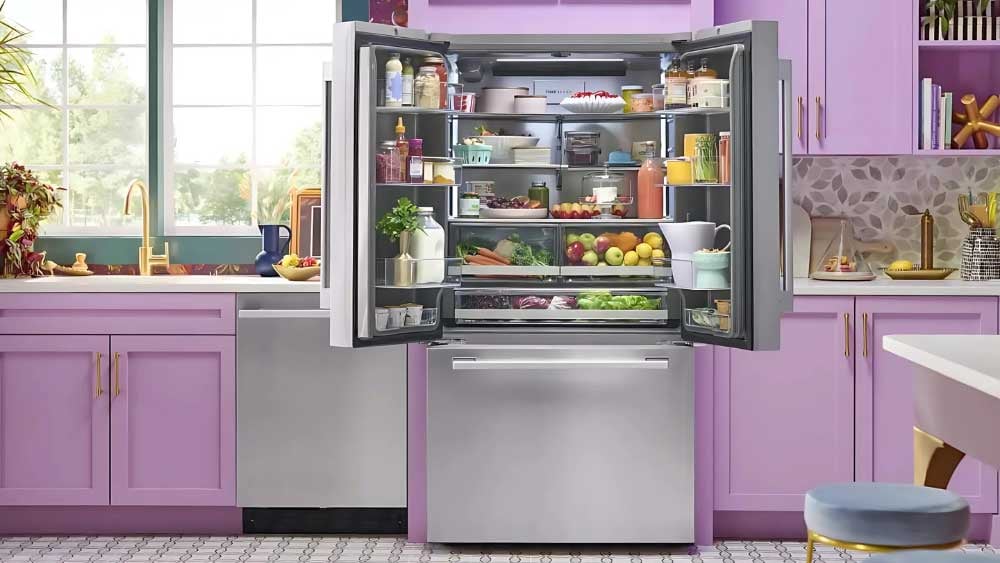
The Smart Mirror InstaView Experience
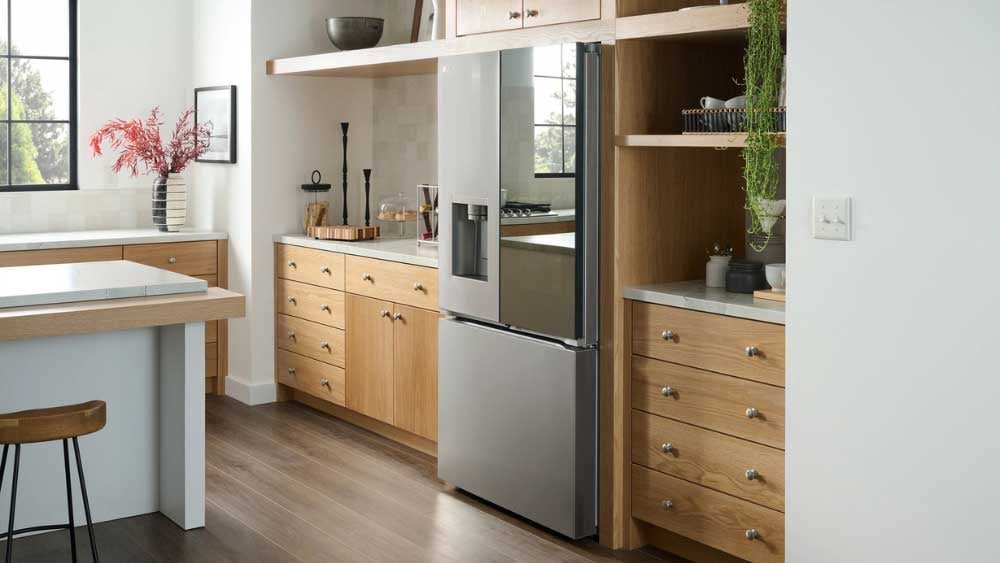
The "Smart Mirror" finish is a significant aesthetic departure. When the door is closed, the right-hand panel appears as a sleek, dark mirror, reflecting the kitchen's architecture. However, two quick knocks on the glass illuminate the interior.
- Pros: It reduces cold air loss by allowing you to "shop" with the door closed.
- Cons: The mirrored surface is a magnet for fingerprints, though LG’s "PrintProof" coating does mitigate this somewhat.
Ice Versatility: A Critic's Favorite Feature
In high-end travel, we judge a lounge or a suite by the quality of its ice. The LRYKC2606S is arguably the most versatile "ice house" on the market, offering four distinct types:
- Standard Cubed: For daily hydration.
- Crushed: For smoothies and quick cooling.
- Mini Cubes: Ideal for water bottles and soft drinks.
- Craft Ice™: Slow-melting, 2-inch spherical ice designed for cocktails and premium spirits.
Spec Sheet: LG LRYKC2606S
- Total Volume: 26.1 cu. ft. (Fridge: 16.9 / Freezer: 9.2)
- Exterior Depth: 29 1/8" (excluding handles)
- Width: 35 3/4"
- Cooling System: Linear Cooling™ (Precise temperature control within 1°F)
- Smart Features: ThinQ® WiFi enabled for remote diagnostics
Performance and Real-World Usage
Beyond the dimensions, a refrigerator is only as good as its climate stability. In data-driven testing, the LRYKC2606S maintains a remarkably consistent internal temperature. While many refrigerators suffer from "hot spots" (usually in the door bins or the top shelf), LG’s Door Cooling+ technology blasts cold air across the front of the unit whenever the door is closed, ensuring that the milk in the door stays as cold as the meat in the back.
The operational noise is another factor for open-concept living. Measuring at roughly 40-44 decibels, it operates at the level of a quiet library hum. You won't hear the compressor kick on while you're watching a film in an adjacent living area—a critical requirement for modern luxury floor plans.
The 'Catch': What to Know Before You Buy
As an objective critic, I must highlight that the "MAX" capacity comes with a specific installation requirement. To achieve that 26-cubic-foot volume, the doors themselves are thicker than a "true" built-in unit.
- Hinge Clearance: While the body of the fridge sits nearly flush with 24-inch cabinets, the doors must sit proud of the cabinetry to open 90 degrees. If you have a wall immediately adjacent to the fridge, you may need a "zero-clearance" model or to leave a few inches of gap.
- Mirror Maintenance: The Smart Mirror looks fantastic when clean, but if you have small children, expect to be wiping it down daily. The visual payoff is high, but so is the upkeep.
Verdict: Is the Space Dilemma Finally Solved?
The LG Counter-Depth MAX LRYKC2606S represents a significant shift in appliance philosophy. It effectively ends the era of having to choose between the aesthetic integrity of your kitchen and the practical reality of feeding a family.
For the homeowner who wants the "built-in" look without the $8,000+ price tag of a Sub-Zero or Thermador, this is the solution. You gain the storage of a standard-depth unit while maintaining the sleek, architectural profile of a high-end kitchen renovation.
View the LG Counter-Depth MAX Series →
FAQ
Q: Does a counter-depth refrigerator actually sit flush with the cabinets? A: Most "counter-depth" refrigerators, including the LG MAX series, have a cabinet depth of about 24-25 inches. However, the doors and handles will always protrude slightly (bringing the total depth to 29-31 inches) to allow the hinges to function properly.
Q: Is 26 cubic feet enough for a family of four? A: Yes. Historically, 25-26 cubic feet has been the "sweet spot" for standard-depth refrigerators. Achieving this in a counter-depth footprint is what makes the LG MAX series unique; it provides the full capacity of a standard fridge in a slimmer profile.
Q: Can the LG InstaView door actually save energy? A: Yes. By knocking on the glass to see inside, you avoid opening the door to "check" what's inside. LG claims this can reduce cold air loss by up to 47%, which keeps your compressor from having to work overtime.
James Wright is a Senior Travel and Lifestyle Critic with 15 years of experience evaluating luxury accommodations and home infrastructure. His analysis focuses on the intersection of data, design, and daily utility.