For decades, the standard end-of-life protocol for a decommissioned Navy vessel was a one-way trip to the scrapyard—a noisy, industrial process of dismantling history for its weight in steel. But along the coastlines of the United States, a more poetic and ecologically profound alternative is gaining momentum. Beneath the turquoise surface of the Atlantic and the Gulf of Mexico, former instruments of war are undergoing a remarkable metamorphosis. They are no longer patrolling for threats; they are harboring life.
The transformation of a decommissioned Navy ship into an artificial reef is a complex feat of engineering, environmental science, and bureaucratic persistence. At its core, the process involves stripping a vessel of every potential contaminant—motors, fluids, and hazardous materials—before intentionally sinking it to the seafloor. Once submerged, these steel behemoths serve as the foundation for new, environmentally sound underwater habitats. They act as natural reef mimics, providing essential shelter for migrating fish and a substrate for coral and sponge growth, sustaining local marine ecosystems for at least 25 years.
The Saga of the HAZAR: From Abandoned Eyesore to Ecosystem
The journey from a "derelict hazard" to a "marine sanctuary" is perhaps best exemplified by the story of the TWR-8419, better known as the HAZAR. A 120-foot former Navy torpedo retriever, the HAZAR’s story began not with a grand environmental vision, but with a legal nightmare.
In 2021, the vessel was sold at a federal auction for $81,600. However, instead of being maintained or scrapped, the ship was eventually abandoned in the marshes of Bohicket Creek, South Carolina. For months, it sat as a rusting eyesore, a ghost ship threatening the fragile marshland ecosystem and drawing the ire of local residents and environmental agencies. The legal battle to remove the vessel was arduous, but it sparked a creative solution: rather than paying for a costly land-based disposal, why not turn the problem into a resource?
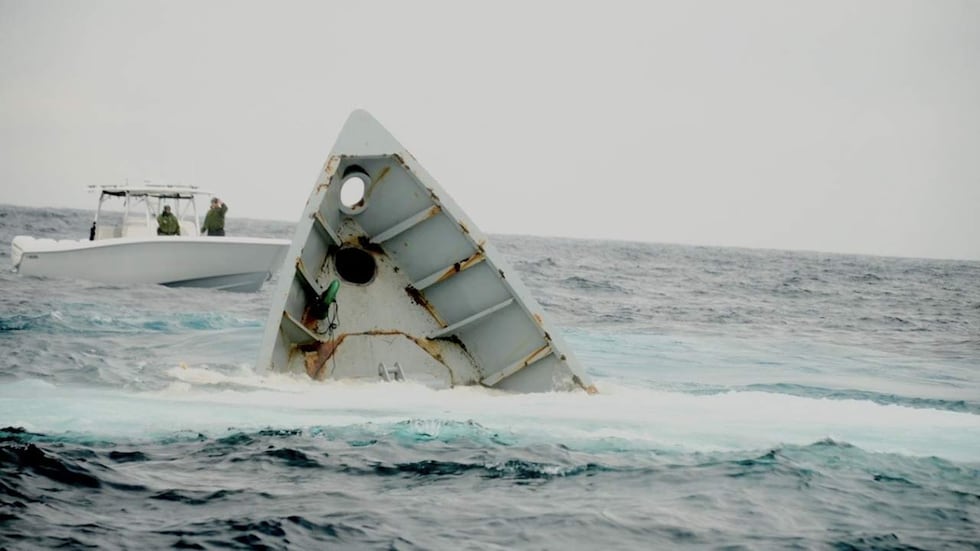
The HAZAR was eventually seized, towed, and prepared for its final mission. In a collaborative effort between state authorities and marine biologists, the ship was scuttled to become South Carolina’s 612th artificial reef. Located roughly 32 miles offshore, the HAZAR now rests in silence, providing a massive structure for snapper, grouper, and amberjack to congregate. The transformation was nearly instantaneous; shortly after the vessel hit the sandy bottom, observers reported spotted dolphins patrolling the site, marking the arrival of the first of many generations of marine life.
The Rigorous Stripping Process: Making a Ship ‘Environmentally Sound’
The most common misconception about artificial reefs is that you can simply "sink a ship." In reality, sinking a vessel without preparation is an act of pollution. To meet the Environmental Protection Agency’s (EPA) "Best Management Practices," a ship must undergo a meticulous "purgatory" in dry dock.
The goal is to ensure the vessel is chemically inert before it touches the seafloor. This means removing all "floatables"—anything that might break loose and wash up on a beach—and every drop of liquid that isn't water. Workers strip out engines, hydraulic lines, and fuel tanks. The most grueling work involves the removal of Polychlorinated Biphenyls (PCBs), once common in gaskets and electrical insulation, and the encapsulation of asbestos.
To help visualize the scale of this preparation, consider the following "Cleaning Checklist" that all reef candidates must satisfy:
| Category | Requirement | Technical Action |
|---|---|---|
| Petroleum/Oil | No visible sheen | Tanks are pressure-washed; bilges are pumped and scrubbed until bone-dry. |
| PCBs | Removal of solids ≥ 50 ppm | All cabling, gaskets, and felt insulation are removed to prevent bioaccumulation. |
| Asbestos | Containment & Safety | Loose asbestos is removed; stable asbestos is sealed to prevent fiber release during sinking. |
| Floatables | Zero buoyancy debris | Wood, plastic, furniture, and loose insulation are completely gutted from the hull. |
| Structural Integrity | Dive Safety | Large holes are cut into the hull and decks to allow divers to exit and to prevent dangerous air pockets. |
Once the EPA issues its clearance, the ship is towed to its designated coordinates. Engineers then use "scuttling charges" or flood valves to allow water into the hull. It is a cinematic moment—the final breath of a ship as it slips beneath the waves, bow or stern first, to meet the sand.
Ecological Impact: 25 Years of Life Support
Why do we go to such lengths? The answer lies in the "vertical relief" these ships provide. Most of the seafloor off the Atlantic coast is relatively flat and sandy—a biological desert for many species. A 100-foot-tall ship creates an immediate skyscraper of activity in this desert.
As currents hit the massive hull, they are forced upward, bringing nutrient-rich water from the bottom toward the surface. This "upwelling" jumpstarts the food chain. Plankton thrive, attracting baitfish, which in turn attract apex predators like sharks and barracuda. For migrating species, these ships act as essential "rest stops" along their journey.
The durability of Navy steel is a primary benefit. While smaller concrete structures or "reef balls" can be shifted by hurricanes, a massive Navy hull is designed to withstand the immense pressure of the ocean. Research indicates these structures remain biologically productive for a minimum of 25 years, though many of the heavier cruisers and carriers are expected to support life for a century or more.
The Economic Side of Reefing: Investment and Tourism
The transition from warship to reef is not merely an ecological win; it is an economic powerhouse for coastal communities. However, the price of admission is steep. The cost of reefing a vessel is dictated by its size and the complexity of its hazardous material removal.
- Ex-USS Spiegel Grove (LSD-32): Sunk off Key Largo in 2002, the project cost approximately $1.3 million.
- Ex-USS Oriskany (CV-34): The "Great Carrier Reef" off Pensacola cost a staggering $15.63 million due to its massive size and the extensive PCB remediation required.
- TWR-8419 (HAZAR): A more modest project, yet it required significant state funding to rectify the abandonment issues.
Despite these upfront costs, the return on investment (ROI) is staggering. Recreational diving and fishing are multi-billion dollar industries. A single high-profile wreck like the Oriskany can generate millions of dollars in annual tourism revenue for local hotels, dive shops, and charter boats. Divers from around the world flock to these sites to explore the eerie, silent corridors of naval history now draped in soft corals and sea fans.
To maximize these benefits, ships are often sunk at specific depths. While some are placed deep for technical divers (180+ feet), many are scuttled so their highest point is within 50 to 60 feet of the surface, making them accessible to recreational divers and increasing the site's economic footprint.
Future Giants: The SS United States and Beyond
The horizon for artificial reefs is expanding. Currently, the most ambitious project in the works involves the SS United States, a nearly 1,000-foot-long ocean liner that once held the Blue Riband for the fastest Atlantic crossing.
Okaloosa County, Florida, has entered into a $10.1 million partnership to acquire and reef the vessel. For many, this is a bittersweet conclusion. Preservationists often fight to keep these ships afloat as museums, but when the cost of maintenance becomes untenable, the alternative is usually the scrapyard. In the eyes of many maritime historians, "reefing" is the ultimate form of preservation. It keeps the ship's soul intact, allowing it to serve a new, peaceful purpose rather than being melted down into rebar.
Learn More About EPA Reefing Guidelines →
FAQ
Q: Are these ships harmful to the ocean? A: Not when prepared correctly. The EPA's Best Management Practices are designed to ensure that all toxic materials are removed. Once cleaned, the steel hull is essentially a giant rock that provides a surface for coral and sponges to grow.
Q: How long does it take for life to move into a new reef? A: Surprisingly fast. Small fish and opportunistic predators often arrive within hours of the sinking. Within a year, the hull is usually covered in a "bio-film" of algae and small invertebrates, which forms the basis for a mature reef ecosystem within 3 to 5 years.
Q: Can anyone sink a ship to make a reef? A: No. It is a highly regulated process requiring permits from the U.S. Army Corps of Engineers, the EPA, and state wildlife agencies. Unauthorized sinking is considered illegal dumping and carries heavy fines.
Conclusion
The transformation of decommissioned Navy ships into ocean reefs represents a rare "win-win" in environmental policy. It honors the naval legacy of these vessels by giving them a permanent home on the seabed, it creates a thriving sanctuary for marine biodiversity, and it fuels the economies of coastal towns. As we look to the future, these "steel forests" will continue to be a testament to human ingenuity—turning the relics of our past into the life-sustaining habitats of our future. For the HAZAR and the giants that follow, the final plunge is not the end of the story; it is simply the beginning of a new mission beneath the waves.