Quick Facts: The Levante Trofeo’s Maranello Heart
- Engine: 3.8-liter 90° V8, Twin-Turbocharged.
- Origin: Built by Ferrari in Maranello to Maserati specifications.
- Output: 590 hp (440 kW) and 730 Nm (538 lb-ft) of torque.
- Performance: 0-60 mph in 3.6 seconds; Top speed of 187+ mph.
- Engineering Milestone: 156 hp per liter—the highest power density ever for a Maserati engine.
- Drive System: Q4 Intelligent All-Wheel Drive with a mechanical limited-slip differential.
- Legacy Status: Production of the Ferrari-sourced V8 officially ended in late 2023.
A deep Italian growl cuts through the silence, announcing a heart built in Maranello. When the Maserati Levante Trofeo debuted at the 2018 New York International Auto Show, it wasn't just another luxury SUV entering a crowded market; it was a statement of engineering defiance. At its core lies a 3.8-liter twin-turbo V8 engine, a masterpiece assembled by Ferrari technicians that represents the pinnacle of the brand’s internal combustion era. While the "Ferrari-powered" label is a potent marketing tool, the reality of the Trofeo involves a much more complex story of reengineering and technical adaptation.
The Ferrari Heart in a Maserati Body
The Maserati Levante Trofeo is powered by a 3.8-liter twin-turbo V8 engine assembled by Ferrari in Maranello, producing 590 horsepower and 730 Nm of torque. This unit is the most powerful production engine in Maserati’s history (until the arrival of the MC20’s Nettuno V6), but it is not a direct "off-the-shelf" transplant from a Ferrari 488 or even a Maserati Quattroporte GTS.

To understand the Trofeo, one must understand its genesis. The project began as a "Skunkworks" initiative in Modena. Engineers wanted to see how far the Levante platform could be pushed. They took the 3.8L V8 from the rear-wheel-drive Quattroporte GTS and set a goal: more power, more torque, and, most importantly, the ability to deliver that power through an all-wheel-drive system. This wasn't a matter of simply turning up the boost; it required a fundamental rethink of the engine's physical architecture.
The Engineering Challenge: Adapting V8 Power for Q4 AWD
The primary hurdle in developing the Levante Trofeo was the Q4 all-wheel-drive system. In the Quattroporte GTS, the V8 sits in a traditional rear-wheel-drive configuration. However, the Levante requires a front driveshaft to pass from the rear-mounted transfer case to the front wheels.
Maserati reengineered the Ferrari V8 for the Levante Trofeo by redesigning the crankcase, crankshaft, and oil pump to make space for the Q4 all-wheel-drive system's front driveshaft. This was a massive undertaking that involved:
- Crankcase Redesign: The lower part of the engine block had to be reshaped to allow the driveshaft to pass through, a feat that required balancing structural integrity with spatial constraints.
- Modified Oil Pump and Sump: To maintain consistent lubrication under the high lateral G-forces an SUV can generate, and to accommodate the new crankcase shape, the lubrication system was entirely overhauled.
- New Crankshaft Assembly: The rotating assembly was refined to handle the increased torque loads and the specific vibration harmonics of the AWD layout.

These changes were tested in extreme conditions over two years. From the frozen tracks of Lapland to the scorching deserts of Morocco, prototypes covered millions of kilometers to ensure the Maranello-built heart could survive the rigors of an SUV chassis.
Technical Deep Dive: More Than Just a Tune
The performance leap from the 523 hp of the Quattroporte GTS to the 590 hp of the Levante Trofeo came down to a comprehensive hardware upgrade. The Levante Trofeo features specific engine components including new parallel twin-scroll turbochargers, redesigned cylinder heads, camshafts, and pistons to achieve its high-performance output.
| Technical Specification | Maserati Levante Trofeo |
|---|---|
| Engine Architecture | 90° V8, Twin-Turbocharged |
| Displacement | 3,799 cc |
| Max Power | 590 hp @ 6,250 rpm |
| Max Torque | 730 Nm @ 2,500 – 5,000 rpm |
| Power Density | 156 hp / Liter |
| Compression Ratio | 9.48:1 |
| Turbochargers | Two Parallel Twin-Scroll |
The "high-tumble" cylinder heads are perhaps the most critical update. They were redesigned to improve the air-fuel mixture flow into the combustion chamber, allowing for more efficient combustion and higher power ceiling. When paired with the new twin-scroll turbos—one for each cylinder bank—the result is a power density of 156 hp per liter. This is the highest ratio ever for a Maserati power unit, placing it in the upper echelon of internal combustion engineering.
To manage the heat generated by this 590-hp furnace, Maserati engineers also revamped the cooling system. If you look closely at the Trofeo’s hood, the twin heat extractors aren't just for show; they are functional vents that pull hot air away from the turbochargers, while the front fascia features larger air intakes to feed the intercoolers.
Performance Reality: Speed and Handling Dynamics
On the road, the engineering translates into figures that defy the Levante’s 4,784-lb curb weight. Independent testing confirms the Maserati Levante Trofeo accelerates from 0-60 mph in 3.6 seconds and clears a quarter-mile in 12 seconds at 117 mph.
"The Trofeo doesn't just accelerate; it lunges. There is a visceral, mechanical connection between the throttle and the tarmac that many modern turbocharged SUVs have lost in favor of digital isolation." — James Wright, Senior Travel Critic
Beyond straight-line speed, the Trofeo introduced the Corsa (Race) Driving Mode. When engaged, the vehicle undergoes a transformation:
- Chassis: The air suspension automatically drops to the "Aero 2" level, the lowest possible setting.
- Damping: The Skyhook system stiffens to eliminate body roll.
- Power Delivery: Throttle response becomes hair-trigger, and the exhaust valves open fully to let the Ferrari V8 sing.
- IVC (Integrated Vehicle Control): Unlike standard ESP, which reacts after a slip is detected, IVC predicts instability and adjusts engine torque and braking to prevent it, maintaining momentum through corners.

The Trofeo Experience: Luxury Meets Capability
While the engine is the star, the Levante Trofeo remains a Maserati, which necessitates a certain level of grand-touring opulence. The interior is a masterclass in Italian craftsmanship, featuring 'Pieno Fiore' full-grain natural leather. This leather is processed differently than standard automotive hides; it is tanned to remain soft and develop a unique patina over time, rather than being coated in heavy protective plastics.
The cabin is accented with 3D matte carbon fiber trim, which has a tactile, woven texture that feels more "motorsport" than the glossy "plastic-like" carbon found in competitors. For the audiophiles, the Trofeo comes standard with a 1,280-watt, 17-speaker Bowers & Wilkins surround sound system, though one might argue the best soundtrack is found by downshifting in a tunnel.
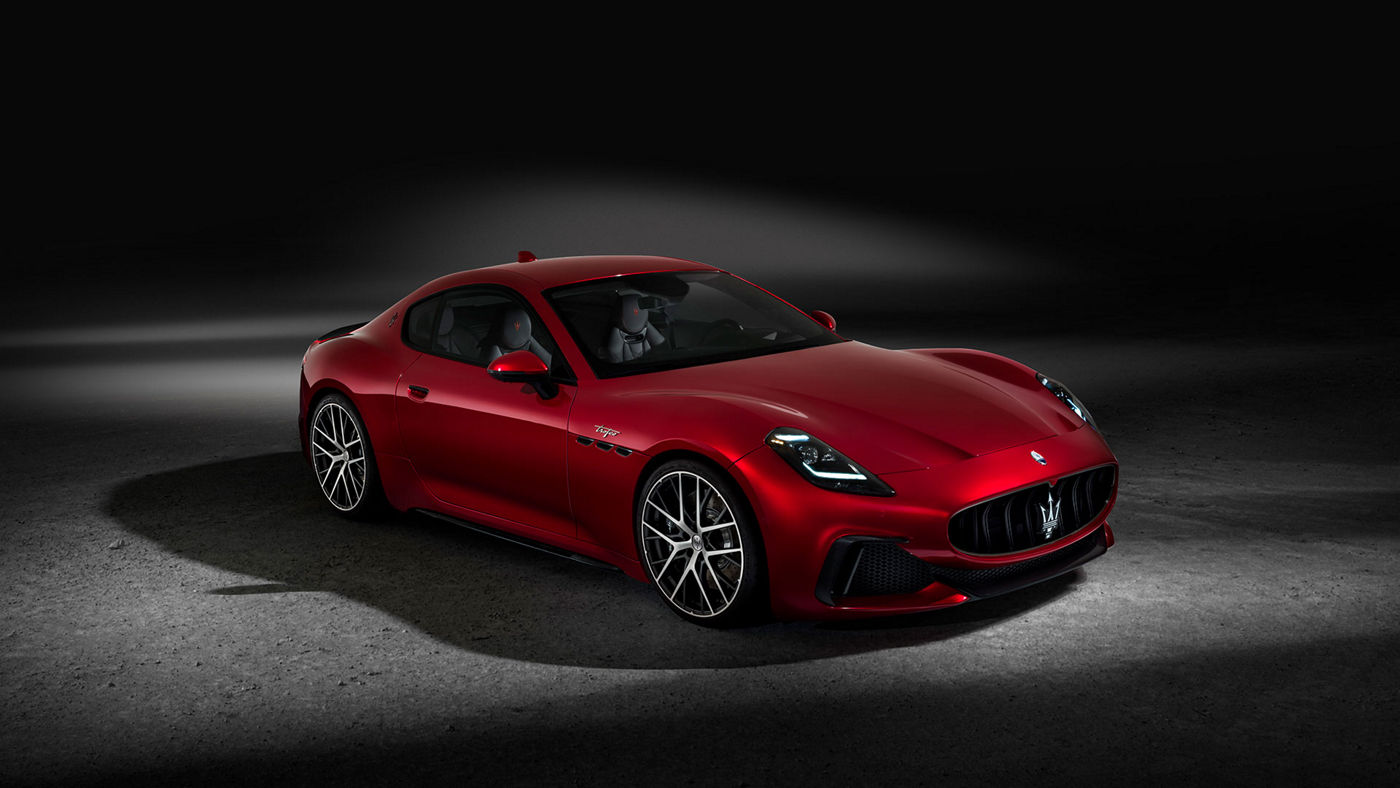
Externally, the Trofeo is distinguished by its 22-inch Orione forged aluminum wheels—the largest ever fitted to a Maserati—and carbon fiber aerodynamic splitters that provide genuine downforce at triple-digit speeds.
The End of an Era: Market Context and Legacy
The Maserati Levante Trofeo occupies a specific moment in automotive history. Production of the Ferrari-assembled V8 ceased in late 2023 as Maserati shifts its focus toward the "Folgore" electric range and the "Nettuno" V6 engine (which is a proprietary Maserati design).
For the collector or the enthusiast, the 2019–2024 Trofeo models represent the final chapter of the Maserati-Ferrari partnership. While Maserati depreciation is a well-documented phenomenon, the Trofeo’s rarity and its Maranello-stamped engine block may provide a stronger "value floor" compared to the standard V6 models.
The Levante Trofeo isn't just a fast SUV; it is a meticulously reengineered bridge between two of the most famous names in Italian motoring. It is a vehicle that took a high-strung Ferrari V8 and taught it how to handle the weight, the weather, and the four-wheel-drive demands of the modern world.
FAQ
1. Is the Levante Trofeo engine exactly the same as a Ferrari 488? No. While it shares the same 3.8L 90° V8 architecture and is built by Ferrari, the Levante engine features a different crankcase, oil system, and twin-scroll turbochargers specifically designed for an AWD SUV application. Ferrari's own versions often use a flat-plane crank, whereas the Maserati version uses a cross-plane crank for a smoother, more "gentlemanly" exhaust note.
2. How do I distinguish a Trofeo from a standard Levante GTS? The Trofeo features specific "Trofeo" badging on the C-pillars, functional hood vents, 22-inch Orione wheels, and more extensive use of carbon fiber on the front splitters and rear diffuser. Inside, the "Trofeo" logo is stitched into the headrests of the Pieno Fiore leather seats.
3. Is the Maserati Levante Trofeo reliable? The Ferrari-sourced V8 is a high-performance, precision-engineered unit. While the engine itself is robust, it requires meticulous maintenance. Buyers should look for full service histories, specifically regarding oil changes and cooling system inspections, as these are high-heat engines.
If you are considering adding this Italian masterpiece to your stable, now is the time to act before the final production units disappear from dealership floors.