Quick Facts
- Accuracy Benchmark: Research shows a 97-98% correlation with clinical DXA scans for body composition metrics.
- Core Technology: 3rd Generation BioActive sensor capturing 2,400 data points in 15 seconds.
- Metabolic Innovation: First-to-market AGEs Index tracking biological aging markers through skin autofluorescence.
- Regulatory Milestone: First FDA-authorized sleep apnea detection feature on a smartwatch.
- Key Metrics: Tracks body fat percentage, skeletal muscle mass, basal metabolic rate, and body water.
- Consistency Requirement: Best results are achieved when testing on an empty stomach with specific arm posture.
Samsung body composition technology uses a Bioelectrical Impedance Analysis (BIA) sensor to measure key health metrics like body fat percentage, skeletal muscle mass, and basal metabolic rate. The sensor sends a low-level electrical microcurrent through the body; since fat offers more resistance than muscle or water, the device can estimate body composition based on the signal's speed and impedance. This feature allows Galaxy Watch users to monitor metabolic health beyond simple weight or BMI tracking, using the samsung body composition explained guide to better understand their daily physiological trends.
Clinical Accuracy: Samsung Watch BIA vs DXA Scan
For years, the gold standard for measuring body fat and muscle mass has been the Dual-Energy X-ray Absorptiometry (DXA) scan. These machines are massive, expensive, and usually found only in hospitals or high-end sports labs. When Samsung introduced BIA to the wrist, many of us in the tech world were skeptical. However, independent research has largely validated the hardware.
The Bioelectrical Impedance Analysis (BIA) sensor on the Samsung Galaxy Watch demonstrates a 97-98% correlation with clinical gold-standard reference devices, such as DXA scans, for measuring body fat percentage and fat-free mass. This level of samsung watch body composition accuracy is impressive because it brings laboratory-level insights to a device that weighs less than 50 grams.
Traditional metrics like BMI (Body Mass Index) are fundamentally flawed because they cannot distinguish between muscle and fat. As a mobile device editor, I often see athletes who are labeled "overweight" by BMI standards because of their dense muscle mass. By comparing samsung galaxy watch BIA vs DXA scan outcomes, it becomes clear that the Galaxy Watch excels at identifying these nuances. Whether you are looking at galaxy watch 6 body composition accuracy or the improved samsung watch 7 body composition accuracy, the focus is on long-term trends rather than one-off snapshots.
Comparative Accuracy Table: BIA vs. DXA
| Feature | Galaxy Watch BIA Sensor | Clinical DXA Scan |
|---|---|---|
| Correlation | 98% with standard benchmarks | 100% (The Benchmark) |
| Time Required | 15 Seconds | 10-20 Minutes |
| Cost | One-time Watch Purchase | $100 - $300 per scan |
| Accessibility | Daily from your wrist | Requires clinic appointment |
| Data Points | 2,400 data points | Multi-layer X-ray imaging |
Feature 1: The BioActive Sensor & Body Composition
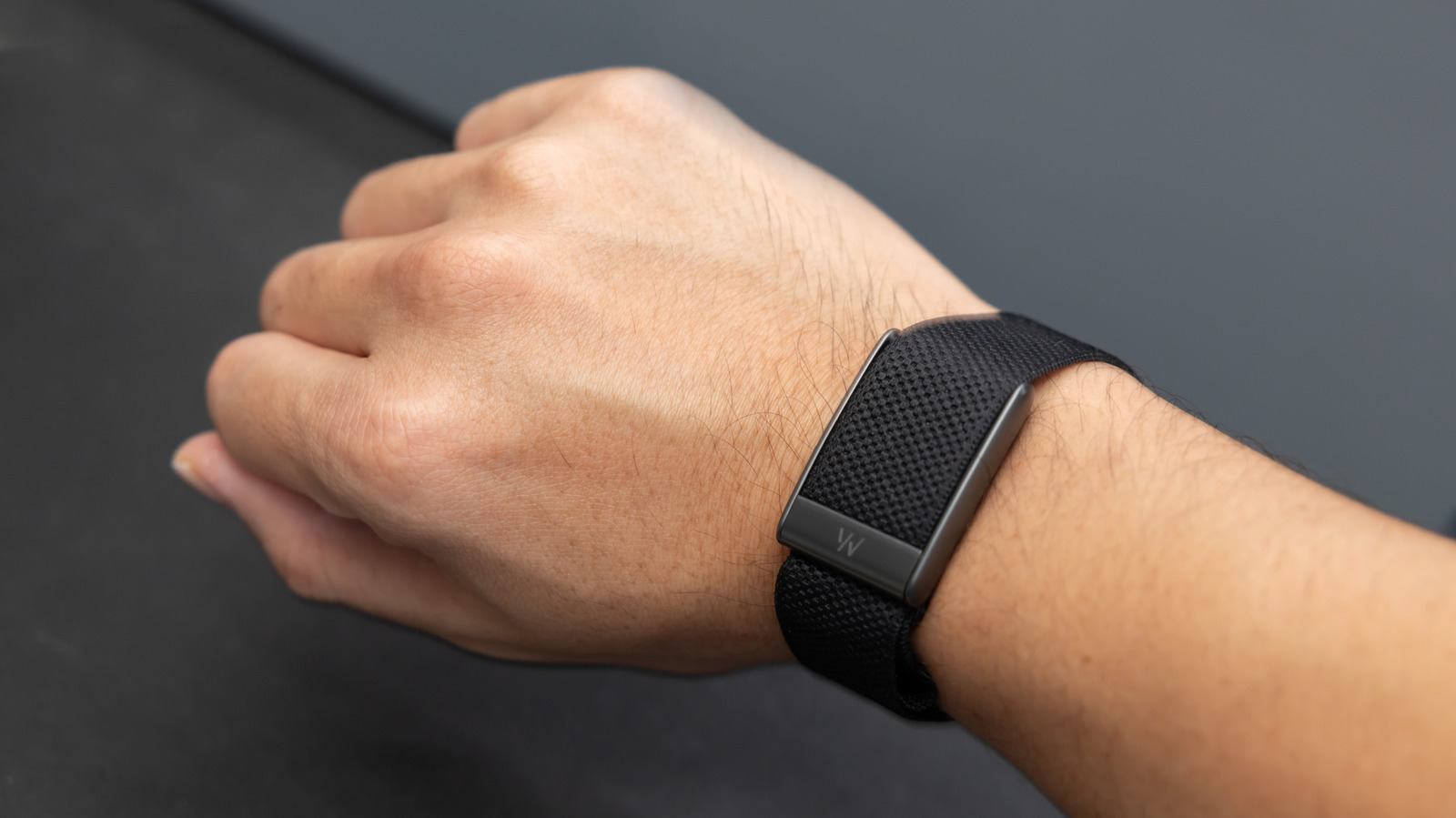
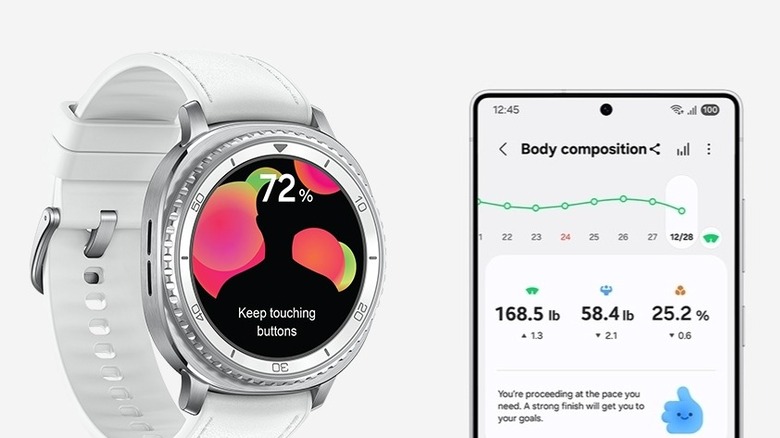
The heart of these health features is the BioActive sensor. This 3rd Gen array is a masterpiece of miniaturized engineering. It combines three powerful health sensors—Optical Heart Rate, Electrical Heart Signal, and Bioelectrical Impedance Analysis—into a single chip. When you perform a scan, you place your middle and ring fingers on the buttons, creating a closed loop for the microcurrent.
This tiny current travels through your body to calculate skeletal muscle mass and basal metabolic rate. Skeletal muscle mass is a critical metric for anyone interested in longevity, as maintaining muscle is one of the best defenses against metabolic decline as we age. Meanwhile, basal metabolic rate helps you understand how many calories your body burns at rest, which is essential for tailoring your nutrition.
Interpreting samsung health body composition results requires a shift in mindset. We often tell our readers to look at the trend line over a month rather than the daily fluctuation. Because bio-impedance technology is sensitive to water weight, your numbers might swing after a salty meal or a dehydrating flight. When comparing galaxy watch body composition vs smart scale results, the watch often provides a more integrated picture because it combines body composition with your activity levels and sleep data within the same ecosystem.
Feature 2: AGEs Index & Biological Aging
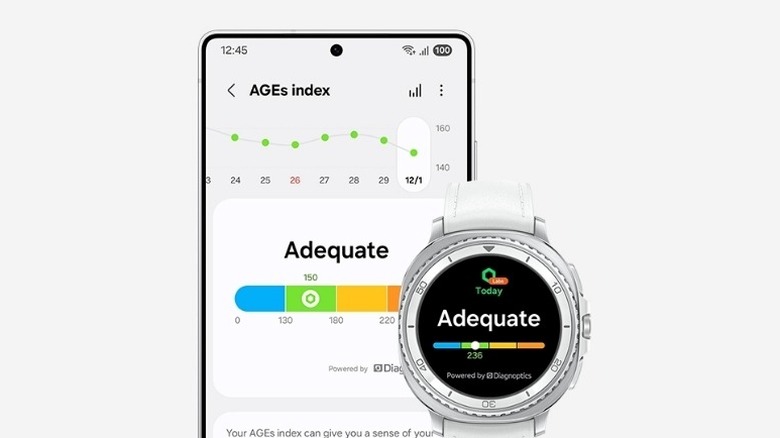
One of the most exciting additions to the latest models is the AGEs (Advanced Glycation End-products) Index. This is where Samsung currently leaves every other smartwatch manufacturer in the dust. The AGEs Index project acts as a galaxy watch ages index metabolic health guide, measuring how your lifestyle and diet affect your biological aging process.
AGEs are compounds that form when protein or fat combine with sugar in the bloodstream. They accumulate in your tissues as you age and are strongly influenced by your diet. The Galaxy Watch uses a new LED array—incorporating ultraviolet, yellow, and red light—to perform skin autofluorescence. This measures the glycation levels in your skin, giving you a score that reflects your metabolic health over the past several weeks.
This isn't just about weight; it is about the internal quality of your nutrition. If you spend two weeks eating highly processed, sugary foods, you will likely see your AGEs Index score move into a less favorable zone. It provides a unique window into biological aging process markers that were previously only available through specialized lab testing. By tracking these metabolic health markers, the watch helps you visualize the "hidden" cost of poor dietary habits before they manifest as chronic issues.
Feature 3: FDA-Authorized Sleep Apnea Detection
While body composition and metabolic tracking focus on the reflection of your diet and exercise, the Sleep Apnea detection feature focuses on a critical, often invisible, health risk. Samsung was the first company to receive U.S. Food and Drug Administration (FDA) De Novo authorization for a smartwatch-based sleep apnea detection feature.
This feature allows users over the age of 22 to identify signs of moderate to severe obstructive sleep apnea. It works by monitoring blood oxygen levels during sleep and looking for specific patterns of desaturation that indicate breathing interruptions. Unlike a one-night sleep study in a lab, which can be stressful and unrepresentative, the Galaxy Watch can monitor you over multiple nights to provide a more accurate picture of your respiratory health during rest.
For users wearing the Samsung Watch Ultra, the increased sensor sensitivity further aids in the accuracy of these readings. The samsung watch ultra body composition accuracy remains a benchmark for the series, but its ability to pair that data with sleep apnea detection makes it a comprehensive wellness tool. When you combine nutrition monitoring via the AGEs index with respiratory monitoring via sleep apnea detection, you get a 360-degree view of your health that no other wearable platform currently matches with FDA-cleared authority.
Pro Tips: How to Improve Samsung Watch Accuracy
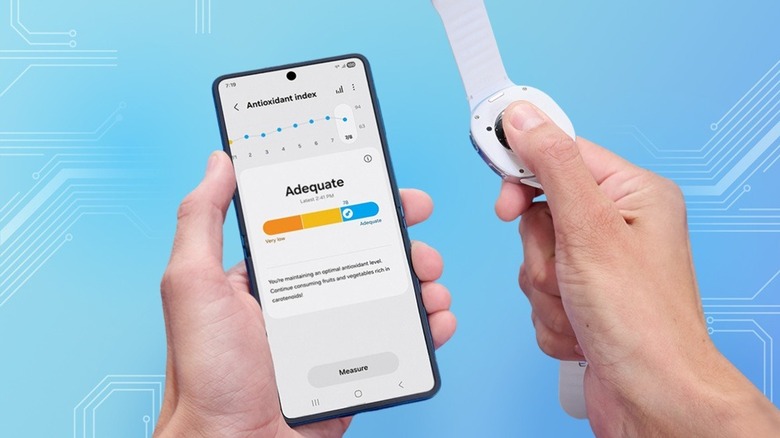
To get the most out of your BioActive sensor and ensure your wearable wellness data is as precise as possible, we recommend following a strict measurement protocol. Consistency is more important than the absolute number on any given day.
- Time of Day: Always take your measurement first thing in the morning.
- Fasting: Perform the scan on an empty stomach, before eating or drinking coffee.
- Hydration: Be well-hydrated from the day before, but avoid taking the scan immediately after chugging water, as this can confuse the bio-impedance technology.
- Avoid Exercise: Do not measure right after a workout. Increased blood flow to the muscles and sweat on the skin will skew your body fat percentage results.
- Bathroom Use: Use the bathroom before measuring to ensure excess bladder volume doesn't interfere with the microcurrent.
- The "Elevated" Posture: During the scan, keep your arms elevated away from your torso. This prevents "current leakage" where the microcurrent takes a shortcut through your armpits instead of traveling through your entire upper body. This helps mitigate the traditional upper-body bias of wrist-based BIA sensors.
By refining how to improve samsung watch body composition accuracy through these habits, you move from "guessing" to "tracking." This data should be treated as a behavioral tool—if you see your skeletal muscle mass increasing over three months, your training program is working, regardless of what the bathroom scale says.
FAQ
Is Samsung Health accurate for body composition?
Samsung Health is highly accurate for a consumer wearable, showing a 97-98% correlation with clinical DXA scans. While it may not replace a medical-grade diagnostic tool for a one-time absolute value, it is incredibly reliable for tracking health trends and behavioral progress over time. Factors like hydration and skin temperature can cause slight daily variances.
How to read Samsung body composition?
After completing a scan, the Samsung Health app provides a breakdown of several metrics. Focus on skeletal muscle mass to track strength gains and body fat percentage to track metabolic health. The basal metabolic rate (BMR) tells you your baseline calorie burn. Look for the "Target" feature in the app to set goals and see if your current trend line is moving toward them.
What should my body composition be?
Ideal body composition varies significantly based on age, sex, and athletic goals. Generally, for men, a healthy body fat range is 10-20%, while for women, it is 18-28%. However, "ideal" is subjective; someone focusing on longevity may prioritize higher skeletal muscle mass over a specific fat percentage. Consult the charts within the Samsung Health app, which are calibrated to your demographic data.
What should my muscle percentage be for my age?
Muscle mass naturally tends to decline as we age (a process called sarcopenia). For men under 40, a skeletal muscle mass of 40-50% of total body weight is often considered excellent. For women in the same age group, 30-40% is a strong benchmark. As you cross into your 50s and 60s, maintaining these percentages becomes a key indicator of metabolic resilience and mobility.
What does 20% body fat really look like?
At 20% body fat, a man will typically look lean with some muscle definition visible, particularly in the arms and shoulders, but without a "six-pack" of abs. For a woman, 20% body fat is considered very lean and athletic, often resulting in visible abdominal definition and clear muscle separation in the legs. Use the visual guides in your samsung body composition explained results to see where you sit on the spectrum from "Athlete" to "Healthy."