The dream of the affordable electric vehicle—the long-promised $25,000 "Model 2"—has officially transitioned from a product roadmap to automotive folklore. For years, the industry anticipated that Tesla would democratize luxury EV ownership by leveraging its manufacturing scale to produce a high-volume, low-margin family car. Instead, the narrative has shifted toward a more speculative and technologically complex horizon.
Tesla has reportedly scrapped the Model 2 to prioritize the development of a dedicated, self-driving Robotaxi built on the same "NV9X" shared vehicle architecture. This pivot, confirmed by several internal sources and hinted at by recent executive departures, signals a fundamental change in Tesla's identity. The company is no longer merely an automaker seeking to replace the Toyota Corolla; it is betting its $500-plus billion market cap on becoming an autonomous mobility provider.
Quick Facts: The Tesla Pivot
- The Change: Cancellation of the "Model 2" (Project Redwood) in favor of a dedicated Robotaxi.
- The Reveal: Official unveiling scheduled for August 8, 2024.
- The Tech: Utilization of FSD V14 and AI5 hardware aimed at Level 5 autonomy.
- The Financials: Target of $280 billion in revenue by 2027, driven by high-margin software services.
- The Strategy: Transitioning to the "Unboxed" manufacturing process to reduce costs by 20%.
The Death of the Model 2: Why the Affordable Tesla was Scrapped
For seasoned observers of the travel and transport sectors, the cancellation of the Model 2 is less of a surprise and more of a strategic retreat. The global EV landscape has shifted violently since Elon Musk first teased a $25,000 car in 2020. Today, Chinese manufacturers like BYD and Xiaomi are producing capable electric vehicles for half that price, creating a "race to the bottom" that Tesla—burdened by Western labor costs and a complex global supply chain—is unlikely to win on hardware alone.
By scrapping the Model 2, Tesla avoids a low-margin price war. The "NV9X" platform, originally intended for both a compact car and the Robotaxi, will now be optimized solely for autonomy. This move removes the necessity for traditional controls like steering wheels and pedals, which simplifies the interior and reduces weight.
The Critical Pivot: Tesla has abandoned the traditional consumer-ownership model for its next-generation platform to prioritize a self-driving Robotaxi architecture. This allows the company to focus on high-margin ride-sharing services rather than competing in the saturated sub-$30,000 retail market.
Comparison: Model 2 (Proposed) vs. Robotaxi (Projected)
| Feature | Model 2 (Scrapped) | Robotaxi (The Pivot) |
|---|---|---|
| Primary Goal | High-volume retail sales | Autonomous ride-sharing fleet |
| Interior Design | Traditional (5 seats, steering wheel) | Minimalist (2-4 seats, no pedals) |
| Price Point | ~$25,000 Retail | ~$0.30 - $0.50 per mile (Service) |
| Hardware | AI4 / HW4 | AI5 / HW5 |
| Autonomy Level | Level 2+ (Supervised) | Level 4/5 (Unsupervised) |
| Production Tech | Standard Giga Press | "Unboxed" Parallel Assembly |
The August 8 Reveal: Unveiling the Robotaxi and Cybercab
The announcement of an August 8 reveal date served as a critical stabilizer for Tesla’s stock price after a period of cooling demand. This event is not merely a product launch; it is the culmination of Musk’s "Master Plan Part 2 and 3," which envisioned a world where Tesla owners could add their vehicles to an autonomous fleet, earning passive income while they sleep.
Early leaks suggest the Robotaxi, or "Cybercab" as some trademarks imply, will lean heavily into the brutalist design language of the Cybertruck. From a critic’s perspective, the lack of a steering wheel represents a significant psychological hurdle for travelers. However, the potential for a localized "Tesla Network"—an Uber-like app where you summon a driverless vehicle—could revolutionize urban transit and airport transfers, displacing traditional taxi services and car rental agencies.
The success of the August 8 reveal hinges on more than just aesthetics. Tesla must demonstrate a "proof of concept" that satisfies both the visionary investor and the skeptical regulator. The Robotaxi represents a high-stakes gamble: if Tesla can solve autonomy before its competitors, it becomes a monopoly in the next generation of transport. If it fails, it is merely a mid-size automaker with an aging fleet.
Technical Dominance: FSD V14 and AI5 Hardware
The backbone of this pivot is Tesla's Full Self-Driving (FSD) software, specifically the transition to "end-to-end neural networks." Unlike previous versions that relied on millions of lines of human-written code to navigate obstacles, FSD V14 is trained on massive datasets of video footage from the global Tesla fleet.
Tesla is aiming for a 99.95% reliability rate—approximately five times safer than a human driver. To achieve this, the Robotaxi platform is expected to debut with AI5 hardware, which offers vastly superior TOPS (Tera Operations Per Second) compared to the current AI4 systems.
Technical Specifications to Watch:
- Compute Power: AI5 hardware is projected to provide 10x the processing capacity of AI4, essential for real-time Level 5 decision-making.
- Battery Efficiency: Utilizing 4680 battery cells with improved energy density to target a 600-mile range for the fleet-oriented vehicles, minimizing downtime for charging.
- Sensor Suite: Continued reliance on "Vision Only" (no LiDAR), bolstered by high-resolution cameras with enhanced low-light performance.
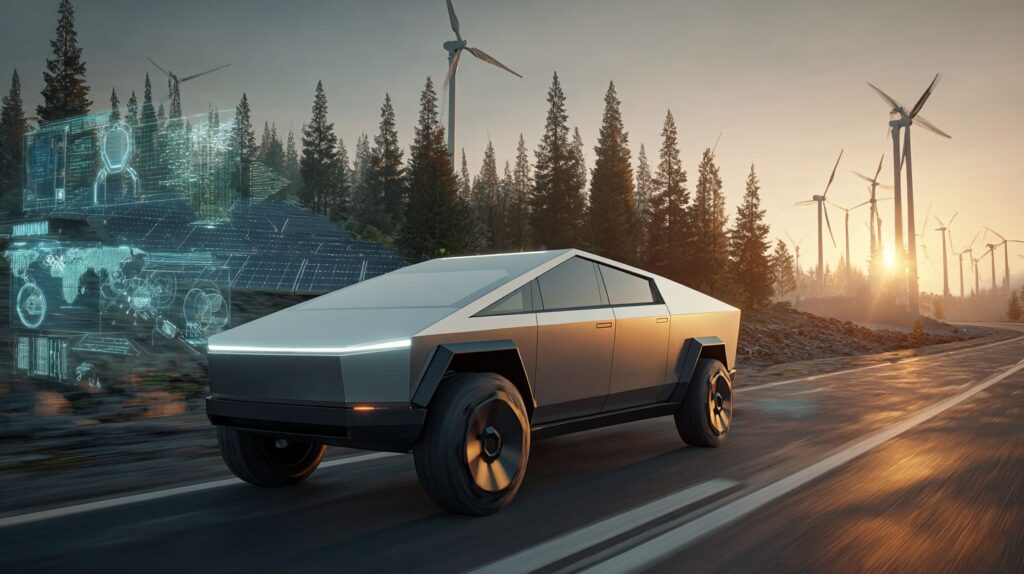
Strategic Outlook: Tesla’s 2026 strategy focuses on FSD V14 and AI5 hardware, aiming for Level 5 autonomy and a 600-mile range to outpace competitors like Lucid and Cadillac.
Financial Projections: Will Investors Buy the Pivot?
From an analytical standpoint, the financial logic behind the Robotaxi pivot is compelling, even if the execution remains a "moonshot." Traditional automotive manufacturing is a capital-intensive, low-margin business (typically 8-12%). In contrast, a software-based ride-sharing network operates with margins closer to 30%.
Tesla analysts are currently projecting a $280 billion revenue target by 2027, representing a 55% CAGR (Compound Annual Growth Rate). This growth is not predicated on selling more cars to individuals, but on the "adoption rate" of FSD. Tesla aims to achieve an 85% FSD adoption rate across its global fleet, charging either a high-margin subscription fee or taking a percentage of every mile driven in its autonomous network.
Furthermore, the "Unboxed Process"—Tesla's new manufacturing philosophy—is designed to reduce costs by 20%. By building vehicle sub-assemblies in parallel rather than on a traditional linear assembly line, Tesla can reduce the factory footprint and the time required to build each Robotaxi unit.
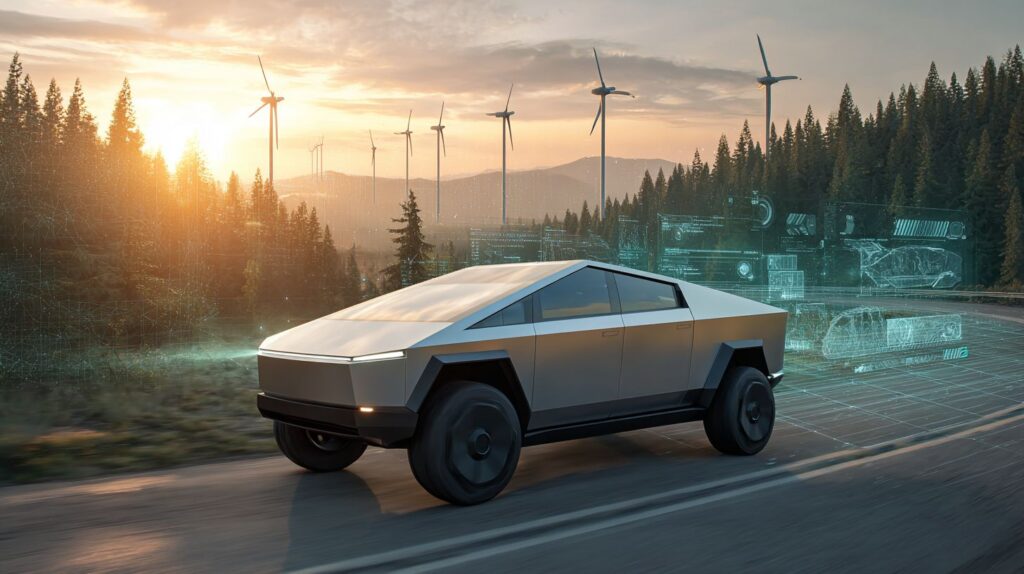
Regulatory and Legal Roadblocks: The 'Cybercab' Drama
As an industry critic, I must emphasize that the greatest threat to Tesla’s Robotaxi isn't the technology—it’s the bureaucracy. Even if the Robotaxi is ready by August 8, it faces a gauntlet of regulatory hurdles that could delay deployment for years.
- The Trademark Tussle: Tesla recently encountered legal friction over the name "Cybercab," which is already involved in trademark disputes with a European company. While this is a minor management hurdle, it reflects a lack of pre-launch foresight.
- Safety Compliance: To operate without a steering wheel, Tesla needs federal exemptions (FMVSS) in the United States and UNECE R157 compliance internationally. In California, the DMV requires rigorous Level 4 testing data—something Tesla has historically bypassed by labeling FSD as a "Level 2" system.
- The NACS Advantage: While the Robotaxi is the star of the show, Tesla’s "Plan B" is the monetization of its infrastructure. By opening the North American Charging Standard (NACS) to competitors like Ford and GM, Tesla is turning its Supercharger network into a recurring revenue stream, independent of its own vehicle sales.
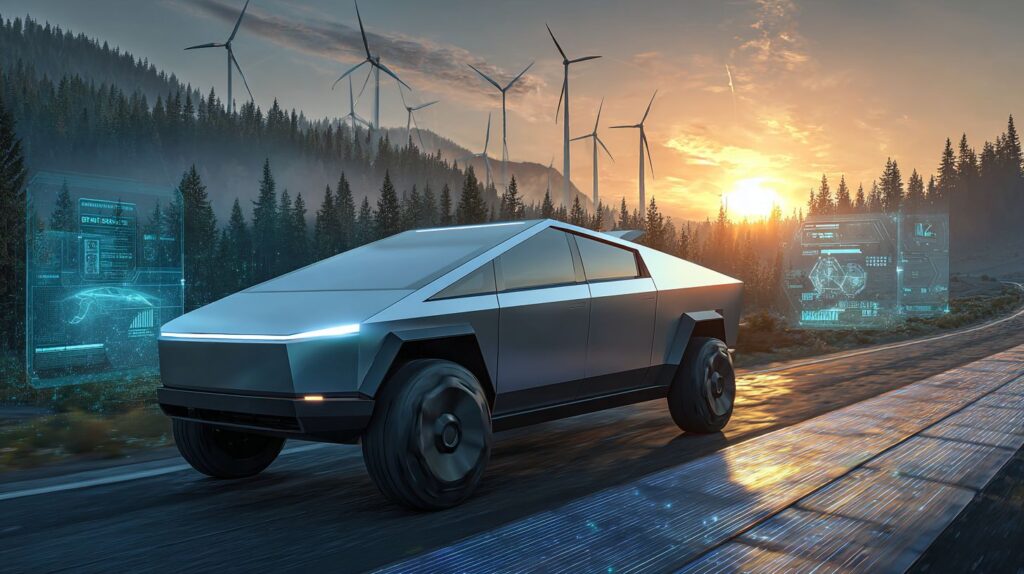
The Roadmap: 2024–2026
- August 2024: Robotaxi Reveal; FSD V12.5 global rollout.
- Early 2025: Initial "supervised" Robotaxi testing in select markets (Texas/Florida).
- Late 2025: Unboxed Process implementation at Giga Texas and Giga Mexico.
- 2026: First commercial "unsupervised" rides, pending regulatory approval in the US and China.
The Verdict
Tesla’s decision to scrap the Model 2 in favor of the Robotaxi is a "bet the company" moment. It is a move away from the safety of being a mass-market manufacturer toward the volatility of being an AI pioneer. For the traveler, this could mean the end of the dream of owning a cheap Tesla, replaced by the reality of never needing to own a car again.
As we look toward the August 8 reveal, the question isn't whether Tesla can build a car without a steering wheel—they’ve already proven they can build hardware. The question is whether they can convince a world of regulators and cautious commuters that the software is ready to take the lead.
FAQ
Q: Is the $25,000 Tesla completely dead? A: Not necessarily. While the dedicated "Model 2" as a separate consumer car has been deprioritized, Tesla may still use the cost-savings from the Robotaxi platform to eventually release a simplified, low-cost model. However, the current focus is entirely on the autonomous fleet.
Q: When can I actually ride in a Tesla Robotaxi? A: While the reveal is in August 2024, commercial availability is unlikely before 2026 due to the rigorous safety testing and regulatory approvals required by individual states and countries.
Q: Will current Tesla owners be able to use their cars as Robotaxis? A: Elon Musk has stated that Model 3 and Model Y vehicles equipped with the necessary hardware should eventually be able to join the "Tesla Network," though hardware retrofits (like AI5) might be required for true Level 5 operation.
Stay Informed on the Future of Transport
The landscape of autonomous travel is moving faster than ever. To stay updated on the latest policy changes, hotel infrastructure for EVs, and destination rankings influenced by smart transit, follow our weekly updates.